Heating Your Italian Home: Autonomo vs Centralizzato
Nothing quite prepares you for the bone-chilling dampness of an Italian winter inside an unheated stone building. I remember my first winter in Florence, wearing two sweaters and a wool scarf at my own dinner table because I didn't realize my centralized system only turned on for six hours a day. This guide breaks down the crucial differences between autonomous and centralized heating so you aren't left shivering in the dark.
Disclosure: This post may contain affiliate links. We may earn a commission at no extra cost to you if you make a purchase through these links. Read full disclosure.
Decoding the Jargon: What Do Autonomo and Centralizzato Actually Mean
When you are hunting for an apartment on platforms like Spotahome, you will constantly see the words "Riscaldamento Autonomo" or "Riscaldamento Centralizzato" tucked away in the listing details. For a newcomer, these might look like minor technical specs, but they will dictate your comfort levels and your bank balance from November through April. Understanding these terms is the first step toward a successful relocation. Let's peel back the layers of Italian plumbing and bureaucracy to see what is actually happening behind your walls.
Riscaldamento Autonomo: Your Boiler Your Rules
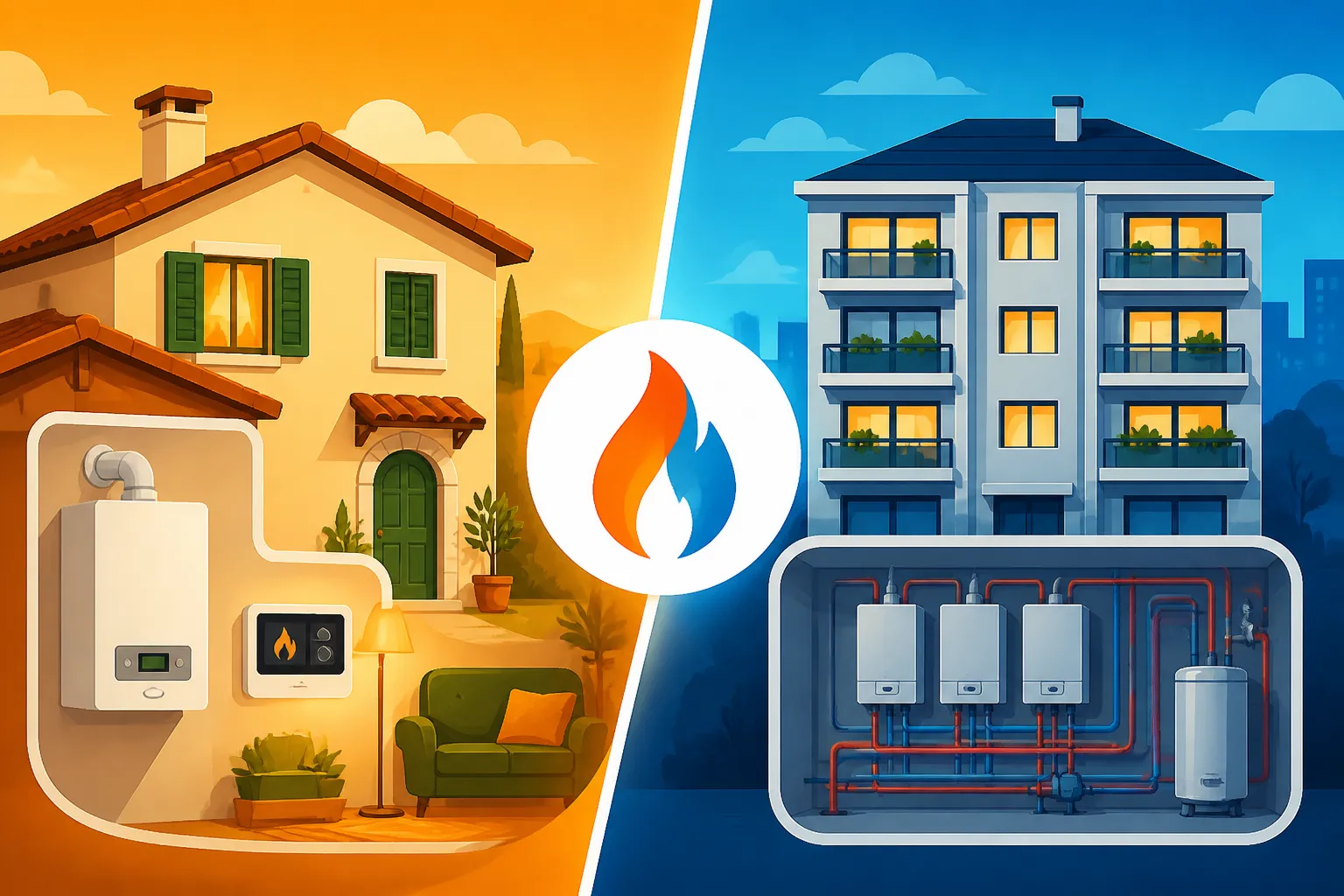
Riscaldamento autonomo means you have your own private boiler, usually located in the kitchen or on a small balcony outside. This is the holy grail for many expats because it gives you absolute control. If you are someone who feels the cold easily, you can crank up the heat at 2:00 AM if you want to. You have a private thermostat, and you decide exactly which hours the radiators are active and what temperature they should reach.
However, with great power comes great responsibility. When you have an autonomous system, you are the one responsible for the "bolletta del gas." You will need to set up your own account with a provider like Enel or Eni. If you are just moving in and waiting for your permanent Wi-Fi to be installed, you might find yourself using an Airalo eSIM to manage these utility registrations on your phone while sitting in your new, potentially chilly living room. Beyond the bills, you are also responsible for the annual safety check of the boiler, known as the "bollino blu," which is a mandatory legal requirement in Italy.
Riscaldamento Centralizzato: The Shared Struggle
Riscaldamento centralizzato is a system where one massive boiler in the basement serves the entire building. The "amministratore" (building manager) decides when the heat turns on and off for everyone. Historically, this meant that if your neighbor liked it at 18 degrees but you wanted 22, you were out of luck. You were all stuck with the same schedule and the same heat output.
In many older buildings in Rome or Milan, this system is still the norm. The heat typically comes on in the early morning and again in the late afternoon. If you work from home, the midday "gap" can be brutal. You will often find yourself heading to Amazon Italy to buy a heavy-duty space heater or an electric blanket just to survive the hours when the building-wide system is dormant. The cost for this is usually included in your monthly "condominio" fees rather than a separate gas bill.
The Hidden Hybrid: Riscaldamento Centralizzato con Contabilizzazione
In recent years, Italian law has mandated that most centralized systems be fitted with "valvole termostatiche" and "contabilizzatori di calore." These are small electronic devices attached to each individual radiator. They allow you to turn the heat up or down in specific rooms, and they track exactly how much thermal energy you are consuming.
This hybrid system is becoming the standard. It offers a middle ground: the building still sets the overall "on" and "off" times for the main boiler, but you only pay for the heat you actually use. It encourages neighbors to be mindful of energy waste. If you keep your guest room at a lower temperature, your portion of the building’s heating bill will decrease. It is a more equitable way of Navigating Italian Utilities: Electricity, Water, Gas, Internet and ensures that the person who leaves their windows open all day isn't subsidized by the person who lives in a sweater.
Financial Realities: Which System Is Better for Your Wallet
The financial impact of your heating choice is significant, especially given the volatility of energy prices in Europe. I have seen expats get blindsided by a 400-euro gas bill in January because they didn't understand the efficiency of their autonomous boiler. Conversely, I have seen people shocked by massive "conguaglio" (adjustment) fees at the end of the year in buildings with centralized systems. You need to look at both the monthly cash flow and the long-term maintenance costs.
Monthly Bills vs Condominio Fees
With an autonomous system, your heating costs are transparent but seasonal. You might pay 30 euros a month in the summer just for hot water, but that could spike to 200 euros or more in the dead of winter. This requires careful budgeting. If you are trying to understand the Cost of Living in Italy 2026: Budgeting for Expats, you must factor in these winter peaks. You are directly in charge of the contract, which means you can shop around for better rates or "green" energy plans.
In a centralized system, the cost is smoothed out over the year. Your monthly "spese condominiali" stay the same every month, which makes it easier to manage a fixed budget. However, you are at the mercy of the building’s overall efficiency. If the building has poor insulation, the main boiler has to work harder, and everyone's fees go up. When reviewing your lease, it is vital that you know How to Understand Condominio Fees (Spese Condominiali) in Italy so you can see exactly how much of that money is going toward the communal boiler.
Maintenance Costs and Annual Inspections
One of the biggest "hidden" costs of an autonomous system is the "manutenzione caldaia." By law, your boiler must be inspected annually or biennially by a certified technician. They will check for carbon monoxide leaks and ensure the system is running efficiently. This usually costs between 80 and 120 euros. If a part breaks, like the pump or the expansion tank, the cost of the repair falls on you if it's due to poor maintenance, or the landlord if it's due to old age.
In a centralized system, you don't have to worry about the boiler technician. The building manager handles all of that. The cost of maintenance, the "bollino blu," and any major repairs are shared among all the tenants. This is often a relief for expats who don't want the hassle of finding a reliable plumber. If you do find yourself needing help with other household issues, knowing How to Find Reliable Repair Services in Italy is still a necessary skill for any resident.
Efficiency and Hidden Charges
The age of the system is often more important than whether it is autonomous or centralized. An ancient autonomous boiler from the 1990s will be a money-pit compared to a modern centralized condensing boiler. When you are visiting potential homes, ask the agent or landlord for the "APE" (Attestato di Prestazione Energetica). This is an energy performance certificate that rates the apartment from A (best) to G (worst).
Be wary of "hidden" charges in centralized systems. Even if you turn all your radiators off, you will still pay a "fixed fee" (quota fissa) which covers the heat lost through the building’s pipes and the general maintenance of the central plant. This can sometimes be 20% to 30% of the total heating cost. Before signing anything, it is wise to learn How to Understand an Italian Rental Contract Clause by Clause to ensure you aren't being overcharged for communal energy losses.
The Rules of the Game: Legal Dates and Regional Restrictions
Italy is not a "one size fits all" country when it comes to climate. The government has divided the peninsula into six climatic zones, labeled A through F. These zones dictate exactly when the heat can be turned on and for how many hours per day. This is a shock to many North Americans or Northern Europeans who are used to having the heater available year-round. In Italy, turning on your central heating outside of the legal window can actually result in heavy fines for the building.
The Climatic Zones: Why Sicily Isn't Milan
If you live in Zone A (like parts of Sicily), you might only be allowed to have the heat on for five hours a day from December to March. Meanwhile, if you are in the Italian Alps (Zone F), there are no restrictions at all because the temperatures are consistently freezing. Most major expat hubs like Rome (Zone D) or Milan and Florence (Zone E) have very specific windows.
Milan, for instance, typically allows heating from October 15th to April 15th, for a maximum of 14 hours per day. Rome is usually November 1st to April 15th, for 12 hours per day. Even if you have an autonomous system, you are legally supposed to follow these regional dates, though enforcement is much stricter for centralized buildings. If you are cold in the "shoulder season" (like a chilly late October in Rome), your only options are blankets or a portable electric heater from Amazon Italy.
The Accensione Schedule: When the Heat Turns On
In a centralized building, the "amministratore" will post a notice in the lobby (the "androne") detailing the "accensione" schedule. This is often the most debated topic in building meetings. The manager will usually split the hours: perhaps four hours in the morning (6:00 AM to 10:00 AM) and eight hours in the evening (2:00 PM to 10:00 PM).
If you are an early riser or a night owl, this can be incredibly frustrating. I have lived in apartments where the heat cut off exactly at 9:30 PM, just as I was settling in to watch a movie. This lack of flexibility is the primary reason why families with small children or the elderly often prefer autonomous systems. If your lifestyle doesn't fit the standard 9-to-5 mold, you should look for Understanding Italian Rental Contracts 101: 4+4, 3+2, and Transitorio options that specifically mention "riscaldamento autonomo."
National Laws vs Condominio Regulations
Beyond the regional zones, each "condominio" can vote on its own internal rules during the annual assembly. They might decide to turn the heat on for fewer hours than the legal maximum to save money. Or, they might vote to delay the start of the heating season if the weather is unseasonably warm.
As a tenant, you rarely have a vote in these meetings, but you are bound by the results. This is why communication with your neighbors is key. If the entire building is freezing, you can collectively pressure the administrator to adjust the timers within the legal limits. However, if you are the only one who is cold, you will likely be told to buy another "maglione" (sweater).
Comparison of Heating Systems in Italy
| Feature | Riscaldamento Autonomo | Riscaldamento Centralizzato |
|---|---|---|
| Control | Full control over temperature and hours. | Controlled by building manager/timers. |
| Payment | Direct gas bill (seasonal spikes). | Included in monthly condo fees (stable). |
| Maintenance | Tenant's responsibility (Annual safety check). | Managed by building administrator. |
| Flexibility | High (can turn on whenever legal). | Low (follows building-wide schedule). |
| Energy Efficiency | Depends entirely on your private boiler. | Often more efficient due to modern central plants. |
| Repair Hassle | High (you must find the technician). | Low (administrator handles all repairs). |
Practical Tips for Keeping Your Italian Home Warm
Italian homes are often built to stay cool in the summer, which unfortunately makes them "caves" in the winter. High ceilings, tiled floors, and thick stone walls are great in August but a nightmare in January. You have to be proactive about heat retention. Don't expect the radiators to do all the work; you need to manage your environment like a local would.
Dealing With Drafty Windows and Ancient Shutters
The biggest enemy of warmth in Italy is the "infissi" (window frames). Unless you are in a brand-new building, your windows likely have single-pane glass and wooden frames that have warped over the decades. You will feel a literal breeze coming through the cracks. In many historic centers, you aren't even allowed to change the windows because of aesthetic preservation laws.
To combat this, use the "tapparelle" (shutters) or "persiane" effectively. As soon as the sun goes down, close them tightly. They create an extra layer of insulating air between the glass and the outside world. You can also find heavy thermal curtains or weather-stripping tape on Amazon Italy to seal the gaps. Keeping the heat in is just as important as generating it, especially if you want to avoid Dealing with Humidity and Mold in Italian Homes, which often flourishes in cold, damp corners of old apartments.
Modern Solutions for Smart Control
If you have an autonomous system, you should consider installing a smart thermostat. Devices like Tado or Nest allow you to control your heating from your phone. This is a game-changer if you travel often or have an unpredictable schedule. You can turn the heat on while you are on the train home so the house is warm when you arrive, rather than leaving it on all day and wasting money.
For centralized systems with thermostatic valves, you can actually buy smart radiator heads. These replace the manual knobs on your radiators and allow you to set schedules for each individual room. Just make sure to keep the original knobs so you can put them back when you move out. This level of control can significantly lower your "contabilizzatore" readings and save you hundreds of euros over the winter.
Negotiating with Landlords about Heating Systems
When you are in the process of signing a lease, don't be afraid to ask about the heating history. Ask to see the previous year's gas bills or condominio statements. If the apartment has an ancient boiler, you might be able to negotiate a slightly lower rent or ask the landlord to perform a full service on the unit before you move in.
If the apartment is listed on Spotahome, you can often see the energy rating in the description. If it's a 'G' rating, prepare for high bills. You should also ensure that the lease clearly states who is responsible for the mandatory annual maintenance. It is much easier to resolve these points early on rather than having a dispute in the middle of a cold snap. For more on the legalities of these agreements, check out How to Understand an Italian Rental Contract Clause by Clause.
Troubleshooting Common Issues in Italian Rentals
Even with the best preparation, things go wrong. Boilers break, pipes freeze, and administrators forget to update the timers. Knowing what to do in these situations will save you hours of frustration and potentially a lot of money. The Italian system relies heavily on "knowing who to call," so building a small network of contacts is essential.
Boiler Failures and Emergency Repairs
If your autonomous boiler stops working, the first thing to check is the "pressione" (pressure). It should usually be between 1 and 1.5 bar. If it's too low, there is usually a small knob underneath the boiler that you can turn to let more water into the system. This is a 10-second fix that saves you a 50-euro call-out fee for a technician.
If that doesn't work, you need a "tecnico della caldaia." Do not just call a general plumber; you need someone certified for your specific brand of boiler (e.g., Vaillant, Beretta, Junkers). If you are struggling with the language barrier, look for How to Find Reliable Tradespeople for Home Repairs in Italy or ask your neighbors for a recommendation. In a centralized system, if your radiators are cold but your neighbors' are warm, you likely have air trapped in the pipes. You simply need a radiator key to "bleed" the air out until water starts to trickle.
Disputes Over Heating Expenses
Disputes over heating bills are incredibly common in Italy. Sometimes the "contabilizzatori" malfunction, or the building manager makes a mistake in the calculations. If your bill seems impossibly high, you have the right to request a detailed breakdown of the expenses. This is where having a good relationship with your neighbors pays off; ask them if their bills have also spiked.
If you cannot resolve the issue with the administrator, you might need professional help. An accountant can help you decipher the complex spreadsheets the building manager sends out. You can find resources on How to Find an English-Speaking Commercialista in Italy to help you navigate these financial disputes. Often, just showing that you are informed and checking the numbers is enough to make the administrator double-check their work.
Navigating a Cold Apartment in the Shoulder Season
The most uncomfortable times in Italy are often the last two weeks of October and the second half of April. The weather can be surprisingly cold, but the centralized heat is legally turned off. This is the time when humidity starts to seep into the walls. To prevent damage and stay comfortable, many Italians use "deumidificatori." Removing the moisture from the air makes the room feel much warmer even if the temperature is the same.
During these weeks, you might also rely on "pompe di calore" if your apartment has air conditioning units that also heat. However, be aware that running AC units for heat is extremely expensive on your electricity bill. It is often more cost-effective to wear high-quality thermal base layers and use a hot water bottle. Moving to Italy is an exercise in adaptation; sometimes, that means learning to love a heavy wool blanket as much as the Italians do.
Disclaimer
The information provided in this guide is for general informational purposes only and does not constitute legal, financial, or professional advice. Energy regulations, climatic zones, and legal dates in Italy are subject to change by local and national authorities. Always verify current laws and the specific terms of your rental contract with a qualified professional or the relevant local "Comune" office before making financial or legal commitments.