International Student Job Fairs in Italy
Wandering the crowded aisles of an Italian career fair, handing out an English resume, only to be met with polite but dismissive smiles is a crushing feeling. I remember standing at a massive Milan expo, completely invisible to recruiters because I didn’t understand the local networking rules. This guide breaks down exactly how international students can successfully navigate job fairs in Italy.
Disclosure: This post may contain affiliate links. We may earn a commission at no extra cost to you if you make a purchase through these links. Read full disclosure.
The Reality of Italian Career Fairs
Overcoming the Language Barrier
The most jarring realization for international students attending their first Italian job fair is that “international” rarely means English-only. Even when multinational corporations like Deloitte or Pirelli set up booths in Rome or Milan, the HR representatives staffing those tables are Italian, and they default to speaking Italian. If you walk up and immediately launch into a pitch in English, you create an instant barrier. They might switch to English to accommodate you, but you have already signaled that you are an outsider who might struggle to integrate into their daily office life.
You do not need to be flawlessly fluent to make a good impression, but you do need to show effort. Simply initiating the conversation in Italian changes the entire dynamic. Using ItalianPod101 to practice introducing yourself, stating your degree, and asking if they are comfortable continuing in English shows immense respect for their culture. It demonstrates that you are actively trying to bridge the gap, which is exactly the kind of adaptability recruiters look for in foreign talent.
The reality is that your competition is fierce. You are up against local students who know the system inside and out. To stand out, you have to prove that your international background is an asset, not a liability. Understanding the broader Work Culture in Italy: What Expats Should Expect is crucial before you even step foot in the exhibition hall, as the expectations for hierarchy and communication are drastically different from Anglo-Saxon countries.
Networking Culture and First Impressions
In Italy, the concept of bella figura—making a good, appropriate impression—dominates the professional world. This applies heavily to career fairs. Showing up in casual campus attire will immediately disqualify you in the eyes of many traditional recruiters. You must dress the part. A well-tailored blazer, polished shoes, and neat grooming are non-negotiable.
Furthermore, networking in Italy is highly relational. Recruiters are not just looking at your skills; they are assessing if they want to have a coffee with you every morning. The interactions at these booths are often less transactional than in the US or UK. They might ask you about your hometown, how you are liking the local food, or your experience studying abroad. Rushing to hand them your CV without engaging in this polite small talk is a massive faux pas. Practicing your listening comprehension with ItalianPod101 ensures you can pick up on these conversational cues and respond warmly, building the personal rapport that Italian hiring managers desperately want to see.
Top Job Fairs and Recruitment Events to Target
University Specific Career Days
Your absolute best starting point is your own university. Institutions like Politecnico di Milano, Bocconi, Luiss, and the University of Bologna host massive, multi-day career events specifically designed for their students and recent alumni. Because the companies attending these fairs have existing partnerships with the universities, they are often much more open to hiring international students from those specific programs.
These events are highly structured. You usually have to register for specific company presentations or book one-on-one slots in advance. Do not sleep on these deadlines. If you are studying in a major tech or engineering hub, these university fairs are your direct pipeline to lucrative internships. You can read more about where these hubs are located in our guide on Top Italian Cities for IT Jobs and Tech Startups.
National and Industry Specific Expos
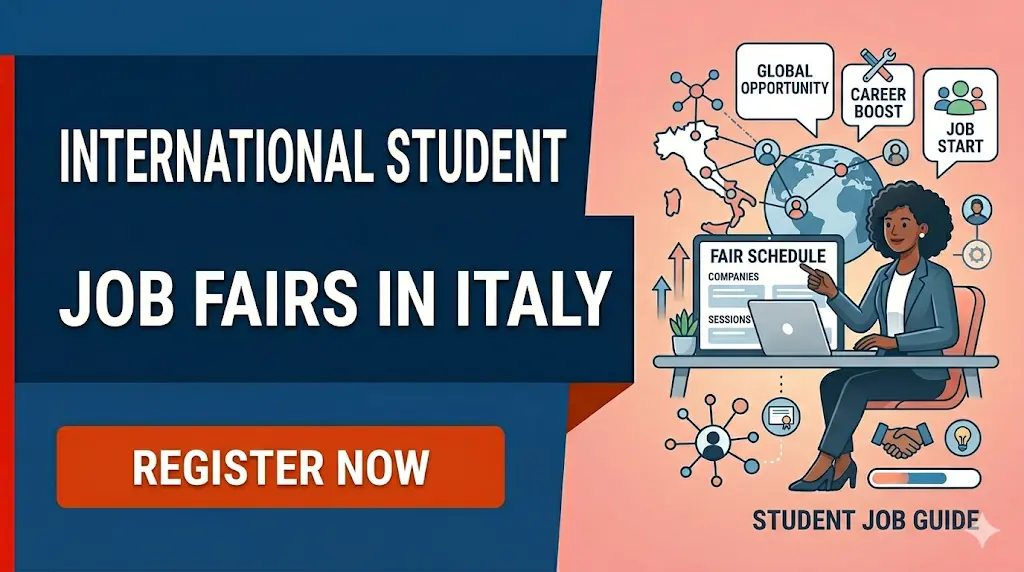
Beyond your campus, there are several national career fairs that travel across Italy. Job Meeting and Brain at Work are two of the largest networks organizing career days in major cities throughout the year. They bring together hundreds of companies across various sectors, from finance and engineering to fashion and hospitality.
Another critical resource is the AlmaLaurea network, an inter-university consortium that not only acts as a massive database for graduates but also hosts significant career events. If you are looking for roles in specific fields that are desperate for bilingual talent, you should prioritize industry-specific fairs. For a detailed breakdown of where the jobs actually are, review the Italian Job Market 2027: In-Demand Skills and Sectors.
| Career Fair / Network | Scope | Best Suited For | Typical Timing |
| University Career Days | Local / Institutional | Students currently enrolled or recent alumni | Spring & Autumn |
| Job Meeting | National (Touring) | General graduates, all sectors | Year-round |
| Brain at Work | National | High-tech, engineering, corporate business | Spring & Autumn |
| AlmaLaurea Events | National / Consortium | Registered graduates seeking formal entry roles | Varies by region |
| Salone dello Studente | National | Entry-level, educational pathways, early internships | Autumn |
How to Prepare Your Application Materials
Formatting the Italian CV
If you bring a standard American or British resume to an Italian job fair, recruiters will be confused. Italian CVs have specific requirements. First, a professional headshot is standard practice. Second, you absolutely must include a privacy consent clause at the very bottom, authorizing them to process your personal data under GDPR regulations. Without this sentence, they are legally barred from contacting you and will throw your paper CV in the trash.
Translating your academic experience requires precision. Do not just translate “Bachelor’s Degree” to a random Italian word; you need to use the proper local equivalent (Laurea Triennale). I relied on ItalianPod101 to translate the specific coursework and academic terminology on my resume, ensuring my technical skills made sense to local HR departments. If you have a thin employment history, building out these academic sections is vital. Read our comprehensive tutorial on How to Write an Italian CV with No Experience to format this perfectly.
You should bring at least twenty printed copies of your CV, nicely organized in a portfolio. While many booths will have QR codes for you to upload your digital profile, having a high-quality physical copy to hand to the recruiter during your conversation leaves a lasting, tangible impression.
Elevator Pitches and Visa Knowledge
When you step up to a booth, you have about two minutes to make an impact. Your elevator pitch needs to be flawless. It should cover who you are, what you are studying, and what specific value you can bring to their company. Because Italian business culture is formal, I used the business modules on ItalianPod101 to practice the formal Lei address, ensuring my pitch sounded respectful and professional.
The biggest hurdle you will face is the visa question. Italian employers are notoriously terrified of the bureaucracy involved in sponsoring foreign workers. When they realize you are an international student, they will immediately worry about the paperwork. You have to be the expert on your own legal status to ease their anxiety.
You must be able to explain that, as a student, you are legally allowed to work part-time. You should familiarize yourself entirely with the Italy Student Visa: The 20 Hours Per Week Rule Explained (2026). Furthermore, you need to confidently explain that graduating from an Italian university allows you to convert your student permit into a work permit outside of the dreaded quota system. If an employer brings up sponsorship fears, knowing the facts outlined in Italian Employer Obligations When Hiring Non-EU Workers will allow you to quickly de-escalate their concerns and keep the focus on your skills.
Following Up After the Fair
The Art of the Italian Follow Up
You survived the fair, your feet are aching, and you have a handful of business cards. The work is only half done. If you do not follow up, you will be forgotten. In Italy, following up requires a delicate balance between showing eager initiative and not being overly aggressive.
Wait 24 to 48 hours before sending an email to the recruiters you connected with. This email should be in Italian if you spoke in Italian, or bilingual if you communicated in English. Keep it brief: thank them for their time, reference a specific topic you discussed at the booth, and attach your localized CV in PDF format. ItalianPod101 was incredibly helpful for drafting a culturally appropriate email, teaching me the right formal sign-offs like Cordiali Saluti instead of a casual “Thanks.”
If they offer you an interview and eventually a contract, you will need to know what you are signing. Checking the vocabulary lists on ItalianPod101 to understand contract types is a smart move, but you should also dive into our guide on the Types of Italian Employment Contracts Contratti di Lavoro to understand your rights regarding probationary periods and vacation time.
Leveraging Digital Networks
Finally, immediately add every recruiter you spoke with on LinkedIn. Italian professionals use LinkedIn heavily, and a personalized connection request referencing the specific career fair is rarely ignored. This digital connection keeps you on their radar even if they do not have an immediate opening.
Make sure your digital profile matches the high-quality physical CV you handed them at the fair. If your digital presence is a mess, the great impression you made in person will vanish. For targeted advice on making your profile attractive to local headhunters, review Using LinkedIn to Find Jobs in Italy. By combining your in-person charm, culturally adapted application materials, and relentless follow-up, you can turn a chaotic Italian job fair into the launchpad for your expat career. Keep in mind the Waiting Period for International Students to Start Working so you can set realistic start-date expectations with your new employer.
References
Primary sources official
- AlmaLaurea (Inter-university Consortium) – https://www.almalaurea.it/
- Ministero del Lavoro e delle Politiche Sociali – https://www.lavoro.gov.it/
Other helpful sources
- Job Meeting Italy – https://www.jobmeeting.it/
- Brain at Work – https://www.brainatwork.it/
Disclaimer
The information provided in this article is for educational and informational purposes only and does not constitute official legal, immigration, or career advice. Hiring practices, job fair schedules, and student visa employment regulations are subject to frequent changes. Always verify your right to work, the specifics of the 20-hour rule, and contract legalities with the official Italian Ministry of Labour, your university’s career services office, or a qualified immigration professional before accepting employment.