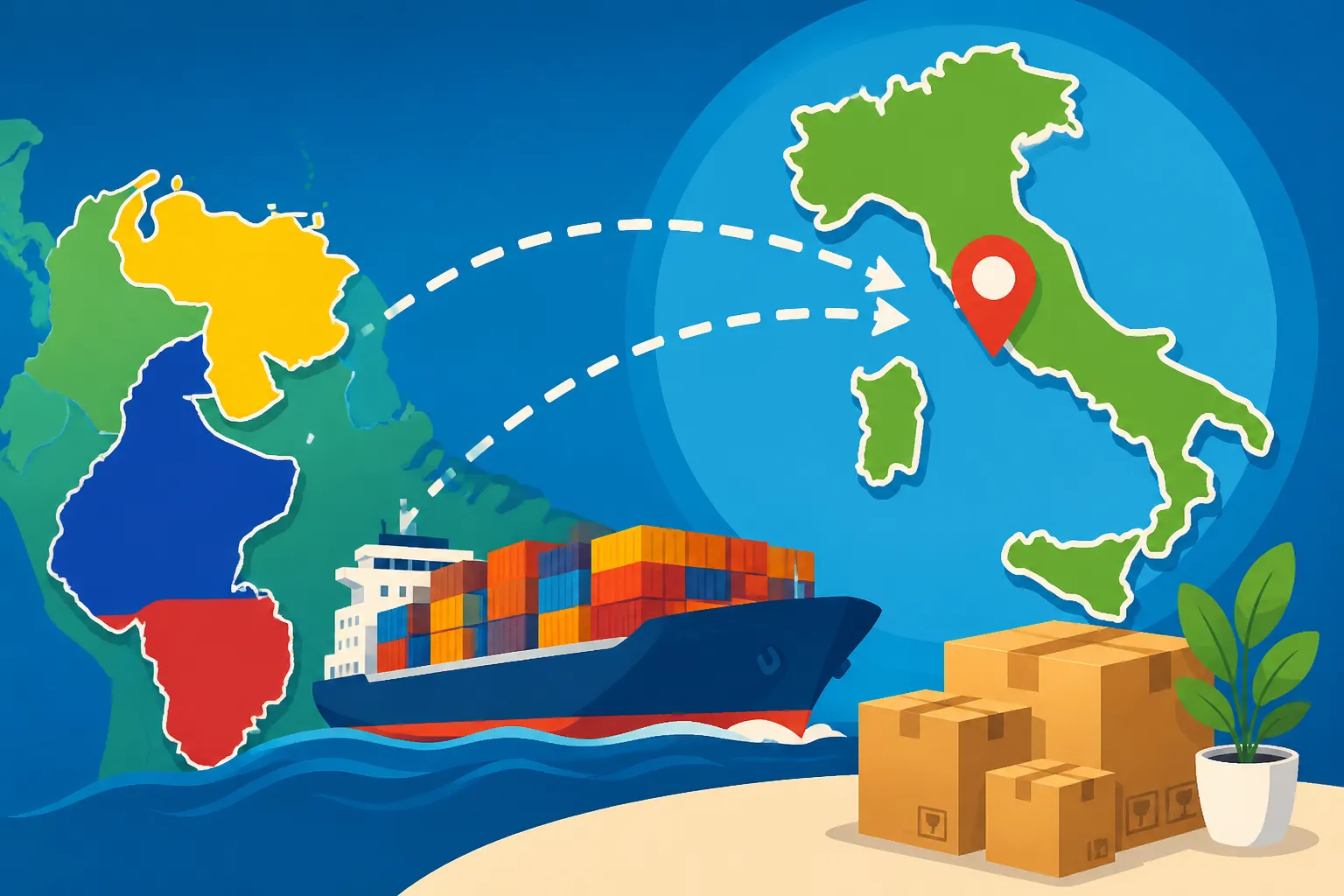
Moving to Italy from Venezuela and Colombia: Freight Routes and Costs
Moving from Venezuela or Colombia to Italy is an adventure of a lifetime, but let's be real: the logistics of getting your entire life across an ocean can feel like trying to solve a Rubik's Cube blindfolded. The sheer thought of international freight, customs forms, and unexpected costs is enough to make anyone second-guess their dreams. This guide is here to untangle the complexities of shipping your belongings from South America to Italy, providing clear insights into freight routes, costs, and how to choose reliable moving partners, ensuring your treasured possessions arrive safely and without breaking the bank.
Disclosure: This post may contain affiliate links. We may earn a commission at no extra cost to you if you make a purchase through these links. Read full disclosure.
The Initial Shock: Understanding the Logistics from South America to Italy
When you decide to pack up your life in Caracas, Bogotá, or any other vibrant city in Venezuela or Colombia, and move it all the way to a picturesque Italian town, you’re not just changing addresses. You're embarking on a monumental logistical undertaking. This isn't a cross-town move; it's a cross-continental one with its own set of rules, challenges, and occasional headaches.
Why Shipping from Venezuela and Colombia is Unique
The journey your belongings will take from Venezuela or Colombia to Italy is far from straightforward. First, there's the sheer geographical distance, spanning thousands of kilometers across the Atlantic. This isn't like shipping from within the European Union or even North America, where established routes and standardized procedures might make things a bit smoother. From a South American perspective, especially Venezuela, you're contending with additional layers of complexity. Economic fluctuations, specific export regulations, and sometimes even local infrastructure issues can add unpredictable variables to your shipping timeline and costs. Colombia, while perhaps more stable, still requires meticulous attention to detail regarding its export documentation and customs clearance processes.
Moreover, the cultural nuances in administration can be a hurdle. What seems like a simple form or a quick phone call in one country might involve multiple bureaucratic steps and endless waiting in another. You'll need to prepare for a level of detail and patience that might not be typical in your home country. This isn't just about moving boxes; it's about navigating two distinct logistical ecosystems, each with its own quirks and demands.
The Different Ways to Get Your Stuff to Italy
When it comes to transporting your household goods, you generally have two main options: sea freight or air freight. Each has its own set of pros and cons, and the best choice for you will depend heavily on your budget, timeline, and the volume of items you're sending.
Sea Freight: The Cost-Effective, Slower Route
Sea freight is by far the most popular and cost-effective option for large international moves, especially when you're moving an entire household. Your belongings will be loaded into a container (either a dedicated full container load, FCL, or a shared less than container load, LCL) and shipped across the ocean.
- Pros: Significantly cheaper for larger volumes, especially if you're shipping furniture, appliances, and many boxes. It's also more environmentally friendly. If you're looking to bring your car or motorcycle, sea freight is typically the only viable option.
- Cons: It's slow. Very, very slow. Transit times from South America to Italy can easily range from 4 to 8 weeks, not including time for customs clearance on both ends. This means you'll need to plan well in advance and be prepared to live without many of your possessions for a couple of months. Damages can also be a concern if not packed properly due to the movement of the ship and handling at ports.
- Best for: Full household moves, large furniture, vehicles, items you don't need immediately, and anyone on a tighter budget for shipping.
Air Freight: The Speedy, Pricier Option
If you're in a hurry or only need to send a few essential items, air freight might be appealing. Your goods will be flown to Italy, dramatically cutting down on transit time.
- Pros: Speed is the main advantage. Your items could arrive in Italy within a few days to a couple of weeks, depending on the service and customs processing. This is ideal for crucial documents, small valuable items, or things you simply can't wait for.
- Cons: The cost. Air freight is considerably more expensive than sea freight, sometimes prohibitively so, especially for bulky or heavy items. The pricing is based on both weight and volume, whichever is greater, which means even light but large items can become very costly. There are also stricter regulations on what can be shipped via air due to safety concerns.
- Best for: Urgent items, electronics, small boxes of clothing, important documents, or very high-value items where speed and security outweigh cost. It's usually not practical for an entire household move.
Most expats opt for a combination of both: a small air freight shipment for immediate necessities upon arrival, and a larger sea freight shipment for the bulk of their belongings. This balanced approach helps you settle in without feeling completely adrift while keeping overall shipping costs manageable.
Deciphering Freight Costs: What Really Drives the Price Tag
One of the biggest anxieties when moving internationally is the cost. It's not just the sticker price from the moving company; there are layers of fees, surcharges, and potential unexpected expenses that can quickly add up. Understanding these components is crucial for budgeting and avoiding unpleasant surprises.
Key Factors Influencing Your Shipping Quote
When you receive a quote from a moving company, it's rarely a single, all-encompassing figure. Instead, it's a breakdown of various services and charges. Here are the primary factors that dictate how much you'll pay:
- Volume and Weight: This is the most significant factor. Moving companies calculate costs based on the cubic meters (m³) your belongings occupy for sea freight, and a combination of weight and volumetric weight for air freight. The more stuff you have, the more expensive it gets. So, a thorough decluttering before you even ask for a quote can save you a bundle.
- Distance and Route: The journey from Venezuela or Colombia to Italy is long, and the specific ports involved can also affect pricing. Direct routes are usually faster and sometimes cheaper than routes involving multiple trans-shipments.
- Service Type (Door-to-Door, Port-to-Port):
- Door-to-door: The most convenient, as the moving company handles everything from packing at your old home to unpacking at your new home in Italy. This includes local collection, transport to the port, shipping, customs clearance, and final delivery. It's usually more expensive but offers peace of mind.
- Port-to-port: You're responsible for getting your items to the origin port and picking them up from the destination port. This is cheaper but requires you to manage local logistics, which can be challenging, especially in a new country like Italy where language barriers and local transport rules can be tricky.
- Packing Services: Professional packing ensures your items are secured for international transit, often a requirement for insurance coverage. While an added cost, it can prevent damage and save you time. If you opt for DIY packing, ensure you use high-quality materials and techniques.
- Insurance: Non-negotiable for international moves. The cost of insurance will depend on the declared value of your goods and the level of coverage you choose. We'll delve into this more later, but trust me, you want it.
- Customs Duties and Taxes: While personal effects for new residents are often exempt from duties in Italy under specific conditions, there are exceptions, and taxes like VAT might still apply to certain items or if you don't meet the exemption criteria. A good moving company will advise you on this, but it’s still a potential cost.
- Storage Fees: If there's a delay in your new home being ready or issues with customs, your items might need to be stored, incurring additional charges.
- Special Handling: Oversized items, fragile antiques, pianos, or vehicles require special crating, handling, and transport, all of which come with extra costs.
Unpacking the "Hidden" Costs and Fees
Ah, the "hidden" costs – they're not always intentionally hidden, but they often aren't explicitly detailed in the initial, high-level quote. It's vital to ask your chosen moving company for a comprehensive breakdown to avoid nasty surprises.
- Terminal Handling Charges (THC): These are fees charged by port authorities or shipping terminals for handling your container or cargo at both the origin and destination ports. They cover the costs of loading, unloading, and moving containers within the terminal.
- Fuel Surcharges (BAF/CAF): Bunker Adjustment Factor (BAF) or Currency Adjustment Factor (CAF) are surcharges added by shipping lines to account for fluctuations in fuel prices and currency exchange rates. These can change over time and might not be fixed at the time of your initial quote.
- Demurrage and Detention Fees: These are perhaps the most common and frustrating "hidden" costs.
- Demurrage: Charged by the shipping line if your container remains at the port terminal beyond the allowed free time (typically a few days) for pickup after it arrives. This can happen due to customs delays, issues with documentation, or simply a slow pickup process.
- Detention: Charged if you keep the container outside the port for longer than the free time allowed for unpacking and returning the empty container. Both can add up very quickly, sometimes hundreds of euros per day, so efficiency is key once your shipment lands.
- Customs Brokerage Fees: Even if you're exempt from duties, you'll likely need a customs broker (often provided or arranged by your moving company) to navigate the Italian customs process. Their expertise ensures your paperwork is correct and clearance is as smooth as possible, but their services come with a fee.
- Inspection Fees: In some cases, customs officials may decide to inspect your shipment, which can incur additional fees and further delays.
- Port Security Fees: Small surcharges to cover enhanced security measures at ports.
Always ask your prospective movers for a detailed quote that itemizes all potential charges, including any "estimated" fees that might fluctuate. This transparency is key to managing your budget. This is where a service like Sirelo can be incredibly helpful; by comparing multiple quotes, you can often identify companies that offer more transparent and inclusive pricing, minimizing these surprises.
Here's a quick look at estimated ranges to give you a rough idea, keeping in mind these are highly variable:
| Factor | Sea Freight (LCL) from Venezuela/Colombia to Italy | Air Freight (100kg) from Venezuela/Colombia to Italy |
|---|---|---|
| Transit Time | 4-8 weeks | 3-10 days |
| Estimated Cost | €1,500 – €5,000+ (for 5-10 m³) | €800 – €2,500+ (for 100kg, smaller items) |
| Volume/Weight | Per cubic meter (LCL), or full container (FCL) | Per kg (volumetric or actual, whichever is higher) |
| Ideal For | Large household, furniture, vehicles | Urgent items, small boxes, high-value goods |
| Risk of Delay | Moderate to High | Low to Moderate |
(Note: Costs are indicative and highly dependent on current fuel prices, exchange rates, specific origin/destination, and services chosen. Always get a custom quote.)
Navigating the Customs Maze: Italy and South America
Customs can be the trickiest part of an international move. Both the exit customs in Venezuela or Colombia and the entry customs in Italy have their own procedures, documentation, and restrictions. A misstep here can lead to significant delays, unexpected costs, or even confiscation of goods.
Essential Documentation for Your Italian Customs Clearance
Getting your personal effects into Italy as a new resident generally benefits from certain exemptions, but only if you provide the correct documentation. The Italian customs authorities, Agenzia delle Dogane e dei Monopoli, are thorough, and any missing or incorrect paperwork can halt your shipment.
Here's what you'll typically need:
- Detailed Packing List/Inventory: This is paramount. Every box must be numbered, and its contents listed in detail. For larger items, a separate inventory with descriptions is required. This list needs to be as accurate as possible and ideally in Italian, or accompanied by a sworn translation if in another language. This forms the basis of your customs declaration.
- Passport Copy: A clear copy of your valid passport, including your personal details and signature.
- Codice Fiscale: This is your Italian tax code, an essential identification number for almost every administrative procedure in Italy, including customs clearance. You'll need to obtain this before your goods arrive. It’s one of the first things you should sort out when preparing for your move. You can learn more about how to get this crucial document in our guide on How to Get a Codice Fiscale in Italy (and Why You Need One).
- Proof of Residency in Italy: This could be your Italian residence permit (Permesso di Soggiorno), a long-stay visa (e.g., a work visa, student visa, or elective residence visa), or proof of application for residency at the Comune. This proves you are moving to Italy as a resident, not just a tourist bringing goods.
- Dichiarazione di Valore (Declaration of Value): For certain goods, particularly those of high value or those not clearly "personal effects" in the traditional sense, you might need a sworn declaration of their value. This is often prepared by your moving company or a customs broker.
- Proof of Ownership and Use: To qualify for duty-free import of personal effects, you usually need to demonstrate that you owned and used the items for at least six months in your country of origin (Venezuela or Colombia) before shipping. Receipts or bank statements can sometimes serve as proof.
- Declaration of Transfer of Residence: A formal statement confirming your intention to establish residence in Italy. This is usually part of the documentation your moving company or customs broker will help you prepare.
The struggle to gather all these documents, often in a specific format or with certified translations, is real. Start early, keep everything meticulously organized, and don't hesitate to lean on your moving company or a specialized customs broker for guidance. This is one area where cutting corners can lead to significant delays and costs.
Import Duties, Taxes, and Prohibited Items
Here's the good news: generally, personal effects imported into Italy by a private individual transferring their normal place of residence from a non-EU country are exempt from import duties and VAT. However, this exemption comes with strict conditions:
- Ownership Period: You must have owned and used the goods for at least six months in Venezuela or Colombia before transferring your residence.
- Resale Restriction: The imported items cannot be sold, rented, or transferred to another person for at least 12 months after their import into Italy.
- Timing of Import: Your personal effects must usually be imported within 12 months of your official registration of residency in Italy.
If you don't meet these criteria – for instance, if you're importing brand-new items or things bought specifically for the move – then you will likely be subject to standard import duties and Italy's VAT (IVA), which is currently 22% for most goods. Vehicles, even if owned for over six months, have their own specific set of rules and taxes.
Prohibited and Restricted Items:
Italian customs, like any other, has a list of items you simply cannot import or that require special permits:
- Firearms and Ammunition: Strictly controlled and require specific licenses and permits. Do not attempt to ship these without prior legal consultation.
- Drugs and Narcotics: Absolutely prohibited.
- Certain Plants, Seeds, and Foods: Strict phytosanitary regulations apply. Fresh produce, meat products, and certain plant materials are generally prohibited or require health certificates to prevent the introduction of pests or diseases. For items like coffee, spices, or packaged goods, smaller quantities for personal use are usually fine, but large commercial-like quantities might raise flags.
- Counterfeit Goods: Importing pirated or counterfeit items is illegal.
- Explosives and Flammable Materials: Obvious safety risks.
- Culturally Sensitive Items: Antiques, artifacts, or items made from endangered species might be restricted or require special export permits from Venezuela/Colombia and import permits for Italy.
Always declare everything honestly on your packing list. Don't try to hide items, as penalties for false declarations are severe. When considering what to ship, remember that anything you wouldn't bring on a plane, or anything that seems out of the ordinary for personal household effects, is worth double-checking with your mover or a customs expert.
Choosing the Right Partner: Why a Reliable Mover is Your Best Bet
Moving your entire life across continents is not a DIY project. The complexities of international shipping, coupled with the distinct customs regulations of Venezuela, Colombia, and Italy, make a professional moving company an indispensable partner. But how do you pick the right one? The choice of mover can make or break your relocation experience.
What to Look for in an International Moving Company
Finding a reliable international mover is like finding a needle in a haystack, especially when dealing with routes like South America to Italy. You need a company that not only understands logistics but also the human element of what you're going through. Here’s what to prioritize:
- Experience with Your Specific Route: This is paramount. Look for companies with a proven track record of shipping from Venezuela or Colombia to Italy. They will be familiar with the ports, customs procedures, common pitfalls, and reliable local partners on both ends. An experienced mover can anticipate issues and offer solutions before they become problems.
- Transparent and Detailed Pricing: As discussed, hidden fees are a real pain. Demand a comprehensive, itemized quote that clearly outlines all potential costs, including terminal charges, fuel surcharges, customs brokerage, and insurance. A trustworthy company will be upfront about what's included and what might be extra.
- Comprehensive Insurance Options: Ensure they offer robust insurance coverage for international moves. Discuss different policy types (e.g., total loss vs. all-risk) and what happens in case of damage or loss.
- Customs Expertise: Your mover should have in-house customs specialists or trusted partners who can guide you through the intricate documentation requirements for both exiting South America and entering Italy. They should be able to advise you on duty exemptions, prohibited items, and any specific declarations needed for valuable goods.
- Excellent Communication: You'll want a company that provides clear, timely updates on your shipment's status. Look for dedicated points of contact and responsiveness to your questions. Language barriers can exacerbate stress, so finding a company with English-speaking staff (if needed) is a huge plus.
- Professional Packing Services: For international moves, professional packing isn't just a luxury; it's often a necessity. Goods are handled multiple times, so proper packing with high-quality materials is crucial to prevent damage. Inquire about their packing standards and materials.
- Strong Testimonials and Reputation: Check reviews on independent platforms. Look for consistent positive feedback regarding their reliability, customer service, and ability to handle international complexities. Don't just rely on their website testimonials.
How Sirelo Simplifies Your Move
This is where platforms like Sirelo come into their own. Instead of sifting through countless individual moving company websites and requesting quotes one by one, Sirelo offers a streamlined solution designed to connect you with reputable international movers specializing in your route. They act as a central hub, making the initial, often overwhelming, search significantly easier.
Here's how Sirelo can be your hero in this daunting process:
- Effortless Quote Comparison: You provide your move details once, and Sirelo matches you with multiple pre-vetted moving companies experienced in shipping from Venezuela or Colombia to Italy. This means you receive several competitive quotes, allowing you to easily compare prices, services, and transit times side-by-side. This saves you hours of research and ensures you get the best value.
- Access to Reliable Movers: Sirelo partners with companies that have a proven track record in international relocations. This adds a layer of confidence, knowing you're not just picking a random company off the internet, but one that meets certain standards.
- Resource Hub: Beyond quotes, Sirelo offers a wealth of informational resources, guides, and tips on international moving. These can help you understand the process better, prepare your inventory, and navigate common challenges, complementing the specific advice you receive from your chosen mover.
- Reduced Stress: Let's face it, moving is stressful. The ability to quickly compare reputable movers, understand your options, and gain insights from a trusted platform like Sirelo significantly reduces the mental load and anxiety associated with a complex international relocation. It empowers you to make informed decisions rather than feeling lost in the logistical wilderness. By facilitating connections with reliable partners, Sirelo helps you find a moving company that will treat your precious cargo with the care it deserves, ensuring a smoother journey for your belongings to Italy.
Practical Steps and Timeline for Your Freight Move
An international move, particularly one involving freight, is a marathon, not a sprint. Proper planning, meticulous execution, and a realistic timeline are your best friends.
Pre-Move Planning and Inventory Creation
Start planning your move at least 3-6 months in advance. Seriously, it's not too early! The earlier you begin, the less rushed and stressed you'll feel, and the more options you'll have for movers and shipping dates.
- Declutter Ruthlessly: Before anything else, go through everything you own. International shipping is expensive, so ask yourself if each item is truly worth the cost of moving it. Donate, sell, or discard anything you don't absolutely need or love. This is perhaps the most significant cost-saving measure you can take.
- Create a Detailed Inventory List: This isn't just for customs; it's also for your own sanity and insurance purposes. Start a spreadsheet:
- Box number (assign unique numbers to each box).
- Contents of each box (be specific, e.g., "Kitchen – pots and pans, 4 plates" rather than just "Kitchen stuff").
- Declared value of contents (for insurance).
- Room where the box belongs in your new Italian home.
- Condition of items (if they are high value or antique).
This list will be invaluable for customs declarations, tracking, and unpacking.
- Get Quotes Early: As soon as you have a rough idea of your volume, start requesting quotes from international moving companies. Platforms like Sirelo are excellent for this, allowing you to compare options efficiently. This also helps you budget effectively and allows time for pre-move surveys.
- Confirm Your Italian Residency: Ensure your visa and Permesso di Soggiorno are underway, or at least you have solid proof of your intent to reside in Italy. This will be critical for duty-free customs clearance. If you need help with the initial steps for registering, our guide on Registering Residency in Italy (Residenza and Anagrafe) can provide invaluable information.
Packing, Collection, and Tracking Your Shipment
Once you've chosen your mover and finalized your inventory, the physical process begins.
- Professional Packing: Unless you're shipping very few, non-fragile items, professional packing is highly recommended for international moves. Movers use specialized materials and techniques to protect your belongings from the rigors of transit. Many insurance policies also require professional packing for full coverage. The packing crew will label each box with your unique identification and destination information.
- Collection Day: On the scheduled collection day, ensure everything is ready according to the mover's instructions. Walk through your home with the crew leader to confirm all items are accounted for and packed. This is often the last time you'll see your belongings until they reach Italy, so be thorough.
- Bill of Lading: You will receive a Bill of Lading (BOL), which is a crucial legal document. It serves as a contract between you and the carrier, a receipt for your goods, and a document of title. Keep it safe!
- Tracking Your Shipment: Most reputable international movers offer online tracking services. You'll receive a tracking number that allows you to monitor the progress of your container or air freight shipment. While precise, real-time tracking can sometimes be elusive for sea freight, you'll generally get updates on major milestones like port departures and arrivals.
- Preparation for Arrival: As your shipment approaches Italy, the moving company or their local agent will contact you to confirm arrival details and prepare for customs clearance. This is when your Italian Codice Fiscale and residency documents become critical.
Arrival, Customs Clearance, and Delivery in Italy
The journey is not over once your shipment reaches Italian shores. The final leg involves customs and getting your items to your new home.
- Port Arrival and Customs Processing: Your container will arrive at an Italian port (e.g., Genoa, Naples, Livorno, Venice). The local agent of your moving company will typically handle the initial customs formalities. They will submit all your documentation (packing list, passport copy, Codice Fiscale, proof of residency, etc.) to Italian customs. This process can take anywhere from a few days to a couple of weeks, depending on the port, the volume of traffic, and whether your shipment is selected for physical inspection. Be prepared for potential bureaucratic hurdles, which are a common part of Navigating Italian Bureaucracy: Comune and Prefettura.
- Payment of Charges: If there are any outstanding charges (e.g., demurrage, detention, or applicable duties/VAT if you didn't qualify for exemption), these will need to be settled before your goods can be released from customs.
- Final Delivery: Once cleared, your goods will be transported from the port to your new residence in Italy. The delivery team will typically bring the boxes into your home and place them in the designated rooms, based on your inventory list. You should inspect all items for damage or missing boxes before signing off on the delivery. Any discrepancies should be noted immediately on the delivery receipt.
Essential Considerations Beyond the Shipment
While getting your stuff to Italy is a huge part of the move, there are other crucial elements to consider that contribute to a successful and less stressful transition.
Insuring Your Precious Cargo
Let me be absolutely clear: for an international move of this magnitude, insurance is not an option; it's a necessity. Imagine your cherished family heirlooms, a lifetime of memories, or simply your expensive electronics, lost or damaged somewhere over the Atlantic. Without proper insurance, you're left with nothing but regret.
Most reputable international moving companies offer various insurance policies. Here's what you need to know:
- Declared Value: You'll need to provide a declared value for your entire shipment, or for specific high-value items. Be honest and realistic. This value will determine your premium and the maximum payout in case of a claim.
- Types of Coverage:
- Total Loss: This is the most basic and cheapest coverage. It only covers your entire shipment if it's completely lost (e.g., container falls overboard). It does not cover individual items being damaged or lost.
- All-Risk Coverage: This is the gold standard and what you should aim for. It covers loss or damage to individual items due to external causes, subject to exclusions. This means if a box is crushed or an antique vase breaks, you're covered (assuming it was professionally packed and documented).
- Exclusions: Read the policy carefully. There are always exclusions. Common ones include pre-existing damage, mold or mildew (unless caused by a direct insurable event), inherent vice (the nature of an item to damage itself), or damage due to improper packing if you packed it yourself.
- Deductibles: Like any insurance, there might be a deductible (an amount you pay out-of-pocket before the insurance kicks in).
- Filing a Claim: Understand the process and timeline for filing a claim. You usually need to notify the moving company and insurer immediately upon discovering damage or loss, ideally noting it on the delivery receipt.
Don't skimp on insurance to save a few euros. The peace of mind alone is worth the investment. Sirelo's partners often integrate insurance options, making it easier to secure coverage from a trusted provider as part of your moving package.
What to Prioritize for Your First Few Weeks in Italy
Your first few weeks in Italy will be a whirlwind of excitement, discovery, and yes, more bureaucracy. Even if your freight is en route, there are immediate practicalities to tackle.
- Temporary Accommodation: Have your temporary lodging sorted before you arrive. This could be a short-term rental or a hotel while you search for your permanent home.
- Activate Your Codice Fiscale: As soon as you land, ensure your Codice Fiscale is obtained or activated. You'll need it for almost everything: opening a bank account, signing a lease, getting a phone plan, and of course, clearing customs for your shipment. You can consult our dedicated guide on How to Get a Codice Fiscale in Italy (and Why You Need One) for detailed instructions.
- Get Connected: Sort out your mobile phone and internet. You'll need a local SIM card immediately to stay in touch, especially with your moving company. Learn about the providers and options available in our guide How to Get an Italian SIM Card and Mobile Plan as a New Arrival. Similarly, if your permanent home is ready, setting up your internet is crucial.
- Register Your Residency: This is a vital administrative step that triggers access to many public services, including the national healthcare system and official recognition of your stay. Our guide on Registering Residency in Italy (Residenza and Anagrafe) offers a step-by-step walkthrough.
- Essentials for the Interim: Don't ship everything. Pack a "first night" box for air freight or carry-on that includes: essential toiletries, a few changes of clothes, crucial documents (passports, visas, birth certificates, driver's license), prescription medications, universal adaptors, and any small comfort items that will help you feel at home during those first few weeks before your main shipment arrives. Think of it as your survival kit for navigating Italy's charm and bureaucracy.
These initial steps will lay the groundwork for a smoother transition, allowing you to breathe a little easier knowing the basic necessities are covered while your precious cargo makes its way across the ocean.
Disclaimer
Please note that the information provided in this guide is for general informational purposes only and does not constitute legal, financial, or immigration advice. Regulations regarding visas, residency, customs, and taxation in Italy, Venezuela, and Colombia can change frequently. While we strive to provide up-to-date and accurate information, it is essential to consult with relevant official authorities, legal professionals, tax advisors, and reputable international moving companies for personalized advice tailored to your specific situation. We are not responsible for any actions taken based on the information in this article.