Pet-Friendly Housing Options in Italy
Moving to Italy is stressful, but doing it with a dog or cat can feel like a housing death sentence. I spent my first two months getting rejected by landlords who automatically assumed my quiet spaniel would destroy their antique floors. This guide breaks down exactly how to navigate Italian rental laws and find legitimate pet-friendly housing options without losing your mind.
Disclosure: This post may contain affiliate links. We may earn a commission at no extra cost to you if you make a purchase through these links. Read full disclosure.
The Legal Landscape of Pets in Rentals
Condominium Rules vs Landlord Rights
When you start researching pet laws in Italy, you will inevitably stumble across a widely misunderstood 2012 reform to the Italian Civil Code (Article 1138). This law explicitly states that condominium rules cannot forbid residents from owning pets. Many newly arrived expats read this and celebrate, assuming they have a legally protected right to bring their golden retriever into any apartment building in Rome or Milan.
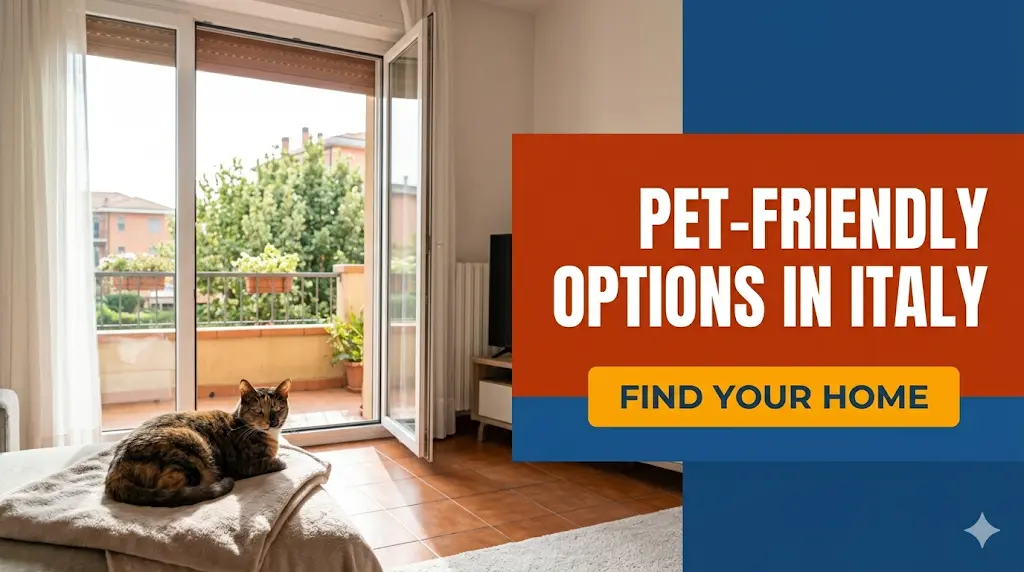
Finding pet-friendly housing in Italy is generally possible, but it requires careful search and clear communication with landlords. Italian law tends to favor tenants, and pets cannot always be completely banned in condominium rules, though landlords may still set conditions in rental agreements.
Many listings specify “animali ammessi” (pets allowed), especially for dogs and cats. Larger pets or multiple animals may require additional approval or a higher security deposit. It’s important to provide information about your pet, including size, behavior, and vaccination records, to reassure landlords. Urban areas may have fewer options compared to suburban locations. Checking lease terms, building rules, and nearby green spaces ensures a comfortable living environment for both you and your pet.
This is a dangerous half-truth. The 2012 reform strictly applies to the regolamento di condominio (the building’s homeowner association rules). It means the building manager cannot ban your dog from walking through the shared lobby or riding the elevator. However, this law does not apply to private lease agreements. The individual person who owns your specific apartment absolutely has the right to ban animals from their private property. Deciphering the hierarchy between national civil law and private contracts is a notoriously exhausting part of Navigating Italian Bureaucracy Comune and Prefettura, and misunderstanding it can lead to immediate eviction.
The Fine Print of the Lease Agreement
Before you get attached to a beautiful apartment with a balcony, you must interrogate the lease. In Italy, a private lease is a legally binding contract between two parties. If the landlord includes a specific clause stating divieto di tenere animali (prohibition of keeping animals), that clause overrides your desire to have a pet.
If you sign the contract and attempt to sneak your cat inside anyway, you are in breach of contract. The landlord can legally initiate eviction proceedings and keep your security deposit to cover alleged damages. You must negotiate the pet clause before you sign anything. If the landlord agrees to allow your pet, you must ensure that the divieto di tenere animali is explicitly crossed out or replaced with an addendum permitting your specific animal. Paying close attention to these clauses is the most critical step when Signing an Italian Rental Contract.
Finding Your Temporary Landing Pad
Short-Term Platforms for Pet Owners
The hardest part of relocating to Italy with an animal is the initial landing phase. You cannot easily stay in a cheap hostel while you spend two months hunting for a permanent 4+4 residential lease. Most standard hotels charge extortionate daily pet fees, which will rapidly destroy your carefully planned Cost of Living in Italy 2026 Budgeting for Expats.
To survive this transition, veteran expats bypass the traditional, anti-pet hotel industry and use Spotahome. By booking your initial 1-to-3-month stay through Spotahome, you can explicitly filter for properties where landlords proactively welcome pets. Because Spotahome verified the property and facilitated the agreement digitally, you eliminate the massive risk of arriving with your suitcases and dog crate only to have an Italian landlord change their mind at the front door. Securing a mid-term landing pad via Spotahome gives you a safe, legal base of operations for you and your pet while you physically explore the city for a permanent home, or even weigh the Eligibility for Dual Residence in Italy Two Homes.
Logistics of Arriving with an Animal
When you finally land at Fiumicino or Malpensa after a grueling international flight, your primary focus is getting your stressed animal out of their travel crate and into your new apartment. The last thing you need is to be stranded on the tarmac without the ability to text your Spotahome landlord or pull up Google Maps to find the nearest dog park.
To prevent this digital blackout, download a data eSIM from Airalo before you depart. Having Airalo active on your phone the exact second you land means you have instant, reliable internet. Using Airalo keeps you connected so you can coordinate your arrival logistics seamlessly without hunting for a spotty airport Wi-Fi network.
Furthermore, you physically cannot pack heavy bags of kibble, bulky litter boxes, or large dog beds in your international luggage. Instead of wandering around an unfamiliar Italian city jet-lagged, trying to find a pet store, set up an account on Amazon Italy the week before you fly. Order your heavy pet supplies to arrive at your new temporary address on your exact move-in date. Having a litter box, food bowls, and familiar toys waiting for you via Amazon Italy drastically reduces the transition stress for your animal. It also saves you from dragging thirty pounds of dog food onto a crowded public bus, leaving you free to focus on setting up your own human essentials, like Setting Up Utilities in Italy.
Strategies to Win Over Italian Landlords
Crafting the Perfect Pet CV
Once you are settled in your temporary housing and begin hunting for a permanent, unfurnished apartment, you will encounter heavy landlord skepticism. Italian landlords are terrified of clawed-up hardwood floors and noise complaints from neighbors. To win them over, you have to proactively remove their anxiety.
You must build a “Pet CV.” This might sound ridiculous, but in a competitive rental market, it works. Print out a one-page document featuring a cute photo of your pet, their age, breed, and weight. Crucially, include a reference letter from your previous landlord stating your animal is quiet, clean, and non-destructive. Accompany this with your pet’s vaccination records and their European pet passport to prove you are a responsible, legally compliant owner. Taking these administrative steps seriously mirrors the preparation required for your own medical transition, detailed in Healthcare in Italy An Expats Guide.
Financial Assurances and Insurance
If a charming letter doesn’t work, money will. You can legally volunteer to pay a slightly higher security deposit explicitly earmarked for potential pet damage, as long as the total deposit does not exceed the legal maximum of three months’ rent.
The ultimate negotiation tool, however, is securing a Polizza Responsabilità Civile (civil liability insurance policy) that specifically covers pet damage. Showing a skeptical landlord that an insurance company will cover the cost of scratched doors instantly lowers their defenses. You can often pay for these localized insurance premiums easily through local digital wallets, a process we cover in Using Mobile Payment Apps Satispay etc in Italy.
Once you move in, you must strictly adhere to condominium etiquette. While pets are allowed in common areas, Italian law dictates they must be on a leash measuring no more than 1.5 meters. Finally, cleaning up after your pet is heavily monitored by nosy neighbors. You must throw your pet waste strictly into the Secco/Indifferenziata (general waste) bins, a rigorous sorting rule you must master quickly to avoid fines, as detailed in our guide on Managing Waste and Recycling Schedules in Italy.
| Strategy | Purpose | Impact on Landlord | Cost to Expat |
| Pet CV & References | Proves the animal’s good behavior history | Builds trust and humanizes the pet | Free (Requires preparation) |
| Increased Security Deposit | Covers potential physical damage | Removes direct financial anxiety | 1-2 months extra rent (Refundable) |
| Civil Liability Insurance | Protects against property damage and neighbor disputes | Provides professional financial backing | €50 – €150 per year |
| Mid-term Pet-Friendly Platforms | Avoids traditional landlord negotiations entirely | Guarantees safe arrival | Standard platform booking fees |
References
Primary sources (official)
- Gazzetta Ufficiale – Riforma del Condominio (Legge 220/2012, Art. 1138) – https://www.gazzettaufficiale.it/eli/id/2012/12/17/012G0241/sg
- Ministero della Salute – Animali d’affezione e regole nei luoghi pubblici – https://www.salute.gov.it/portale/caniGatti/homeCaniGatti.jsp
Other helpful sources
- Idealista – Animali in condominio: cosa dice la legge – https://www.idealista.it/news/immobiliare/residenziale/2021/09/28/155787-animali-in-condominio-le-regole-da-seguire
- OIPA (Organizzazione Internazionale Protezione Animali) – Animali in Condominio – https://www.oipa.org/italia/animali-condominio/
- Italy Law Firms – Buying an apartment in Italy: condominium rules and legal issues for foreigners – https://italylawfirms.com/en/buying-apartment-italy-condominium-rules-and-legal-issues-foreigners/
Disclaimer
The information provided in this article is for educational and informational purposes only and does not constitute official legal or real estate advice. While Article 1138 of the Italian Civil Code prevents condominium assemblies from banning pets from a building, private lease agreements (contratti di locazione) superseding these general rules to ban pets inside specific private units are legally binding. Disputes between tenants and landlords regarding property damage, noise complaints, or breach of contract are subject to local civil courts. Always have a bilingual legal professional review your rental contract for hidden pet-related clauses before signing.