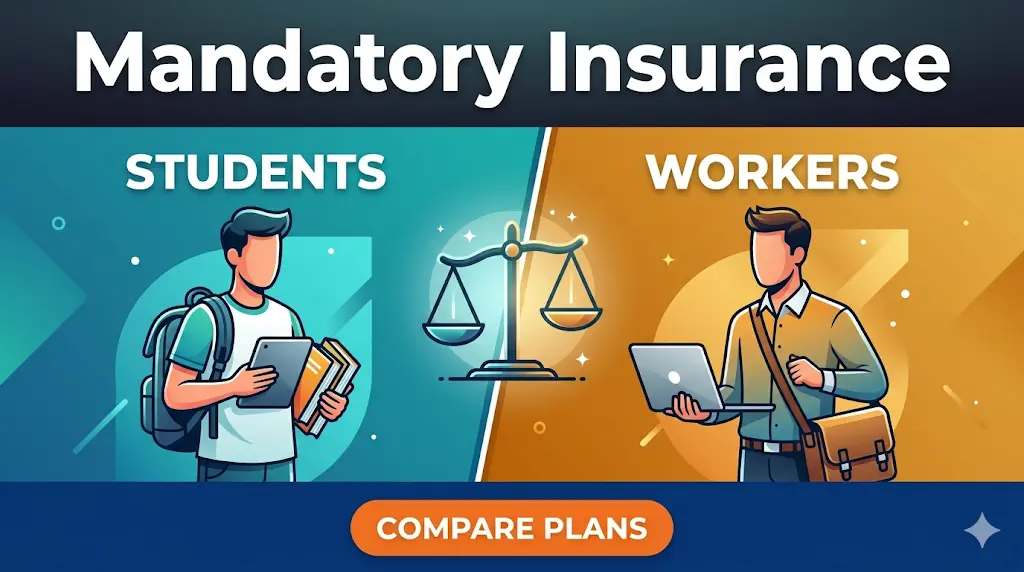
Mandatory Insurance for Students vs Working Expats
Figuring out Italian healthcare requirements feels like navigating a maze blindfolded, especially when the rules drastically differ depending on whether you hold a study visa or a work permit. I remember standing at the local health authority office with the wrong paperwork, feeling utterly defeated by the bureaucracy. This guide breaks down exactly how mandatory insurance works for both students and working expats in Italy, so you can secure your residence permit without the stress.
Disclosure: This post may contain affiliate links. We may earn a commission at no extra cost to you if you make a purchase through these links. Read full disclosure.
Understanding the Italian Healthcare System Baseline
The Role of the Servizio Sanitario Nazionale SSN
Italy operates under a universal public healthcare system known as the Servizio Sanitario Nazionale. This system provides comprehensive medical coverage, including hospital visits, specialist appointments, subsidized prescription medications, and emergency care to all legal residents. When you step foot in the country, understanding how you fit into this framework is your first major bureaucratic hurdle. Whether you are a student or a professional, the SSN is the backbone of your medical safety net.
Accessing the SSN requires registration at your local Azienda Sanitaria Locale. The process is famously paper-heavy and highly localized, meaning the requirements in Rome might differ slightly from those in Milan. The foundational difference for foreigners lies in whether your registration is mandatory and free, or voluntary and fee-based. This distinction is entirely dependent on your visa status and reason for residing in the country.
Navigating the local health office can be incredibly daunting if you do not speak the language. The clerks rarely speak English, and medical bureaucracy is complex even for locals. If you are preparing for this step, using resources like ItalianPod101 to learn essential bureaucratic vocabulary is a lifesaver. Being able to explain your visa status clearly in the local language can turn a frustrating rejection into a successful registration. For more foundational knowledge, you might want to review our guide on Getting Health Insurance in Italy: Public and Private Options.
Private Health Insurance Alternatives
While the public system is robust, private health insurance plays a crucial role in the expat experience, particularly during the initial arrival phase. Private policies are often utilized to bridge the gap between your arrival date and the moment your public healthcare registration is finalized. For many visa types, showing proof of private coverage is an absolute prerequisite before you even board your flight to Europe.
Private healthcare in Italy operates parallel to the public system. It offers the distinct advantage of bypassing long waiting lists for non-urgent specialist appointments and elective procedures. Furthermore, private clinics are much more likely to have English-speaking staff, which provides immense peace of mind for newly arrived foreigners who are still finding their footing.
However, relying strictly on private insurance can become expensive over time. Most expats eventually transition to the public system or use a hybrid approach. If you decide to maintain private coverage, you will need to carefully review the policy terms to ensure they meet the specific legal minimums required for your residence permit. It is often advisable to practice your reading comprehension with ItalianPod101 so you can understand the fine print on local insurance contracts, ensuring you aren’t caught off guard by hidden deductibles or coverage limits.
Insurance Requirements for International Students in Italy
Securing Coverage Before Arriving for Your Visa
If you are moving to study, you cannot obtain your visa without proving you have adequate medical coverage for the duration of your academic program. Italian consulates strictly require a comprehensive policy that guarantees coverage for emergency hospitalization and repatriation. This policy must explicitly state its validity in the Schengen Area and have no restrictions on the specific regions you might travel to.
Most students opt to purchase a basic private policy in their home country that meets these minimum consulate requirements. This is usually the cheapest and most straightforward way to get the stamp in your passport. It is important to note that these bare-bones policies are often designed merely for emergency compliance rather than practical day-to-day healthcare.
When you purchase this initial policy, ensure you have multiple translated copies. The border agents may ask to see it, and you will absolutely need it when you apply for your initial residence permit. Should you need to visit a doctor immediately upon arrival, having your documents in order is essential. Studying medical terms on ItalianPod101 beforehand can help you communicate your symptoms effectively if you have to use this emergency coverage during your first few weeks. If you are still gathering your paperwork, checking out our checklist on Student transcript requirements for Italy student visa can also be helpful.
Converting Private Policies Once in Italy
Once you have arrived and settled into your studies, relying on your foreign emergency policy might not be the most practical long-term solution. Many students find that their home-country insurance operates on a reimbursement model, requiring them to pay out-of-pocket for Italian medical bills and then file complex claims internationally. This can cause significant cash flow issues on a student budget.
To mitigate this, you can purchase an Italian private policy designed specifically for international students. Companies like INA Assitalia historically offered very affordable packages that met the legal requirements for residence permit renewals. These local policies are much easier to use at private clinics and are recognized immediately by local authorities, streamlining your administrative life.
The downside is that private student policies generally do not provide you with a dedicated family doctor. You will have to seek out private clinics for minor ailments. Calling to book these appointments can be intimidating. Using audio lessons from ItalianPod101 to practice telephone conversations can give you the confidence needed to secure an appointment without relying on a bilingual friend to call on your behalf.
The SSN Voluntary Registration Option for Students
The most comprehensive route for an international student is voluntary registration with the public healthcare system. Unlike working expats, students are not automatically entitled to free public healthcare. Instead, you have the right to opt into the system by paying a flat annual fee. This fee is calculated per calendar year, meaning it expires on December 31st regardless of when you paid it.
Paying this voluntary fee grants you the exact same rights as an Italian citizen. You will receive a healthcare card, be assigned a primary care physician, and pay only minimal co-pays for tests and specialized care. For students with pre-existing conditions or those requiring regular medication, this is undoubtedly the safest and most cost-effective option available.
The registration process requires taking the payment receipt from the post office to your local health authority. Be prepared for a very traditional bureaucratic experience. The forms will be entirely in the local language, so brushing up on your reading skills with ItalianPod101 will help you fill out the application accurately. Having full access to the public system is invaluable, and you can read more about the specifics in our guide on How to Register for Italian Healthcare (SSN) as a Foreigner.
Navigating Mandatory Coverage for Working Expats
Employer Sponsored Coverage and Payroll Deductions
If you are moving to Italy with a standard employment contract, your healthcare situation is vastly different from that of a student. Registration with the public healthcare system is not just an option; it is a mandatory right. As an employee, your contributions to the national health system are automatically deducted from your monthly paycheck alongside your taxes and social security.
Because you are paying into the system through your taxes, your registration is considered mandatory and free at the point of service. You do not have to pay the flat annual fee that students do. Your employer will handle the fiscal side of things, but you are still responsible for taking your employment contract, tax code, and residence permit receipt to the local health authority to finalize your physical registration and choose your doctor.
Many medium to large corporations also provide supplemental private health insurance as an employment perk. This corporate coverage can be a massive benefit, allowing you to access high-end private facilities for dental work or specialized diagnostics. Reviewing your employment contract thoroughly is vital. If your HR department is local, using ItalianPod101 to learn formal workplace vocabulary will help you ask the right questions about your secondary insurance benefits during your onboarding process.
Mandatory Registration for Self Employed Expats
Freelancers and digital nomads face a slightly different path, though the end result is the same. If you are residing in the country on a self-employment visa, you are also mandated to register with the public healthcare system. Since you do not have an employer withholding taxes on your behalf, your contributions are calculated based on your annual tax returns.
During your first year, before you have filed a local tax return, you will likely need to register based on your projected income or pay a baseline percentage. Your accountant will guide you through how to declare these contributions. Just like employed workers, you must visit the local health authority to process your enrollment and obtain your medical card. For a broader overview of costs, see our article on Cost of Healthcare in Italy: What Expats Need to Know.
Navigating the tax and healthcare registration simultaneously requires dealing with multiple government offices. You will find yourself speaking with accountants, tax agency clerks, and health officials. Ensuring your conversational skills are sharp by practicing with ItalianPod101 will prevent costly misunderstandings regarding your mandatory contributions and coverage start dates.
Dependent Coverage for Expat Families
One of the greatest benefits of the mandatory registration route for working expats is the inclusion of dependents. If you are registered in the public system through your employment or self-employment status, your dependent spouse and children are automatically entitled to the exact same coverage at no additional cost.
This family-wide coverage is a tremendous relief for expats relocating with children. It ensures your kids have immediate access to pediatricians and mandatory childhood vaccinations required for school enrollment. You will need to present your family status certificates, properly translated and legalized, at the health authority to link your family members to your profile.
Understanding the pediatric care system is its own unique challenge. From booking check-ups to dealing with school medical certificates, the administrative load is heavy. Listening to family-focused dialogue scenarios on ItalianPod101 can equip you with the specific phrases needed to discuss your children’s health with their new pediatrician comfortably. For a deeper dive into the system’s structure, review Differences between Public and Private Healthcare in Italy.
Comparing Costs and Bureaucratic Hurdles
Financial Breakdown for Students
For students, the financial burden of healthcare is entirely out-of-pocket and front-loaded. The basic emergency private policy required for the visa usually costs a few hundred euros for the year. However, if a student opts for the voluntary public healthcare registration, they must pay a specific flat rate. Historically, this rate was highly subsidized for students, usually hovering around 150 euros per calendar year.
Recently, there have been discussions and localized changes regarding these voluntary fees, with some regions applying the standard voluntary rate which is significantly higher. It is critical to check with the specific region you are moving to. Regardless of the exact figure, this payment must be made via a postal bulletin before you can even begin the registration process.
Budgeting for these costs is an essential part of your pre-departure planning. Because the public system fee expires in December, a student arriving in September will have to pay the full annual fee for just a few months of coverage, and then pay it again in January. Understanding these financial quirks is easier when you can read the official regional health websites. I recommend using the reading comprehension tools on ItalianPod101 to navigate these regional portals effectively.
Financial Breakdown for Workers
For working expats, the upfront out-of-pocket costs for public healthcare are non-existent. You do not pay a flat annual fee to register. Instead, your costs are proportional to your income and are handled on the back end through your tax withholdings. This makes the day-to-day budgeting simpler, as you only need to worry about the small co-pays required for specific medications or specialist visits.
The hidden costs for workers usually come in the form of supplemental private insurance. If your employer does not provide it, you may choose to purchase a private family policy out of pocket to ensure faster access to specialists. These private policies can range from 1,000 to over 3,000 euros annually depending on the age of the applicants and the level of coverage desired.
The bureaucratic hurdle for workers is less about the payment and more about the documentation. You must prove your employment status and consistent tax contributions to maintain your active registration. If you change jobs or lose your employment, your healthcare status can be temporarily suspended. You can find more information about handling medical supplies in our piece on Italian Pharmacies: Prescription, Over-the-Counter, and Supplies.
| Feature | International Students | Working Expats |
| Visa Requirement | Proof of insurance required before arrival | Handled via employment contract/tax status |
| SSN Access Type | Voluntary registration | Mandatory registration |
| Cost Structure | Flat annual fee (expires Dec 31st) | Income-based tax deductions |
| Dependent Coverage | Not included (dependents pay separately) | Automatically included at no extra cost |
| Private Insurance Role | Often used as primary emergency coverage | Used as supplemental/premium coverage |
Making the Choice Between Public and Private Options
Assessing Your Healthcare Needs and Frequency
When deciding whether to rely on voluntary public enrollment (for students) or to purchase supplemental private insurance (for workers), an honest assessment of your health is required. If you are young, generally healthy, and only visit a doctor for the occasional seasonal flu, a basic private policy or standard public coverage might be perfectly adequate.
However, if you have chronic conditions requiring regular monitoring, prescription medications, or specialized therapies, the public system is unparalleled. The subsidized costs for life-saving medications under the public system will save you thousands of euros compared to buying them privately or relying on reimbursement policies.
Take the time to translate your current medical records before you move. Knowing exactly what treatments you need will guide your insurance choice. If you have complex medical history, the vocabulary lessons on ItalianPod101 are highly recommended so you can translate your specific ailments and advocate for your continuing care effectively with your new local physician.
Language Barriers in Italian Clinics
The language barrier is arguably the most significant factor pushing expats toward private healthcare. Public hospitals and local family doctors are heavily burdened and generally do not have the time to accommodate non-native speakers. While you might find an English-speaking doctor in major cities like Milan or Rome, it is never guaranteed in the public sector.
Private clinics cater to the international community. They actively advertise English-speaking doctors, provide translated medical reports, and have bilingual reception staff. For many newly arrived expats dealing with the stress of relocation, paying for private insurance simply to guarantee they can be understood during a medical crisis is worth every penny.
If you commit to the public system, you must commit to learning the language. You will need to describe your symptoms, understand dosage instructions, and navigate hospital wards in the local tongue. Dedicating time to medical and anatomical modules on ItalianPod101 can bridge this communication gap, making the excellent public healthcare system far more accessible and less intimidating. For a deeper understanding of local clinic operations, review Healthcare in Italy: An Expats’ Guide.
Bridging the Gap with Supplemental Insurance
Ultimately, the best approach for both students looking for comprehensive care and workers wanting convenience is a hybrid model. Relying on the public system for major emergencies, chronic care, and general practitioner visits provides a solid, cost-effective baseline.
You can then purchase a modest supplemental private policy to cover outpatient specialist visits, dental care, and elective diagnostics. This allows you to bypass the infamous public waiting lists when you need a quick ultrasound or a consultation with a dermatologist, while still having the safety net of the national hospital system for serious issues.
This hybrid approach requires managing two separate systems, which means twice the paperwork and twice the bureaucratic communication. By continually improving your language proficiency with tools like ItalianPod101, you can confidently manage claims in the private sector and bookings in the public sector, ensuring you get the absolute best medical care your new home country has to offer.
References
Primary sources (official)
- Italian Ministry of Health (Ministero della Salute) – https://www.salute.gov.it/
- Italian State Police (Polizia di Stato) – Information on Residence Permits – https://www.poliziadistato.it/articolo/controlla-online-il-permesso-di-soggiorno
Other helpful sources
- Italian National Social Security Institute (INPS) – https://www.inps.it/
- Ministry of Foreign Affairs (Visa Portal) – https://vistoperitalia.esteri.it/
Disclaimer
The information provided in this article is for educational and informational purposes only and does not constitute legal, medical, or financial advice. Immigration laws, healthcare fees, and insurance requirements in Italy are subject to frequent changes at both the national and regional levels. Always consult with official Italian government sources, the local Azienda Sanitaria Locale, or a qualified immigration professional regarding your specific situation before making any decisions.