Choosing Language Schools vs University Language Courses
Deciding where to learn Italian depends on your professional goals, budget, and learning style. This guide compares private language schools against university courses to help you choose the best pathway for your academic or career journey in Italy.
Disclosure: This post may contain affiliate links. We may earn a commission at no extra cost to you if you make a purchase through these links. Read full disclosure.
Navigating Italian Language Education
For anyone moving to Italy, language is the ultimate key to integration. Whether you are an international student, a digital nomad, or a professional relocating for a corporate role, your ability to communicate effectively will dictate the quality of your experience. The Italian education market offers two primary routes for formal study: private language schools and university-based language centers. Each path serves a distinct purpose and caters to different demographics.
Choosing between private language schools and university language courses in Italy depends on academic goals, budget, and preferred learning structure. Private language schools offer flexible start dates, small class sizes, and intensive programs tailored to short term learners. They are often located in city centers and may include cultural activities, accommodation assistance, and visa support services. However, tuition fees are generally higher and academic credits may not always be transferable.
University language courses, often offered by institutions such as University for Foreigners of Siena or University for Foreigners of Perugia, provide structured programs aligned with official certification standards. These courses may grant recognized qualifications and access to campus facilities. Costs can be more moderate, but admission timelines are fixed and class sizes larger. Students seeking formal certification or long term academic progression may benefit more from university programs, while short term learners often prefer private schools. Carefully compare accreditation status, teacher qualifications, class hours, and refund policies before enrolling to ensure quality instruction and financial transparency.
Choosing between these options is not merely about the cost; it is about the “exit strategy.” Are you learning Italian to navigate daily life and small talk, or do you need formal certification to enter the workforce? If your goal is to eventually transition into the professional sphere, understanding the Italian Job Market 2027: In-Demand Skills and Sectors is crucial, as many local employers prioritize candidates with recognized linguistic credentials.

Private Language Schools: Flexibility and Immersion
Private language schools are the most popular choice for short-term residents, tourists, and expats who need immediate, practical communication skills. These institutions are found in every major city—from the narrow streets of Florence to the bustling hubs of Milan—and are designed to be agile.
Flexibility in Scheduling
One of the primary advantages of private schools is their start dates. Most schools allow students to begin a new course every Monday. This is ideal for those who arrive in Italy outside of the standard academic calendar. Classes range from “standard” (usually 20 hours per week) to “intensive” (30+ hours per week), allowing you to progress at your own speed.
Focus on Communicative Method
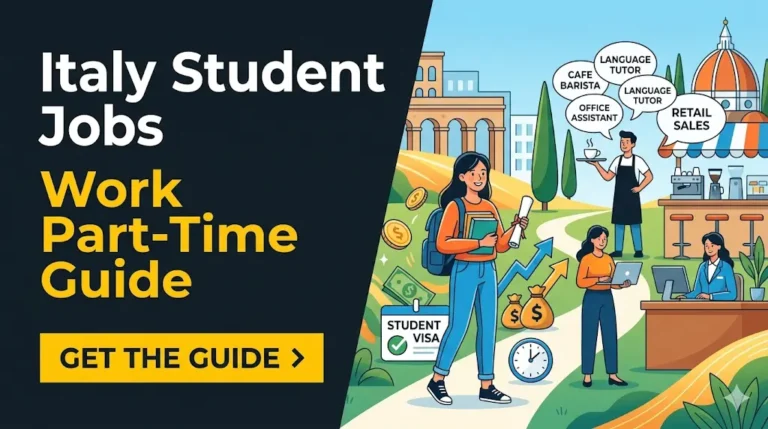
Private schools often prioritize the “communicative method,” which focuses on speaking and listening from day one. Because these schools cater to a diverse international crowd, the environment is social and high-energy. Teachers are often trained to help students navigate real-world situations, such as grocery shopping or visiting a doctor. If you are a student worker, this practical knowledge is essential when Finding Part-Time Jobs for International Students in Italy, where basic service-level Italian is often required.
Cultural Activities and Housing Assistance
Private schools are more than just classrooms; they are service providers. Most will assist you in finding local accommodation and organize afternoon activities, such as wine tastings, cooking classes, or guided city tours. This makes them a “soft landing” for newcomers who may feel overwhelmed by the initial transition.
University Language Courses: Academic Rigor and Certification
University language centers (known as Centro Linguistico di Ateneo or CLA) offer a more traditional, academic approach to learning Italian. These courses are typically designed for students who intend to enroll in a full degree program or for researchers who need a high level of academic literacy.
Structured Academic Calendar
Unlike private schools, university courses follow a semester-based calendar. You will typically find courses starting in late September/October and again in February. This structure provides a deeper, more sustained immersion into grammar and formal writing. This is particularly important for those who need to satisfy the Language Requirements for Public Sector Jobs, where a high level of formal, written Italian is mandatory.
Preparation for Official Exams
Universities are often the official testing centers for national certifications like CILS (Certificazione di Italiano come Lingua Straniera) or CELI. While private schools can prepare you for these tests, studying at a university puts you directly in the environment where the academic standards for these exams are set. Having an official university-backed certificate carries significant weight during the process of Recognizing a Foreign Diploma in Italy.
Integration with Campus Life
Studying at a university center gives you access to the broader university ecosystem. You can use the libraries, eat at the mensa (student canteen), and interact with Italian students. This provides a level of cultural immersion that private schools—often filled only with other foreigners—cannot match.
Table: Comparison of Private Schools vs. University Centers
| Feature | Private Language Schools | University Language Centers |
| Start Dates | Every Monday (Flexible) | Semester-based (Oct/Feb) |
| Course Duration | 1 week to 1 year | 3 months to 1 academic year |
| Class Size | Small (8–12 students) | Large (20–40 students) |
| Primary Focus | Conversational / Practical | Grammar / Academic Writing |
| Cost | Higher per week | Lower per academic hour |
| Extracurriculars | High (Excursions, social events) | Low (Self-managed campus life) |
| Certification | Internal Diploma / CILS prep | ECTS Credits / CILS testing |
| Ideal For | Expats, Nomads, Professionals | Degree-seekers, Researchers |
Financial Considerations and Hidden Costs
Budgeting for language study involves more than just the tuition fees. You must consider the administrative costs and the regional variations in pricing across Italy.
Tuition Fees
Private schools usually charge between €200 and €400 per week for an intensive course. Long-term discounts are common if you book for three months or more. University courses are generally cheaper if calculated by the hour, often costing between €400 and €900 per full semester, depending on whether you are an enrolled student or an external participant.
Administrative and Material Costs
Universities often charge a mandatory enrollment fee and may require you to pay for specific academic insurance. Private schools usually include materials in the price, but you may be charged a “registration fee” of €50–€100. Always check if the course includes the cost of the final proficiency exam, as sitting for the CILS or CELI separately can cost an additional €120–€200.
Visa Implications for Language Study
If you are a non-EU citizen, the type of course you choose will impact your visa eligibility. To obtain a student visa for language study, the course must typically be for at least 20 hours per week and provided by a recognized institution.
- Private Schools: Must be accredited by the Ministry of Education (Presa d’Atto) or a major body like ASILS to be valid for visa purposes.
- Universities: Automatically valid for student visas.
The permesso di soggiorno (residency permit) you receive for a university course may sometimes be easier to renew or convert than one from a private school, as the university is viewed as a high-level institutional sponsor.
Conclusion
Choosing between a private language school and a university course is a matter of prioritizing speed and flexibility versus academic depth and institutional prestige. If you are in Italy for a short time or need to start working immediately, the practical, communicative approach of a private school is invaluable.
However, if your long-term goal is academic enrollment, public sector employment, or obtaining a high-level professional certification, the university route offers the necessary rigor and recognized credits. Regardless of the path you choose, mastering the Italian language is the single most important investment you will make in your future in the Mediterranean.
References
Primary sources (official)
- Ministero dell’Università e della Ricerca (MUR): Official guidelines on Italian language proficiency for international students. https://www.mur.gov.it/it
- CILS – Università per Stranieri di Siena: Official portal for the most recognized Italian language certification. https://cils.unistrasi.it/
Other helpful sources
- ASILS (Associazione Scuole di Italiano come Lingua Seconda): The association of high-quality private Italian language schools. https://www.asils.it/en/
Disclaimer
The information provided in this article is for general informational purposes only and does not constitute professional legal or academic advice. Enrollment requirements, tuition fees, and visa regulations for 2026 are subject to change by the Italian Ministry of Education and individual institutions. Always verify current details with your chosen school or university and the official Italian consulate before making financial commitments.