How to Write an Italian CV with No Experience
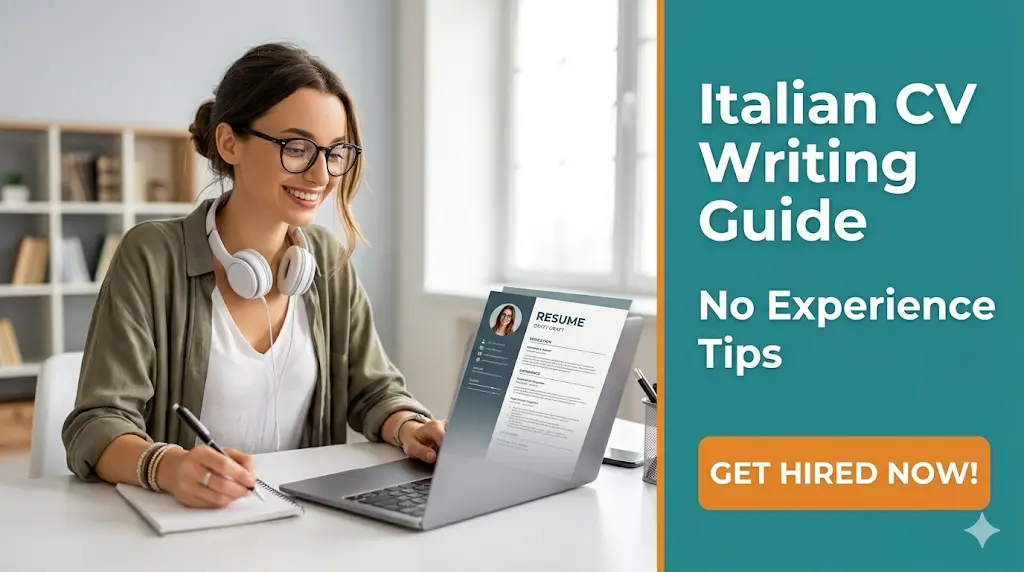
Staring at a blank page when you lack formal work history is stressful, but formatting it for Italian employers feels like a completely different beast. I remember agonizing over whether to include my photo or how to translate my university coursework during my first job hunt in Milan. This guide will help you build a compelling Italian CV from scratch, highlighting your true potential even without prior professional experience.
Disclosure: This post may contain affiliate links. We may earn a commission at no extra cost to you if you make a purchase through these links. Read full disclosure.
Understanding the Italian CV Format
When you are trying to break into the Italian job market without a solid track record of employment, the presentation of your document becomes your strongest asset. Italian recruiters are traditionally conservative, though the startup culture in cities like Milan and Rome is rapidly changing the landscape. Understanding the structural expectations is your first hurdle.
The Europass Standard Versus Modern Templates
If you have spent any time looking into European job markets, you have likely heard of the Europass CV. For many years, this standardized, government-backed format was the absolute gold standard in Italy. Even today, if you are applying for public sector jobs, university administrative roles, or positions at highly traditional Italian corporations, the Europass format is often explicitly required. It is rigid, structured, and ensures that recruiters can find specific information in the exact same place on every applicant’s profile.
However, the Europass format has a major drawback for entry-level candidates: it is heavily biased toward listing chronological work experience. It can make a lack of professional history glaringly obvious. If you are applying to creative agencies, tech startups, or international firms based in Italy, a modern, well-designed template is often preferred. A modern format allows you to manipulate the visual hierarchy, placing your education, skills, and projects at the top, drawing the reader’s eye away from the empty experience section.
| Feature | Europass CV | Modern CV Template |
| Best Used For | Public administration, traditional companies, academic roles | Tech startups, creative industries, international corporations |
| Flexibility | Very low. Fixed sections and strict chronological order. | High. Can move education and skills above experience. |
| Visual Appeal | Clinical, uniform, and somewhat outdated. | Dynamic, customizable to reflect personal branding. |
| Space Efficiency | Poor. Often pushes content to multiple pages unnecessarily. | Excellent. Can condense entry-level info into one strong page. |
Essential Personal Details to Include
One of the biggest culture shocks for expats drafting their first Italian CV is the sheer amount of personal information expected. In many Western countries, strict anti-discrimination laws mean you omit details like your age or marital status. In Italy, omitting these details can confuse recruiters or make your application look incomplete.
You are expected to include a professional headshot. This should not be a cropped photo from a vacation; invest in a clean, well-lit portrait against a neutral background. Additionally, you must list your date of birth, your exact place of birth, and your current residential address. If you are a foreigner, it is highly advisable to clearly state your nationality and your current visa status. Recruiters want to know immediately if you have the legal right to work or if they need to sponsor you. Reading up on Working in Italy: Opportunities and Visa Options can help you understand exactly what to state regarding your residency status. You should also ensure your contact information features an Italian phone number; relying solely on a foreign number can deter local HR departments from calling you. For more insights on general expectations, reviewing CV and Interview Tips for Working in Italy is highly recommended.
Highlighting Skills and Education Over Experience
Without a five-year career history to lean on, your education and your measurable skills must carry the weight of your application. The goal here is to reframe your academic journey and your personal development as highly relevant professional training.
Leveraging Your Academic Background
In Italy, your educational pedigree holds significant weight, particularly for entry-level roles. When formatting your education section, place it prominently at the top of your CV. You need to use the correct Italian terminology to describe your degrees to avoid confusion. For instance, a Bachelor’s degree is a Laurea Triennale, and a Master’s degree is a Laurea Magistrale.
Do not just list the name of your university and the degree title. Flesh out this section by highlighting specific coursework, major research projects, and your final thesis title if it is relevant to the industry you are targeting. In Italy, the graduation grade, known as the voto di laurea, is highly regarded. If you graduated with top marks, prominently display it. If you studied abroad, participated in an Erasmus program, or secured any academic grants, list these achievements. They demonstrate adaptability and a global mindset, which are incredibly attractive to Italian companies looking to internationalize. If your degree is from outside the EU, you might want to look into Recognizing a Foreign Diploma in Italy so you can accurately equate your qualifications for local employers.
Showcasing Language Proficiency
As an expat, your language skills are your secret weapon. You must clearly state your proficiency in Italian, your native language, and any other languages you speak using the Common European Framework of Reference for Languages scale. Do not just say “Fluent in Italian”—specify if you are B1, B2, C1, or C2. If you hold official certifications, list them. You can learn more about these in the Italian Language Certificates (CILS, CELI) Explained guide.
If your Italian is currently a work in progress, honesty is the best policy, but you can frame it positively by showing active dedication. Mentioning your ongoing studies with ItalianPod101 on your CV demonstrates to employers that you are taking your integration seriously. For example, you can state your current CEFR level and note that you are actively utilizing ItalianPod101 to master business vocabulary and improve your conversational fluency. Dedicating time to audio lessons on ItalianPod101 shows initiative that recruiters respect. Even beyond the CV, practicing interview scenarios with ItalianPod101 can significantly reduce your anxiety before a phone screening. Gaining cultural insights from ItalianPod101 guides will also help you navigate the nuances of the Italian workplace once you land the job.
Soft Skills and Extracurricular Activities
When you lack a traditional job title, you must prove your competence through your life experiences. Did you manage the budget for a university club? That is financial management and organizational leadership. Did you volunteer at a local community center? That demonstrates teamwork and community engagement.
Create a dedicated section for these experiences. Detail the software you know how to use, your proficiency with data analysis, or your graphic design capabilities. Soft skills, such as problem-solving, cross-cultural communication, and adaptability, should be woven into the descriptions of your academic projects and extracurriculars rather than just listed as empty buzzwords.
Structuring Your Italian CV Without a Work History
How you organize the information on the page dictates how the recruiter will perceive your value. A strategic layout can make an inexperienced candidate look like a highly focused, upcoming talent.
Crafting a Strong Personal Profile
The personal profile, or Profilo Personale, sits right beneath your contact information. This is a three to four-sentence elevator pitch. Because you do not have work experience to summarize, use this space to state your academic background, your core strengths, and your specific career objective in Italy.
Be direct about what you are looking for. Instead of a generic statement, write something tailored. For example: “Recent marketing graduate with a focus on digital consumer behavior, possessing native English fluency and a B2 level in Italian. Currently seeking a junior role or internship in a Milan-based tech startup to leverage my data analysis skills.” This immediately tells the recruiter who you are and what you want. To understand what roles are currently viable, you might want to check the Italian Job Market 2027: In-Demand Skills and Sectors to align your objective with actual market needs.
Formatting for Readability and Applicant Tracking Systems
Even in Italy, medium to large companies use Applicant Tracking Systems to filter resumes before a human ever sees them. Your CV must be machine-readable. Avoid heavy graphics, obscure fonts, or saving your document in unusual file formats. Always export your CV as a clean PDF.
Keep your CV strictly to one page. Without a decade of experience to list, stretching your CV to two pages will only highlight the filler content. Use clear, bold headings for your sections, such as Istruzione e Formazione for education and Competenze for skills. Use bullet points rather than dense paragraphs to describe your university projects. If you are applying for part-time roles while studying, make sure your availability is clear; reading up on Working Part-Time on a Student Visa in Italy will ensure you are legally compliant with the hours you offer.
Crucial Additions and Common Mistakes
There are a few uniquely Italian bureaucratic hurdles that can result in your CV being immediately thrown in the trash if you are not careful. Avoid these common pitfalls to ensure your application is actually considered.
The Mandatory Privacy Consent Statement and GDPR
This is arguably the most critical piece of advice for writing an Italian CV: you must include a privacy consent statement at the very bottom of the document. Under Italian law and European GDPR regulations, a company cannot legally process your personal data, or even keep your CV on file, unless you explicitly give them written permission to do so.
If you forget this statement, many HR departments will simply delete your application to avoid legal liability. You should add this exact phrasing at the bottom of your page:
“Autorizzo il trattamento dei miei dati personali presenti nel curriculum vitae ai sensi del Decreto Legislativo 30 giugno 2003, n. 196 e del GDPR Regolamento UE 2016/679.”
Do not hide it; place it in the footer or clearly at the end of your text, and ensure you sign and date the CV if you are bringing a physical copy to an interview.
Translating Titles and Coursework Incorrectly
Expats frequently make the mistake of using direct, literal translations for their educational achievements or club leadership roles. A literal translation can sound nonsensical to an Italian recruiter. Take the time to research the equivalent Italian terms.
Furthermore, do not rely exclusively on your CV to do the talking. Since your experience is light, your cover letter must bridge the gap between your potential and their needs. You can learn exactly how to format this companion document by reading What to Include in a Cover Letter for Italian Jobs. Additionally, make sure your online presence matches your new Italian CV; optimizing your profile according to the Using LinkedIn to Find Jobs in Italy guide will ensure consistency across the board. If you are relying on temporary roles to build up your resume initially, looking into Internships and Trainee Programs in Italy can be the perfect stepping stone to fill that experience gap.
Remember, getting your foot in the door without experience requires patience. Keep refining your language skills with tools like ItalianPod101, practicing your interview techniques, and sending out tailored applications. Your unique background as an international candidate is an asset; you just have to format it in a language that Italian employers understand.
References
Primary sources (official)
- Ministero del Lavoro e delle Politiche Sociali: https://www.governo.it/en/ministeri/ministero-del-lavoro-e-delle-politiche-sociali
- Europass Official Portal: https://europass.europa.eu/en
Other helpful sources
- AlmaLaurea (Italian University Graduate Database): https://www.almalaurea.it/en
Disclaimer
The information provided in this article is for general informational purposes only and does not constitute legal or professional career advice. Immigration rules, employment laws, and data privacy regulations in Italy are subject to frequent changes. Always verify current requirements with official Italian government resources, a qualified legal professional, or the specific hiring company before submitting your job application.