Digital Nomad Stays in Italy: Booking for Wi-Fi, Desks, and Quiet
Ah, the life of a digital nomad in Italy! It sounds like a dream, doesn't it? Sipping espresso while coding from a sun-drenched balcony in Florence, or drafting reports with a view of the Amalfi Coast. But any expat will tell you that the reality of finding that perfect balance between productivity and la dolce vita can be a real headache, especially when it comes to securing a place with reliable Wi-Fi, a proper desk, and actual peace and quiet. This guide is here to walk you through exactly how to cut through the noise (sometimes literal, sometimes bureaucratic) and book digital nomad-friendly stays in Italy, using a trusted platform like Booking.com, so your remote work setup is as dreamy as your surroundings.
Disclosure: This post may contain affiliate links. We may earn a commission at no extra cost to you if you make a purchase through these links. Read full disclosure.
Embracing the Digital Nomad Lifestyle in Italy: Challenges and Charms
Italy, with its captivating blend of ancient history, vibrant culture, and unparalleled cuisine, beckons countless digital nomads. The allure is undeniable: imagine your lunch break involving a quick stroll to a local pasticceria for a fresh cornetto or an afternoon passeggiata through a medieval town. However, making this dream a sustainable reality requires a bit more than just a good laptop and a sense of adventure. It demands strategic planning, especially when it comes to your living and working environment.
The Romantic Ideal vs. The Practical Reality
Many foreigners arrive in Italy with visions of picturesque living, and while those moments absolutely happen, the day-to-day grind of a digital nomad still exists. You still have deadlines, Zoom calls at odd hours due to time differences, and the constant need for a stable internet connection. The charm of an old, rustic apartment might wear thin when the Wi-Fi repeatedly drops during an important meeting, or the thin walls mean you're privy to your neighbor's opera practice (charming, perhaps, but not conducive to focus!).
The challenge often lies in reconciling the romantic image with the practical necessities of your remote job. You might adore the idea of living in a tiny, historic borgo, but if the local internet infrastructure is lagging, or every cafe is just a bit too bustling for a quiet work session, it can quickly become frustrating. That's why being proactive in your accommodation search is paramount. You need a space that supports your work, not hinders it, allowing you to truly enjoy the Italian lifestyle during your downtime.
The Unique Needs of a Remote Worker Abroad
Unlike a typical tourist who might only need a bed and a shower, digital nomads have a very specific set of requirements for their accommodations. We're talking about more than just a roof over your head; it's about a functional, productive ecosystem.
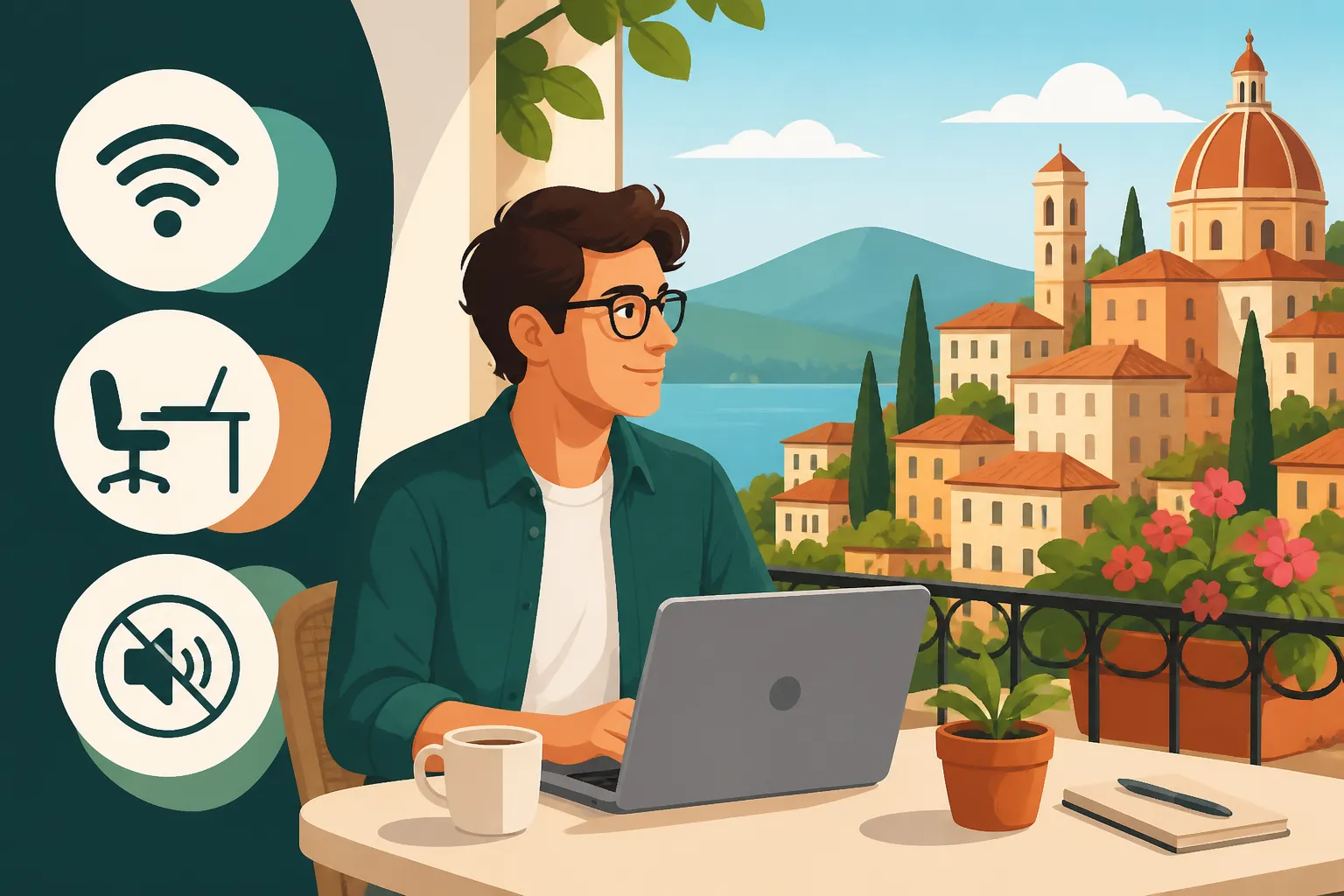
First and foremost, a reliable internet connection isn't a luxury; it's a lifeline. Slow, intermittent, or data-capped Wi-Fi can derail your entire work week and cost you precious hours. Beyond that, a dedicated workspace is crucial. While working from bed for a day is fine, sustained productivity often requires a proper desk, an ergonomic chair (a rare find, admittedly, but one can hope!), and adequate lighting. You also need quiet. Italy is a country that thrives on social interaction, and noise can be a constant companion, whether it's from street life, neighbors, or even enthusiastic local festivals. Finding that oasis of calm is a significant factor. Then there's the need for a functional kitchen, laundry facilities for longer stays, and perhaps even some accessible social spaces if you're looking to connect with other expats. Without these core elements, the "digital nomad dream" can quickly turn into a stressful, unproductive nightmare.
Key Amenities for a Productive Digital Nomad Stay
When you're packing your bags for Italy, thinking about your work setup is just as important as deciding which gelato flavors to try first. The right amenities can make or break your productivity and, frankly, your sanity.
Unnegotiable: Fast and Reliable Wi-Fi
Let's be honest: in today's world, Wi-Fi isn't an amenity, it's a utility, especially for us digital nomads. You absolutely cannot compromise here. Many listings will simply state "Wi-Fi available," but that's like saying "food is served" without mentioning if it's a Michelin-starred meal or a stale cracker. You need fast Wi-Fi, and you need it to be reliable.
In Italy, internet speeds can vary wildly depending on the region, the city, and even the specific building. Older buildings, while charming, can sometimes have older wiring or thick walls that impede signal strength. Always look for specifics in the listing description. Does it mention fiber optic? What about the speed in Mbps? Even better, look for reviews that specifically mention internet quality. I've heard countless tales of expats arriving only to find the Wi-Fi barely registers above dial-up, forcing them to spend extra money on mobile hotspots or waste time hunting for reliable cafes. On a site like Booking.com, you can often find properties that cater specifically to business travelers, which usually implies better connectivity. Don't be afraid to message the host directly before booking to confirm the internet speed, especially if your work depends heavily on video calls or large file transfers. This small step can save you a world of trouble.
Essential: A Dedicated Workspace and Comfort
While working from your bed with your laptop might sound appealing for a short stint, it's not sustainable for long-term productivity or your posture! A dedicated workspace is paramount. This means a proper desk and a comfortable chair, ideally one that supports your back through those long work sessions.
Many places in Italy, especially smaller apartments or older rentals, might offer a small table that doubles as a dining surface and a workspace. This can be fine for short periods, but if you're staying for weeks or months, you'll feel the strain. Look for photos that clearly show a desk area. Is there enough space for your laptop, an external monitor if you use one, and your notebook? Is there adequate lighting, preferably natural light, to prevent eye strain? These details make a huge difference. Think about the power outlets, too – are there enough near the desk, and are they conveniently placed? Overlooking these seemingly minor points can lead to daily frustrations that chip away at your work efficiency and overall enjoyment of your Italian experience.
Desirable: Peace, Quiet, and Practicalities
Beyond Wi-Fi and a desk, a truly productive environment needs peace and quiet. Italy is a lively country, and sound travels easily, whether it's the rumble of Vespas outside, the chatter from a piazza below, or the everyday sounds of apartment living.
When browsing options on Booking.com, pay close attention to the location description. Is it on a busy street or tucked away on a quieter lane? Look for comments in reviews regarding noise levels. A top-floor apartment or one facing an internal courtyard might offer more tranquility than one directly overlooking a bustling square. Double-glazed windows are a huge bonus if you find them mentioned. Beyond quiet, consider other practicalities. Does the apartment have air conditioning, especially if you plan to be there during the hot Italian summers? Many older buildings lack this, and trying to work in a sweltering room is no fun. A well-equipped kitchen for preparing your own meals is also a fantastic perk for long-term stays, saving you money and giving you more control over your diet. Access to laundry facilities, whether in-unit or communal, is another practical consideration that significantly improves your quality of life as a digital nomad.
Finding the Right Accommodation Type for Digital Nomads
Italy offers a diverse range of accommodation options, each with its own set of pros and cons for the digital nomad. Your choice will largely depend on your budget, desired level of independence, and how much social interaction you're looking for.
Serviced Apartments and Private Rentals
For many digital nomads, a serviced apartment or a private rental found on platforms like Booking.com is the ideal choice. These options strike a fantastic balance between comfort, privacy, and functionality.
Pros: You get your own space, often including a full kitchen, which is a massive advantage for longer stays. Having a separate living area and a dedicated bedroom, or at least a distinct workspace, means you can create a clear boundary between your work and relaxation zones. Serviced apartments often come with all utilities included, and sometimes even cleaning services, taking some of the daily grind off your plate. Private rentals can offer a more authentic living experience, making you feel less like a tourist and more like a local. They often have better Wi-Fi than some hotels and more space for your gear. Many are also designed with longer stays in mind, meaning they might already have a suitable desk and chair.
Cons: The biggest drawback can be the initial search effort. You'll need to sift through listings carefully to ensure they meet your specific work needs (Wi-Fi, desk). Also, private rentals might have less on-site support compared to a hotel if something goes wrong, though many hosts are incredibly responsive. Availability can also be an issue in popular cities or during peak seasons, so booking well in advance is a smart move. When using platforms like Booking.com, pay close attention to the filter options to narrow down your search to properties that explicitly state "apartment" or "vacation rental" and check for amenities like a kitchen and a workspace.
Hotels and Boutique Stays
While traditional hotels might not be the first thought for a long-term digital nomad, they can certainly offer advantages, especially for shorter stays or when you value certain services.
Pros: Hotels often come with a built-in infrastructure that can be very appealing. This includes reliable (usually) Wi-Fi, daily cleaning, and reception staff who can assist with any issues. Business hotels, in particular, are designed with workspaces in mind and may even offer co-working spaces or meeting rooms. The certainty of a professionally managed property can reduce stress. Many hotels, especially those catering to a higher-end clientele, often have excellent connectivity and ergonomic setups. On Booking.com, you can easily filter for "business-friendly" or "hotels with free Wi-Fi" to help refine your choices.
Cons: The main downsides are often cost and lack of personal space. Hotels can be significantly more expensive for longer stays compared to private rentals, and you usually don't get a kitchen, forcing you to eat out more, which adds up quickly. The room itself might feel cramped after a while, especially if you're trying to separate work and leisure. While Wi-Fi is usually available, it might be a shared network, which can sometimes lead to slower speeds during peak usage hours. Plus, the constant flow of tourists can sometimes make it harder to feel settled or to experience the local pace of life.
Hostels and Co-Living Spaces
For the budget-conscious and socially inclined digital nomad, hostels and co-living spaces are increasingly popular options in Italy's major cities.
Pros: These options are typically the most affordable, especially for solo travelers. Hostels often have communal areas that can double as workspaces, and many now offer dedicated co-working facilities. They are fantastic for meeting other travelers and digital nomads, fostering a sense of community. Co-living spaces, specifically, are designed with remote workers in mind, often featuring excellent Wi-Fi, ergonomic workstations, and planned social events. This can be a great way to combat the loneliness that sometimes comes with remote work.
Cons: Privacy is the obvious trade-off. Even in private rooms in hostels, you're sharing common spaces, and noise can be a significant issue. Focused work might be challenging with people constantly coming and going. Co-living spaces can offer more structure, but they still require a willingness to share and adapt to group dynamics. While Wi-Fi might be robust in dedicated co-working areas, it can sometimes be less reliable in individual rooms within a larger, shared network. These options might not always be readily available on Booking.com for longer-term bookings, requiring you to explore specialized co-living platforms or direct bookings.
| Accommodation Type | Wi-Fi Reliability (General) | Dedicated Workspace | Privacy Level | Cost (Longer Stays) | Community Aspect |
|---|---|---|---|---|---|
| Serviced Apartments | High (check reviews) | High | High | Mid-High | Low |
| Private Rentals | Variable (check host) | Mid-High | High | Mid | Low |
| Hotels | High (business hotels) | Mid-High | Mid-High | High | Low-Mid |
| Hostels/Co-living | Mid-High (shared network) | Mid (communal) | Low-Mid | Low | High |
Navigating Booking.com for Digital Nomad Stays in Italy
Booking.com is an invaluable resource for finding accommodation that perfectly fits the digital nomad lifestyle in Italy. Its extensive filters and review system are your best friends in cutting through the sheer volume of options. Don't just browse randomly; go in with a strategy!
Mastering the Search Filters
When you land on Booking.com, resist the urge to just type in a city and hit "search." Instead, leverage those filters like a pro. After selecting your destination and dates (even if tentative, just to get started), dive into the "Facilities" or "Amenities" section.
Firstly, "Free Wi-Fi" is non-negotiable. Select it. But remember what I said earlier: "free Wi-Fi" isn't enough. Look for properties that explicitly highlight "high-speed Wi-Fi" or "fiber optic internet" in their descriptions. Next, consider your workspace needs. While there isn't always a direct "desk" filter, look for categories like "Business facilities" or "Meeting/Banquet facilities" if you're open to hotels, as these often indicate more professional setups. For apartments, scan the images and descriptions for a dedicated desk or a table large enough to serve as one. You can also filter by "Kitchen" or "Kitchenette" if you plan on cooking, which is a huge cost-saver for longer stays. Another critical filter for digital nomads is "Air conditioning," especially if you're planning to stay during the summer months when temperatures can soar and make working uncomfortable. Don't forget to filter by "Property type" – choosing "Apartments," "Serviced Apartments," or "Holiday Homes" will often yield results more suitable for extended, self-sufficient stays.
Deciphering Reviews for Digital Nomad Needs
This is where the real detective work comes in. Reviews are goldmines of information, but you need to know what to look for, especially regarding Wi-Fi, desks, and quiet. Don't just glance at the overall star rating.
First, always sort reviews by "Most recent" to get the most up-to-date information, as internet speeds and property conditions can change. Then, use the search bar within the reviews section. Type in keywords like "Wi-Fi," "internet," "desk," "workspace," "quiet," "noise," or "signal." This will pull up all comments where these terms are mentioned. Look for recurring themes: are multiple guests complaining about slow Wi-Fi? Or are people praising the incredibly fast connection? Pay close attention to reviews left by business travelers or other digital nomads, as their needs align most closely with yours. A family on holiday might not care about internet speed, but a lone business traveler certainly will. If a review mentions a "small table" or "working from the kitchen counter," that might be a red flag for your comfort. Conversely, if guests rave about "a perfect dedicated office nook," you've hit the jackpot. This detailed review analysis on Booking.com can save you from an unproductive nightmare and help you find that hidden gem.
Direct Communication with Hosts and Property Managers
Even after meticulous filtering and review-reading, sometimes you just need to ask. Don't hesitate to use Booking.com's messaging system to contact the host or property manager directly before you book.
This is your chance to get absolute clarity on those make-or-break amenities. Ask specific questions: "What is the average Wi-Fi speed (upload and download) in Mbps?" "Is there a dedicated desk and an office chair, or just a dining table?" "What is the noise level like, particularly during the day?" "Are there many power outlets near the work area?" You can even mention you're a digital nomad and need a reliable setup for remote work. Their response (or lack thereof) can tell you a lot. A quick, clear, and detailed response indicates a host who understands your needs and is likely to provide a good experience. A vague or delayed answer might be a sign to look elsewhere. This direct communication not only ensures your peace of mind but also allows you to establish a rapport, which can be helpful during your stay.
Choosing Your Italian Base: Cities vs. Smaller Towns
Deciding where to base yourself in Italy as a digital nomad is a significant choice, influencing everything from your daily routine to your overall experience. Each type of location offers distinct advantages and disadvantages.
Major Cities: Connectivity and Community
For many digital nomads, cities like Rome, Milan, Florence, or Bologna are the obvious choices, and for good reason. They offer a density of resources and opportunities that smaller towns simply can't match.
Pros: Italian major cities boast superior infrastructure. You're far more likely to find high-speed fiber optic internet connections, which, as we've established, are paramount. Public transportation is excellent, meaning you don't need a car to get around. You'll find a wider range of accommodation options, including serviced apartments and hotels explicitly catering to business travelers, which are often listed prominently on Booking.com. Beyond logistics, cities offer vibrant expat communities, co-working spaces, English-speaking doctors, and an endless array of cultural events, restaurants, and social opportunities. If you're looking to network, attend meetups, or simply enjoy a cosmopolitan atmosphere, a major city is your best bet. There's also usually a higher chance of finding businesses and services that are more accustomed to dealing with foreigners, making daily life a little easier. You can find detailed guides on topics like Living in Milan: Neighborhoods and Practical Tips and Living in Rome: Neighborhoods and Practical Tips to help you narrow down your urban choices.
Cons: The biggest drawback of major cities is often the cost of living and the crowds. Rent can be significantly higher, and daily expenses like dining out or public transport can add up. The hustle and bustle, while exciting, can also be overwhelming and noisy, which might detract from your peace and quiet if your accommodation isn't well-insulated. Parking can be a nightmare if you have a car, and ZTLs (limited traffic zones) are notorious for catching unsuspecting drivers with hefty fines. While there's a strong community, the sheer size of the city can sometimes make it harder to form close bonds with locals compared to a smaller town.
Smaller Towns and Rural Escapes: Authenticity and Tranquility
Stepping away from the urban sprawl into Italy's charming smaller towns, medieval borghi, or rural regions offers a completely different, often more authentic, experience for the digital nomad.
Pros: The primary draw here is tranquility and a slower pace of life. Imagine working with a view of rolling Tuscan hills or a serene Umbrian valley. These locations offer a profound sense of peace and quiet, which can be incredibly conducive to focused work and relaxation. The cost of living is typically much lower, from rent to groceries. You'll often find a stronger sense of local community, where shopkeepers know your name and neighbors greet you on the street. It's an opportunity to truly immerse yourself in Italian culture and practice your Italian language skills. For those seeking inspiration and a break from the relentless pace of modern life, these smaller towns can be a haven. On Booking.com, you might find charming agriturismi or unique holiday homes in these areas that offer a blend of comfort and rustic charm.
Cons: The trade-offs are real, however. Internet infrastructure can be less reliable and slower in more remote areas. This is a critical point to verify before committing. Public transportation might be sparse or non-existent, meaning a car becomes almost essential, adding to your expenses and logistical challenges. Access to amenities like international grocery stores, English-speaking services, or specialized co-working spaces is limited. Social circles might be smaller and take longer to penetrate, especially if you don't speak Italian. While the authenticity is a major draw, it also means embracing slower administrative processes and a way of life that might require more adaptation. For context on connectivity, you might want to read about Internet and Mobile Providers in Italy: TIM, Vodafone, and More.
Avoiding Common Pitfalls in Your Digital Nomad Stay
Italy is a wonderful place, but like any destination, it has its quirks and potential pitfalls, especially for digital nomads. Being forewarned is being forearmed!
The Reality of Italian Connectivity
You might expect seamless, blazing-fast internet everywhere in a modern European country, but Italy's connectivity landscape can be a mixed bag. While major cities generally have good fiber optic coverage, rural areas can still be stuck with slower DSL or even satellite options. Even within cities, older buildings might have internal wiring that can't handle modern speeds, or landlords might opt for cheaper, less reliable providers.
Never assume. If a listing doesn't explicitly state fiber optic and a speed, always inquire. A common scenario is Wi-Fi being provided by a small, portable modem rather than a fixed line, which can offer inconsistent speeds. Another frustration is the actual setup. Sometimes, the router is located in a common area, meaning your signal in a far-flung bedroom might be weak. The best defense is to read reviews meticulously, specifically searching for "Wi-Fi" or "internet" keywords, and to directly message the host via Booking.com for detailed speed information. Don't be shy about asking for a screenshot of a recent speed test! This insistence can prevent days of productivity lost to buffering screens and dropped calls.
Noise Levels: Beyond the Picturesque Charm
Italy is loud. It's a vibrant, passionate country where conversation flows freely, families gather boisterously, and city streets are alive with traffic and chatter. While this contributes to its undeniable charm, it can be a nightmare when you're trying to concentrate on a complex task or join a video conference.
What looks like a charming piazza from a photo might actually be a bustling square with a constant stream of tourists, late-night revelers, and early-morning street sweepers. Apartment buildings often have thin walls, meaning you might hear your neighbors' TV, children playing, or even passionate arguments. Even the idyllic countryside isn't immune; church bells, barking dogs, and farm machinery can all contribute to the soundscape. When booking on Booking.com, always check the map view to see if the property is on a main road, next to a lively square, or perhaps tucked away on a quieter side street. Look for reviews that mention "quiet" or "noise." Consider properties with good window insulation, if mentioned. If you're a light sleeper or easily distracted, investing in good noise-canceling headphones is highly recommended for your digital nomad journey in Italy.
Navigating the Rental Contract and Hidden Costs
Renting property in Italy, even short-term rentals facilitated by platforms like Booking.com, can sometimes come with unexpected nuances and potential hidden costs if you're not careful. This isn't always malicious; sometimes it's simply a difference in how things are done.
Beyond the advertised nightly or monthly rate, be aware of potential extra charges. These might include a "tourist tax" (tassa di soggiorno) which is common in many Italian cities and usually paid upon arrival. Some properties might charge extra for utilities (electricity, gas) if your stay is particularly long, or for cleaning fees that are higher than anticipated. Always read the full breakdown of costs before confirming your booking. For longer stays in apartments, some landlords might expect a security deposit that is separate from the Booking.com payment process, or they might have specific rules about waste sorting that, if not followed, could incur fines. Always ask for clarity on check-in and check-out procedures, especially if they differ from standard hotel practices. Being prepared for these small details will ensure your budget stays on track and you avoid any unwelcome surprises. Understanding Italian Rental Contracts Explained: 3+2, 4+4, Transitorio might also give you better insight into common practices, even for shorter-term digital nomad stays.
Ultimately, Italy offers an incredible backdrop for digital nomads, blending work with an enriching cultural experience. By being diligent in your search, leveraging the power of platforms like Booking.com, and understanding the unique considerations of remote work in this beautiful country, you can secure a stay that truly supports both your professional and personal aspirations. Happy travels, and even happier working!
Disclaimer
This article is for general informational purposes only and does not constitute professional advice. Laws, prices and regulations vary by location and change over time. Consult a qualified professional for guidance on your specific situation.