Italy Border police vs immigration office: who checks documents?
Standing exhausted at passport control while a border guard angrily demands a document you packed in your checked luggage is a uniquely terrifying expat initiation. I once almost got denied entry in Rome because I confused what the airport police needed versus what the local immigration office required. This guide clarifies exactly who checks what during your Italian relocation.
Disclosure: This post may contain affiliate links. We may earn a commission at no extra cost to you if you make a purchase through these links. Read full disclosure.
The Frontline at the Airport Polizia di Frontiera
Initial Passport and Visa Scrutiny
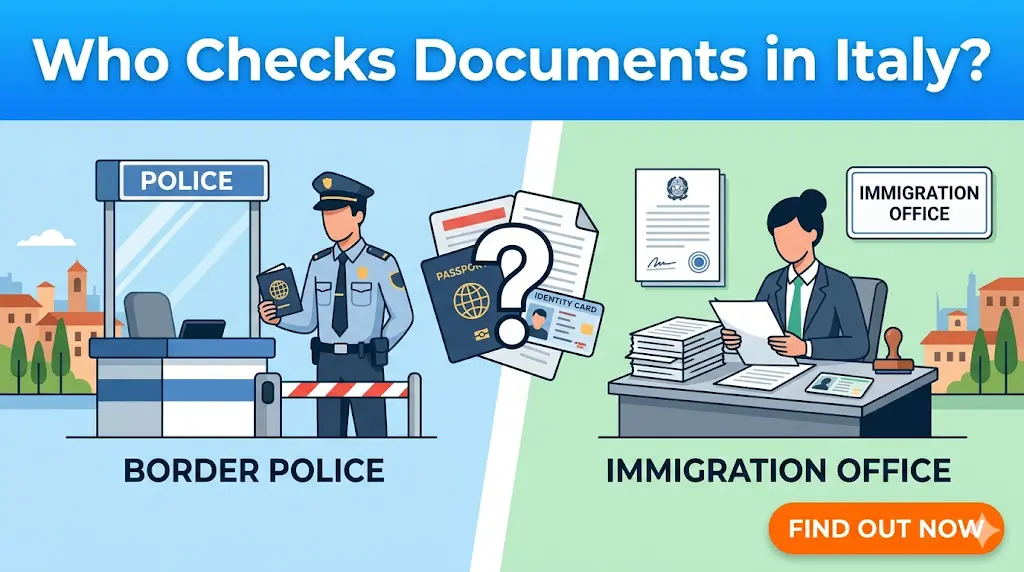
When you land at an international Italian airport like Rome-Fiumicino or Milan-Malpensa, the very first Italian authority you interact with is the Polizia di Frontiera (Border Police). These are the armed, uniformed officers sitting inside the glass booths at passport control. Their primary objective is immediate national security and border integrity. They do not process your long-term integration paperwork; their sole focus is determining if you possess the immediate, legal right to step onto Italian soil on that specific day.
The border police will scan your physical passport and inspect your visa sticker. They cross-reference your identity with the Schengen Information System (SIS) to ensure you have not previously overstayed a European visa, committed a crime in a neighboring country, or triggered an international alert. This is a rapid, high-pressure assessment. If you are entering on a short-term tourist visa, they will meticulously count the stamps in your passport to ensure you have not violated the strict 90/180-day rule. Understanding this distinction is a fundamental part of mastering the Schengen Visa Requirements Italy.
Proving Your Financial and Accommodation Safety
The single biggest misconception expats hold is assuming that possessing a valid Italian visa guarantees automatic entry into the country. It absolutely does not. The Polizia di Frontiera retains the ultimate, discretionary authority to deny your entry at the border if they believe your circumstances have changed or if you cannot prove the intent of your trip.
Even with a perfectly valid visa, a border guard can ask you to present a return flight itinerary (if you are on a short-stay visa), proof of immediate financial subsistence, and the exact address where you will be sleeping that night. Expats frequently make the catastrophic mistake of packing their hotel reservations or their initial Signing an Italian Rental Contract paperwork in their checked luggage. You must keep all your immediate travel, financial, and housing documents physically on your person in your carry-on bag. If you cannot produce these documents at the glass booth, the border police can detain you in a holding area until they verify your story, or worse, put you on the next flight back home.
The Deep Dive at the Ufficio Immigrazione
Reporting Your Presence in the First Eight Days
Once the Polizia di Frontiera stamps your passport and allows you through the physical gates, their job is entirely finished. From that moment forward, your legal presence in the country is managed by the Ufficio Immigrazione (Immigration Office). This department is a specialized branch of the Questura (the provincial police headquarters).
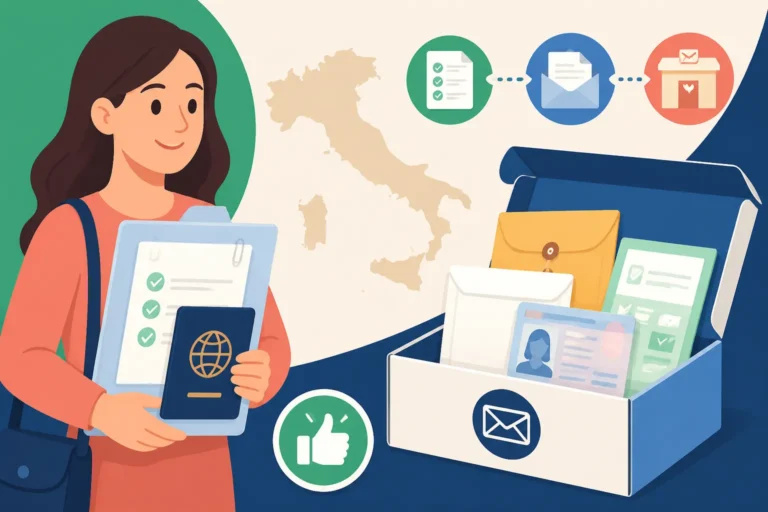
The clock starts ticking the second you clear customs. Under Italian law, any non-EU citizen intending to stay longer than 90 days must legally declare their presence to the Ufficio Immigrazione within eight days of arrival. You initiate this process not by walking into the police station, but by going to a designated Poste Italiane (post office) and submitting a massive yellow envelope called the kit postale. This triggers your formal application for a Permesso di Soggiorno (residence permit). Transitioning from the fast-paced airport environment to the slow, analog reality of the local provincial police is a jarring cultural shock that we explore deeply in Navigating Italian Bureaucracy Comune and Prefettura.
The Questura Appointment and Fingerprinting
Submitting the postal kit secures you an official appointment date at the local Questura. Unlike the two-minute interaction you had with the border police, the Ufficio Immigrazione conducts a massive, granular deep dive into your life. You will likely wait months for this appointment, stand in line outside the police station at dawn, and face a bureaucratic gauntlet.
The immigration officers are tasked with verifying the exact, underlying reason for your stay in Italy. If you are there for work, they will demand to see your finalized Types of Italian Employment Contracts Contratti di Lavoro. If you are a student, they will verify your university enrollment and attendance records. They will take your ten-digit fingerprints and integrate your biometric data into the national database. The Ufficio Immigrazione is not just checking if your documents are authentic; they are verifying that you are actively fulfilling the specific conditions of the visa category you applied for. This intense level of scrutiny is completely bypassed by the airport police, but it will define your life in Italy, especially when you are eventually forced into Renewing Your Italian Permesso di Soggiorno every year.
Navigating the Overlap of Responsibilities
Document Translations and Private Health Insurance
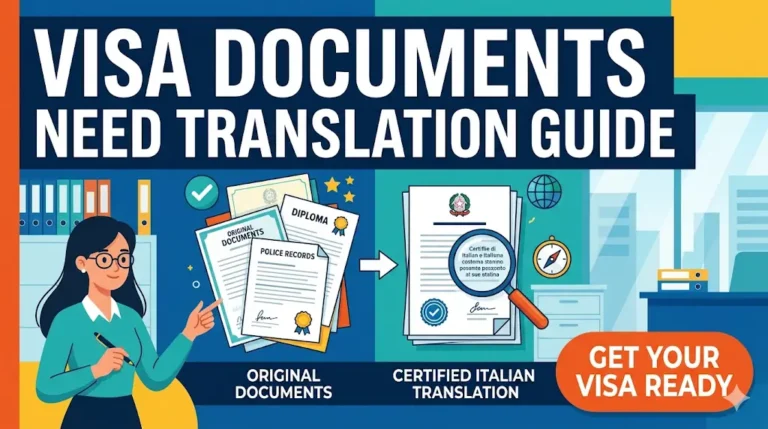
The most critical difference between the border police and the local immigration office lies in their strict formatting rules. The Polizia di Frontiera at the airport might accept a quick glance at an English hotel booking on your smartphone. The Ufficio Immigrazione, however, operates under rigid Italian administrative law. They will absolutely reject any foreign legal document—such as a birth certificate, marriage license, or corporate financial affidavit—unless it is accompanied by a certified, sworn Italian translation.
Getting your vital records and legal documents translated is a massive hurdle, which is why veteran expats rely so heavily on RushTranslate. By submitting your foreign documents to RushTranslate, you guarantee that the immigration officers receive certified, legally accurate Italian versions that comply with the strict standards of the Questura. An immigration clerk will instantly reject your entire residence permit file if an English document is submitted without a sworn translation, sending you to the back of a six-month waiting list. Utilizing RushTranslate prevents this disastrous administrative delay. Having your pristine RushTranslate files properly organized is the most effective way to survive the Ufficio Immigrazione and successfully move forward with Checking Your Italian Tax Code Codice Fiscale Status.
Similarly, healthcare requirements overlap both entities but with different levels of intensity. The border police may ask for basic emergency travel insurance before letting you into the country. The Ufficio Immigrazione, conversely, demands proof of comprehensive, long-term health coverage to issue your residence permit. Because you cannot finalize Registering with the Italian Public Healthcare System SSN until your residence permit is approved, you are caught in a massive coverage gap. To bridge this, expats consistently use Cigna Global. Using Cigna Global provides a globally recognized policy that satisfies both the quick check by the border police and the strict bureaucrats at the immigration office. Presenting a Cigna Global certificate proves you are not a burden on the state. Securing Cigna Global ensures your visa status is protected and your finances are shielded from unexpected medical emergencies, an essential strategy covered in Healthcare in Italy An Expats Guide.
Digital E Visas and Future Border Automation
The divide between the airport and the local police station is becoming even wider due to incoming technology. The Polizia di Frontiera will increasingly rely on biometric e-gates to scan the new cryptographically signed PDF e-visas and QR codes. This will drastically speed up your interaction at the airport, a shift deeply detailed in Electronic submission of Italian visa application available.
However, despite these futuristic airport advancements, the Ufficio Immigrazione at the local Questura will likely remain tied to physical paper dossiers, massive postal kits, and in-person fingerprinting for the foreseeable future. Understanding that you must prepare digital files for your initial entry while maintaining perfectly printed, physical Understanding the Decreto Flussi in Italy paperwork for your local police appointments is the true key to conquering Italian immigration.
| Department | Location | Primary Goal | Key Documents Checked | Interaction Style |
| Polizia di Frontiera | International Airports / Borders | Immediate national security and entry rights. | Passport, Visa Sticker, Return Flight, Emergency Funds. | Rapid, high-pressure, strict but brief. |
| Ufficio Immigrazione | Local Provincial Questura | Long-term integration, issuing residence permits. | Kit Postale, Certified Translations, Leases, Work Contracts. | Slow, highly bureaucratic, requires deep document scrutiny. |
References
Primary sources (official)
- Polizia di Stato – Polizia di Frontiera (Border Police Operations) – https://www.poliziadistato.it/articolo/polizia-di-frontiera
- Polizia di Stato – Ufficio Immigrazione (Immigration Office Information) – https://www.poliziadistato.it/articolo/stranieri
- Portale Immigrazione – Automazione Permessi/Carte di Soggiorno – https://www.portaleimmigrazione.it/
Other helpful sources
- Studio Legale Metta – Entering Italy: Border Police vs Questura – https://www.studiolegalemetta.com/
- The Local Italy – What to expect at passport control and the Questura – https://www.thelocal.it/
Disclaimer
The information provided in this article is for educational and informational purposes only and does not constitute official legal or immigration advice. The Polizia di Frontiera retains absolute discretion to deny entry to any foreign national at the Italian border, regardless of the possession of a valid visa, if the traveler cannot demonstrate the purpose and conditions of their stay. The procedures for obtaining a Permesso di Soggiorno through the Ufficio Immigrazione and the Questura are subject to strict regional variations and ongoing updates by the Italian Ministry of the Interior. Always consult a registered Italian immigration attorney (avvocato immigrazionista) to verify your specific documentation requirements.