How to Set Up Electricity in a New Italian Apartment
Moving into your dream home in Italy often comes with an unexpected reality check: standing in an empty, dark apartment with no clue how to turn the lights on. I remember my first night in Florence, huddled under a blanket because I didn't realize the electricity wouldn't just be there when I arrived. This guide covers everything you need to know about setting up your power supply without the typical bureaucratic headache.
Disclosure: This post may contain affiliate links. We may earn a commission at no extra cost to you if you make a purchase through these links. Read full disclosure.
Understanding the Difference Between Voltura and Subentro
The first thing you will encounter when calling an energy company is a choice between two very specific Italian administrative terms: voltura and subentro. Getting this wrong can lead to weeks of delays, so it is vital to understand which one applies to your new living situation.
A voltura (takeover) occurs when the electricity in the apartment is currently active and the previous tenant is still living there or has just moved out. In this scenario, the power is never cut off. You are simply changing the name on the contract from the previous occupant to yourself. This is the smoothest possible transition. It usually takes about five to seven working days to process. If you found your apartment through a platform like Spotahome, the listing often specifies if utilities are already active, which can save you a significant amount of stress during the move-in week.
A subentro (reactivation), on the other hand, is required when the meter is physically present in the apartment but the service has been deactivated. This typically happens if the apartment has been empty for several months and the previous tenant or landlord closed the contract to avoid paying fixed monthly fees. Reactivating a meter is a bit more formal and can take up to ten working days. It involves a "request for activation" and, in some rare cases, a technician might need to visit the property to inspect the meter, though most modern Italian meters are managed remotely.
Locating Your POD Code and the Meter
Before you can even think about calling Enel, Eni, or any other provider, you need the "Golden Ticket" of Italian utilities: the POD code. POD stands for Point of Delivery. It is an alphanumeric code starting with "IT" followed by 14 digits that uniquely identifies your specific meter.
You will usually find the POD code on a previous tenant’s bill. If you don’t have access to an old bill, you can often find it by pressing the button on the electronic meter (contatore) until the code appears on the small LCD screen. Most meters in modern Italian apartments are located either inside the flat (usually near the front door), in a common hallway, or in a dedicated "meter room" in the basement of the building.
If you are struggling to find the meter or the code, don't hesitate to ask your landlord or the portiere (doorman). Dealing with these small technicalities is a standard part of The Ultimate Guide to Renting and Buying a Home in Italy. Once you have this code, you are halfway there. Without it, the energy company won’t be able to find your address in their national database, no matter how accurately you describe the location of your balcony.
Essential Documents for the Application
Italian bureaucracy loves paperwork, and setting up electricity is no exception. You cannot simply call and give a name; you must provide a specific set of documents that prove who you are and that you have a legal right to occupy the property.
First and foremost, you need your Italian tax code. If you haven't secured this yet, you should prioritize How to Get a Codice Fiscale in Italy (and Why You Need One) immediately, as nothing—literally nothing—happens in Italy without it. You will also need a valid ID (a passport for non-EU citizens or a national ID card for EU citizens).
Furthermore, you will be asked for a copy of your rental agreement. The energy provider needs to see that the contract has been officially registered with the Agenzia delle Entrate. This is why it is so important to How to Understand an Italian Rental Contract Clause by Clause before you sign, ensuring that everything is "in regola." If the contract isn't registered, you might find it impossible to get the lights turned on, as the provider is legally barred from activating services in properties that appear to be "abusive" or unregistered rentals.
| Document Required | Purpose | Tip |
|---|---|---|
| Codice Fiscale | Tax Identification | Keep a digital copy on your phone at all times. |
| Valid ID / Passport | Identity Verification | Ensure it is not within 6 months of expiry. |
| POD Code | Technical Identification | Found on the meter or old bills. |
| Registered Lease | Proof of Residency | Must be the version with the stamp from the Tax Office. |
| IBAN | Payment | Using a local bank simplifies the automatic billing. |
Choosing Between the Free Market and the Protected Market
As of 2024 and 2025, the Italian energy landscape has undergone a massive shift. Historically, many residents were part of the Mercato Tutelato (Protected Market), where prices were set by the state. However, this has largely transitioned into the Mercato Libero (Free Market).
In the Free Market, you can choose from dozens of providers like Enel Energia, Eni Plenitude, Iren, or Sorgenia. Each offers different "packages." Some are fixed-rate, meaning you pay the same price per kilowatt-hour for a year or two, regardless of market fluctuations. Others are variable, tied to the national energy index (PUN). For most expats, a fixed-rate contract provides peace of mind, especially if you are still figuring out the Cost of Living in Italy 2026: Budgeting for Expats and don't want surprises during a cold winter.
When you are comparing plans, look closely at the "fixed marketing costs" (PCV). These are monthly fees you pay just for being a customer, regardless of how much electricity you use. If you have a small studio and use very little power, a low PCV is more important than a low price per kWh. To help manage your home environment more efficiently, you might want to look on Amazon Italy for smart plugs or energy-monitoring devices that help you track consumption in real-time.
Resident vs Non-Resident Tariffs
This is a nuance that catches almost every foreigner off guard. In Italy, electricity rates are tiered based on whether the property is your "Primary Residence" (residente) or a "Second Home" (non-residente).
When you first move in, if you haven't yet gone to the Comune to register your residency, the energy company will likely classify you as a non-resident. This results in significantly higher fixed costs and taxes on your bill. Once you have completed your residency registration, you must notify your energy provider to switch your status to "Resident." This small administrative step can save you hundreds of euros a year.
It is helpful to read up on Navigating Italian Utilities: Electricity, Water, Gas, Internet to understand how these different statuses affect all your household bills. While you wait for your residency and electricity to be finalized, you might find yourself needing a reliable data connection to stay in touch with family or translate documents. In these transition periods, an eSIM from Airalo is a lifesaver, allowing you to bypass the need for a physical SIM card before you have your permanent Italian phone number sorted out.
Understanding Power Limits (The 3kW Standard)
In many countries, you can run the oven, the dishwasher, and the washing machine simultaneously without a second thought. In Italy, doing this will likely cause your power to "trip" (scattare).
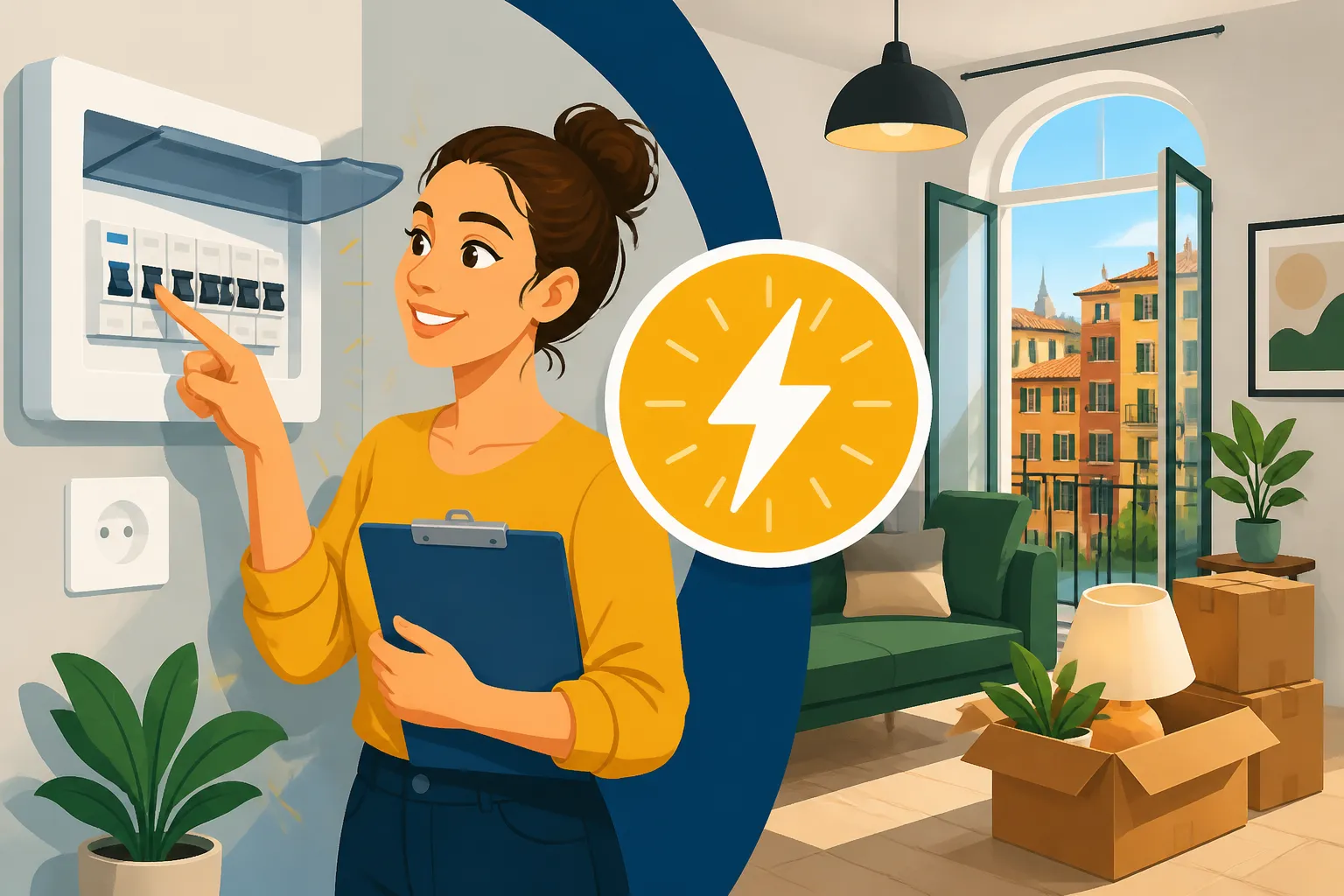
The standard residential power limit in Italy is 3.3 kW. If you exceed this, the meter will automatically shut off the power to the entire apartment. You will then have to find the meter—often in the dark—and flip the switch back up. If you are a heavy user of electronics or have a large family, you can request an upgrade to 4.5 kW or 6 kW. Note that increasing your power limit will also increase your fixed monthly costs on the bill.
If you are unsure whether your lifestyle requires more power, I suggest sticking with the 3 kW limit for the first month. Learn to time your chores; don't run the hairdryer while the laundry is in the final spin cycle. If you find it too restrictive, a simple phone call to your provider can upgrade your limit remotely within 24 to 48 hours.
Reading Your First Bill and the Canone RAI
When your first bill arrives, don't panic at the total. Italian electricity bills are usually issued every two months (bimestrale). The first bill often includes one-time activation fees or a security deposit if you didn't set up a direct debit (domiciliazione bancaria).
One specific line item that confuses many is the "Canone RAI." This is the national television license fee. Since 2016, the Italian government has included this fee directly in the electricity bill to reduce tax evasion. It is a small monthly amount (usually around 7-9 euros) charged from January to October. If you do not own a television, you can file a declaration of non-possession with the Agenzia delle Entrate, but for most of us, it’s just another part of the Italian "living experience."
Because of the complexity of these bills, it's a good idea to How to Understand an Italian Rental Contract Clause by Clause and check if your landlord has already included some of these costs in your monthly rent, though this is rare for long-term 4+4 contracts. Generally, the tenant is responsible for setting up their own account and paying the provider directly.
Practical Steps to Activation
To wrap this up, let's look at the actual workflow you should follow the day you get your keys.
First, take a photo of the meter reading. Even if you are doing a voltura, you want proof of the "start" number so you aren't charged for the previous tenant’s final lasagna-baking marathon. Second, call your chosen provider or go to their local "Spazio" (physical storefront). While many things in Italy can be done online, going in person to a service center can sometimes cut through the language barrier if your Italian is still a work in progress.
Third, set up your online portal immediately. Most providers have excellent apps where you can track your usage and pay bills with a credit card. While you are getting your home tech set up, you can order essentials like power strips or energy-efficient lightbulbs from Amazon Italy to ensure your new space is both functional and cost-effective from day one.
Lastly, be patient. The lights will come on, the coffee will brew, and eventually, the bureaucracy will become a distant memory. Setting up a home in a new country is a marathon, not a sprint. Validation of your frustration is key—it is complicated, it is annoying, but once you’re sitting in your lit-up living room with a glass of wine, it will all feel worth it.
Disclaimer
This guide is for informational purposes only and is based on personal experience and current regulations as of 2026. Utility laws and market conditions in Italy can change frequently. Always verify the latest requirements with your specific energy provider or a legal professional before signing any contracts.