How to Buy a Home in an Italian Village (1-Euro Homes Reality Check)
Many people dream of buying a 1-Euro home in a sun-drenched Italian village, but they often underestimate the bureaucratic mountain and the renovation costs involved. I remember standing in a dusty piazza in Sicily, clutching a set of rusty keys and wondering if my romantic vision had blinded me to the crumbling reality of the walls. This guide provides a reality check on the 1-Euro home scheme and details exactly how to navigate the purchase process safely.
Disclosure: This post may contain affiliate links. We may earn a commission at no extra cost to you if you make a purchase through these links. Read full disclosure.
The Reality Behind the One Euro Price Tag
The headlines are always intoxicating: "Buy a house in Italy for the price of an espresso!" However, the one-euro figure is merely a symbolic entry point into a complex legal and financial obligation. Most of these houses are what we call "ruderi," or ruins, often abandoned for decades after younger generations moved to Northern Italy or abroad. You aren't just buying a house; you are signing a contract with a municipality to breathe life back into a dying community.
Hidden Costs and Mandatory Renovations
When you see a one-euro price tag, your first thought should be about the structural integrity of the roof. In most cases, these properties require a full overhaul, from plumbing and electrical systems to seismic retrofitting. Municipalities typically require you to submit a renovation plan within six to twelve months of purchase and complete the works within three years. If you fail to meet these deadlines, you could face heavy fines or even lose the property and your initial deposit.
Furthermore, you must account for the secondary costs that the "one euro" does not cover. You will still need to pay for the Buying Costs in Italy: Notaio, Agency Fees, and Taxes which can easily add up to several thousand euros. Before you even set foot in the village, you should consider your connectivity. Many of these remote areas have spotty service, so I highly recommend downloading an eSIM from Airalo before you arrive to ensure you can use GPS and translation apps while scouting these tucked-out-of-the-way hamlets.
The Commitment to Local Residency
Some towns offer these homes specifically to people who intend to move there full-time, while others are more flexible, allowing the properties to become holiday homes or short-term rentals. However, the primary goal of the "Case a 1 Euro" project is repopulation. If you aren't prepared to spend significant time in the village, you might find the local administration less than helpful.
Social integration is the secret ingredient to a successful renovation. In my experience, the locals are incredibly welcoming, but they want to see that you are invested in the town's future. Buying your supplies from the local hardware store rather than a big-box retailer in the city goes a long way. For those initial months of scouting, using a service like Spotahome to find a base in a nearby larger town can give you the flexibility you need to visit the village multiple times before committing.
Timeframes and Deadlines
The Italian bureaucracy moves at its own pace—usually slow, until a deadline hits, then it becomes frantic. You will need to move quickly once your application is accepted. This involves securing a How to Get a Codice Fiscale in Italy (and Why You Need One) immediately, as nothing happens without this tax code.
You should also be prepared for the "surety bond." Most municipalities require a deposit, often between 2,000 and 5,000 euros, which acts as a guarantee that you will fulfill the renovation. This money is returned once the work is finished, but you must budget for it as an upfront cash outflow. During this period, you will also need to figure out How to Open a Bank Account in Italy: Requirements and Tips to handle the local payments for permits and contractors.
Navigating the Administrative Maze
Buying a home in Italy is a formal process involving a "Notaio" (Notary), who acts as an impartial official for the state. Unlike in the US or UK, where lawyers handle the back-and-forth, the Notary is the one who ensures the title is clear and the taxes are paid. In a 1-Euro scheme, the Notary’s role is even more critical because many of these homes have "fragmented ownership," where twenty different cousins might own a tiny percentage of the house.
Finding Available Properties and Towns
Not every town in Italy is giving away houses. Regions like Sicily, Abruzzo, and Calabria are the most active. You need to monitor official municipal websites (Comune) or dedicated portals that aggregate these listings. Do not trust everything you see on social media; often, by the time a house goes viral on TikTok, the application window has already closed.
I always suggest visiting the town in person before applying. A house might look charming in a photo, but you won't see the dampness in the walls or the fact that the only road to the property is too narrow for a construction truck. While you are on the ground, use Amazon Italy to order any basic tools or measuring tapes you might need; their delivery network is surprisingly efficient even in more remote areas, and it saves you from hunting for a shop in a town you don't know.
Submitting the Application and Deposit
Once you find a property, you submit a formal expression of interest to the Comune. This usually involves a dossier including your ID, proof of funds for the renovation, and sometimes a preliminary idea of what you want to do with the space. If multiple people apply for the same house, the town uses a ranking system based on criteria like how quickly you will finish the work or if you plan to move your family there.
If you are selected, you will be asked to sign the preliminary contract and pay the surety bond. This is where the "dream" starts to feel like a full-time job. You will be communicating with local architects and the technical office of the Comune (Ufficio Tecnico). Be prepared for a lot of paperwork and ensure you understand the Italian Heritage Property Restrictions in Italy for Owners if the house is in a historical center, as this can severely limit the types of windows or roof tiles you are allowed to use.
Finalizing the Sale with the Notary
The "Rogito" is the final deed of sale. This happens in the Notary’s office, and if you don't speak fluent Italian, you are legally required to have a certified translator present. The Notary will read the entire contract aloud to ensure everyone understands the obligations. You will pay the 1-Euro purchase price, but you will also pay the Notary’s fee and the land registry taxes at this moment.
You should ask for a detailed breakdown of How Much Are Notary Fees When Buying Property in Italy? before the meeting so there are no surprises. It is a formal, slightly stiff affair, but once the signatures are down and the stamp is applied, you are officially a homeowner in Italy. It’s an emotional moment, but keep your head clear; the real work is just about to begin.
Practical Challenges of Village Living
Living in an Italian "borgo" is not like living in a city. The rhythms are dictated by the seasons and the midday "pausa." If you show up at the local municipality office at 2:00 PM expecting to file a permit, you will find the doors locked and the streets empty. Empathizing with this local pace is the only way to survive without losing your mind.
Dealing with Local Bureaucracy and Services
The local technical office will be your best friend or your worst enemy. You will need permits for everything: "SCIA" or "CILA" are the acronyms you’ll soon know by heart. These are the notifications of work that your architect must file. One major hurdle for many expats is the waste system. You will need to learn How to Understand Condominio Fees (Spese Condominiali) in Italy if your property shares any common walls or courtyards, and registering for the local "TARI" (trash tax) is mandatory.
Getting utilities connected to a house that hasn't been inhabited since the 1970s is an adventure in itself. You might find that the water pipes are made of lead or that the electrical grid in your alleyway can't handle a modern induction stove. You will need to find How to Find Reliable Tradespeople for Home Repairs in Italy who are willing to work in remote areas. Local word-of-mouth is usually better than any online directory.
Modern Amenities and Connectivity
Do not assume that every village has high-speed fiber internet. If you are a digital nomad, this is a dealbreaker. Before buying, check the coverage maps. While Airalo can get you through the first few weeks with data, you’ll eventually need a fixed line. In some mountain villages, EOLO or satellite internet are the only viable options.
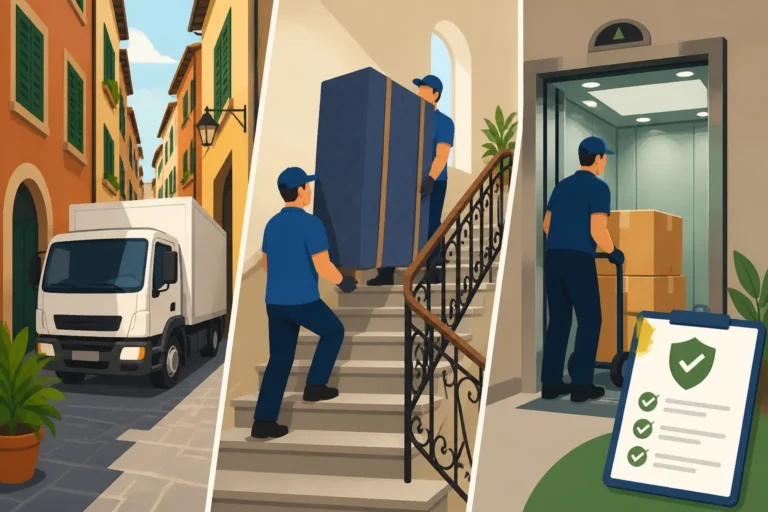
Daily logistics like grocery shopping also change. You won’t find a giant supermarket next door. You’ll be buying your bread from the "panificio," your meat from the "macelleria," and your vegetables from the "fruttivendolo." It takes longer, but the quality is incomparable. If you are moving your entire life over, start looking into How to Choose a Moving Company in Italy (What to Check) early, as getting a large shipping container into a medieval village with 2-meter wide streets is a logistical puzzle that requires a specialized crew.
Social Integration and the Language Barrier
If you don't speak Italian, your renovation costs will likely be higher because you won't be able to negotiate directly with contractors. While many younger Italians speak English, the "geometra" (surveyor) or the plumber in a small Sicilian village almost certainly will not. Learning the basics of "cantiere" (construction site) Italian is essential.
Integration isn't just about language; it’s about presence. Go to the bar in the morning for your "caffè." Sit in the piazza. Say "buongiorno" to everyone. These small gestures build the social capital you will need when you inevitably have a dispute with a neighbor over a shared wall or a leaking pipe. The community wants to see that you are part of the village fabric, not just an investor looking for a cheap flip.
Estimated Costs Comparison Table
To give you a clearer picture, I have put together a comparison of what you might expect to pay for a 1-Euro home versus a "ready-to-live" cheap village home.
| Expense Category | 1-Euro Home Estimate | Cheap Traditional Home (25k-40k) |
|---|---|---|
| Purchase Price | €1 | €30,000 |
| Notary & Legal Fees | €2,500 – €4,000 | €3,000 – €5,000 |
| Purchase Taxes | €1,000 – €2,000 | €2,000 – €4,000 |
| Surety Bond (Refundable) | €2,000 – €5,000 | €0 |
| Renovation Costs | €50,000 – €150,000 | €5,000 – €20,000 |
| Architect/Surveyor Fees | €5,000 – €10,000 | €1,000 – €3,000 |
| Total Initial Investment | €60,501 – €171,001 | €41,000 – €62,000 |
Considering Traditional Purchases in Rural Areas
After looking at the table above, many people realize that a 1-Euro home might actually be more expensive and significantly more stressful than buying a "normal" house for 30,000 euros. In many Italian villages, you can find habitable properties—houses that just need a coat of paint and some new furniture—for the price of a mid-range car.
The advantage of a traditional purchase is that you aren't under the ticking clock of a municipal renovation deadline. You can take your time, doing one room a year as your budget allows. You also have a wider choice of locations, as you aren't limited to the specific towns participating in the 1-Euro scheme. Whether you go the 1-Euro route or the traditional route, the goal is the same: finding a piece of the "dolce vita" in a place that values history and community over the frantic pace of modern life. It’s a challenge, yes, but waking up to the sound of church bells and the smell of fresh jasmine in your own Italian courtyard makes every bureaucratic headache worth it.
Disclaimer
This guide is for informational purposes only and does not constitute legal, financial, or real estate advice. Italian laws and municipal regulations regarding property and taxes are subject to change, and you should always consult with a qualified professional before making any real estate investment in Italy.