How to Apostille US Documents for an Italian Visa
Navigating the world of international document legalisation is a special kind of headache that most Americans never encounter until they decide to move to the Bel Paese. I remember standing in a local government office in Rome, documents in hand, only to be told they were "worthless" because they lacked a specific gold seal from the US. This guide solves the confusion by walking you through every step of getting your US documents correctly apostilled for your Italian visa application.
Disclosure: This post may contain affiliate links. We may earn a commission at no extra cost to you if you make a purchase through these links. Read full disclosure.
Understanding the Apostille and Why Italy Requires It
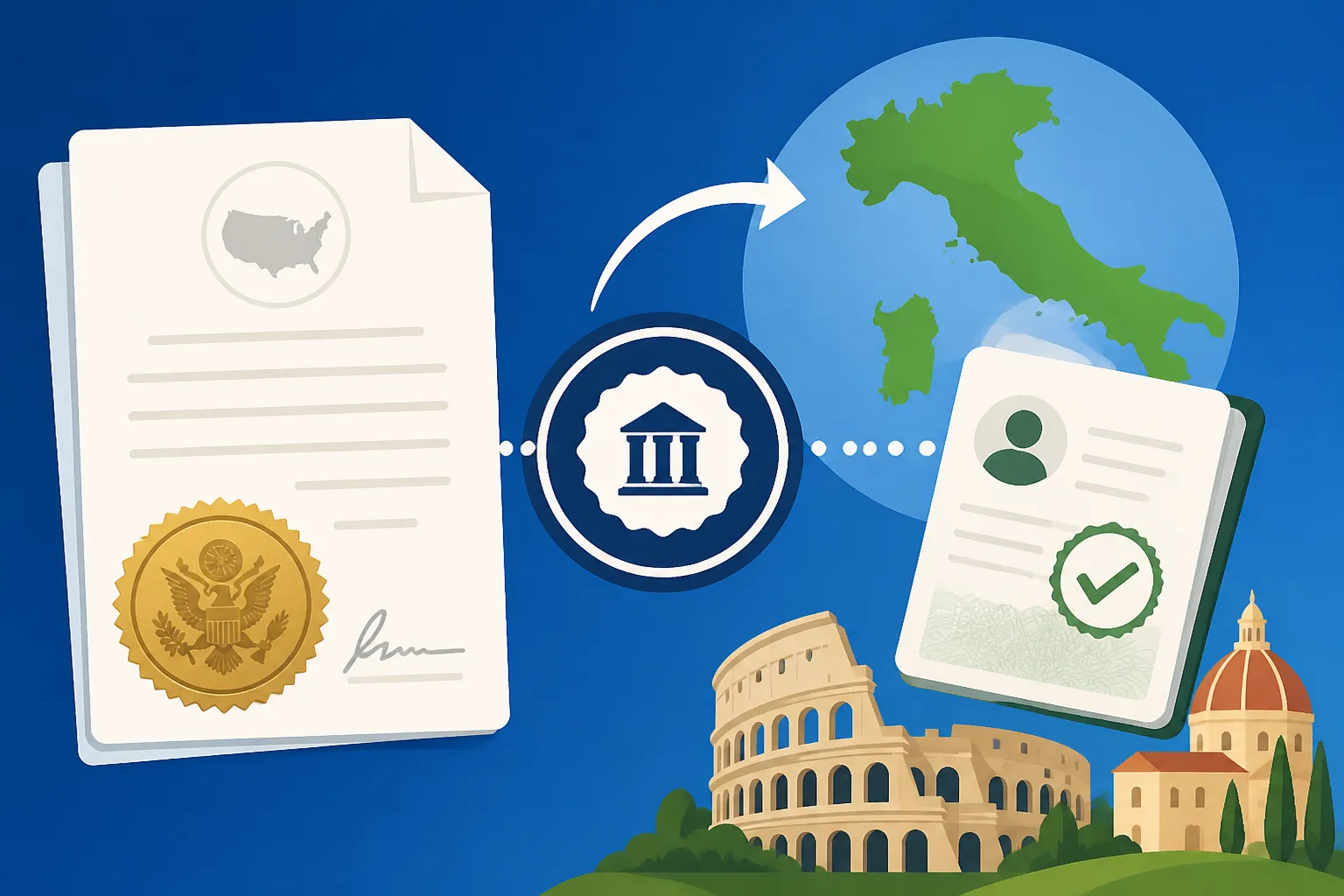
Before you dive into the paperwork, you need to understand what an Apostille actually is. In the simplest terms, an Apostille is a certificate issued by a government authority that authenticates the seal and signature of a public official on a document. Since both the United States and Italy are members of the 1961 Hague Convention, they have agreed to recognise this standardized form of legalisation.
When I first started my residency process, I thought a standard notarized copy was enough. It wasn't. In Italy, a notary’s signature is just the first step for certain private documents; for public records like birth certificates, the state or federal government must "vouch" for the official who signed that record. Without this, the Italian Consulate or the Questura will not accept your paperwork as valid. This is a foundational part of the Ultimate Guide to Visas and Immigration in Italy.
It is also important to note that an Apostille does not "verify" the information within the document; it only verifies that the person who signed it had the legal authority to do so. This distinction matters because if your birth certificate was signed by a local clerk who isn't on the Secretary of State’s "approved" list, your Apostille application will be rejected. You must ensure you are working with long-form, certified copies issued by the correct registrar.
The Difference Between Notarization and Apostille
Many expats confuse these two terms. Notarization is a local act where a Notary Public verifies your identity and watches you sign a document. An Apostille is a higher-level government authentication. For documents like birth, marriage, or death certificates, you do not need a notary. You need a certified copy from the Department of Vital Records, which is then sent to the Secretary of State for the Apostille.
For private documents, such as a power of attorney or a diploma from a private university, you must first have the document notarized. Only then can the Secretary of State apostille the notary's signature. If you are preparing for a move, you might also be looking into Health Insurance for Italian Visa Types: A Comparison to ensure your other requirements are met.
Common Documents Requiring an Apostille for Italy
If you are applying for an elective residence visa, a work visa, or citizenship Jure Sanguinis, you will likely need several documents apostilled. The most common include:
- Birth Certificates
- Marriage Certificates
- Divorce Decrees (often required to be "final" and "certified")
- FBI Criminal Background Checks
- University Transcripts and Diplomas
When dealing with education records, the process is slightly different as the school registrar often needs to notarize the records before the state will apostille them. This is a crucial step when you are Studying in Italy: A Guide for International Students.
Step-by-Step Guide to Apostilling US State Documents
State-level documents, such as birth and marriage certificates, are handled by the Secretary of State in the state where the event occurred. This means if you were born in California but married in New York, you have two separate processes to manage. I learned the hard way that you cannot "cross-authenticate" between states.
First, you must obtain a new, "long-form" certified copy of your record. Many states have updated their seals and signatures, and Italian consulates often reject certificates that are more than six months or a year old. Once you have the fresh copy, you will mail it (or hand-deliver it) to the Secretary of State’s office with a specific cover letter and the required fee, which usually ranges from $5 to $20 per document.
Navigating the Secretary of State Office
Each state has its own quirks. For example, in New York, you often have to get the document authenticated by the County Clerk before the Secretary of State will touch it. This "triple-authentication" is a nightmare if you aren't prepared for it. Always check the specific "Apostille/Authentication" page on your state's Secretary of State website for the latest mailing instructions and processing times.
While waiting for your state documents, it is a great time to organize your other visa requirements, such as your health coverage. Many expats choose a policy from Cigna Global during this transition phase to meet the consulate's strict requirements for "unlimited" or high-coverage medical insurance.
Timelines and Realistic Expectations
State-level Apostilles can take anywhere from a few days to several weeks. If you are in a rush, some states offer "walk-in" services where you can get the document apostilled while you wait. However, in the post-2020 world, many offices have moved to a mail-in-only system. If you are abroad and trying to manage this, you might need to hire a specialized service to handle the "boots on the ground" logistics for you.
| Document Type | Issuing Authority | Authentication Level | Typical Processing Time |
|---|---|---|---|
| Birth/Marriage Certificate | State Vital Records | Secretary of State | 1–3 Weeks |
| FBI Background Check | FBI (CJIS) | US Dept. of State (Federal) | 4–8 Weeks |
| University Diploma | School Registrar | Notary + Sec. of State | 2–4 Weeks |
| Power of Attorney | Private Individual | Notary + Sec. of State | 1 Week |
Federal Documents: The FBI Background Check and Beyond
If you are applying for a long-stay visa, Italy will almost certainly require a background check. For US citizens or residents, this means an FBI Identity History Summary. This is a federal document, and therefore, it cannot be apostilled by a state Secretary of State. It must go to the US Department of State’s Office of Authentications in Washington, D.C.
This part of the process is notoriously slow. When I applied, the wait time was nearly two months. You first need to get your fingerprints taken (electronically via a "Channeler" is fastest) and receive your FBI report. Once you have the report—either a physical copy or a PDF—you must send it to D.C. with Form DS-4194. This federal Apostille looks different from state ones; it is a large, leaden-colored sheet with a federal seal. This is a vital component when you are learning How to Obtain an Italian Work Visa.
Dealing with the US Department of State
The Office of Authentications in D.C. does not have a "walk-in" counter for the public currently. Everything must be mailed. I highly recommend using a trackable mailing service like USPS Priority Mail or FedEx, and including a pre-paid, trackable return envelope. If your documents get lost in the federal system, you are essentially starting from zero.
If you find this federal process overwhelming, you are not alone. Many people use third-party "expeditors" who physically drop off documents in D.C. to shave a few weeks off the timeline. While expensive, it can save your visa appointment if you are running behind. Once you have these documents, you are one step closer to Getting Your Residence Permit Kit in Italy: Step-by-Step.
Consistency is Key
The name on your FBI report must exactly match the name on your passport and your birth certificate. If you have a middle name on one and only an initial on the other, the Italian consulate might flag it. Bureaucracy in Italy loves consistency. If there is a discrepancy, you may need to provide a "One and the Same" affidavit, which itself must be notarized and apostilled.
Translation Requirements and Final Checklist
An Apostille makes the document legal, but it doesn't make it readable for the Italian authorities. Once you have the Apostille attached to your US document, the entire thing—including the Apostille itself—must be translated into Italian.
Italy is very picky about translations. Most consulates require "Certified Translations," and some even require "Sworn Translations" (traduzione giurata) performed by a translator registered with an Italian court. For the initial visa application in the US, many consulates accept translations from professional agencies like RushTranslate or Translayte, provided they include a certificate of accuracy. These agencies are familiar with the specific terminology required by the Italian Ministry of Foreign Affairs. For more on this, see Apostilles and Sworn Translations for Italian Visas.
Sworn Translations vs. Professional Services
If you are already in Italy and need to translate documents for your residency permit or to register with the local town hall, a standard translation won't cut it. You will likely need to find a local "traduttore giurato" who will take the documents to the local court (Tribunale) to have them officially stamped. This is a necessary step when Registering Residency in Italy (Residenza and Anagrafe).
Using a service like Translayte can be a lifesaver when you are still in the US, as they can often provide digital copies that you can review for any typos in names or dates before the hard copies are mailed. Always double-check every single letter. I once saw a visa denied because "Street" was translated as "Strada" in one place and left as "Street" in another.
Putting It All Together for the Consulate
Your final packet for each document should look like this:
- The original US document (e.g., Birth Certificate).
- The Apostille page (firmly attached by the issuing office—do not remove the staple!).
- The Italian translation of both the document and the Apostille.
Keep these items in the exact order requested by your specific consulate. Do not use paperclips or staples that aren't already there. Presenting a clean, organized folder goes a long way with the consular officers. This attention to detail is just as important when you are Finding and Using Pharmacies in Italy or dealing with any other local administrative task.
Finally, remember that the Apostille process is the "long pole in the tent" for your visa timeline. Start your FBI check and order your birth certificates at least four months before your intended move date. By the time you are Registering With Your Local ASL in Italy: A Practical Guide, the stress of the Apostille will be a distant memory, but getting it right now is what makes your future life in Italy possible.
Disclaimer
This guide is for informational purposes only and reflects the personal experience of an expat who has navigated the Italian immigration system. Requirements for Apostilles and translations can change without notice and vary significantly between different Italian Consulates and local Comuni. Always verify the latest regulations with the official website of the Italian Ministry of Foreign Affairs or your specific consulate before submitting documents. We are not legal professionals or government officials.