Apostilles and Sworn Translations for Italian Visas
Navigating the labyrinth of Italian bureaucracy often feels like a full-time job where the rules change every time you reach the front of the line. I remember standing in a dusty office in Florence, clutching my birth certificate, only to be told my perfectly valid original wasn't "legal" because it lacked a specific stamp. This guide breaks down exactly how to secure apostilles and sworn translations so you can avoid the heartbreak of a rejected visa application.
Disclosure: This post may contain affiliate links. We may earn a commission at no extra cost to you if you make a purchase through these links. Read full disclosure.
Understanding the Apostille: The Golden Ticket for Italian Bureaucracy
The term "apostille" sounds like something out of a medieval history book, but for an expat, it is the single most important piece of paper you will ever track down. Essentially, an apostille is an international certification that authenticates the origin of a public document. Italy is a member of the Hague Convention, which means they won't accept a foreign birth certificate, marriage license, or criminal record check unless it has this specific, square-shaped stamp from your home country’s government. Without it, your document is just a piece of paper with no legal standing in the eyes of an Italian consulate.
What is an Apostille and Why Does Italy Demand It?
Think of the apostille as a bridge of trust between two governments. When you present a document from the United States, the UK, or Australia to an Italian official, they have no way of knowing if the signature of the local clerk is authentic. The apostille solves this by having a higher authority—usually the Secretary of State or the Ministry of Foreign Affairs—verify that the person who signed your document actually had the power to do so. It doesn't certify that the content of the document is true; it just certifies that the document is "real" in a legal sense.
For many of us, this is the first hurdle in the Italy relocation checklist: visa, housing, tax, health, etc.. I’ve seen people arrive in Italy with their original university diplomas thinking they are set, only to realize they have to mail them back across the ocean because the apostille was missing. Italy is particularly strict about this; unlike some countries that might accept a simple notarization, the Italian Questura and consulates are immovable on the requirement for a Hague apostille for almost all foreign public acts.
Which Documents Require an Apostille for Your Visa?
Generally, any document issued by a government body that you intend to use for your visa or residency application needs an apostille. This includes your birth certificate, marriage or divorce decrees, and most importantly for many visa types, your FBI or state police background check. If you are applying for a Student Visa Italy: Admission, Requirements, and Process, you will likely need an apostille on your high school or university transcripts.
It is also worth noting that documents have an "expiration date" in the eyes of Italian officials. For example, a criminal background check is usually only considered valid for six months from the date of issue. If you get your apostille too early, it might expire before your appointment at the consulate. Conversely, if you wait too long, the backlog at government offices might cause you to miss your window. I always recommend timing your background check and apostille requests about three to four months before your intended move date.
The Hague Convention: A Quick History for Expats
Before 1961, getting a document recognized abroad was a nightmare of "legalizations" where you had to go to multiple embassies and ministries. The Hague Apostille Convention simplified this to a single stamp. However, not every country is a member. If you are from a country that is not part of the convention, you will have to go through a much more grueling process involving the Italian Embassy in that specific country to "legalize" the document manually.
Fortunately for most Western expats, the process is standardized. Even so, the physical appearance of the apostille varies. Some are stickers, some are separate sheets of paper stapled to the original, and some are embossed stamps. In Italy, the official will look for the specific title "Apostille (Convention de la Haye du 5 octobre 1961)" at the top. If that heading isn't there, they won't even look at the rest of the document.
The Step-by-Step Guide to Getting Your Documents Apostilled
The process of getting an apostille is rarely centralized, which is where most of the frustration begins. You cannot simply go to a "federal apostille office" for everything. Instead, the authority that issued the document is the one that must apostille it. This means if you were born in California but married in New York, you are dealing with two different state governments. I once spent three weeks tracking down a specific county clerk in rural Pennsylvania just because my background check was processed through a local office there—save yourself the stress and start mapping out your document origins early.
Securing State-Level vs. Federal-Level Apostilles
In the United States, for example, birth, death, and marriage certificates are apostilled by the Secretary of State in the state where the event occurred. However, if you are submitting federal documents, such as an FBI background check, these must be apostilled by the U.S. Department of State in Washington, D.C. This is a critical distinction. Sending a state-issued birth certificate to D.C. will result in a rejection and a waste of weeks of time.
For those looking at How to Apostille US Documents for an Italian Visa, the current processing times in Washington D.C. can be upwards of 8 to 12 weeks. Many expats use private channelers to speed this up, but even then, the federal government moves at its own pace. State-level apostilles are usually much faster, with some states offering walk-in services where you can get your stamp in twenty minutes. Always check the specific Secretary of State website for the most current mailing instructions and fees.
Common Pitfalls: Notarization vs. Certification
A very common mistake is thinking that a notary public can provide an apostille. They cannot. A notary can only witness a signature. For an apostille, the document must be a "certified copy" issued by the vital records office. If you take a photocopy of your birth certificate to a notary and ask them to stamp it, and then send that to the Secretary of State, it will likely be rejected for Italian visa purposes. Italy generally requires the apostille to be attached to an original, long-form certified copy of the document.
When you order your documents, specifically request "Long Form" or "Vault Copies" intended for international use. These contain more information and are more likely to be accepted without question. Once you have these certified originals, you then send them to the appropriate apostille authority. If you find this logistics chain overwhelming, professional agencies like RushTranslate can often help guide you through the initial certification steps before the legal translation phase begins.
Timeline Expectations for Domestic Processing
If you are currently abroad and trying to handle this, the timeline becomes even more stretched. You have to account for international shipping of original documents, which is both expensive and risky. I highly recommend using a courier service with tracking like DHL or FedEx. Never send your only original birth certificate through standard international mail; the "Poste Italiane" is legendary for many reasons, but speed and reliability with thin envelopes are not among them.
| Document Type | Issuing Authority | Typical Apostille Source | Average Timeline |
|---|---|---|---|
| Birth Certificate | State/Province Vital Records | Secretary of State (State-level) | 2-4 Weeks |
| FBI Background Check | Federal Government (DOJ) | US Dept of State (Federal) | 8-12 Weeks |
| University Diploma | University Registrar | Secretary of State (after Notarization) | 3-5 Weeks |
| Marriage License | County/City Clerk | Secretary of State (State-level) | 2-4 Weeks |
Navigating Italian Sworn Translations: More Than Just Words
Once you have your apostille, you might think you’re done. Unfortunately, the Italian government rarely speaks "English document." You now need a translation, but not just any translation. It must be a traduzione giurata (sworn translation). This is a translation that has been officially verified in an Italian court (Tribunale) by a translator who takes an oath that the work is accurate. This adds a layer of legal liability that regular translation services don't provide.
What is a Traduzione Giurata (Sworn Translation)?
A sworn translation in Italy is a physical bundle of papers. It consists of the original document (or a certified copy), the Italian translation, and a "verbale di giuramento" (oath statement) signed by the translator and a court official. All these pages are stapled together and branded with marche da bollo (revenue stamps), which usually cost around €16 for every four pages of translation. If you pull these staples apart, the document becomes legally void.
When I first moved to Italy, I tried to translate my own driver's license to save money. The official at the motorization office laughed—not unkindly, but certainly with an air of "oh, you poor foreigner." They required a translator registered with the local Chamber of Commerce or the Court's list of experts. For those who aren't in Italy yet, using a service like Translayte can be a lifesaver, as they specialize in providing certified and sworn versions that meet high European standards.
When to Use a Translation Service vs. a Local Professional
Deciding whether to get your translation done in your home country or in Italy is a strategic choice. If you are applying for a visa at an Italian consulate in the US or UK, they often have a list of "approved translators" whose work they recognize. If you use someone from their list, the consulate itself "legalizes" the translation. This is often the path of least resistance for a Family Reunification Italy: Bringing Your Spouse and Kids application.
However, if you are already in the country and applying for your Italian Residence Permit (Permesso di Soggiorno) Explained, you will almost certainly need a translation performed by an Italian-based translator and sworn in an Italian court. Services like RushTranslate are excellent for the initial visa phase because they understand the formatting requirements that consulates look for, which can prevent "fix-it" requests that delay your departure by months.
The Legal Responsibility of the Translator in Italy
In Italy, a "sworn" translator is more than just a linguist; they are a temporary public official in the moment they sign that oath. If they intentionally misinterpret a document, they face criminal charges. This is why sworn translations are more expensive than standard ones. The translator has to physically go to the court, wait in line, and pay for the revenue stamps out of pocket (which you then reimburse).
When looking for How to Get a Sworn (Giurata) Translation for Italy, always ask the translator if they are "iscritto all'albo" (registered with the court). If they aren't, the court might refuse to let them swear the translation. It’s also worth checking if your insurance documents, such as those from Cigna Global, need to be summarized or fully translated. Often, for the Permesso di Soggiorno, a summary of your policy's coverage in Italian—stating it meets the €30,000 minimum—is enough, provided it’s sworn.
Cost Comparisons and Document Preparation Timelines
Budgeting for this part of the move is where many expats get caught off guard. Between the cost of ordering the original documents, the apostille fees, the translation fees, and the revenue stamps, you can easily spend €500 to €1,000 before you even buy a plane ticket. It is an investment in your legal safety, but it pays to shop around and understand the breakdown of these costs.
Budgeting for Translation and Legalization Fees
The cost of a sworn translation is usually calculated per page or per word, but in Italy, it is often "per sheet" of the translated text. A standard birth certificate might cost between €40 and €70 for the translation itself, plus the €16 revenue stamp. If you have a complex divorce decree that is 20 pages long, you are looking at a significant bill.
It is also important to remember the cost of the apostille itself. While some US states only charge $10, others might charge $40 or more per document. When you add in international courier fees—which I cannot stress enough are necessary—the total grows quickly. If you are applying for an Elective (Retirement) Visa Italy: Requirements and Limits, you may have a mountain of financial statements to translate, so look for translators who offer "flat rates" for large volumes of documents.
Comparison Table: Translation Options
| Option | Best For | Typical Cost | Processing Time |
|---|---|---|---|
| Consulate-Approved (Home Country) | Initial Visa Application | Moderate | 1-2 Weeks |
| Italian Court-Sworn (In Italy) | Residency & Local Admin | High (due to stamps) | 1-2 Weeks |
| Online Agency (RushTranslate) | Certified Copies/Consulates | Competitive | 2-3 Days |
| Professional Services (Translayte) | Sworn/Certified Hybrid | Moderate to High | 3-5 Days |
Expediting Your Paperwork: Is It Worth the Extra Cost?
In the world of Italian immigration, time is your most precious commodity. If your consulate appointment is in two weeks and you don't have your FBI apostille, paying an expeditor is almost always worth it. If you miss that appointment, it might be six months before another slot opens up on the Using Visto per l’Italia Portal: Italy Visa Application Online.
However, be wary of agencies that promise "Italian court swearing" in 24 hours. The Italian court system (the Cancelleria) has specific hours and often requires appointments. A translator cannot simply walk in at 4:00 PM and get a document sworn. Reliable professionals will give you a realistic window of 5 to 10 business days for a sworn translation. If you’re in a rush, focus on getting the apostille expedited first, as that is usually the longest bottleneck in the entire chain.
Real-World Scenarios: From Student Visas to Elective Residence
The type of visa you are pursuing will dictate the "intensity" of your document preparation. A student might only need two or three items apostilled, while someone moving for an Elective Residence visa or pursuing Italian Citizenship by Descent (Jure Sanguinis): Who Qualifies Now might need dozens of documents going back three generations.
Documentation for Non-EU Family Reunification
Bringing a spouse or children is a beautiful goal, but the paperwork is daunting. You will need marriage certificates and birth certificates for everyone involved. Each of these must be apostilled and then translated. Italy is very specific about "full versions" of birth certificates that list both parents' names. If you provide a "short form" certificate, the consulate will likely reject the family link, even if the document has an apostille.
This is a common point of failure for those Bringing Family to Italy: Family Reunification in Detail. I’ve seen families separated for months because a child's birth certificate didn't have the father's place of birth listed. Always double-check that your certificates are the most comprehensive versions available from your local government before you pay for the apostille or translation.
Handling Professional Certificates for Work Visas
If you are lucky enough to be moving on a work permit, your employer will likely handle the "Nulla Osta" (entry clearance), but you are still responsible for your personal documents. If your job requires specific qualifications—like being a doctor, engineer, or teacher—your diplomas and professional licenses must be apostilled and translated.
Furthermore, you might need a Dichiarazione di Valore (Declaration of Value) from the Italian consulate. This is a document where the consulate "translates" your foreign degree into the Italian educational equivalent. This is essential for anyone applying for an Applying for an Italy visa as a remote worker: Is it possible? who wants to eventually convert to a local work permit or enroll in further professional training in Italy.
Special Requirements for Dual Citizenship Applicants
Applying for citizenship "Jure Sanguinis" is the ultimate document marathon. You need birth, marriage, and death certificates for every ancestor in your direct line back to the Italian-born progenitor. Every single one of these must have an apostille. Many applicants also find that their ancestors changed the spelling of their names (e.g., "Giovanni" becoming "John").
In these cases, you might need to provide "One and the Same" certificates or legal amendments to the records, which—you guessed it—also need apostilles and translations. Because of the volume of paperwork, many citizenship seekers use services like Translayte to ensure consistency across the hundreds of pages of translated text. Small discrepancies in dates or names can lead to a "rejection for clarification," which can add years to a citizenship claim.
Dealing with Rejections and Bureaucratic Speed Bumps
Even with the best preparation, things can go wrong. An official might decide your apostille is too old, or they might not like the way a specific Italian term was translated. When this happens, the most important thing is not to panic. Bureaucracy in Italy is often a negotiation, but when it comes to the legality of a document, you usually just have to comply with their specific request, no matter how nonsensical it seems.
My Document Was Rejected: What Now?
If the consulate or Questura rejects a document, ask for a written explanation (a preavviso di rigetto). Often, it’s a simple fix. Maybe they want the translation to be done by a translator on their specific list, or perhaps the apostille wasn't "bound" to the document correctly. If you used an online service, reach out to them immediately; agencies like RushTranslate often offer revisions if a specific phrasing is questioned by an official.
One of the most frequent reasons for rejection is the lack of a How to Get a Codice Fiscale for an Italian Visa Application. While not a translation issue per se, the name on your Codice Fiscale must match your apostilled birth certificate exactly. If your middle name is missing on one but present on the other, the system might not "see" you as the same person. Always ensure 100% name consistency across all your translated and apostilled paperwork.
Validating Foreign Records Within Italy (The Questura Hurdles)
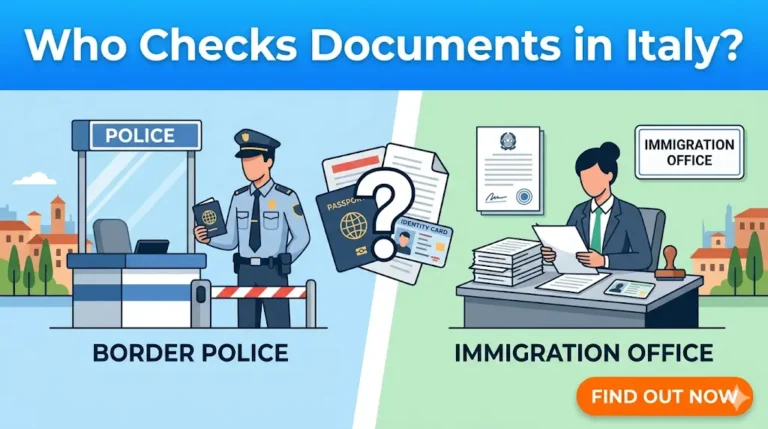
Once you are in Italy, the Questura becomes your primary point of contact. They are notorious for having "local rules" that differ from city to city. What works in Rome might be rejected in a small village in Puglia. If they insist on a local sworn translation, don't argue—just find a local perito (expert) at the courthouse.
This is also where your health insurance documentation comes into play. If you have an international policy like Cigna Global, the Questura will want to see an Italian summary. If you haven't had this sworn, they might send you away to get it done. To save time, I always tell people to have a "mini-kit" of their most essential documents—birth certificate, marriage certificate, and insurance summary—already apostilled and sworn before they ever step foot in a Questura for their fingerprinting appointment.
Disclaimer
This guide is intended for informational purposes only and does not constitute legal advice. Immigration laws and document requirements in Italy are subject to frequent changes and regional variations. It is highly recommended to consult with the specific Italian consulate or a qualified immigration professional before submitting your application. Always verify the latest requirements on the official website of the Italian Ministry of Foreign Affairs.