Applying for an Italy visa as a remote worker: Is it possible?
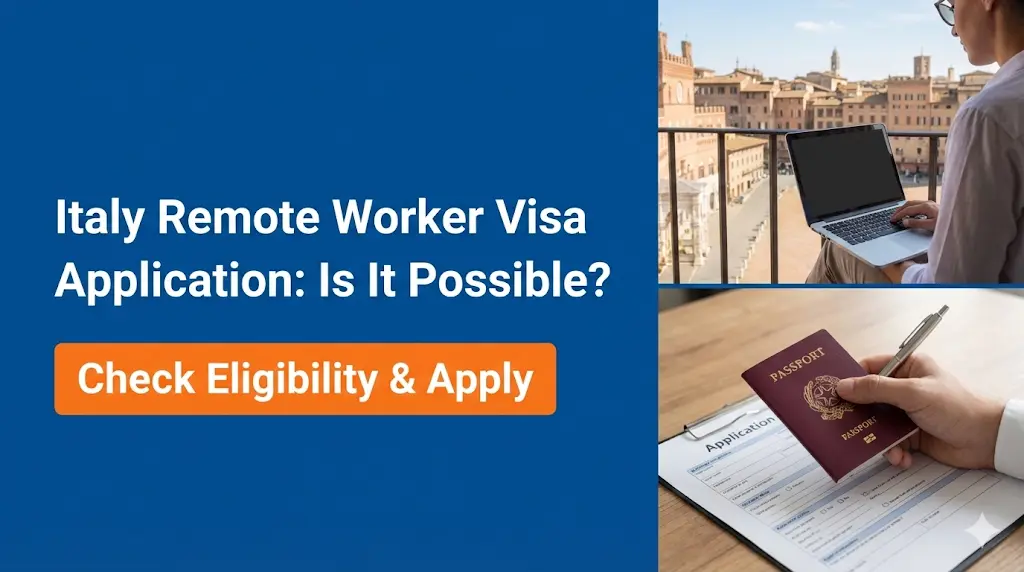
The dream of trading your home office for a sun-drenched balcony in Tuscany is no longer just a fantasy. The answer to whether you can move to Italy as a remote worker is a definitive yes. With the official implementation and refinement of the Italian Digital Nomad Visa, non-EU citizens now have a clear legal pathway to live in Italy while maintaining their professional careers with employers or clients based outside the country.
Disclosure: This post may contain affiliate links. We may earn a commission at no extra cost to you if you make a purchase through these links. Read full disclosure.
Introduction
In recent years, Italy has transformed its immigration landscape to attract “highly qualified” global talent. While Italy was once seen as a difficult place for non-EU remote workers to establish legal residency, the introduction of specialized visa categories has opened new doors. Whether you are a full-time employee of a foreign corporation or a location-independent freelancer, the legal framework now supports your desire to settle in Italy.
However, “possible” does not mean “easy.” The Italian bureaucratic system remains rigorous, requiring applicants to meet strict income thresholds, professional qualification standards, and housing requirements. Navigating these rules is essential to avoid common pitfalls that lead to application denials. This guide will walk you through the primary visa options for remote workers, the specific requirements, and the administrative steps you must take to turn your Italian dream into a reality. For a broader look at the immigration landscape, you might start with our Ultimate Guide to Visas and Immigration in Italy.
The Best Option: The Italian Digital Nomad Visa
The most direct and popular route for remote professionals is the Digital Nomad Visa. This program is specifically designed for non-EU/EEA citizens who perform “highly qualified” work using technological tools that allow them to work remotely.
Eligibility for Employees and Freelancers
The Digital Nomad Visa is inclusive of two distinct groups of workers:
- Remote Workers (Employees): Individuals who have a stable employment contract with a company located outside of Italy.
- Digital Nomads (Freelancers/Self-Employed): Independent contractors, consultants, or business owners who provide services to foreign clients.
The primary advantage of this visa over other categories is that it does not fall under the “Decreto Flussi” (quota system), meaning there is no annual limit on how many people can apply. Furthermore, it does not require a “Nulla Osta” (work authorization), which significantly speeds up the initial application process.
Core Requirements
To qualify, you must be able to demonstrate professional stability and financial self-sufficiency. The current 2026 requirements include:
- Income Threshold: You must earn a minimum annual income of at least €28,000 (roughly €2,333 per month). This income must be stable, regular, and derived entirely from sources outside of Italy.
- Professional Experience: You must provide evidence of at least six months of experience as a remote worker or freelancer.
- Education/Skills: You typically need an accredited university or college degree (at least three years) or documented high achievement in your professional field.
- Family Inclusion: One of the major benefits of this program is that it allows you to bring your family. However, the income requirement increases: you must show an additional €825 per month for a spouse and €412.50 per month for a dependent child.
Can You Work on a Tourist Visa?
Many travelers wonder if they can simply “work from Italy” for a few months on a standard tourist visa or a visa-waiver (Schengen) entry. While millions of people do this quietly, it is important to understand the legal boundaries.
Citizens of visa-waiver countries (like the USA, Canada, or Japan) can stay in Italy for up to 90 days within any 180-day period for tourism. During this short stay, you are generally not considered a “resident,” and your primary purpose must be leisure. However, if your intention is to live in Italy long-term or if your stay exceeds 90 days, you must obtain a long-stay National Visa (Type D) such as the Digital Nomad Visa.
It is vital to distinguish between a holiday with occasional emails and establishing a remote office. If you are caught performing unauthorized work long-term on a tourist visa, you risk deportation and a ban from the Schengen Area. For short-term travel rules, see our Italy Schengen Visa Guide: Tourist and Business Travel.
Comparative Visa Options for Remote Workers
While the Digital Nomad Visa is the preferred route for most, other pathways exist depending on your financial profile and long-term goals.
| Visa Type | Primary Target | Income Requirement (2026) | Work Allowed? |
| Digital Nomad Visa | Employees & Freelancers | €28,000+ per year | Remote work only |
| Self-Employment Visa | Freelancers/Entrepreneurs | ~€25,500+ per year | Yes, including Italian clients |
| Elective Residence Visa | Retirees/HNWIs | €31,000+ (Passive only) | No (Strictly forbidden) |
| Investor (Golden) Visa | High-net-worth investors | Proof of funds for investment | Yes |
The Elective Residence Visa Warning
A common mistake for remote workers is applying for the Elective Residence Visa (ERV). While this visa allows you to live in Italy long-term, it is designed for those with 100% passive income (like pensions, rental income, or dividends). Under the ERV, any form of work—including remote work for a foreign employer—is strictly prohibited. If you plan to keep your job, the ERV is not the correct choice for you. To learn more about this specific path, check our Elective (Retirement) Visa Italy: Requirements and Limits guide.
Essential Documentation for Your Application
Applying for a remote work visa in Italy requires a meticulous portfolio of documents. Consulates are famously strict about the quality and translation of your paperwork.
- Proof of Remote Work: You must provide an employment contract (for employees) or service agreements/invoices (for freelancers) that prove you can perform your work fully online from abroad.
- Income Verification: This is typically proven through 6–12 months of bank statements, pay slips, or tax returns.
- Employer Statement: For remote employees, your boss must provide a signed statement confirming the company’s legal compliance and authorizing your remote work from Italy.
- Proof of Accommodation: You must have a registered lease agreement or property deed for a home in Italy.
- Health Insurance: You must maintain a comprehensive private health insurance policy with a minimum coverage of €30,000 valid for your entire stay.
- Criminal Background Check: A recent record from your home country (and any country you’ve lived in for the last five years) confirming no criminal history.
Remember that after you arrive in Italy, the visa is only the first step. Within eight days of arrival, you must apply for your physical residence permit. You can find out more in our post: do I need a permesso di soggiorno after a visa?
Tax Implications of Remote Work in Italy
One of the most important considerations for remote workers is their tax status. Holding a Digital Nomad Visa or any long-stay residence permit typically makes you an Italian tax resident if you spend more than 183 days a year in the country.
This means you will be subject to Italian income tax and social security contributions on your worldwide income. Italy does offer some very attractive tax incentives for new residents, such as the “Inpatriates” regime or the special flat tax for high-net-worth individuals, which can significantly reduce your tax burden for the first few years. However, these rules are complex and change frequently. We strongly recommend reading our article on Understanding Italy’s Tax System: A Guide for Foreigners and consulting a professional commercialista (accountant) before you move.
Conclusion
Applying for an Italy visa as a remote worker is not only possible today but is now a well-established legal pathway. The Digital Nomad Visa has removed many of the traditional barriers, such as quotas and work authorizations, making it the most accessible relocation program Italy has ever offered for professionals. By ensuring you meet the €28,000 income threshold, securing a registered Italian lease, and meticulously preparing your professional documentation, you can successfully transition your career to one of the most beautiful countries in the world.
Whether you seek the vibrant energy of Milan or the ancient charm of a Sicilian village, the digital nomad lifestyle is waiting for you in Italy. Start preparing your dossier today, and you could be enjoying your first aperitivo as a legal resident sooner than you think.
References
Primary sources (official)
- Italian Ministry of Foreign Affairs (Visto per l’Italia): https://vistoperitalia.esteri.it
- Agenzia delle Entrate (Italian Tax Authority) – Information for New Residents: https://www.agenziaentrate.gov.it
Other helpful sources
- Italy Digital Nomad Visa Guide 2026 (Migrun): https://www.migrun.tech/italy/guide-italy-digital-nomad
- Italy Digital Nomad Visa (2026): Cost, Requirements & Applications (Golden Visas): https://www.goldenvisas.it/italy-digital-nomad-visa/
Disclaimer
The information provided in this article is for educational and informational purposes only and does not constitute official legal, tax, or immigration advice. Italian immigration laws, tax regimes, and visa requirements are subject to frequent changes. Always consult the official websites of the Italian Ministry of Foreign Affairs or a certified professional for the most current and personalized guidance.