How Long Does It Take to Get a Permesso di Soggiorno?
Waiting in the Italian immigration limbo is a rite of passage every newcomer must face, yet nobody tells you just how long that "temporary" yellow receipt will be your only form of ID. I remember staring at my first ricevuta in a tiny Roman apartment, wondering if I’d ever see my actual plastic card before my visa expired. This guide meticulously breaks down the realistic timelines for the Permesso di Soggiorno so you can plan your life with confidence.
Disclosure: This post may contain affiliate links. We may earn a commission at no extra cost to you if you make a purchase through these links. Read full disclosure.
The Reality of the Permesso di Soggiorno Timeline
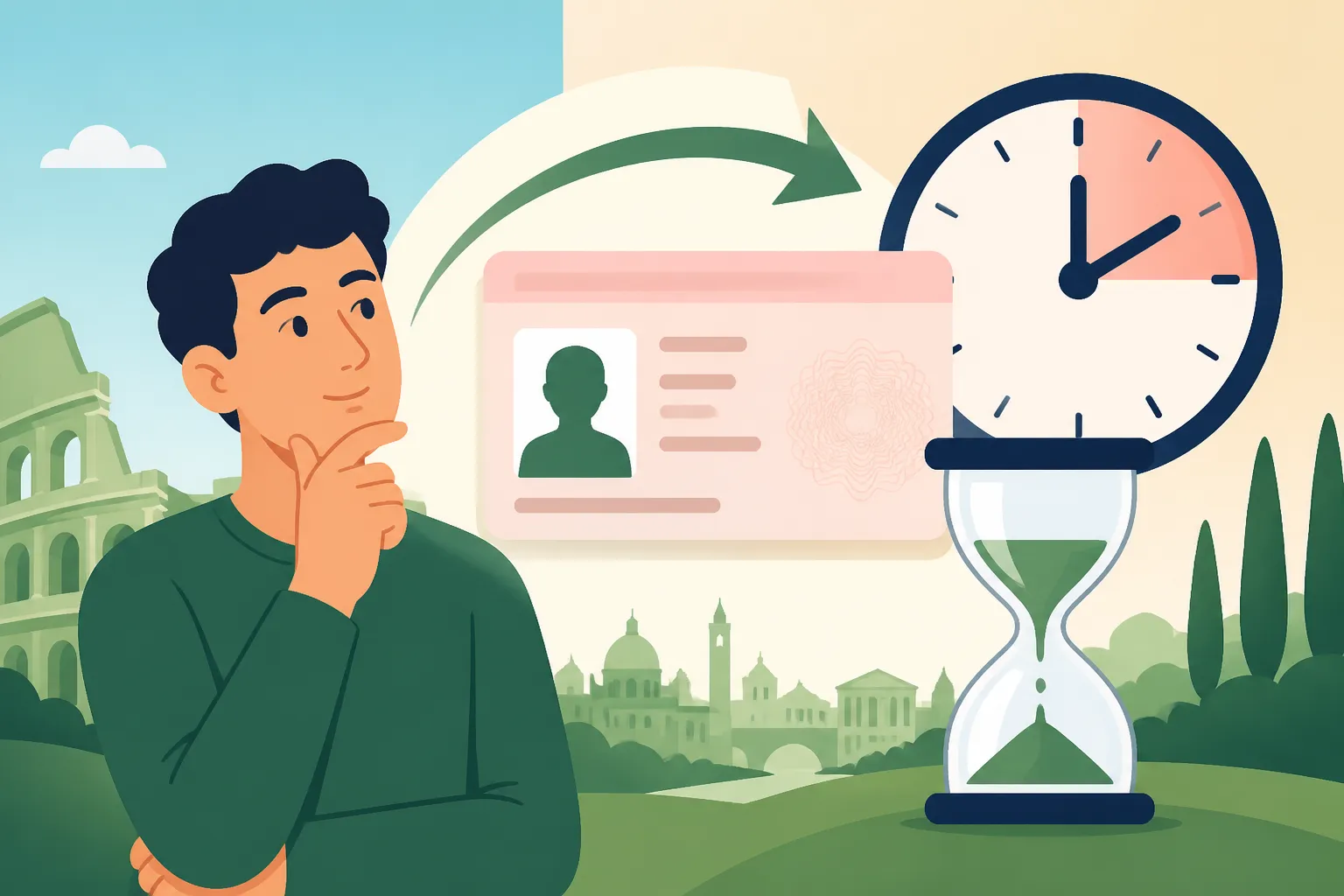
The most frequent question I get from fellow expats is: "Is it normal that it’s been six months?" The short answer is yes. The long answer involves a complex dance between the Italian Post Office, the central immigration database, and your local Questura. While Italian law technically suggests that a residence permit should be issued within 60 days, almost no one in the major cities sees their card that quickly. In reality, the process can take anywhere from three months to over a year, depending on a dozen variables you can’t control.
Phase 1: From Post Office to Appointment Date
Your journey begins at a "Sportello Amico" desk within a Poste Italiane branch. Once you submit your kit, the clerk hands you a receipt (the ricevuta) and a sheet of paper with your appointment date for fingerprinting at the Questura. This date is your first indicator of how backlogged your city is. In smaller provinces, your appointment might be in three weeks. In Milan or Rome, I have seen newcomers handed appointment dates that are eight or nine months into the future.
It is vital to understand Getting Your Residence Permit Kit in Italy: Step-by-Step before you even head to the post office. If you forget a single document, the clerk might still accept the kit, but you’ll pay for that mistake later with a "request for integration" that adds months to your wait. During this phase, you are legally "in processing." You can stay in Italy, but your mobility is limited. Many people find this the most stressful period because they are still figuring out How to Get an Italian SIM Card and Mobile Plan as a New Arrival and other basics while feeling like they don't yet "officially" exist in the system.
Phase 2: The Questura Appointment and Fingerprinting
The day of your appointment at the Questura (Immigration Office) is the most significant hurdle. This is where your digital fingerprints are taken and your original documents are verified against the photocopies you sent in the kit. If your file is perfect, the officer will tell you to wait for an SMS. If it isn't, they will hand you a "Motivi Ostativi" or a request for more documents.
One major reason for delays at this stage is insurance. If you are a student or an elective resident, you must show proof of coverage. Many expats choose a policy from Cigna Global because it meets the specific requirements for the Questura, ensuring the officer doesn't flag your file for insufficient coverage. Another common delay stems from poorly translated documents. If you’ve brought marriage or birth certificates from home, they must be translated into Italian. Using a professional service like RushTranslate or Translayte ensures that the terminology matches what the Italian Ministry of Interior expects, preventing the officer from rejecting your papers and forcing you to reschedule—a mistake that can easily cost you another 90 days.
Phase 3: The Processing Gap and Final Issuance
After the fingerprinting, your file goes into a "work in progress" state. The local Questura must verify your background with the central authorities in Rome. This is usually the longest "black hole" of the process. You will spend weeks or months checking the State Police website to see if your card is ready. It is helpful to know How to Track Your Permesso di Soggiorno Status Online so you don't waste your mornings standing in line just to ask for an update.
Once the card is printed, it is sent back to your local Questura. You will eventually receive an SMS on the Italian phone number you provided, giving you a date and time for pickup. If you don't receive an SMS but the website says "Stato: in consegna," you may need to go to the office during their designated pickup hours.
Factors That Dictate Your Waiting Time
Not all wait times are created equal. Italy is a country of regional nuances, and this is never more apparent than in the immigration offices. A student in a university town will have a vastly different experience than a tech worker in a financial hub.
Regional Bureaucracy: North vs. South
Paradoxically, some of the wealthiest cities in the North have the longest wait times due to the sheer volume of applicants. Milan, Bologna, and Turin are notorious for year-long waits. Conversely, if you have settled in a smaller town in Abruzzo or Molise, you might find that the Questura is actually ahead of schedule. When I moved from a major city to a smaller province, my renewal time was cut in half simply because there were fewer files for the officers to process.
The "Nulla Osta" (work authorization) verification also plays a role. If you are Working in Italy: Opportunities and Visa Options, your permit is tied to your employer's records. If the labor office is slow to confirm your contract to the Questura, your card remains stuck in "pending" status.
Permit Type and Complexity
The type of permit you apply for drastically changes the scrutiny—and thus the time—involved.
| Permit Type | Typical Wait Time (Major Cities) | Typical Wait Time (Small Towns) |
|---|---|---|
| Student (Studio) | 3 – 5 Months | 1 – 2 Months |
| Subordinate Work (Lavoro Subordinato) | 6 – 10 Months | 3 – 5 Months |
| Family Reunion (Motivi Familiari) | 5 – 8 Months | 2 – 4 Months |
| Elective Residence | 4 – 7 Months | 2 – 3 Months |
Students often get priority because their permits are short-lived. It would be absurd for a student to receive their one-year card eleven months into their course, though it does happen. If you are on a study path, make sure you understand Understanding Italy's Student Visas to ensure you apply for the correct renewal window.
Living With the Ricevuta: What You Can and Can't Do
The yellow receipt you get from the post office is your lifeline. In Italy, it is legally equivalent to the permit for many administrative tasks, but it has its limits. Understanding these limits is the difference between a smooth transition and a major legal headache.
Navigating Healthcare and Services
One of the first things you’ll want to do is register for the national health system. Many people think they have to wait for the plastic card, but that is a myth. You can actually start Registering with an Italian Family Doctor (Medico di Base) using just your ricevuta and your tax code (codice fiscale). The ASL (local health authority) will issue you a temporary paper version of your health card.
If you are a student, the rules are slightly different. You should look into Healthcare for International Students in Italy: SSN vs Private to see if paying the voluntary contribution to the SSN is faster for you than waiting for a private insurance claim. Similarly, if you have a chronic condition, don't wait for the plastic card to visit a pharmacy. You can get help with Italian Pharmacies: Prescription, Over-the-Counter, and Supplies as long as you have a prescription from an Italian doctor, which you can get once registered at the ASL.
Travel Restrictions While Waiting
This is the biggest pain point. While you are waiting for your first Permesso di Soggiorno (initial issuance), you are generally not allowed to travel through other Schengen countries. You can travel back to your home country, but the flight must be direct or transit only through non-Schengen countries. If you are renewing a permit, you have more flexibility, but you must always carry your expired card and the new renewal receipt together.
I once had a friend try to fly through Frankfurt with only a receipt for a first-time permit; she was nearly denied boarding because the German authorities did not recognize the Italian paper receipt as a valid travel document. Always check the current Ministry of Interior circulars before booking a flight.
How to Avoid Unnecessary Delays
While you can't make the Questura work faster, you can certainly prevent them from working slower. Most delays are "self-inflicted" due to clerical errors or missing information.
The Importance of Document Accuracy
Every document you submit is a potential point of failure. If your lease agreement isn't registered with the Agenzia delle Entrate, your permit will be delayed. If your name is spelled differently on your insurance than on your passport, the system will flag it.
When it comes to official documents from abroad, the Questura is very particular. If you use a service like Translayte or RushTranslate, ensure you ask for "certified" translations that include the translator's stamp of accuracy. The Italian bureaucracy values "l'originale" and "la marca da bollo" above all else. If you are missing the €16 stamp (marca da bollo) on your application, the post office won't even process it, but if you have a low-quality translation, the Questura won't tell you until months later during your appointment.
Maintaining Your Health and Safety
The stress of immigration can take a toll. While you wait, don't ignore your well-being. If you find yourself in a medical bind while waiting for your Obtaining the Italian Health Card (Tessera Sanitaria), remember that emergency services are available to everyone. Knowing How to Call 112 in Italy: What to Say and What Happens is essential for any resident, regardless of their permit status. Italy has a high standard of care, but the bureaucracy of getting into the system is the hurdle, not the care itself.
Summary Checklist for a Faster Process
To keep your timeline as short as possible, follow these veteran tips:
- Submit Early: If you are renewing, you can submit the kit up to 60 days before your current permit expires.
- Double-Check the Kit: Ensure every photocopy is clear. Do not include your original passport in the kit—only a photocopy of every single page (even the blank ones).
- Use Certified Translations: Don't DIY your translations. Use a reputable service to ensure the Questura accepts them immediately.
- Keep Your Receipt Safe: Make three copies of your Poste Italiane receipt. Keep one in your wallet, one in a safe at home, and a digital scan on your phone.
- Check the Website Weekly: Sometimes the SMS system fails. Manually checking the State Police website is the only way to be sure.
The wait is long, and the frustration is real. But once that plastic card is finally in your hand, you'll have full access to everything Italy has to offer, from opening a bank account to finally feeling like a true resident of the Bel Paese.
Disclaimer
The information provided in this guide is for informational purposes only and does not constitute legal advice. Immigration laws and processing times in Italy are subject to frequent change. Always consult with the official website of the Polizia di Stato, the Portale Immigrazione, or a qualified immigration lawyer for the most current regulations.