Health Insurance for Italian Visa Types: A Comparison
Navigating the Italian visa process often feels like a test of endurance, especially when a bureaucrat rejects your entire application because of one missing sentence in your health insurance policy. I remember standing in a drafty consulate office, sweating through my shirt, as they told me my "world-class" plan wasn't compliant. This guide solves that specific nightmare by comparing insurance requirements for every Italian visa type.
Disclosure: This post may contain affiliate links. We may earn a commission at no extra cost to you if you make a purchase through these links. Read full disclosure.
Understanding the Italian Health Insurance Requirement for Visas
The Italian government views health insurance not just as a safety net for you, but as a guarantee that you won't become a financial burden on their public healthcare system the moment you step off the plane. Whether you are applying at a consulate in your home country or sitting in a Questura (police headquarters) in Florence for your first residence permit, the requirements are rigid. They generally look for three things: a minimum coverage amount—typically 30,000 EUR—no deductibles or co-pays for emergency services, and a specific mention of "repatriation of remains" or "emergency medical evacuation."
Many expats make the mistake of thinking their standard travel insurance from a credit card or a basic holiday policy will suffice. In reality, these are almost always rejected. The policy must clearly state it is valid for Italy (or the entire Schengen Area) and covers the entire duration of your initial visa. If you are moving for the long term, this insurance acts as the bridge until you can complete your How to Register for Italian Healthcare (SSN) as a Foreigner process. Without the right document in your "Kit Postale," your journey ends before it truly begins.
The distinction between "entry insurance" and "residency insurance" is also vital. The insurance you show the consulate to get your passport stamped is often different from the one the Questura requires for your Permesso di Soggiorno. For example, some consulates are lenient with international providers like SafetyWing, which is excellent for digital nomads and travelers, while certain local Questure might demand a policy written in Italian or issued by an Italian entity. Understanding this regional inconsistency is the first step toward a successful move.
Health Insurance for Student Visas: The Entry-Level Standard
For students, the financial barrier to entry is lower, but the administrative hurdles are just as high. Most students opt for the "W.A.I." (Welcome Association Italy) policy, which is essentially the bare minimum required to satisfy the law. It is cheap, usually costing around 150 to 200 EUR per year, but it offers very limited coverage. It is designed to get you your visa and your Italian Health Card (Tessera Sanitaria) eventually, but it won't pay for a routine check-up or a specialist visit for a nagging sports injury.
If you are a student who wants more than just a piece of paper for the police, you might look into Healthcare for International Students in Italy: SSN vs Private. A more robust private plan, such as those offered by Cigna Global, provides a level of comfort that the basic student policies lack. This is particularly important if you have a pre-existing condition or if you simply don't want to deal with the potentially long wait times of the public system while you are trying to study for exams.
Once you arrive, many students choose to pay the "voluntary contribution" to join the National Health Service. This is often the smartest financial move. By paying a flat annual fee, you get access to a family doctor and the same rights as an Italian citizen. However, keep in mind that this contribution is based on the calendar year (January to December). If you arrive in September, you pay for the whole year but only get four months of coverage. Balancing these costs is a key part of What Expats Need to Know about the Cost of Healthcare in Italy.
The Elective Residence Visa: Premium Coverage for Retirees
The Elective Residence Visa (ERV) is the most scrutinized visa type in terms of health insurance. Since applicants for this visa are not allowed to work, the Italian government demands proof that you can cover every possible medical scenario out of pocket or through a high-level private policy. Consulates often require "unlimited" coverage or at least a very high ceiling (often 50,000 EUR or more) and specifically look for a policy that does not exclude any major categories of care.
For retirees, the stakes are higher because age can make premiums skyrocket. This is where Getting Health Insurance in Italy: Public and Private Options becomes a critical research task. Many ERV holders choose to maintain an international policy from a provider like Cigna Global because it offers portability. If you decide to spend three months in the US or UK, your coverage follows you, which a local Italian "Polizza Sanitaria" will not do. However, you must ensure the policy explicitly states it has zero deductible for the visa application to be successful.
A common pitfall for ERV applicants is the "waiting period" clause. If your insurance has a 3-month wait for certain treatments, the consulate might view this as a gap in coverage. You need a letter from the insurer stating that coverage is "full and immediate" from the date of entry into Italy. This level of detail is why many retirees consult with specialists before filing their paperwork. After all, the ERV is a lifestyle choice, and nothing ruins that lifestyle faster than a rejected visa and a lost consulate appointment that took six months to book.
Work Visas and the Digital Nomad Frontier
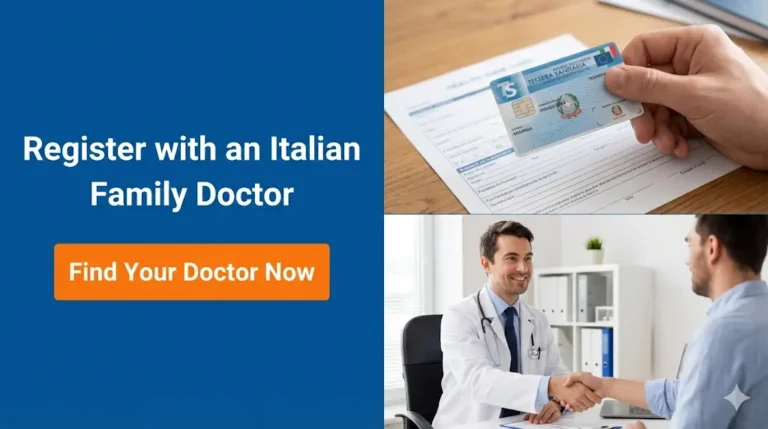
If you are moving to Italy for a traditional job, your employer will typically handle your social security contributions, which eventually grants you access to the public system. However, there is a gap between your arrival and your final registration with the local health office. During this period, you are legally required to have private insurance. Most workers use a short-term policy to bridge this 2-3 month gap until they can complete Registering with an Italian Family Doctor (Medico di Base).
The landscape changed significantly with the introduction of the Digital Nomad Visa. For these remote workers, the insurance requirements are a hybrid of the student and elective residence rules. You need a policy that covers the entire duration of your stay, which is often one year. Many in this category turn to SafetyWing for its flexibility, as it allows you to start and stop coverage easily. However, you must ensure that your specific plan meets the Italian requirement of covering "all risks" without a high deductible that would scare off a Questura official.
For freelancers and those with a Partita IVA, the insurance choice is even more personal. You aren't tied to an employer's plan, so you must decide between relying solely on the public system or supplementing it with private care. Many find that Public vs Private Health Insurance in Italy is not an "either-or" choice but a "both" strategy. They use the public system for major emergencies and surgery while keeping a private policy for quick access to specialists and better hospital amenities.
Comparing Private Health Insurance Providers for Expats
When you are looking at the market, you will find two main categories: International Private Medical Insurance (IPMI) and local Italian private insurance. International plans are generally more expensive but offer English-speaking support, higher coverage limits, and worldwide portability. Local Italian plans are cheaper and designed specifically to satisfy the legal requirements of the Italian bureaucracy, but they can be difficult to navigate if your Italian isn't yet fluent.
| Visa Type | Minimum Coverage | Key Requirement | Best For |
|---|---|---|---|
| Student Visa | 30,000 EUR | Emergency only is okay | Budget-conscious students |
| Work Visa | 30,000 EUR | Gap coverage until SSN | Professionals with jobs |
| Digital Nomad | 30,000 EUR | Full duration coverage | Remote workers & freelancers |
| Elective Residence | 50,000+ EUR | No deductibles; all risks | Retirees & high-net-worth |
| Family Reunification | 30,000 EUR | Coverage for all dependents | Families moving together |
International providers like Cigna Global are often the "gold standard" for the Elective Residence Visa because their policy documents are usually available in multiple languages, including Italian, which can save you a fortune in Medical Translation and Interpretation Services. On the other hand, for a quick tourist visa or a short-term digital nomad stint, a more agile provider like SafetyWing often provides exactly what is needed for the entry stamp without the long-term commitment of a heavy IPMI policy.
Critical Clauses and the Questura Reality Check
Even with a great policy, the "reality check" happens at the Questura. I’ve seen people with 1,000,000 EUR coverage get rejected because their policy didn't explicitly use the word "Schengen" or because it mentioned a $50 deductible. The Italian bureaucracy is literal. If the law says "no limitations," they want to see the phrase "no limitations." This is why it is often helpful to have a summary of benefits translated into Italian and highlighted for the official.
Another hurdle is the duration of the policy. If you have a one-year visa, but your insurance is paid monthly and could technically be canceled, the Questura might take issue. They prefer to see a policy that is paid in full for the year or a contract that clearly states it is non-cancelable for the duration of the residency permit. This is particularly relevant when Obtaining the Italian Health Card (Tessera Sanitaria), as the dates on your card will often mirror the expiration date of your insurance or your permit.
Finally, always remember that insurance is just one piece of the puzzle. It must work in harmony with your residency registration at the local Comune. Once you have your Permesso di Soggiorno (Italian Residence Permit): Guide in hand, your insurance needs might change as you gain more access to the Italian public system. The goal of your initial policy is to get you through the door legally and safely so you can start enjoying your new life under the Italian sun.
Differences between Public and Private Healthcare in Italy
The choice between public and private healthcare in Italy is rarely about the quality of the doctors—who are excellent in both sectors—but about the speed and the "experience." The public system, or SSN, is the backbone of the country. It is where you go for serious trauma, life-saving surgery, and chronic disease management. However, the wait times for a non-urgent MRI or a visit to a dermatologist can be months long in the public sector. This is why many expats keep their private insurance even after they have joined the SSN.
Private clinics offer a very different experience. You can often get an appointment within 48 hours, the facilities look more like boutique hotels than hospitals, and you are much more likely to find English-speaking staff. For a detailed breakdown of these differences, check out Differences between Public and Private Healthcare in Italy. Most veteran expats eventually land on a hybrid model: they use the public system for their primary care and the private system for specialist visits to save time and stress.
Understanding the "Ticket" system is also crucial. Even in the public system, you usually pay a small co-pay (the "Ticket") for visits and tests unless you have an exemption. Private insurance can sometimes reimburse these costs, depending on your plan. As you settle in, you will realize that Finding Doctors and Hospitals in Italy is a skill in itself, requiring a mix of online research, local recommendations, and sometimes a bit of trial and error with different insurance providers.
Essential Disclaimer
The information provided in this guide is for educational and informational purposes only and does not constitute legal, financial, or professional medical advice. Immigration laws, visa requirements, and healthcare regulations in Italy are subject to frequent changes. While we strive to provide accurate and up-to-date information, readers should always verify requirements with the official website of the Italian Ministry of Foreign Affairs (Esteri), the local Italian Consulate, or a qualified immigration professional before making any financial or travel commitments. Use of any insurance brand mentioned is at the reader's own discretion and risk.