How to Check If You Qualify for the EU Blue Card in Italy
Finding yourself staring at a mountain of Italian paperwork while trying to figure out if you can legally work in the Bel Paese is a rite of passage for every expat. I remember sitting in a dusty café in Rome, clutching my degree and wondering if my career would ever survive the "Decreto Flussi" lottery. This guide will help you determine if you can skip the usual quotas and qualify for the EU Blue Card in Italy.
Disclosure: This post may contain affiliate links. We may earn a commission at no extra cost to you if you make a purchase through these links. Read full disclosure.
Understanding the EU Blue Card in the Italian Context
The EU Blue Card is essentially Italy’s answer to the "highly skilled worker" dilemma. Unlike the standard work permits that are subject to the annual Decreto Flussi—a quota system that often fills up within minutes of opening—the Blue Card is "extra-quota." This means if you qualify, you can apply at any time of the year. It is designed specifically for non-EU citizens who possess high-level professional qualifications and have a binding job offer in Italy.
However, the term "highly qualified" is where many expats get tripped up. In Italy, this doesn't just mean you are good at your job; it means you fit into specific categories defined by the Italian Institute of Statistics (ISTAT). Generally, you must fall into levels 1, 2, or 3 of the ISTAT classification of occupations. This includes managers, specialized professionals, and technicians. If your job title is "Social Media Intern," the Blue Card likely isn't for you. If you are a "Senior Software Engineer" or a "Biotech Researcher," you are in the right place.
The beauty of the Blue Card is that it provides a faster track to residency and eventually allows for easier mobility within the European Union. But before you start packing your bags for Milan or Florence, you need to be absolutely certain your paperwork matches the rigorous standards of the Italian immigration authorities. Trust me, the Questura (police headquarters) does not have a sense of humor regarding missing certifications.
The Three Golden Pillars of Eligibility
To qualify for the EU Blue Card in Italy, you must satisfy three specific requirements simultaneously. If even one of these pillars is weak, your application will likely be rejected before it even reaches the desk of a deciding officer.
1. Educational and Professional Qualifications
You must hold a higher education qualification (a university degree) granted by a recognized institution. This program must have lasted at least three years. It is not enough to just have the diploma; the Italian government requires proof that your degree is valid and equivalent to an Italian one. This usually involves obtaining a Dichiarazione di Valore (Declaration of Value) from the Italian consulate in the country where you graduated, or a comparability certificate from CIMEA.
When gathering these documents, remember that everything must be translated into Italian. Services like RushTranslate or Translayte can be lifesavers here, as they provide certified translations that meet the strict requirements of Italian administrative offices. If you don't have a degree, some recent changes allow for professional experience to be used instead, but this is notoriously difficult to prove and usually requires at least five years of experience in the sector. You should read up on How to Get Your Foreign Degree Recognized in Italy to understand the nuances of this process.
2. A Valid Job Offer or Contract
You cannot apply for a Blue Card as a freelancer or someone "looking for work." You must have a job offer or a signed employment contract from an Italian company. The contract must have a duration of at least six months. While the Blue Card was originally intended for long-term stays, the six-month minimum provides some flexibility for specialized consultants.
The job offer must also correspond to your qualifications. If you have a degree in Architecture but are being hired as a Chef, the Italian authorities will flag this immediately. The alignment between your academic background and your Italian job description is a critical check during the How the Nulla Osta (Work Authorization) Works in Italy phase of the application.
3. The Minimum Salary Threshold
Italy sets a specific minimum annual salary for Blue Card applicants. This is not a static number; it is calculated based on three times the minimum wage required for exemption from healthcare co-payments. For 2026, this usually hovers around €25,000 to €28,000 per year, though it is always wise to aim higher to ensure your application is viewed favorably.
The salary must be reflected in your gross annual income (RAL) as stated in your contract. If your employer offers a lower salary, you simply will not qualify, regardless of your skills. It’s a hard line in the sand. When comparing this to other visas, you might notice the How Much Income Is Required for the Italy Digital Nomad Visa? requirements are different, so always ensure you are looking at the specific Blue Card legislation.
Comparing the EU Blue Card to Standard Work Permits
It is helpful to see how the Blue Card stacks up against the typical "Subordinate Work" visa that most foreigners try to get. The differences are stark, especially regarding timing and flexibility.
| Feature | EU Blue Card | Standard Work Visa (Subordinate) |
|---|---|---|
| Quota Restrictions | None (Apply anytime) | Strictly limited by Decreto Flussi |
| Education Requirement | 3-year Degree or high-level exp. | None (technically) |
| Minimum Salary | Approx. €25k-€28k+ | Standard Italian minimum wage |
| Contract Duration | Min. 6 months | Usually 1 year or permanent |
| Family Reunification | Faster and easier | Standard process |
| EU Mobility | Easier after 12-18 months | Restricted |
As you can see, the Blue Card is superior if you meet the high bar of entry. The lack of a quota is the single biggest advantage. I’ve seen friends wait years for a "slot" in the Decreto Flussi, only to be told the system crashed on day one. With the Blue Card, the power is in your hands—and your employer's hands—to trigger the process whenever you are ready.
Step-by-Step Guide to Verifying Your Qualifications
If you think you meet the criteria, don't just take your own word for it. You need to verify your qualifications against the Italian labor market's specific codes.
Step 1: Identify Your ISTAT Code
The Italian employer must specify the ISTAT code for the position they are hiring you for. You can search the ISTAT website for "Nomenclatura e Classificazione delle Unità Professionali." You are looking for roles that begin with digits 1, 2, or 3. If the role falls under category 4 (clerical workers) or lower, you will not qualify for the Blue Card. This is a common point of failure for administrative roles that might feel "high level" but don't meet the technical definition.
Step 2: Formalize Your Academic Documents
Once you have the code, get your degree translated and legalized. Use Translayte or RushTranslate for the certified Italian versions. You will likely need to send these to the Italian Embassy in your home country for the Dichiarazione di Valore. This step can take months, so start the moment you have a serious job lead. Without this, your Experience Requirements for Italy’s Blue Card Visa will mean nothing to the Ministry of the Interior.
Step 3: Check Health Insurance Requirements
During the period after you arrive but before you are fully registered with the National Health System (SSN), you must have health insurance. Italian law requires that you are covered from the moment you step off the plane. Many expats choose a provider like Cigna Global for this transition period because they offer international policies that are widely accepted by the Questura during the first appointment. For more on the long-term system, see Getting Health Insurance in Italy: Public and Private Options.
Life After Qualifying: The Reality of the Application
Qualifying is only half the battle; the application process is where the real "Italian experience" begins. Once you and your employer confirm eligibility, the employer must apply for the Nulla Osta (Work Authorization) through the Sportello Unico per l’Immigrazione (SUI).
In Italy, the Blue Card process is digitized to an extent, but it still requires physical appointments. Once the Nulla Osta is issued, you will take it to the Italian consulate in your home country to get your visa. After arriving in Italy, you have eight days to file The Kit Postale: Applying for a Permesso di Soggiorno by Post. This is the infamous "Yellow Kit" you get at the post office. It marks the beginning of your legal residency journey.
One thing they don't tell you in the brochures is that you will be living in a state of "receipt limbo" for several months. After you send the kit, you get a receipt (ricevuta) which serves as your legal document until your actual plastic card is printed. During this time, you can still work and access basic services, but traveling outside of Italy (except to your home country via a direct flight) can be tricky. You should also look into The Italian Health Card (Tessera Sanitaria): Uses and How to Get One as soon as you have your receipt to ensure you have medical coverage.
Dealing with Common Bureaucratic Roadblocks
Even if you qualify on paper, the Italian bureaucracy can throw curveballs. The most common issue is the "Incomplete File" notice. This usually happens when the employer hasn't uploaded the correct tax records or when the worker's degree translation isn't "sworn" (traduzione giurata).
If you find yourself stuck, it might be time to find professional help. While you can do this yourself, many expats hire a commercialista or an immigration lawyer to handle the communication with the SUI. Knowing How to Find an English-Speaking Commercialista in Italy can save you hours of shouting into the void of a government telephone line.
Another hurdle is the housing requirement. To get your final residency permit, you often need an "Idoneità Alloggiativa," a document stating your apartment is fit for human habitation according to local standards. This isn't strictly part of the Blue Card "qualification" check, but it is part of the "staying in Italy" check. Make sure your Italian landlord is willing to provide the necessary contracts and documents.
Final Checklist for the Aspiring Blue Card Holder
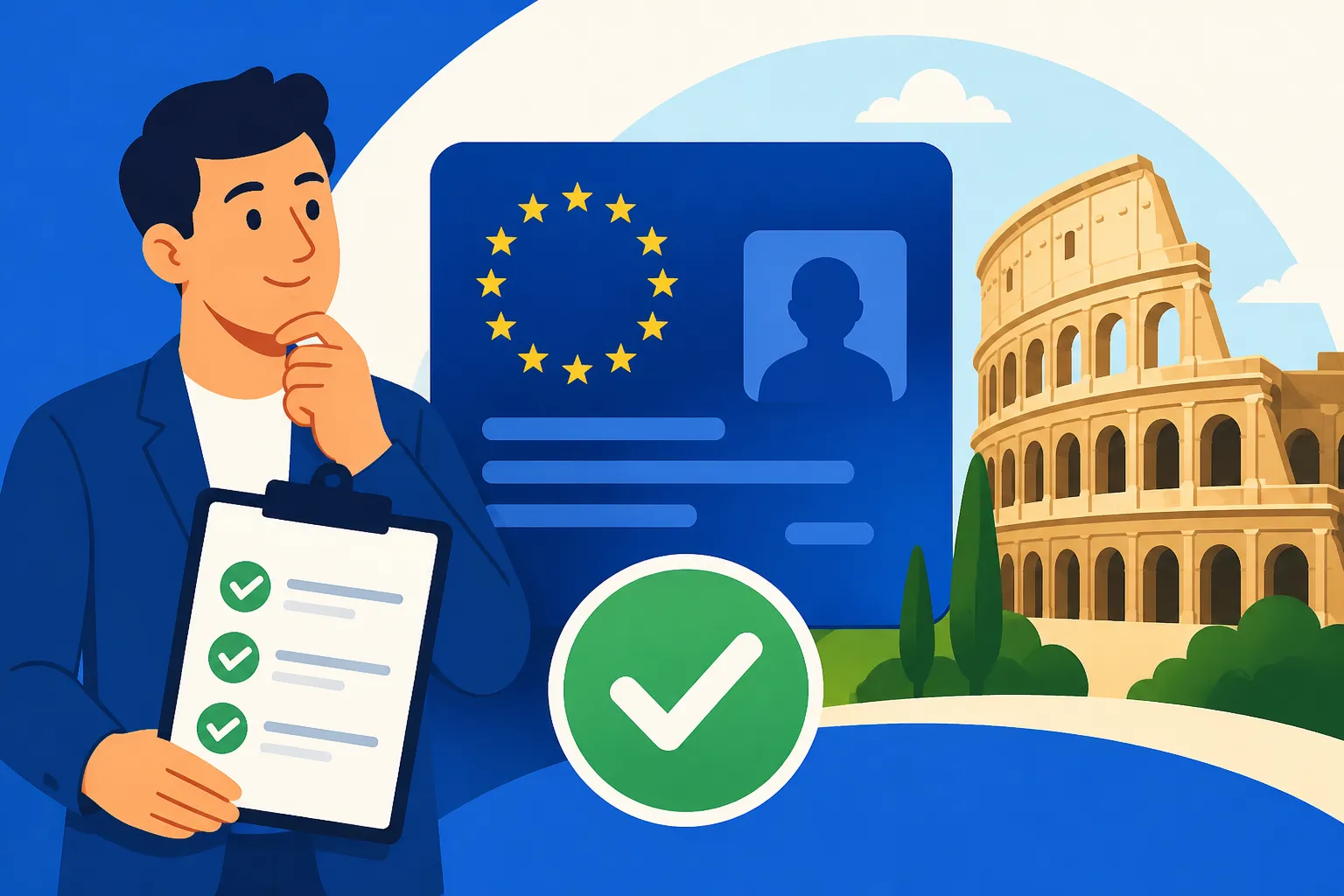
Before you sign that contract, run through this final list to ensure you truly qualify:
- Does my job fall into ISTAT levels 1, 2, or 3?
- Is my degree from a 3-year (or longer) university program?
- Does my annual gross salary meet the current year's threshold (approx. €28,000)?
- Is my employer willing to go through the SUI portal and wait for the Nulla Osta?
- Do I have my degree and transcripts ready for translation by RushTranslate or Translayte?
- Do I have initial health coverage through a provider like Cigna Global?
If the answer to all of these is "Yes," then you are one of the lucky few who can bypass the stress of the quotas. Italy is a beautiful, albeit frustrating, place to live. Navigating the Blue Card requirements is your first test of patience. If you can handle the Questura, you can handle anything the Mediterranean lifestyle throws at you. For more tips on the transition, check out Public vs Private Health Insurance in Italy or learn about Using Your European Health Insurance Card (EHIC) in Italy if you are moving from another EU state.
Disclaimer
This guide is for informational purposes only and does not constitute legal or immigration advice. Italian immigration laws, salary thresholds, and ISTAT classifications are subject to frequent changes by the Ministry of the Interior and the Ministry of Labor. Always verify the latest requirements with an official Italian consulate or a qualified immigration professional before submitting any applications or signing employment contracts.