Ordering Food and Drinks in Italian: A Practical Phrasebook
One of the most thrilling parts of living in or visiting Italy is diving headfirst into its incredible food and drink culture, but let's be honest, the moment you need to actually order something, a wave of panic can set in. Even after years here, I still catch myself fumbling for words or misunderstanding a nuance, especially when hunger is involved! This guide is here to soothe those anxieties, offering you a practical phrasebook and a deep dive into the unspoken rules of ordering food and drinks in Italian, so you can confidently savor every delicious moment without feeling lost in translation.
Disclosure: This post may contain affiliate links. We may earn a commission at no extra cost to you if you make a purchase through these links. Read full disclosure.
Navigating the Italian Menu: Understanding the Basics
The Italian menu isn't just a list of dishes; it's a meticulously structured roadmap to a culinary journey. For those of us used to ordering a "main course" and being done with it, the traditional Italian meal structure can feel like a labyrinth. But once you get the hang of it, you'll appreciate the artistry behind it.
The Structure of an Italian Meal (and Menu)
When you sit down at a traditional Italian restaurant, or ristorante, you'll typically be presented with a menu that follows a very specific progression. It usually starts with antipasti, which are small appetizers designed to whet your appetite. Think cured meats (salumi), local cheeses (formaggi), bruschetta, or fried delicacies (fritti misti). These are not meant to be a meal in themselves but a gentle introduction to what's to come.
Next up, you'll find the primi piatti, or "first courses." These are often carbohydrate-based and include pasta dishes, risotto, soups (zuppe), or gnocchi. Don't make the mistake of thinking a primo is equivalent to a main course in other cuisines; it's generally a more modest portion, designed to be followed by a secondo. Many an expat has mistakenly filled up on a generous plate of pasta, only to realize there's an entire second course yet to be enjoyed!
The secondi piatti are your "second courses," and these are typically meat (carne) or fish (pesce) dishes. You might find anything from grilled steak (tagliata di manzo) to roasted chicken (pollo al forno) or a fresh catch of the day (pesce del giorno). Crucially, secondi almost never come with side dishes. That’s where the contorni come in, listed separately. These are your side dishes – vegetables like roasted potatoes (patate al forno), sautéed spinach (spinaci saltati), or a simple mixed salad (insalata mista). You need to order these separately, or you might find yourself staring at a beautifully cooked piece of fish with nothing else on the plate!
After the main event, if you still have room, comes the dolce (dessert), followed by caffè (coffee, almost always espresso), and finally, a digestivo (a small glass of liqueur to help with digestion, like limoncello or amaro). This multi-course structure isn't mandatory, of course, but understanding it helps you decode the menu and order intentionally. Don't feel pressured to order all courses; it's perfectly acceptable to pick and choose.
Essential Menu Vocabulary
Understanding a few key Italian terms on a menu can make all the difference, especially when you're trying to figure out what's what. Here's a quick rundown to get you started:
| Category | Italian Term | Common Dishes/Examples | Notes |
|---|---|---|---|
| Appetizers | Antipasti | Bruschetta, Salumi misti, Fiori di zucca fritti | Often small, flavorful starters. |
| First Courses | Primi Piatti | Pasta, Risotto, Zuppe, Gnocchi | Generally carbohydrate-based; don't expect a huge portion. |
| Second Courses | Secondi Piatti | Carne (meat), Pesce (fish) | Main protein course, usually served without sides. |
| Side Dishes | Contorni | Verdure (vegetables), Patate (potatoes), Insalata (salad) | Must be ordered separately to accompany a secondo. |
| Desserts | Dolci | Tiramisù, Panna cotta, Gelato | Sweet treats to finish the meal. |
| Drinks | Bevande | Acqua, Vino, Birra, Caffè | Water, wine, beer, coffee. |
Beyond these categories, pay attention to common preparations: alla griglia (grilled), al forno (baked), fritto (fried), bollito (boiled), saltato (sautéed). If you see della casa, it means "of the house" and usually refers to the house wine, a local specialty, or a daily special. Knowing these terms can help you quickly scan a menu and identify dishes that appeal to you.
It's also crucial to know how to ask about allergens and dietary restrictions. Italy, thankfully, is becoming much more accommodating in this regard, especially in larger cities and tourist areas. The phrase for "without gluten" is senza glutine, and for "vegetarian" is vegetariano. If you are vegan, you'll need to specify vegano. Don't just assume; always ask, especially when in smaller, more traditional establishments where these concepts might be newer. Phrases like "Sono allergico/a a…" (I am allergic to…) or "Non posso mangiare…" (I cannot eat…) are vital. This awareness is key to enjoying your meal without any worries. If you're planning a trip and want to know more about the broader culinary landscape, checking out resources like "Italian Food Culture: Eating Well as a Visitor" can give you a great head start.
Ordering at a Bar or Caffè: Mastering Your Morning Ritual
The Italian bar is a magical, multi-purpose institution, serving everything from morning coffee and cornetti (croissants) to aperitivi and light lunches. It's often where the day truly begins for Italians, and mastering the art of ordering here is a rite of passage for any expat.
The Art of Ordering Coffee in Italy
Let's get one thing straight: coffee in Italy is almost always espresso. When you simply ask for un caffè, you will get a small, strong shot of espresso. If you want something else, you need to be specific. The beauty of Italian coffee culture is its simplicity and speed. Most Italians drink their coffee standing at the bar, often in just a few sips, before continuing with their day. This is particularly true for morning cappuccinos.
Here are the most common coffee orders and how to say them:
- Espresso: Un caffè (literally "a coffee")
- Cappuccino: Un cappuccino
- Latte Macchiato: Un latte macchiato (steamed milk with a splash of espresso)
- Caffè Macchiato: Un caffè macchiato (espresso "stained" with a dash of foamed milk)
- Caffè Lungo: Un caffè lungo (an espresso with a bit more hot water, but still stronger than an Americano)
- Caffè Americano: Un caffè americano (espresso with a lot of hot water, served in a larger cup)
- Decaffeinated: Un deca (short for decaffeinato)
Remember, ordering a latte will get you a glass of milk, not a coffee drink! For more on this ritual, our guide on "How to Order Coffee in Italy Like a Local" dives even deeper. The key to ordering at the bar is often to go to the cassa (cashier) first, tell them your order, pay, and then take your scontrino (receipt) to the barista, repeating your order. This process ensures efficiency and is a uniquely Italian system that can throw off newcomers. Don't be afraid to point to what you want on display if your Italian fails you, or simply watch how others order before you step up.
Beyond Coffee: Juices, Pastries, and Aperitivi
While coffee reigns supreme, Italian bars offer much more. In the mornings, you'll find a tempting array of brioche or cornetti, often filled with cream (crema), jam (marmellata), or chocolate (cioccolato). You might ask for "un cornetto alla crema, per favore." Freshly squeezed orange juice, spremuta d'arancia, is another popular choice.
As the day progresses, especially in the late afternoon, the bar transforms into a hub for the aperitivo. This beloved pre-dinner ritual is all about enjoying a drink, often a Spritz or a glass of Prosecco, accompanied by complimentary snacks (stuzzichini). This can range from simple olives and chips to elaborate buffets with mini-pizzas and bruschetta. To order, you might say, "Vorrei uno Spritz, per favore" (I would like a Spritz, please). It's a fantastic way to unwind and socialize before dinner. For a deeper dive into this delightful tradition, our piece on "Aperitivo in Italy: The Pre-Dinner Ritual Explained" is a must-read.
Whether it's for your morning caffeine fix or a relaxed evening drink, knowing these phrases and understanding the flow of an Italian bar will make your experience much smoother and more enjoyable. It’s an essential part of daily life here, a quick, often bustling, but always delicious interaction that perfectly encapsulates the Italian way.
Restaurant Etiquette and Ordering: From Casual Trattoria to Fine Dining
Dining in an Italian restaurant, whether it's a rustic trattoria, a cozy osteria, or an elegant ristorante, is an experience to be savored. It's not just about the food, but the atmosphere, the company, and the rhythm of the meal. Knowing how to navigate the social cues and express your order politely will enhance your experience immensely.
Getting Seated and Making Your Order
Unlike some countries where you might wait to be seated, in many Italian casual eateries, it's common to find an empty table and then catch the eye of a server. However, in more formal establishments or during busy times, it's always best to wait at the entrance to be shown to a table. A simple "Un tavolo per due, per favore" (A table for two, please) or "Abbiamo una prenotazione a nome di [Your Name]" (We have a reservation under the name of [Your Name]) will do the trick. If you've booked using a platform like Booking.com, which often has restaurant reservation features, it's good to have that confirmation handy.
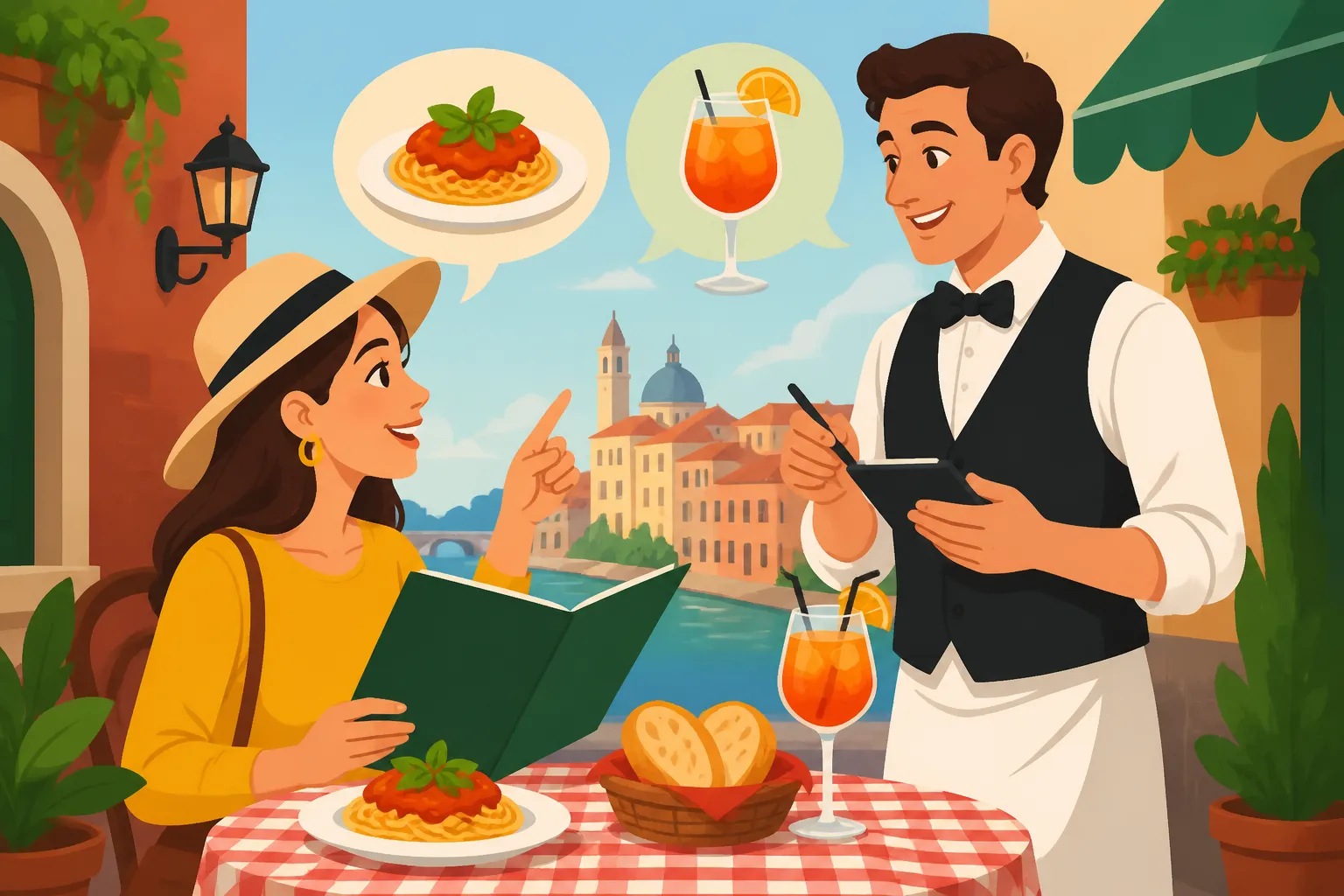
Once seated, a cameriere (waiter) or cameriera (waitress) will usually bring the menu. Take your time to peruse it. Italians generally don't rush through meals. When you're ready to order, a polite "Siamo pronti per ordinare" (We are ready to order) or simply making eye contact and a small nod will signal your readiness. Don't be shy about asking for recommendations! "Cosa ci consiglia?" (What do you recommend?) or "Qual è il piatto del giorno?" (What is the dish of the day?) can lead you to some wonderful, authentic choices. Many restaurants have daily specials that aren't on the main menu, and this is how you discover them.
Specific Food Orders and Customizations
When it comes to actually placing your order, there are a couple of useful phrases. "Vorrei…" (I would like…) is always a safe and polite choice. For example, "Vorrei gli spaghetti alla carbonara" (I would like the spaghetti carbonara). A slightly more direct, but still acceptable, option is "Prendo…" (I'll take…). So, "Prendo la margherita" (I'll take the Margherita pizza).
Customizations can be a little trickier, especially in traditional places where dishes are often considered perfect as they are. However, simple requests are usually fine. If you want something without a specific ingredient, you can say "senza…" (without…). For instance, "Vorrei la pasta senza cipolla" (I would like the pasta without onion). If you want extra of something, "con extra…" (with extra…). "Con extra formaggio, per favore" (With extra cheese, please). For children, you might ask for a porzione piccola (small portion) or for a dish that is semplice (simple).
Ordering Drinks with Your Meal
Drinks are typically ordered at the same time as your food, or shortly after.
- Water: "Acqua naturale, per favore" (Still water, please) or "Acqua frizzante, per favore" (Sparkling water, please). Specify a small bottle (una bottiglia piccola) or large (una bottiglia grande).
- Wine: Many places offer vino della casa (house wine) by the carafe (caraffa) in various sizes (e.g., mezzo litro – half liter, un quarto di litro – a quarter liter). Otherwise, you can ask for "la carta dei vini" (the wine list). Don't be afraid to ask for a recommendation based on your food choice!
- Beer: "Una birra piccola/media/grande alla spina" (A small/medium/large draft beer) or "una birra in bottiglia" (a bottled beer).
Remember that in Italy, it's perfectly normal to drink water or wine with your meal, even at lunch. Soft drinks are available, but less common with traditional meals, and it's rare to see a cappuccino accompanying a pasta dish! That's a definite coffee faux pas after breakfast hours! Understanding these nuances will not only help you order correctly but also immerse you more deeply in the Italian dining culture. For a comprehensive overview of how to conduct yourself and what to expect, check out our guide on "Restaurant Etiquette in Italy: Coperto, Courses, and the Bill".
Asking for the Bill and Leaving: The Grand Finale
The end of an Italian meal is just as much a part of the ritual as the beginning. It's a time for lingering over coffee and conversation, not for being rushed out the door. However, when you're ready to depart, knowing how to politely ask for the bill and handle payment is essential.
Getting the Conto
Unlike in many other countries, servers in Italy will generally not bring the bill to your table until you explicitly ask for it. It's considered rude to rush diners. So, when you're finished and ready, simply catch your waiter's eye and say, "Il conto, per favore" (The bill, please). They might ask if everything was okay, and a simple "Tutto bene, grazie" (Everything fine, thank you) is a polite response.
When the bill arrives, take a moment to look it over. You'll often see a charge for coperto and sometimes servizio.
- Coperto: This is a "cover charge" or bread/table charge, usually a fixed amount per person (e.g., €1-€3). It's legally allowed in most regions of Italy and covers things like bread, tablecloths, and cutlery. It's not a tip, and it's not negotiable.
- Servizio: A "service charge" is less common but can appear, especially in touristy areas or for larger groups. If servizio is listed, it means a tip has already been included.
Understanding these charges is crucial. Many expats and tourists get frustrated or confused by the coperto, feeling like it's a hidden fee. However, it's standard practice, and it's important to differentiate it from a tip. Our detailed post "Restaurant Etiquette in Italy: Coperto, Courses, and the Bill" goes into this further, helping you decode your receipt.
If you're dining with friends and want to split the bill, you can ask, "Possiamo fare alla romana?" (Can we split it evenly?) or "Possiamo pagare separatamente?" (Can we pay separately?). The latter means each person pays for their own items. In smaller, traditional places, they might prefer one payment, so be prepared to pool cash if necessary. Increasingly, card payments are accepted, but it's always wise to carry some cash, especially in smaller towns or establishments.
Tipping Culture in Italy
This is where a lot of foreigners get confused, and honestly, it's a valid frustration because tipping customs vary wildly across the globe. In Italy, tipping is not mandatory or expected in the same way it is in, say, North America. Servers are paid a living wage, and tips are seen as an extra gesture of appreciation for exceptional service, not a supplement to their income.
If you had a fantastic experience and want to leave something extra, a small tip is certainly appreciated. For a standard meal, rounding up the bill to the nearest euro or leaving a few euros (e.g., €2-€5 for a sit-down meal, depending on the total) is customary. You might leave it on the table in cash after paying, or if paying by card, you can offer the cash directly to the server, saying "Per te" (For you). If a servizio charge has already been included on your bill, there's no need to leave an additional tip.
It's important not to overthink it or feel guilty if you don't leave a large tip. Many Italians don't tip at all for casual meals. The emphasis is on enjoying the food and the company, and the service staff are there to facilitate that, not to rely on your tips for their livelihood. This is a common point of confusion for expats, and it's okay to still feel a bit unsure sometimes – it's a cultural difference that takes time to internalize.
Dealing with Dietary Restrictions and Allergies
Navigating dietary needs in a foreign country can be stressful, especially when language barriers are at play. However, Italy has made significant strides in accommodating various dietary restrictions, particularly for common allergies and plant-based diets. It just requires clear communication.
Communicating Allergies Effectively
When you have a serious allergy, clarity is paramount. Don't rely on guesswork or a quick translation app for critical information. Before you even sit down, or as soon as you order, inform your server. The most effective way is to use specific phrases and, ideally, an allergy card translated into Italian.
Here are some essential phrases for communicating allergies:
- "Sono allergico/a a…" (I am allergic to…)
- …arachidi (peanuts)
- …frutta a guscio (tree nuts)
- …glutine (gluten)
- …latticini (dairy products)
- …uova (eggs)
- …crostacei (shellfish)
- "Contiene…?" (Does it contain…?)
- "Non posso mangiare…" (I cannot eat…)
- "È possibile preparare questo piatto senza…?" (Is it possible to prepare this dish without…?)
Consider carrying an "allergy card" that clearly states your allergies in Italian. Many online resources offer printable cards for common allergies. Presenting this to your server can remove any ambiguity. For example, a card stating "Sono celiaco/a e devo mangiare solo alimenti senza glutine. Per favore, aiutatemi a scegliere un piatto sicuro." (I am celiac and must only eat gluten-free foods. Please help me choose a safe dish.) is incredibly helpful. In larger cities, you'll find an increasing number of restaurants, especially pizzerias, that offer senza glutine options. Don't hesitate to do a quick online search for "ristorante senza glutine [city name]" if you have severe allergies.
Vegetarian and Vegan Options
For vegetarians, Italy is a relatively easy country to navigate, although sometimes you need to be specific. Many primi piatti are naturally vegetarian (think pasta al pomodoro, pesto, cacio e pepe, risotto ai funghi). However, be aware that some vegetable dishes or sauces might contain small amounts of pancetta or brodo di carne (meat broth). When in doubt, ask: "È vegetariano?" (Is it vegetarian?). Most servers will understand.
For vegans, it requires a bit more effort, but it's far from impossible. While "vegetariano" is widely understood, "vegano" is still catching on in some traditional areas. You'll need to confirm that dishes are senza latticini (without dairy) and senza uova (without eggs). Many pasta dishes are made with just flour and water (pasta fresca all'uovo is common, but pasta secca is often vegan), and you can often find grilled vegetables (verdure grigliate), salads, or pizza marinara (just tomato, garlic, and oregano, no cheese) as safe options.
- "Sono vegano/a." (I am vegan.)
- "Non mangio carne, pesce, latticini o uova." (I don't eat meat, fish, dairy, or eggs.)
Major cities like Milan, Rome, and Florence now boast a growing number of vegan-specific restaurants, which you can easily find via apps or quick searches. While it may take a little more planning, especially if you venture off the beaten path, most Italian eateries are keen to ensure you enjoy your meal safely. Being polite, patient, and clear in your communication will go a long way.
Navigating Unique Situations and Troubleshooting
Even with the best preparation, things can sometimes go awry. It's part of the expat adventure, right? From incorrect orders to dining with little ones, knowing how to handle these situations gracefully in Italian can save you a lot of stress.
When Things Go Wrong
It happens: your dish arrives, and it's not what you ordered, or maybe it's cold, or perhaps you've been waiting an unusually long time. The key is to address the issue politely but firmly. Italians value politeness, even when making a complaint.
- Incorrect Order: If your dish is not what you asked for, you can say, "Mi scusi, ma credo ci sia stato un errore. Ho ordinato [correct dish]." (Excuse me, but I think there's been a mistake. I ordered [correct dish].)
- Cold Food: "Mi scusi, ma il piatto è freddo." (Excuse me, but the dish is cold.)
- Long Wait: If you've been waiting an excessive amount of time for your order or the bill, you might politely inquire, "Mi scusi, è possibile avere un aggiornamento sul nostro ordine/conto?" (Excuse me, is it possible to get an update on our order/bill?)
Avoid being overly aggressive or raising your voice; this is generally counterproductive in Italian culture. A calm, respectful tone will almost always yield a better result. The staff will usually be eager to correct any mistakes to ensure you have a good experience. Remember, a little understanding and a lot of patience are your best tools when navigating these situations. For travel logistics that might contribute to stress, like booking transportation to a different city for a culinary tour, services like Omio can help simplify your planning, ensuring you get to your destination smoothly and ready to enjoy your meal.
Dining with Kids and Special Requests
Dining out with children in Italy is generally a wonderful experience. Italians adore children, and most restaurants are very welcoming. However, having a few phrases ready can make things even smoother.
- High Chair: "Avete un seggiolone, per favore?" (Do you have a high chair, please?)
- Small Portion: For older children who don't need a high chair but might not finish an adult portion, you can ask for "una porzione piccola" (a small portion) or suggest they share "un piatto da dividere" (a dish to share).
- Child-Friendly Dish: "Avete qualcosa di semplice per i bambini?" (Do you have something simple for children?), or you can specifically ask for "pasta al pomodoro" (pasta with tomato sauce) or "cotoletta" (breaded cutlet), which are usually kid-pleasers.
Many restaurants don't have dedicated kids' menus, but they are often flexible about making simple pasta dishes or smaller versions of existing items. Just ask! They will usually be happy to accommodate. If you're looking for family-friendly activities in between meals, platforms like GetYourGuide offer a range of tours and experiences, including those tailored for families, ensuring your entire trip is a memorable one.
In essence, don't let the language barrier deter you from enjoying Italy's incredible culinary scene. With a few key phrases, a dose of patience, and an open mind, you'll be ordering like a local in no time. Buon appetito!
Key Phrases for Ordering and Paying in Italy
Here's a handy table to keep close, summarizing the most important phrases we've covered. Practice these, and you'll be well on your way to a confident dining experience!
| Situation | Italian Phrase | English Translation |
|---|---|---|
| Getting Seated | Un tavolo per due, per favore. | A table for two, please. |
| Abbiamo una prenotazione a nome di Nome. | We have a reservation under the name of Name. | |
| Ordering Food | Vorrei piatto, per favore. | I would like dish, please. |
| Prendo piatto. | I'll take dish. | |
| Cosa ci consiglia? | What do you recommend? | |
| Qual è il piatto del giorno? | What is the dish of the day? | |
| Customizing Food | Senza ingrediente. | Without ingredient. |
| Con extra ingrediente. | With extra ingredient. | |
| È possibile preparare questo piatto senza…? | Is it possible to prepare this dish without…? | |
| Ordering Drinks | Un caffè, per favore. | An espresso, please. |
| Un cappuccino, per favore. | A cappuccino, please. | |
| Acqua naturale/frizzante, per favore. | Still/sparkling water, please. | |
| La carta dei vini, per favore. | The wine list, please. | |
| Una birra piccola/media/grande alla spina. | A small/medium/large draft beer. | |
| Dietary Restrictions | Sono allergico/a a allergene. | I am allergic to allergen. |
| Sono vegetariano/a. | I am vegetarian. | |
| Sono vegano/a. | I am vegan. | |
| È vegetariano/vegano? | Is it vegetarian/vegan? | |
| Asking for the Bill | Il conto, per favore. | The bill, please. |
| Possiamo fare alla romana? | Can we split it evenly? | |
| Possiamo pagare separatamente? | Can we pay separately? | |
| Troubleshooting | Mi scusi, ma credo ci sia stato un errore. | Excuse me, but I think there's been a mistake. |
| Il piatto è freddo. | The dish is cold. | |
| Dining with Children | Avete un seggiolone, per favore? | Do you have a high chair, please? |
| Una porzione piccola, per favore. | A small portion, please. |
Disclaimer
The information provided in this guide is intended for general informational purposes only and does not constitute professional advice. While we strive to offer accurate and up-to-date information, rules and regulations in Italy, particularly concerning immigration, health, and finance, can change rapidly. Always consult with relevant Italian authorities or qualified professionals for specific advice tailored to your personal situation. We cannot be held responsible for any inaccuracies or omissions.