Italian Social Customs: Greetings, Gestures, and Personal Space
Ah, settling into Italy! You've likely noticed that the way people interact here is a vibrant, often confusing, dance of words, gestures, and close-quarters charm. It’s far from the polite, often distant, norms many of us grew up with. If you've ever found yourself wondering whether to kiss or shake hands, or trying to decipher an entire conversation conveyed through a flick of the wrist, you're not alone. This guide is here to unravel the beautiful, sometimes bewildering, world of Italian social customs, helping you navigate greetings, understand those famous hand gestures, and figure out just how close is too close.
Disclosure: This post may contain affiliate links. We may earn a commission at no extra cost to you if you make a purchase through these links. Read full disclosure.
The Art of the Italian Greeting: Beyond "Ciao"
Greetings in Italy are more than just an exchange of words; they're an initial assessment, a moment to establish connection, and a chance to display respect. While you might be tempted to stick to the universal "Ciao," mastering the nuances of a proper Italian greeting can make all the difference in your daily interactions and help you feel more at home.
Formal vs. Informal Greetings
The choice between formal and informal greetings is your first major hurdle, and it's largely dictated by context and your relationship with the person you're addressing. "Ciao" is wonderfully versatile, but it's fundamentally informal. You'd use it with friends, family, children, and people your own age or younger in casual settings. Think of it as a friendly wave to someone you already know or are quickly becoming familiar with.
However, when you step into a shop, visit a government office, or meet someone for the first time who is older or in a position of authority, defaulting to "Ciao" can come across as overly familiar, even a little rude. This is where "Buongiorno" (good morning/day) and "Buonasera" (good evening) become your best friends. "Buongiorno" is appropriate from morning until early afternoon, typically until around 1 or 2 PM. After that, "Buonasera" takes over and can be used well into the night. It’s always safer to start formal; if the other person uses "Ciao" or invites you to use "tu" (the informal 'you'), then you can happily reciprocate and relax into the informal. Similarly, when departing, "Arrivederci" (goodbye, formal/neutral) is the safe bet, while "Ciao" works for close acquaintances.
The Double-Cheek Kiss (Il Bacetto)
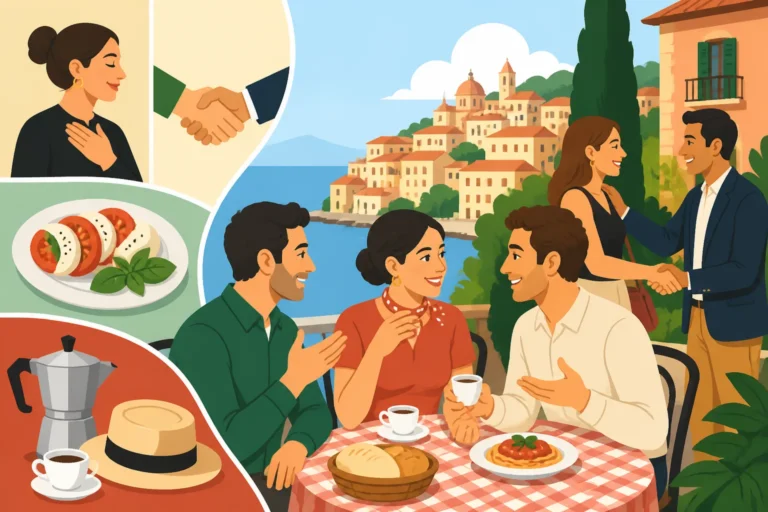
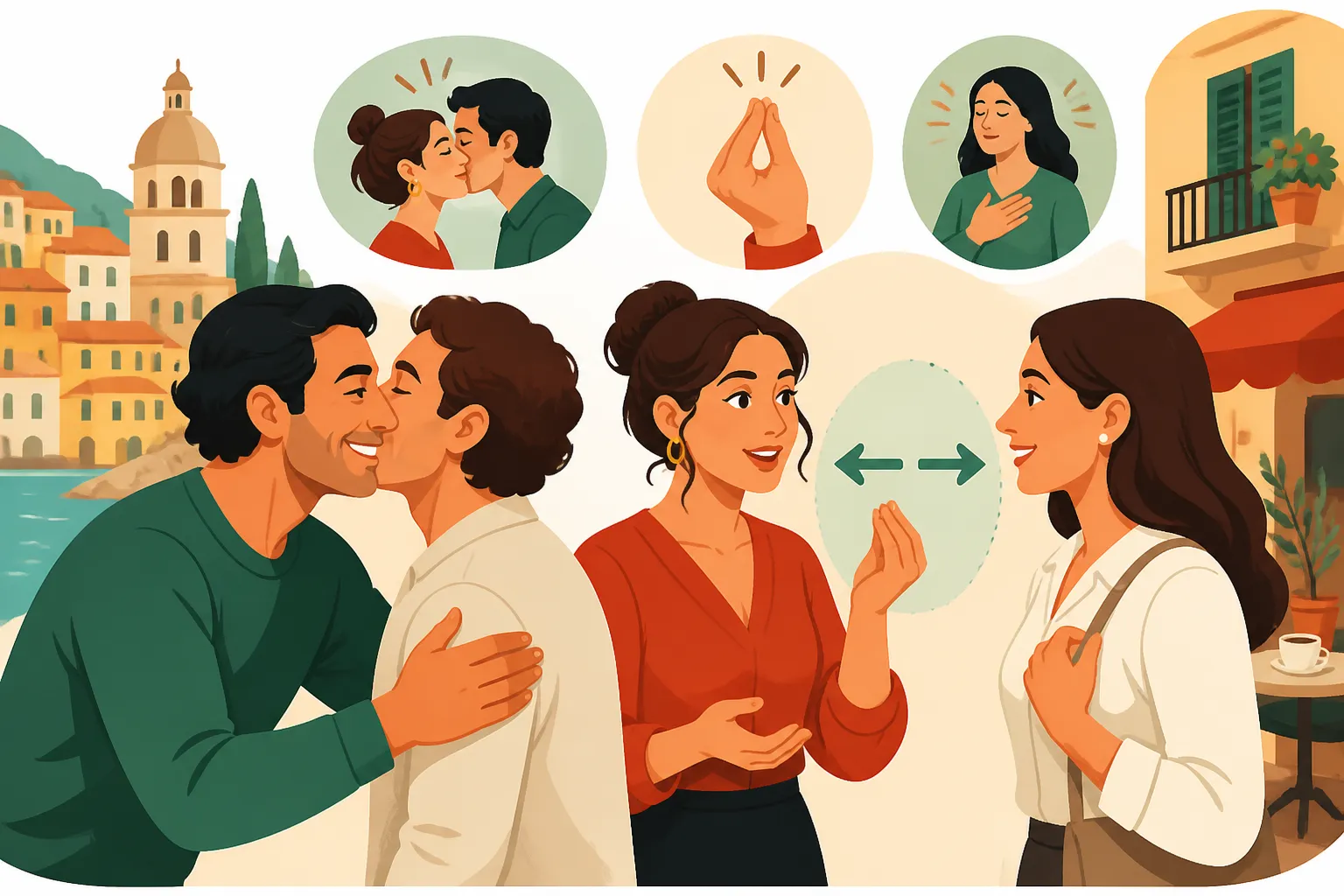
Ah, il bacetto – the double-cheek kiss. This is probably one of the most confusing greetings for many foreigners, and let me tell you, I’ve had my fair share of awkward mid-air collisions trying to figure it out! The general rule is that it's a social kiss, almost always air-kisses, landing on the cheek rather than the lips, and typically goes right-left. It's not usually a greeting you'd offer to a complete stranger or someone in a very formal business setting.
You'll commonly see it exchanged between friends, family members, and acquaintances. Women usually kiss both men and women, while men might kiss women, and increasingly, men will kiss other men, especially if they are good friends or relatives. The trick is to observe. If someone leans in, offer your cheek. Don't go in for a full-on hug or a kiss on the mouth unless you know the person very well. Remember, it's less about actual lip-to-skin contact and more about the gesture of closeness and warmth. If in doubt, a warm smile and a polite "Buongiorno" or "Buonasera" with a slight nod will usually suffice, and you can let the other person initiate further physical contact.
Handshakes and Hugs
The handshake, or stretta di mano, is the most common formal or semi-formal greeting in Italy. It’s what you'll use when meeting someone for the first time in a professional context, when introduced to an acquaintance of a friend, or when interacting with service providers like bank tellers or government officials. A good, firm handshake with direct eye contact is standard. Men will almost always shake hands with other men, especially upon introduction.
Hugs, on the other hand, are reserved for genuine affection and closeness. You'll see close friends, family members, or long-lost relatives embracing warmly. It's not a general social greeting like in some other cultures. If an Italian friend hasn't seen you in ages, a hearty hug might accompany the double-cheek kiss, but you wouldn't typically hug a new acquaintance. As a rule, let the Italians lead when it comes to physical touch beyond the handshake, especially when you are just getting to know someone. It's always better to be slightly reserved initially than to overstep the boundaries of personal space.
Navigating Italian Hand Gestures: A Language in Itself
Italy is famous for its hand gestures, and for good reason! Italians often "speak with their hands," using gestures not just to emphasize words, but to convey entire meanings without uttering a sound. It's a fascinating, complex, and sometimes bewildering aspect of Italian communication. Trying to understand these gestures can be like learning a second language, but it's an incredibly rich and expressive one.
Common Gestures and Their Meanings
Many gestures have very specific meanings, and mistaking one for another can lead to amusing (or awkward) misunderstandings. The most iconic is probably the "pinecone" gesture, where all fingers are brought together, pointing upwards, and the hand is moved up and down. This typically means "What do you want?" or "What are you saying?" – often with an implied sense of exasperation or incredulity. It’s so quintessentially Italian that trying to emulate it as a tourist can sometimes feel forced, but observing it is part of the fun.
Another common gesture involves bringing the fingertips to the thumb, then pulling the hand away, often with a "Mmmwah!" sound. This signifies "perfect" or "delicious," especially in reference to food. You'll see it a lot in restaurants or when complimenting a meal. Pointing a finger at your cheek and twisting it (sometimes with the sound of "gnam gnam") indicates that something is tasty. If someone puts a finger under their eye and pulls down slightly, it usually means "be careful" or "watch out." Understanding these basic signals can really enhance your comprehension of a conversation, even if your Italian is still a work in progress.
Avoiding Misinterpretations
The key to navigating Italian gestures is less about performing them yourself and more about recognizing them. If you try to mimic too many gestures without truly understanding their context, you might end up looking silly or, worse, accidentally offending someone. My advice? Observe, observe, observe! Watch how Italians use their hands in different situations. Notice their facial expressions and the tone of their voice when they make certain gestures. Over time, you’ll start to pick up on the nuances.
For instance, flicking a hand upwards under the chin can mean "I don't care," "I couldn't care less," or even "no" in a dismissive way. If you see someone doing this, it's probably not an invitation for further conversation. A hand held up, palm out, fingers spread wide, and moving back and forth might mean "go away" or "stop." Don't be shy about asking a trusted Italian friend what a gesture means if you’re genuinely curious – they’ll likely be delighted to explain this unique part of their culture. It’s part of the journey when you're Italian Language and Everyday Communication for Visitors.
The Expressiveness Factor
Beyond specific meanings, Italian gestures contribute to an overall sense of expressiveness that can be quite invigorating. Conversations often involve a full-body performance, with hands, arms, shoulders, and facial expressions all playing a role in conveying emotion and meaning. This isn't just for dramatic effect; it's an integral part of how Italians communicate. They use gestures to add emphasis, clarify meaning, and even punctuate sentences.
This expressiveness can sometimes be misconstrued by foreigners as anger or aggression, especially if you're used to more subdued communication styles. However, often it's simply passionate discussion or a lively exchange of ideas. Don't be alarmed if a conversation gets loud and hands are flying – it's often just a sign of engagement and enthusiasm! It’s a stark contrast to some cultures, and embracing this aspect of Italian interaction will deepen your understanding of the people. This vibrancy is also reflected in the broader culture, like when you're exploring Italian Festivals, Holidays, and Traditions in Italy.
Understanding Personal Space (Spazio Personale) in Italy
If you’re from a country where people maintain a respectful arm’s length during conversations, Italy’s approach to personal space might feel like a significant adjustment. Italians tend to have a much smaller "personal bubble" than many North Americans or Northern Europeans, which can initially feel intrusive but is simply a different cultural norm.
The Italian Bubble: Closer Than You Think
When you're chatting with an Italian, don't be surprised if they stand closer to you than you're accustomed to. This isn't a sign of aggression or discomfort; it's a demonstration of warmth and engagement. Maintaining eye contact and standing relatively close is a way to show you're paying attention and fully invested in the conversation. If you instinctively step back, they might perceive it as a sign of disinterest or aloofness, and simply close the gap again. It's a gentle dance that many of us expats learn through trial and error!
This proximity extends beyond one-on-one conversations. In queues at the post office, market, or even at the bar, Italians will stand much closer to the person in front of them. This isn't necessarily cutting in, but rather a standard way of holding one's place. If there's a significant gap, it's often seen as an open invitation for someone else to step in. So, don't be afraid to close ranks a bit when queuing, otherwise, you might find yourself losing your spot!
Physical Touch in Conversation
Another aspect of Italian personal space is the prevalence of light, casual touch during conversations. It's common for an Italian to lightly touch your arm, shoulder, or even your hand to emphasize a point, express warmth, or get your attention. This isn't meant to be flirtatious or overly personal; it's simply another layer of communication that adds to the overall expressiveness.
Again, the key is to observe and react naturally. If a new acquaintance lightly touches your arm while speaking, a stiffening or pulling away might send the wrong signal. A relaxed, open posture is usually the best response. Over time, these touches will become a normal part of your interactions and feel less unusual. This is especially true when you're in a more relaxed social setting, like when you’re Making Friends in Italy as a Foreigner.
Public vs. Private Space
The distinction between public and private space also plays a role. In public spaces like piazzas, markets, or bustling streets, the concept of a strict personal bubble largely evaporates. People are accustomed to being in close proximity, navigating crowds, and often bumping into one another without a second thought. This density is just part of the urban experience.
However, in private settings, such as someone's home, the sense of personal space, while still closer than some cultures, becomes more defined. You wouldn't barge into someone's kitchen without an invitation, for example. Understanding this fluid definition of space – close in public, closer in casual conversation, but still respecting boundaries in private domains – is crucial. Remember to be mindful of your tone and body language, especially if discussing sensitive topics. If you’re ever unsure about What Topics to Avoid in Casual Conversation in Italy, it’s always best to err on the side of caution.
Social Etiquette Beyond the Basics
Italian social customs extend beyond just how people greet or gesture. There are unwritten rules about everything from eye contact to dining, and understanding these can help you integrate more smoothly into daily life.
Eye Contact and Body Language
Direct eye contact is generally seen as a sign of sincerity and engagement in Italy. When someone is speaking to you, maintaining eye contact shows that you are listening and respecting them. Avoiding eye contact can be interpreted as shyness, evasiveness, or even disrespect. It’s part of the warmth and directness of Italian communication. Of course, staring intently can be unsettling, so aim for a natural, engaged gaze.
Beyond eye contact, your overall body language speaks volumes. An open posture, facing the person you're speaking to, and mirroring their general level of animation (without exaggerating) can help build rapport. If you're slumped, crossing your arms tightly, or constantly checking your phone, you might inadvertently convey boredom or disinterest. Italians are incredibly attuned to non-verbal cues, so being mindful of your posture and expressions is important. This is particularly relevant when you're thinking about Dress Codes and Bella Figura in Italy, as your appearance and demeanor always contribute to your overall impression.
Dining Etiquette: Sharing Space at the Table
Dining in Italy is a social event, often a prolonged and lively affair. Restaurant Etiquette in Italy: Coperto, Courses, and the Bill dictates that tables are often set closer together, and conversations can be animated and spirited, meaning the ambient noise level is often higher than in some other countries. This is part of the experience; don't expect hushed tones in a typical Italian trattoria. Being part of the bustling atmosphere means accepting a certain level of closeness and lively chatter.
At the table, sharing is often a gesture of hospitality. While everyone typically orders their own courses, it's not uncommon to offer a taste of your dish to close friends or family. Good table manners are also important: keep your hands visible (not in your lap), don't talk with your mouth full, and use your fork and knife correctly. And when it comes to ordering, check out Ordering Food and Drinks in Italian: A Practical Phrasebook to get it just right! You'll rarely see Italians "doggy-bagging" leftovers, as it's not a common practice.
Politeness and Forms of Address (Lei vs. Tu)
The distinction between the formal "Lei" (you, singular formal) and the informal "tu" (you, singular informal) is a cornerstone of Italian politeness, much like in French or German. Misusing these can create awkward situations. As a general rule, when meeting someone new, especially an older person, someone in a service role (like a shopkeeper, waiter, or official), or anyone in a professional setting, always start with "Lei."
They might then invite you to use "tu," saying something like "Dammi del tu" (give me the "tu") or simply switching to "tu" themselves. This is your cue to reciprocate. If they don't, continue with "Lei." It shows respect and acknowledges the social distance until a closer relationship is established. This applies to both spoken and written communication. Even when dealing with simple transactions, like asking about Tipping in Italy: When, Where, and How Much, maintaining the correct form of address is a sign of good manners. When you’re trying to navigate public services, it's often best to maintain a formal tone, as in official settings, they're generally stricter with proper forms of address.
| Greeting/Gesture | Meaning/Context | Usage | Faux Pas to Avoid |
|---|---|---|---|
| Ciao | Informal "Hello/Goodbye" | Friends, family, peers, children, casual settings | Using it with strangers, elders, or officials initially |
| Buongiorno/Buonasera | Formal/Neutral "Good day/evening" | Strangers, elders, officials, service staff, professional settings | Using "Ciao" instead of these in formal situations |
| Arrivederci | Formal/Neutral "Goodbye" | Most situations when departing | Using "Ciao" when unsure of familiarity |
| Il Bacetto (Double-cheek kiss) | Air-kisses, right then left cheek | Close friends, family, acquaintances, men/women, women/women | Trying it with strangers; actual lip contact |
| Stretta di Mano (Handshake) | Formal/neutral greeting | First introductions, professional settings | Too weak/strong grip; not making eye contact |
| Mano a borsa (Fingers together, pointing up, shaking) | "What do you want/saying?" "What's wrong?" | Expresses confusion, exasperation, incredulity | Using it playfully if you don't grasp the nuanced context |
| Mano a becco (Thumb and forefinger together, pecking motion) | "Perfect!" "Delicious!" | Complimenting food, agreeing enthusiastically | Using it as "I want money" (a different, subtle gesture) |
| Tocca ferro (Touching iron/wood) | Knock on wood (for good luck/ward off bad luck) | When mentioning something that could go wrong | Not understanding its superstitious context |
Common Pitfalls and How to Recover
Even with the best intentions, you’re bound to make a few social blunders in Italy. It’s part of the learning curve for every expat. The good news is that Italians are generally very forgiving of foreigners who are genuinely trying to learn and adapt.
The "Too Formal/Too Informal" Dilemma
One of the most frequent mistakes involves the "Lei" versus "tu" conundrum. Many foreigners default to "tu" because it feels more natural in English, where there's no such distinction. The consequence is usually minimal: a polite Italian might simply continue to use "Lei" with you, subtly correcting you, or they might just let it slide, assuming you don't know any better.
To recover, simply listen. If you've used "tu" and they respond with "Lei," take it as a gentle hint. The next time you address them, switch to "Lei." If they invite you to use "tu," thank them and use it. Don't beat yourself up about it; it’s a tricky part of the language. In general, it’s always safer to start formal and let the other person guide you to informality. This also applies when navigating professional settings, as described in Work Culture in Italy: What Expats Should Expect.
Over-gesturing vs. Under-gesturing
Some expats, eager to embrace the culture, might try to use every Italian gesture they see, often out of context or with exaggerated movements. This can look unnatural and sometimes even a bit comedic. Conversely, if you come from a culture with very subdued body language, you might seem stiff or unengaged to Italians.
The best approach is balance. You don't need to become a maestro of hand gestures overnight. Focus on being an active listener, maintaining engaged eye contact, and using open body language. As for gestures, start by simply observing and understanding. If a particular gesture feels natural to you in a specific context, go for it. If not, a warm smile and expressive facial gestures will convey plenty. Remember that genuine engagement is more important than perfect gesture imitation.
Accidental Space Invasion: What to Do
The closer personal space in Italy can lead to some awkward moments, especially if you're instinctively backing away. You might find yourself inadvertently creating too much distance, which can be interpreted as coldness.
If you realize you’ve been backing up, just try to maintain a comfortable but slightly closer distance. Don't feel you have to press yourself against someone, but aim for a proximity that feels engaged rather than distant. If someone steps closer to you, try to hold your ground rather than retreating. A good rule of thumb is to allow for about half the distance you might typically maintain in your home country. Remember, it's not a breach of your space, but a cultural sign of friendliness. You'll get used to it, I promise! Just lean into the experience, and soon you'll be navigating Italian social interactions with a confidence you never thought possible. How to Behave at an Italian Family Meal often involves this close proximity and lively interaction, so it’s good practice!
Remember, these are general observations. Italy is a diverse country, and nuances can vary from region to region, and even from person to person. The most important thing is to approach interactions with an open mind, a respectful attitude, and a willingness to learn. Italians are often very appreciative of foreigners who make an effort to understand and participate in their culture, even if it means a few missed cues along the way. Be patient with yourself, observe, learn, and enjoy the rich tapestry of Italian social life!
Disclaimer
The information provided in this guide is for general informational purposes only and does not constitute professional advice. While we strive to offer accurate and up-to-date content, social customs and regulations can change, and individual experiences may vary. Always cross-reference information with official sources and local experts. The author and publisher are not responsible for any actions taken based on the information in this guide.