How to Behave at an Italian Family Meal
Walking into an Italian home for a Sunday lunch can feel like entering a high-stakes theatrical performance where you do not have the script. One wrong move with a piece of bread or an ill-timed comment about the sauce can lead to an afternoon of awkward silences. This guide provides the unspoken rules and cultural nuances needed to navigate an Italian family meal with the grace of a local insider.
Disclosure: This post may contain affiliate links. We may earn a commission at no extra cost to you if you make a purchase through these links. Read full disclosure.
The Art of the Arrival: Gifts, Time, and Greetings
The first hurdle of the Italian family meal occurs before you even sit down at the table. In Italy, the concept of "Bella Figura"—presenting oneself well—is not just about fashion; it is about social grace and showing respect to your hosts. When you are invited into someone's home, you are being brought into the inner sanctum of the family. This is a significant gesture, and your arrival sets the tone for the entire multi-hour event.
One of the biggest misconceptions for expats is the idea of "Italian time." While it is true that a 1:00 PM lunch invitation often implies that the first course might not hit the table until 1:30 PM, arriving at 2:00 PM is a grave insult. Aim to arrive about 10 to 15 minutes after the stated time. This gives the host a small buffer to finish last-minute preparations without making you seem eager or, conversely, disrespectful of their schedule. If you are traveling from another city, using a reliable platform like Omio can help you coordinate your trains or buses to ensure you aren't the one guest holding up the antipasto.
Bringing a gift is non-negotiable. However, the choice of gift requires careful thought. A tray of paste (small artisanal pastries) from a local pasticceria is the gold standard for Sunday lunch. If you choose to bring wine, be aware that many families, especially in more rural regions or the south, may serve their own house wine or have a specific bottle already selected to pair with the meal. Bringing a bottle is a lovely gesture, but do not be offended if it isn't opened immediately; it is often kept for the host's future use. Avoid bringing heavy desserts like a full cake unless specifically asked, as the host has likely already spent days preparing a sweet finale. For those staying in a rental booked via Booking.com, ask your local host for the best neighborhood bakery to ensure your gift is of high quality.
Greetings are equally vital. Expect to be introduced to everyone from the Great-Aunt to the youngest toddler. The standard Italian Greetings and Etiquette: Kissing on the Cheek involves a light touch of the cheeks, starting with the left. If you are meeting the elders for the first time, a firm handshake and a polite "Piacere" (Pleasure) is often more appropriate until they initiate the cheek-kiss.
Navigating the Course Marathon
An Italian family meal is not a single event; it is a marathon of flavors and social interaction. Unlike the "all-on-one-plate" style common in North America or Northern Europe, the Italian meal is strictly sequential. Understanding the rhythm of these courses is essential for your digestive health and your social standing at the table. You will start with the Antipasto (appetizers), move to the Primo (usually pasta, risotto, or soup), follow with the Secondo (meat or fish) accompanied by Contorni (vegetable side dishes), and finish with fruit, dessert, coffee, and a digestivo.
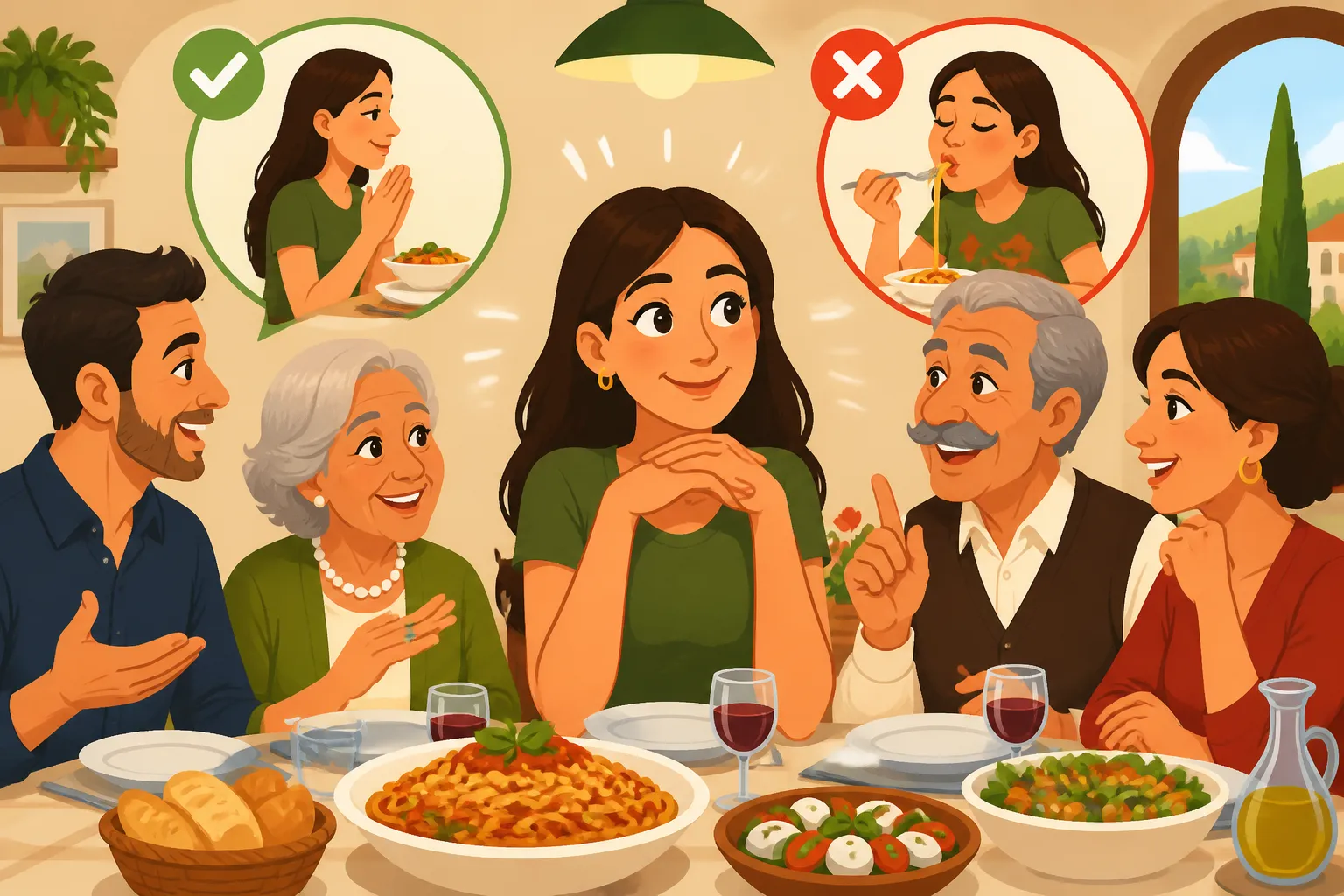
The most common mistake foreigners make is over-eating during the Primo. When a massive bowl of lasagna or tagliatelle al ragù is placed in front of you, it is tempting to clear the plate and ask for seconds. However, you must remember that the Secondo is still coming. Pacing is the key to survival. If you eat too much too early, you will struggle to finish the meat course, which can be interpreted by the host as a sign that the main dish was not to your liking. In the context of How to Eat Like a Local in Italy: Meal Structure and Timing, the meal is designed to be a long, slow experience where conversation is as important as the calories.
Bread etiquette is another area where many expats stumble. In an Italian home, bread is rarely eaten as an appetizer with butter. Instead, it sits on the table as a tool. You use it to push food onto your fork or, most importantly, to perform the "fare la scarpetta" (making the little shoe). This involves using a small piece of bread to soak up the remaining sauce on your plate after the pasta is gone. While considered slightly informal, in a family setting, performing a scarpetta is the ultimate compliment to the cook. It shows that the sauce was so delicious you couldn't bear to leave a single drop. For more on the specifics of these dishes, you might want to look into Pasta in Italy: Regional Shapes and Sauces to Try to understand the work that went into what you are eating.
| Meal Phase | Expectations | Common Pitfalls |
|---|---|---|
| Arrival | Arrive 10-15 mins late; bring pastries. | Arriving empty-handed or too early. |
| Antipasto | Sample small amounts of everything. | Filling up on bread and olives. |
| Primo | Pace yourself; never cut long pasta. | Asking for cheese on seafood pasta. |
| Secondo | Meat/Fish is the star; eat your veggies. | Ignoring the side dishes (contorni). |
| Coffee | No milk after lunch; drink it standing or sitting. | Ordering a cappuccino after noon. |
| Departure | Stay for at least 30-45 mins after coffee. | "Eating and running." |
Drinking and Dining Etiquette
Water and wine are the only two liquids that should be on an Italian dining table during a family meal. Soda is occasionally present for children, but for adults, it is considered a distraction from the food. There is a specific ritual to pouring: always offer to pour for your neighbors before filling your own glass. If you are the guest, your host will likely be very attentive to your glass. If you have reached your limit with wine, leave your glass half-full; a completely empty glass is an invitation for a refill.
One of the most rigid rules in the Italian Social Customs: Greetings, Gestures, and Personal Space involves the intersection of dairy and seafood. If you are served a pasta dish with any kind of shellfish or fish, never—under any circumstances—ask for grated Parmigiano. To an Italian, the strong flavor of the cheese overpowers the delicate saltiness of the sea, and asking for it is a signal that you do not trust the cook’s seasoning. Similarly, while the "no cappuccino after noon" rule is well-known, it is even more strictly enforced in a home setting. After a heavy meal, a shot of espresso is seen as a digestive aid, whereas a milky coffee is viewed as a second meal that will sit heavy in your stomach.
Conversation at the table is a sport. It is loud, overlapping, and passionate. Do not be intimidated by the volume; it is a sign of engagement, not anger. However, as a guest, you should be mindful of What Topics to Avoid in Casual Conversation in Italy. While Italians love to discuss politics and the economy in the abstract, bringing up controversial local political figures or sensitive historical topics can dampen the mood. Stick to "safe" passions: travel, the quality of the ingredients in the meal, and local traditions. If you have recently taken a food tour through GetYourGuide, sharing what you learned about Italian ingredients can be a great way to show your genuine interest in their culture.
Complimenting the cook is an essential part of the etiquette, but it must be specific. Simply saying "It’s good" is insufficient. Instead, comment on the texture of the pasta, the freshness of the tomatoes, or the tenderness of the meat. If the host mentions the origin of the ingredients—perhaps the oil is from a cousin’s grove or the wine is from a neighbor—respond with genuine interest. This acknowledges the effort and the "km 0" (local) philosophy that many Italian families pride themselves on.
Survival Tactics for the Nonna Factor
In almost every Italian family meal, there is a matriarchal figure, the Nonna, whose primary mission in life is to ensure you are fed beyond the point of physical capacity. This is where the most delicate social maneuvering takes place. When Nonna offers you a third helping of lasagna, a simple "No, thank you" is rarely accepted. It is often met with, "But you didn't eat anything!" or "Are you sick?"
The strategy here is the "Polite Persistence." You must compliment the dish profusely, explain that it is the best thing you have ever tasted, and then gently touch your stomach while explaining that you must save room for the equally delicious Secondo. If you are staying in a city like Rome or Florence, you can even mention that you have a long walk back to your accommodation to settle the meal. This shows that you are not rejecting the food, but rather respecting your body's limits so you can enjoy the rest of the experience.
As the meal draws to a close, you will be served fruit and then the dolce. Following the dessert comes the espresso and the ammazzacaffè (the coffee killer). This is usually a strong liqueur like Limoncello, Grappa, or Mirto. Even if you aren't a big drinker, taking a small sip is a sign of participation in the final ritual of the meal.
Leaving is the final test. There is a concept in Italy called "la spaghettata di mezzanotte" (the midnight spaghetti), which symbolizes the idea that meals can last forever. While a lunch won't go until midnight, you should never leave immediately after the coffee. Doing so makes it look like you only came for the food. Stay for at least 30 to 60 minutes after the meal has technically ended, engaging in the chiacchierata (the chat). When it is finally time to go, thank everyone individually. If you have made a good impression, you might even find yourself leaving with a "pacchettino"—a small parcel of leftovers that you’ll be grateful for when you're back in your room.
Disclaimer
The information provided in this guide is intended for educational and cultural integration purposes only. Social customs and etiquette in Italy can vary significantly by region, city, and even individual family tradition. While this guide aims to provide a comprehensive overview based on general Italian practices, readers should remain observant and follow the lead of their hosts in any specific social situation. The author and publisher are not responsible for any social misunderstandings or consequences resulting from the use of this information.