Pasta in Italy: Regional Shapes and Sauces to Try
Walking into an Italian ristorante or browsing a local mercato for pasta can be an absolutely delightful, yet utterly overwhelming, experience. It's not just "pasta" here; it's a universe of shapes, textures, and names, each with a story and a regional allegiance. If you've ever stared at a menu wondering what strozzapreti or paccheri actually are, let alone what sauce they're supposed to go with, you're not alone. This guide is your friendly expat companion, designed to demystify Italy's incredible pasta diversity, helping you understand the regional nuances and savor every delicious bite like a seasoned local.
Disclosure: This post may contain affiliate links. We may earn a commission at no extra cost to you if you make a purchase through these links. Read full disclosure.
The Pasta Landscape of Italy: More Than Just Spaghetti
Italy's relationship with pasta is deeply rooted in its history, geography, and cultural identity. It's not merely food; it's an art form, a daily ritual, and a source of immense regional pride. To truly appreciate pasta in Italy, you have to understand that it's a reflection of the land and its people, evolving distinctly from north to south.
A Brief History and Regionality of Italian Pasta
Forget what you think you know about pasta's origins; while Marco Polo might have brought noodles back from China, archaeological evidence shows pasta was being made in Italy long before that. The Etruscans were already making a form of pasta, and the Romans had their own grain-based dishes. What really cemented pasta's place in Italian cuisine, however, was the rise of regional specialties and agricultural diversity.
In the cooler, more fertile northern regions, where eggs were plentiful and durum wheat was less common, fresh, egg-based pasta became the norm. Think rich, delicate ribbons like tagliatelle or intricate stuffed pastas like tortellini. These pastas could be made by hand in small batches, often using the rich produce and dairy from the surrounding countryside. As you travel south, the climate becomes hotter and drier, perfect for growing hardy durum wheat. This led to the proliferation of dried pasta, made with just semolina flour and water, which could be stored for long periods and shipped easily. Southern Italy, particularly Campania, became the cradle of industrial pasta production, giving birth to iconic shapes like spaghetti, maccheroni, and fusilli. Each town, sometimes even each family, developed its own unique twist on a classic, resulting in the astounding variety we see today. The sauce, too, became intrinsically linked to the pasta shape, often dictated by local ingredients – seafood in coastal areas, game meats in the mountains, and hearty vegetable sauces where fresh produce thrived. This regionality is still paramount, and you'll find Italians fiercely proud of their local pasta traditions.
Fresh vs. Dried Pasta: Understanding the Divide
The most fundamental distinction in the Italian pasta world is between pasta fresca (fresh pasta) and pasta secca (dried pasta). It’s not just about how it’s preserved; it fundamentally alters the texture, cooking method, and ideal sauce pairing.
-
Fresh Pasta (Pasta Fresca): Typically made from soft wheat flour and eggs, sometimes with a little water, fresh pasta has a tender, delicate texture. It's often rolled thin, shaped by hand, and cooked very quickly – sometimes in mere minutes. Because of its delicate nature, fresh pasta thrives with lighter, richer sauces that cling to its surface or fill its pockets. Think creamy butter and sage sauces, slow-cooked meat ragù, or simple vegetable purées. Common examples include tagliatelle, fettuccine, ravioli, tortellini, and lasagne. You’ll find fresh pasta prominently in Northern and Central Italy, and it's often a highlight of family Sunday lunches or special occasions. Many small pastifici (pasta shops) across Italy specialize in freshly made pasta, often creating it right in front of you.
-
Dried Pasta (Pasta Secca): This is the pasta most familiar to many outside of Italy, typically made from durum wheat semolina and water, then extruded through dies and dried slowly at low temperatures. The drying process gives it a firm, chewy texture (al dente) that holds up well to more robust, rustic sauces. Its rough, porous surface, especially when extruded through bronze dies (trafilata al bronzo), is designed to capture and absorb hearty tomato sauces, chunky vegetable concoctions, and rich seafood dressings. Dried pasta is a staple throughout Italy, but particularly dominates the south. Iconic shapes like spaghetti, penne, rigatoni, fusilli, and orecchiette are all forms of dried pasta. It cooks slower than fresh pasta, and its firm bite is a hallmark of authentic Italian cooking.
Knowing this distinction is key to ordering well. If you're looking for a rich, slow-cooked ragù, you'll often find it paired with a fresh, broad noodle like pappardelle in Tuscany. But for a classic arrabbiata, a robust dried pasta like penne is the perfect vehicle.
Northern Italy: Hearty and Rich Pasta Traditions
When you venture into Northern Italy, the pasta scene shifts. Here, the rolling hills, cooler climate, and abundance of dairy and livestock have shaped a cuisine rich in butter, cream, and meat. Pasta often features eggs, making it tender and delicate, perfect for embracing the rich sauces of the region.
Emilia-Romagna: The Land of Egg Pasta and Rich Sauces
Ah, Emilia-Romagna! This region is often dubbed the "food valley" of Italy, and for good reason. It's the birthplace of Parmigiano Reggiano, Prosciutto di Parma, balsamic vinegar, and, famously, an incredible array of egg pasta. If you’re truly looking to dive into the pasta culture, this is a must-visit. You can often find fantastic local experiences through platforms like GetYourGuide, offering cooking classes or food tours that really highlight these regional specialties.
Here, the pasta is almost always fresh and handmade, often by skilled sfogline (women who roll pasta dough by hand). The dough is usually a simple blend of soft wheat flour and plenty of eggs, resulting in a golden, supple sheet.
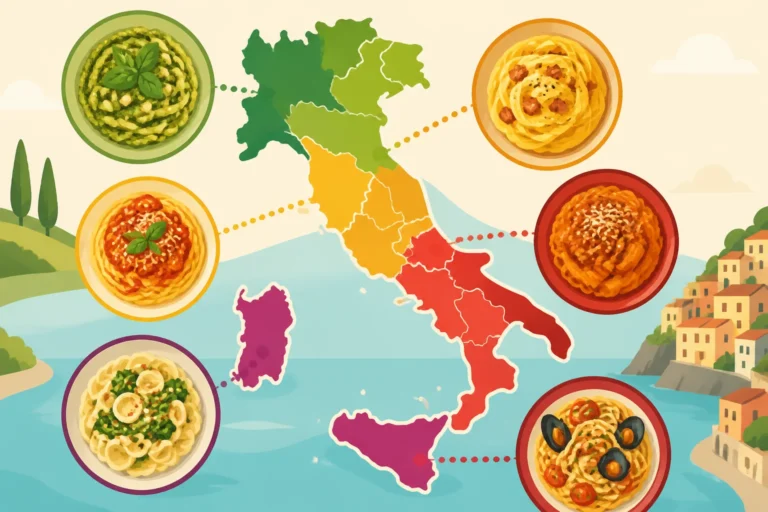
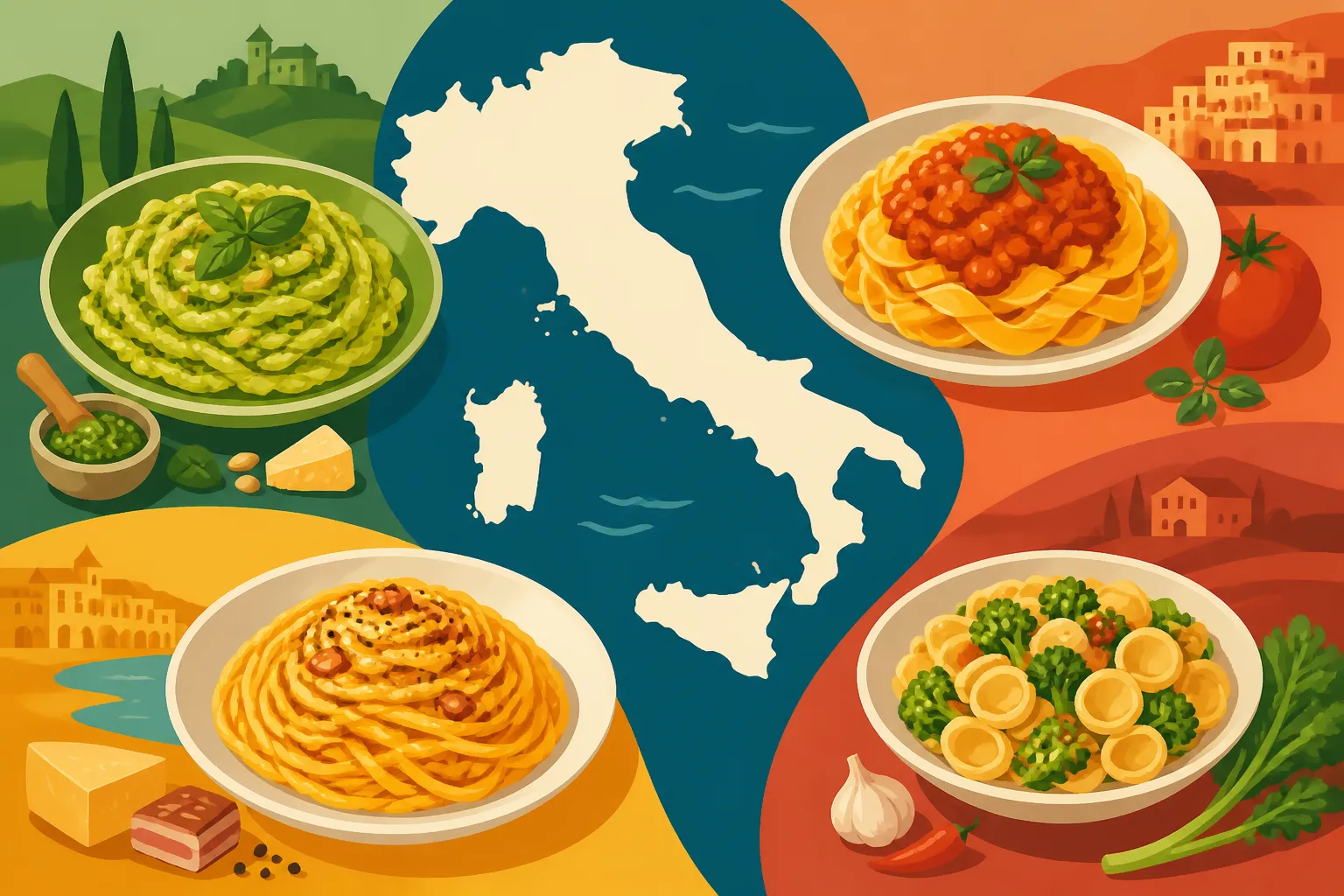
- Tagliatelle al Ragù: This is the quintessential dish of Bologna, a wide, flat egg noodle (about 8mm wide, as per Bolognese tradition) perfectly suited to scooping up a rich, slow-simmered meat sauce. And let's be clear: "Ragù" in Bologna is not spaghetti bolognese. It's a deeply flavorful sauce made with a mixture of ground beef and pork, often pancetta, vegetables (soffritto), tomato paste, milk or wine, and hours of patient cooking. The broad surface area of the tagliatelle provides ample space for the sauce to cling, ensuring a perfect balance in every bite.
- Tortellini in Brodo: These tiny, ring-shaped, stuffed pasta treasures are a Christmas and special occasion staple. Filled with a rich mixture of pork loin, prosciutto, Parmigiano Reggiano, egg, and nutmeg, they are traditionally served "in brodo" – in a clear, flavorful capon or chicken broth. The delicate pasta and savory filling are enhanced by the warmth and depth of the broth, creating a comforting and exquisite experience. It's a testament to the region's dedication to meticulous, small-scale culinary artistry.
- Lasagne Verdi al Forno: While lasagna is known worldwide, the Emilia-Romagna version is iconic. It features green pasta sheets (colored with spinach) layered with béchamel sauce, rich Bolognese ragù, and plenty of Parmigiano Reggiano, then baked until bubbly and golden. It’s a hearty, satisfying dish that showcases the region's love for creamy textures and slow-cooked meat sauces.
Liguria: Coastal Flavors and Unique Shapes
Venturing west to Liguria, the crescent-shaped region hugging the Italian Riviera, the pasta world transforms again. Here, the influence of the sea and the abundance of herbs, particularly basil, dictate the flavors. The pasta shapes are often robust, designed to pair with the region's most famous export: pesto.
- Trofie al Pesto: Trofie are small, thin, twisted pasta shapes, often described as corkscrews, that are perfect for catching the vibrant green Ligurian pesto. This pesto is traditionally made with fresh basil, pine nuts, garlic, Parmigiano Reggiano, Pecorino Sardo, and plenty of local olive oil, all pounded together in a mortar and pestle. The unique shape of the trofie allows the pesto to adhere beautifully, and the pasta itself often has a slightly chewy, firm texture. You might also find trenette al pesto, a flat, narrow noodle, as another classic pairing.
- Pansotti con Salsa di Noci: These delightful, crescent-shaped stuffed pastas are a Ligurian specialty, often filled with a mixture of local wild herbs (like borragine, spinaci selvatici) and ricotta, rather than meat. They are typically served with a delicate "salsa di noci" (walnut sauce), a creamy, rich sauce made from walnuts, breadcrumbs soaked in milk, garlic, marjoram, and olive oil. The mild, herbaceous filling of the pansotti perfectly complements the subtle sweetness and creaminess of the walnut sauce, creating a dish that feels both elegant and rustic.
Piedmont and Lombardy: Stuffed Pastas and Butter Sauces
In the northwestern regions of Piedmont and Lombardy, bordering France and Switzerland, the cuisine reflects alpine and agricultural traditions. Dairy is abundant, and the pasta here often takes the form of delicate, stuffed parcels served with rich, simple sauces that highlight the quality of the ingredients.
- Agnolotti del Plin: From Piedmont, these are tiny, pinched (hence "plin," meaning "pinch" in local dialect) pasta pockets, typically filled with roasted meats like beef, pork, and sometimes rabbit, often combined with escarole or spinach. What makes them truly special is how they are served: either al sugo d'arrosto (with the roasting juices from the meat that formed the filling) or simply with butter and sage. The delicate pasta and rich filling are the stars, not overwhelmed by a heavy sauce. They are a labor of love and a true taste of Piedmontese elegance.
- Pizzoccheri della Valtellina: A standout dish from the Valtellina valley in Lombardy, pizzoccheri are short, flat, dark gray pasta ribbons made from buckwheat flour, giving them a distinct earthy flavor and chewy texture. This is a hearty, mountain dish, traditionally served with potatoes, savoy cabbage or Swiss chard, butter, garlic, sage, and a generous grating of local Valtellina Casera cheese. It’s the ultimate comfort food for a chilly day, showcasing the rustic and robust flavors of the alpine region.
Central Italy: Rustic Simplicity and Robust Flavors
Moving south into Central Italy, the culinary landscape shifts again. Here, the terrain is more rugged, with rolling hills and agricultural plains. The pasta reflects this, often being heartier, more rustic, and designed to stand up to robust sauces made from cured meats, pecorino cheese, and rich tomato bases.
Lazio: Roman Classics You Can’t Miss
Rome and its surrounding Lazio region are famous for a quartet of pasta dishes that are beloved worldwide, yet truly shine in their authentic form here. These dishes are characterized by a beautiful simplicity, relying on a few high-quality ingredients to create powerful flavors.
- Cacio e Pepe: Perhaps the simplest and most iconic Roman pasta, "cheese and pepper" is exactly what it is. Made with Pecorino Romano cheese, freshly ground black pepper, and the starchy pasta cooking water, it creates an incredibly creamy, piquant sauce that coats long spaghetti or tonnarelli. The magic lies in the emulsification of the cheese and water, resulting in a smooth, rich coating without any cream. It’s a masterclass in minimalist perfection.
- Spaghetti all'Amatriciana: Hailing from the town of Amatrice (though fiercely claimed by Rome), this sauce is a savory symphony of guanciale (cured pork jowl), Pecorino Romano cheese, black pepper, and usually San Marzano tomatoes. Some purists argue for no onion, others include it. The rendered fat from the guanciale provides the base, creating a deeply flavorful sauce that pairs perfectly with spaghetti, bucatini (a hollow spaghetti), or rigatoni.
- Spaghetti alla Carbonara: Oh, carbonara. The bane of many non-Italian chefs who dare to add cream! An authentic Roman carbonara is made with just five ingredients: guanciale, Pecorino Romano cheese, egg yolks (and sometimes a whole egg), black pepper, and pasta (typically spaghetti or rigatoni). The hot pasta, tossed with the crisp guanciale and a mixture of eggs and cheese, creates a rich, creamy, and undeniably luxurious sauce that clings perfectly. It's a dish of pure indulgence and a true Roman triumph.
- Pasta alla Gricia: Often called "white Amatriciana," gricia is Amatriciana's lesser-known but equally delicious ancestor, preceding the introduction of tomatoes to Italian cuisine. It features guanciale, Pecorino Romano, and black pepper, creating a deeply savory, salty, and comforting dish. It’s a wonderful example of Roman ingenuity, turning simple pantry staples into something extraordinary. When traveling to Rome, considering booking local food tours through platforms like Booking.com experiences or GetYourGuide to ensure you try these dishes in authentic settings.
Tuscany and Umbria: Thick Pastas and Game Sauces
In the rolling hills and dense forests of Tuscany and Umbria, the pasta often takes on a more rustic character, reflecting the agricultural and hunting traditions of these regions. Here, you'll find thicker, heartier pasta shapes designed to stand up to rich, slow-cooked game sauces.
- Pici all'Aglione: From Southern Tuscany, pici are thick, hand-rolled spaghetti-like noodles made from flour, water, and sometimes a little olive oil. Their rustic, chewy texture is utterly satisfying. One of the most classic pairings is pici all'aglione, a simple yet potent sauce made with plenty of aglione (a local, milder garlic), ripe tomatoes, and olive oil. The garlic is slow-cooked until sweet and mellow, creating a rich, flavorful tomato sauce that perfectly coats the robust pici.
- Pappardelle al Cinghiale: Pappardelle are wide, flat egg noodles, broader than tagliatelle, and they are the undisputed champion for rich game sauces in Tuscany. The most famous is pappardelle al cinghiale (wild boar ragù). The wild boar meat is typically slow-cooked for hours with vegetables, herbs, and red wine until it's incredibly tender and flavorful. The broad surface of the pappardelle is ideal for capturing every succulent shred of meat and rich drop of sauce, making it a hearty and unforgettable dish. This pasta showcases the Tuscan love for robust, earthy flavors drawn directly from the land.
Marche and Abruzzo: Mountain and Sea Influences
The regions of Marche and Abruzzo, straddling the Adriatic coast and the Apennine mountains, offer a fascinating blend of culinary traditions. Here, pasta reflects both the bounty of the sea and the rustic fare of the mountains.
- Maccheroni di Campofilone: From the Marche region, maccheroni di Campofilone are incredibly fine, hair-thin egg pasta, similar to angel hair. Despite the name, they are not "macaroni" in the English sense but rather delicate strands. Due to their extreme thinness, they cook almost instantly and are traditionally served with a rich meat ragù, often made with a mix of beef, pork, and sometimes chicken giblets, simmered for hours. The delicate pasta gently absorbs the complex flavors of the slow-cooked sauce.
- Spaghetti alla Chitarra: A specialty of Abruzzo, spaghetti alla chitarra (guitar spaghetti) gets its name from the special tool used to make it. Dough is pressed through a device resembling a guitar with thin strings, which cuts the pasta into square-edged strands with a rough, porous texture. This unique texture is perfect for clinging to hearty, robust sauces. It's often paired with a classic Abruzzese ragù (lamb or mixed meats) or a simple tomato and basil sauce. The rough surface ensures every strand is coated in flavor, providing a satisfying chew.
Southern Italy: Diverse Shapes and Mediterranean Staples
Southern Italy is often considered the heartland of dried pasta. With a climate ideal for growing durum wheat and a history of robust agricultural traditions, this region boasts an incredible array of pasta shapes and vibrant sauces that celebrate the Mediterranean pantry: fresh vegetables, seafood, and rich tomato products.
Campania: The Home of Dried Pasta and Tomato Glory
Naples, the capital of Campania, is widely regarded as the birthplace of modern dried pasta. The abundance of excellent durum wheat, the hot sun for drying, and the proximity to the sea for trade routes made it a natural hub. The pasta here is incredibly varied, designed to pair with the region's famous tomatoes, seafood, and fresh produce.
- Spaghetti alle Vongole: This quintessential Neapolitan dish features spaghetti (or linguine) tossed with fresh clams (vongole veraci), garlic, chili, white wine, and parsley, often with a hint of cherry tomatoes. The elongated strands of spaghetti are perfect for slurping up the briny sauce and tender clam meat. It's a simple, elegant dish that perfectly captures the essence of coastal Campania.
- Paccheri al Forno: Paccheri are large, wide, tube-shaped dried pasta, originating from Campania. Their robust shape makes them ideal for hearty sauces or for stuffing and baking. Paccheri al forno often involves stuffing the tubes with ricotta, ragù, or other fillings, arranging them in a baking dish, covering with tomato sauce and cheese, and baking until golden and bubbling. It's a comforting, substantial dish, often seen at Sunday family meals. You'll find these large pasta shapes are fantastic vehicles for holding rich, chunky sauces.
- Rigatoni con la Pajata: This is a truly traditional Roman dish, though found throughout Lazio and Campania, and it’s for the adventurous eater! Pajata refers to the intestines of a suckling calf, which are prepared with their mother's milk still inside, creating a unique, creamy, and distinct flavor when cooked slowly in a rich tomato sauce. The ridged rigatoni are perfect for catching the sauce and the tender pajata. It's a taste of truly ancient Roman cuisine, an experience for those who want to delve deep into authentic local flavors.
Sicily: Arab Influences and Island Treasures
Sicily, with its long history of diverse cultural influences – particularly Arab, Norman, and Greek – boasts a pasta tradition unlike any other in Italy. The island's produce, from pistachios to eggplants and abundant seafood, finds its way into its distinct pasta dishes.
- Pasta con le Sarde: This is perhaps Sicily's most famous pasta dish, especially from Palermo. It’s a unique blend of flavors: fresh sardines, wild fennel, pine nuts, raisins, saffron, and onions, all tossed with bucatini or spaghetti. The combination of sweet, savory, and briny notes is extraordinary, reflecting the island's historical culinary fusions. It’s a must-try for anyone visiting Sicily and wanting to taste its historical depth.
- Anelletti al Forno: These small, ring-shaped pasta are unique to Sicily and are primarily used for baked pasta dishes, particularly the elaborate anelletti al forno. This dish is essentially a rich, baked pasta "pie" made with anelletti tossed in a hearty meat ragù (often with peas), layered with caciocavallo cheese, and sometimes eggplant, then baked. It's a celebratory dish, especially popular for picnics or special gatherings, and a true testament to Sicilian comfort food.
Puglia and Basilicata: Hand-Rolled Shapes and Vegetable Sauces
In the heel of Italy's boot, Puglia and Basilicata are renowned for their rustic, hand-rolled pasta shapes, often made simply with semolina flour and water. These shapes are designed to scoop up the region's abundant fresh vegetables and pulses, or robust meat sauces.
- Orecchiette con le Cime di Rapa: This is the iconic dish of Puglia. Orecchiette, meaning "little ears," are small, concave discs perfectly shaped to catch the florets and sauce of cime di rapa (broccoli rabe). The dish features the bitter greens sautéed with garlic, chili, and anchovies (often) in olive oil, creating a wonderfully flavorful and healthy meal. The slight bitterness of the greens balances beautifully with the savory elements and the simple, chewy pasta.
- Cavatelli con le Cozze e i Fagioli: Cavatelli are small, shell-shaped pasta, often with a slightly ribbed interior, perfect for holding chunky sauces. In Puglia and Basilicata, you’ll find them paired with a variety of vegetable and seafood combinations. A popular one is with mussels (cozze) and cannellini beans (fagioli), creating a hearty and flavorful dish that combines the bounty of the sea with the goodness of legumes. It's a fantastic example of the rustic yet refined flavors of Southern Italian home cooking.
- Troccoli al Sugo di Carne: From Puglia, troccoli are a thick, square-edged spaghetti-like pasta, made using a special rolling pin called a troccolaturo. Similar in texture to spaghetti alla chitarra, their robust nature makes them ideal for rich, slow-cooked meat sauces, particularly lamb or mixed pork and beef ragù, showcasing the region's agricultural heritage.
Decoding the Italian Menu: Ordering Like a Local
Navigating an Italian menu can be daunting, but with a little insider knowledge, you'll be ordering like a seasoned traveler in no time. Understanding a few key terms and the philosophy behind pasta and sauce pairings will elevate your dining experience. When you're ready to explore, local train and bus services, easily booked through Omio, can get you to these regional culinary hotspots.
Essential Pasta Terminology
Beyond just knowing the names of shapes, a few Italian terms will help you understand the menu and communicate with your waiter.
- Al dente: This literally means "to the tooth" and describes pasta that is cooked firm to the bite, not soft or mushy. This is the only way Italians eat pasta, as it retains its texture and allows the sauce to be absorbed better.
- Pasta Fresca: Fresh pasta, usually made with eggs.
- Pasta Secca: Dried pasta, typically made with durum wheat and water.
- Ragù: A slow-cooked meat sauce, often with tomatoes and vegetables. It's not just "meat sauce"; it's a specific, rich, and often regional preparation.
- Sugo: A broader term for sauce, often tomato-based or vegetable-based. For example, sugo al pomodoro (tomato sauce).
- Pesto: A cold sauce made from crushed ingredients, most famously pesto alla Genovese (basil, pine nuts, cheese, garlic, olive oil).
- Carbonara/Amatriciana/Cacio e Pepe/Gricia: These are specific Roman dishes, named after their unique sauce preparations, rather than the pasta shape itself, though traditional pairings are very strict.
- Primo Piatto: The first course in an Italian meal, where pasta dishes typically reside. Remember that How to Order a Full Italian Meal: Courses Explained is important for the full dining experience.
- Condimento: The seasoning or dressing for the pasta, essentially the sauce.
- Trafilata al bronzo: "Bronze-drawn" pasta. This refers to dried pasta extruded through bronze dies, which gives it a rough, porous surface that helps sauces cling better. It’s a mark of quality.
Pairing Pasta Shapes with Sauces: The Unwritten Rules
While you can put any sauce on any pasta, Italians have developed specific pairings over centuries that are simply the best. These aren't arbitrary rules, but rather practical considerations based on texture, shape, and how well a sauce adheres.
- Long, Thin Pastas (Spaghetti, Linguine): Best for lighter, smoother sauces that can coat each strand without being too heavy. Think simple tomato sauces, seafood sauces (alle vongole), or olive oil-based dressings. Their length allows for elegant twirling and ensures a consistent sauce-to-pasta ratio.
- Long, Flat Pastas (Fettuccine, Tagliatelle, Pappardelle): Their broad surface area is perfect for rich, thick, or creamy sauces, especially meat ragùs (like Bolognese) or cream-based sauces. The width helps them scoop up and carry the heavier sauce. Pappardelle, being the widest, is ideal for chunky game sauces like cinghiale.
- Short, Tubular Pastas (Penne, Rigatoni, Paccheri): These are workhorses for chunkier, more robust sauces with pieces of meat or vegetables. The hollow center and often ridged exterior are designed to trap sauce. They're excellent for baking dishes, too. Rigatoni all'Amatriciana or Penne all'Arrabbiata are classic examples.
- Small Shapes (Orecchiette, Cavatelli, Orzo): Great for lighter vegetable sauces, pesto, or served in soups. Their small size makes them easy to eat and allows them to blend seamlessly with smaller ingredients. Orecchiette are especially good with chunky vegetable sauces like cime di rapa.
- Stuffed Pastas (Ravioli, Tortellini, Agnolotti): The filling is often the star here, so these are usually served with very simple, delicate sauces that don't overpower the interior. Butter and sage, a light broth, or a simple tomato sauce are common. The aim is to complement, not compete with, the rich filling.
Understanding these principles will help you appreciate the thought that goes into Italian pasta dishes. It's a culinary philosophy that focuses on harmony and balance. So, when you're looking for How to Find Authentic Restaurants in Italy (Not Tourist Traps) or trying to figure out What Time Do Italians Eat Lunch and Dinner() for your next meal, keep these pairings in mind. Don't be afraid to use a few phrases from Survival Italian for Travelers: Key Phrases to Learn First to ask about regional specialties, or brush up on Italian Language and Everyday Communication for Visitors if you're feeling brave! Knowing What Is the Coperto on an Italian Restaurant Bill? and How to Ask for the Bill in an Italian Restaurant are also practical tips for smooth dining. For more general insights, check out Italian Food Culture: Eating Well as a Visitor and Restaurant Etiquette in Italy: Coperto, Courses, and the Bill.
Remember, exploring Italy's pasta is a journey through its diverse landscapes and rich history, one delicious bite at a time!
Disclaimer
The information provided in this guide is for general informational purposes only and is based on typical Italian culinary traditions and current available knowledge. Regional specialties and ingredients can vary, and recipes often have local variations. While we strive to provide accurate and up-to-date information, local regulations, restaurant practices, and seasonal availability may change. Always verify specific details with local sources or experts.