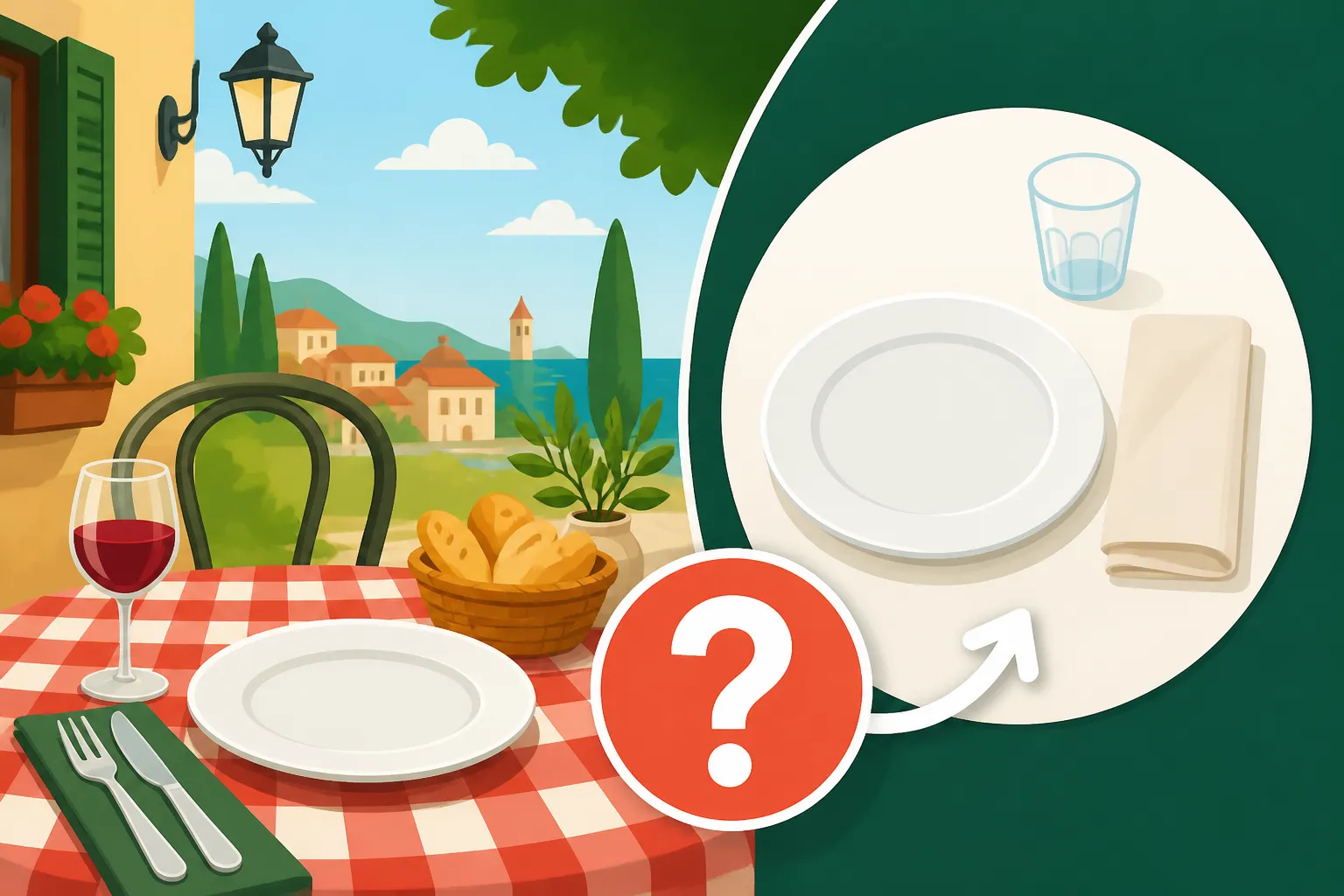
What Is the Coperto on an Italian Restaurant Bill?
You have just finished a sublime meal in a sun-drenched piazza, the last drops of Chianti lingering on your palate, only to receive a bill that is a few euros higher than you calculated. This guide explains the "coperto," that mysterious fixed charge on Italian restaurant receipts, and helps you navigate the cultural nuances of dining out so you never feel surprised by your final total again.
Disclosure: This post may contain affiliate links. We may earn a commission at no extra cost to you if you make a purchase through these links. Read full disclosure.
Understanding the Coperto: More Than Just a Bread Charge
If you have spent any time living in Italy or even just a week exploring the cobblestone streets of Florence or Rome, you have likely encountered the term "coperto" tucked away at the bottom of a menu or a receipt. For many newcomers, this feels like a sneaky hidden fee, but for us veterans who have lived here for years, it is simply a standard part of the tapestry of Italian Food Culture: Eating Well as a Visitor. The word itself translates to "covered," and its origins are as deep-rooted as the country’s history itself.
Back in the Middle Ages, travelers often stopped at inns and taverns to seek shelter from the elements. To save money, many of these travelers would bring their own food but use the inn's tables, chairs, and plates. To compensate the innkeepers for the use of the space and the cleaning of the linens, a "cover charge" was introduced. Fast forward several centuries, and while we no longer bring our own picnic baskets into a trattoria, the tradition of paying for the "place setting" remains. Today, the coperto generally covers the use of the tablecloth, napkins, cutlery, glassware, and—most importantly—the basket of bread that magically appears on your table before you even order.
It is important to understand that the coperto is almost always a fixed, per-person charge. Whether you order a four-course feast or just a simple salad, the charge remains the same. It typically ranges from 1.50€ to 4.00€ per person, though in high-end areas or famous tourist hubs, it can climb higher. Before you head out for your culinary adventure, you might use an app like Omio to book your train tickets to a new city, and while you are planning your journey, you should mentally budget this small fee into your dining costs. It is part of the experience, just like the olive oil on the table or the sound of Vespas zipping past.
Regional Variations and the Legal Landscape of the Coperto
One of the most confusing aspects of the coperto for foreigners is that it isn’t applied uniformly across the entire country. Italy is a land of fierce regionalism, and this extends to administrative rules regarding restaurant billing. If you are using a platform like Booking.com to find a charming apartment in Rome, you might notice that the dining culture there feels slightly different than in Milan or Venice. This is because the region of Lazio, which includes Rome, passed a law in 2006 that technically prohibits the use of the term "coperto" on bills.
However, do not be fooled into thinking your meal in Rome will be free of extra charges. In Lazio, restaurants often replace the coperto with a "pane e servizio" (bread and service) charge. This is a clever workaround that achieves the same result: a fixed fee per person for the table setting and the bread. If you choose to refuse the bread, in many cases, the charge still remains because it is bundled with the service of the table itself. In other regions, like Lombardy or Tuscany, the coperto remains the standard term used.
When you are exploring the backstreets of Venice, perhaps after booking a walking tour through GetYourGuide, you might stumble upon a restaurant in Piazza San Marco where the coperto is significantly higher—sometimes 6€ or 7€ per person. This is often because you are paying for "musica," especially if there is a live band playing. Always check the very bottom of the menu, usually in tiny print, for the words "Coperto" or "Servizio." This is where the veteran expat knows to look before even considering the appetizers. If you want to avoid these charges entirely, you can often eat at the bar ("al banco"). In many Italian bars, if you drink your espresso or eat your panino while standing up, you pay the base price with no cover charge. The moment you sit down and a waiter approaches you, the "service" clock starts ticking.
Coperto vs Servizio vs Mancia: Decoding the Bill
To truly master the art of Italian dining, you must distinguish between three distinct terms that often get lumped together by confused tourists: Coperto, Servizio, and Mancia. Failing to understand these can lead to overpaying or, conversely, feeling like you’ve accidentally insulted your server.
The "Servizio" is different from the coperto. While the coperto is a flat fee, the servizio is usually a percentage of the total bill—typically 10% to 15%. This is more common in areas with a high density of tourists or for very large groups (usually 8 or more people). If "Servizio" is already included on the bill, you are absolutely not expected to leave a tip. In fact, many locals find it redundant. This is where Money Matters in Italy: Banking and Finance for Expats comes into play; understanding how much you are actually spending versus what is a mandatory fee is key to managing your budget while living the "dolce vita."
Then there is the "Mancia," or the tip. Unlike in North America, tipping is not mandatory in Italy, nor is it calculated as a strict percentage. Because waitstaff in Italy are paid a livable wage and have professional contracts, they do not rely on tips to survive. If you’ve had exceptional service, leaving a couple of euros on the table is a lovely gesture, but it is never required. To help you visualize these differences, refer to the table below:
| Term | Description | Average Cost | Mandatory? |
|---|---|---|---|
| Coperto | Fixed charge for bread, linens, and table setting. | 1.50€ – 4.00€ per person | Yes (if listed on menu) |
| Servizio | Service charge, usually a percentage of the bill. | 10% – 15% of total | Yes (if listed on menu) |
| Mancia | Voluntary tip for good service. | Change or a few Euros | No, strictly optional |
Knowing this allows you to focus on the joy of the meal. If you have used GetYourGuide to find a hidden food tour in Trastevere, your guide will likely emphasize that the coperto is simply the price of "occupying" the space. When you are looking for a place to stay on Booking.com, try to find neighborhoods that are slightly away from the main tourist drag; the coperto is usually lower, and the bread is often fresher in these local spots.
Practical Etiquette and How to Navigate the Bill Like a Local
One of the greatest frustrations for foreigners is the feeling of being "scammed" when that extra 6€ or 8€ appears for a family of four. To avoid this, you need to change your mindset. Don't look at the coperto as a penalty; look at it as a "slow food" fee. In Italy, your table is yours for the night. No one is going to drop the check the moment you take your last bite of dessert to flip the table for the next customer. The coperto effectively pays for your right to linger, chat, and enjoy your Italian Wine, Coffee, and Aperitivo Culture for hours on end.
When it comes to the logistics of paying, you should know How to Ask for the Bill in an Italian Restaurant. You will rarely be brought the bill automatically. You must catch the waiter's eye and say, "Il conto, per favore." This is a crucial part of Italian Language and Everyday Communication for Visitors. Once the bill arrives, scan it for the word "Coperto." If it is there, and you enjoyed the bread and the atmosphere, simply pay the total. If you are traveling with a group and used Omio to coordinate your arrival times, it’s often easier to have one person pay the bill and others reimburse them via an app, as splitting the bill ten ways at the register is often met with a heavy sigh from the proprietor.
It is also worth noting that the quality of the "bread" you are paying for varies wildly. In Tuscany, the bread is famously saltless (pane sciocco), a tradition stemming from historical salt taxes. In the South, you might get incredibly rich, durum wheat loaves. If the bread is stale or poor quality, you still have to pay the coperto, but it's a good indicator that you should find a different spot for dinner tomorrow. For those who are meticulous about their dining experiences, learning Restaurant Etiquette in Italy: Coperto, Courses, and the Bill will help you blend in. Remember, the best way to avoid "tourist trap" pricing is to learn How to Find Authentic Restaurants in Italy (Not Tourist Traps) and look for places where the menu is only in Italian and the coperto is clearly stated.
Avoiding Surprises and Managing Your Expectations
The best way to handle the coperto is to expect it. Just as you expect to pay a city tax when you book a room on Booking.com, you should expect the coperto when you sit down for a meal. If you are traveling on a tight budget, look for "Tavola Calda" establishments or "Gastronomie," where you can get high-quality cooked food to take away or eat at a simple counter without any cover charge. This is a great way to save money while still enjoying Italy's Regional Cuisine: How Food Changes Across Italy.
If you find yourself in a situation where the coperto was not listed on the menu and yet appears on your bill, you are technically within your rights to point it out. Italian law requires all fixed costs to be clearly displayed to the consumer. However, as a veteran expat, I can tell you that picking a fight over 2€ is rarely worth the stress and the "brutta figura" (bad impression). It is better to simply make a mental note and move on. To make your trip even smoother, consider booking experiences through GetYourGuide where the meal costs are sometimes inclusive, or use Omio to find the most cost-effective ways to travel between these culinary capitals.
Lastly, don't forget the rhythm of the Italian day. Knowing What Time Do Italians Eat Lunch and Dinner? will help you arrive when the bread is freshest and the service is at its peak. When you finally sit down and see that "Coperto – 2.00" on the menu, take a deep breath, tear off a piece of crusty bread, and realize that you are paying for more than just a place setting—you are paying for the privilege of dining in one of the most beautiful countries in the world. Learning How to Order a Full Italian Meal: Courses Explained will ensure that you make the most of that "covered" table and every euro spent.
Disclaimer
The information provided in this guide is for informational purposes only and reflects the personal experiences and research of a long-term expatriate in Italy. While we strive to provide the most accurate and up-to-date information regarding local laws, regional regulations, and dining customs, these can change without notice. Always check the specific menu and local conditions at each establishment to confirm current pricing and policies. We are not responsible for any disputes or financial discrepancies that may arise during your travels.