What Time Do Italians Eat Lunch and Dinner?
You arrive in a charming piazza at 6:30 PM, your stomach growling after a long day of sightseeing, only to find every restaurant shuttered and the staff inside casually folding napkins. It is a classic "welcome to Italy" moment that leaves many foreigners feeling frustrated and confused. This guide solves the mystery of the Italian dining clock, ensuring you never face a locked door when you are hungry.
Disclosure: This post may contain affiliate links. We may earn a commission at no extra cost to you if you make a purchase through these links. Read full disclosure.
The Sacred Windows: Understanding the Italian Meal Schedule
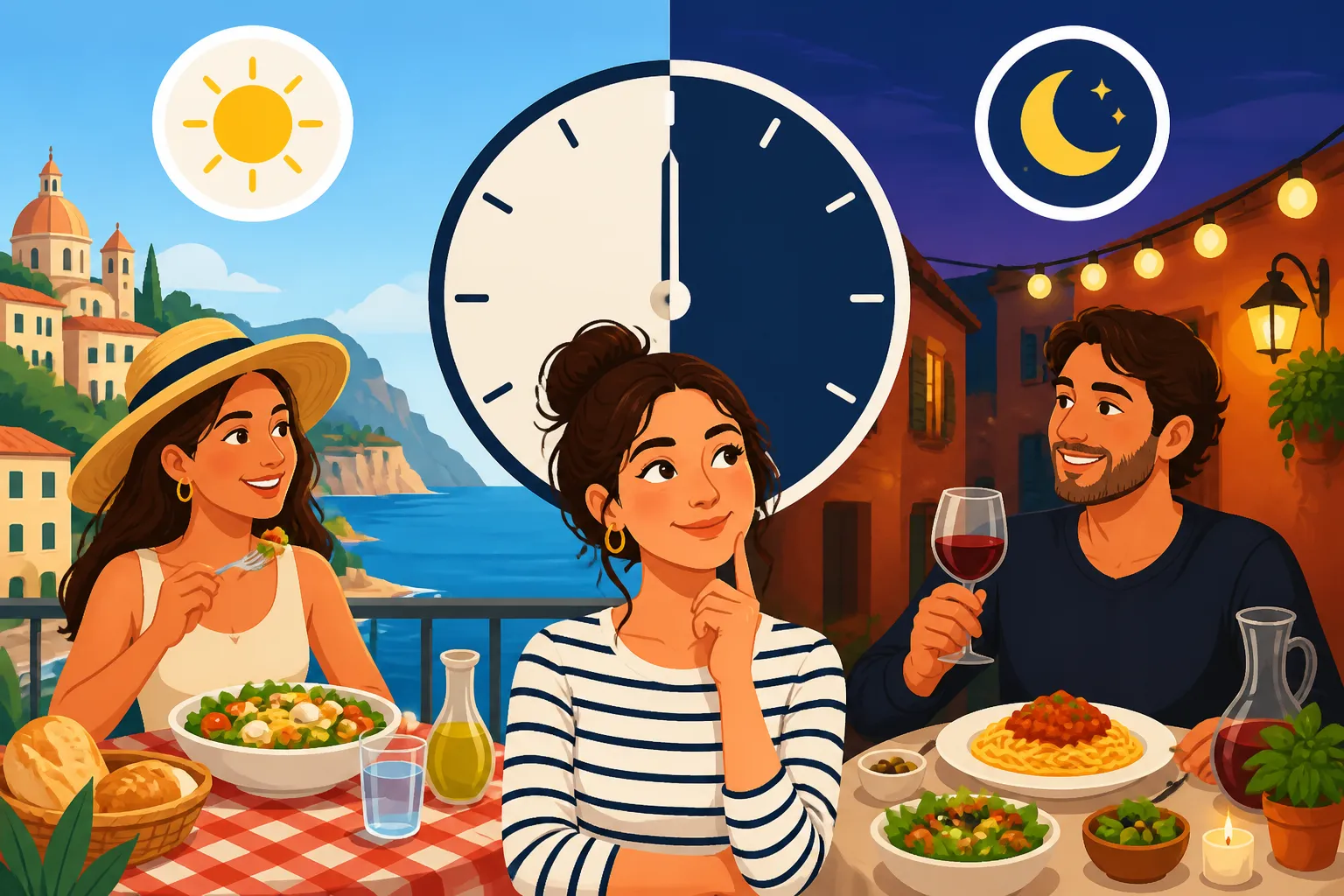
In many parts of the world, food is available whenever you want it. In Italy, food is a scheduled event, almost a ritual. The country operates on a rigid chronological framework that dictates when the ovens are hot and when the chefs are at home taking their own break. If you try to fight this schedule, you will end up eating soggy, pre-made sandwiches from a tourist trap. To truly enjoy the culinary landscape, you must synchronize your watch with the local heartbeat.
The Italian day is divided by the riposo, often referred to by foreigners as the siesta, though it is more of a functional midday break. Between 12:30 PM and 3:30 PM, the country shifts gears. While shops might close, this is the prime window for lunch. However, once that window closes at around 2:30 PM or 3:00 PM, a "food desert" emerges that lasts until well after sunset. Understanding How to Eat Like a Local in Italy: Meal Structure and Timing is the first step in avoiding the heartbreak of a "Chiuso" sign.
I remember my first month in Rome; I thought I could outsmart the system by eating a late lunch at 4:00 PM. I walked for three kilometers and found nothing but bars serving stale pastries. The frustration is real, but it stems from a cultural respect for the "tempo giusto"—the right time for everything. If you are planning your itinerary using tools like Omio to hop between cities, you must factor in these gaps, or you will find yourself arriving in a new town just as every kitchen closes for the afternoon.
Il Pranzo: The Midday Heartbeat of Italy
Lunch, or il pranzo, is traditionally the most important meal of the day, although this is slowly changing in bustling northern hubs like Milan. Still, across most of the peninsula, lunch is a non-negotiable break. Standard lunch hours generally run from 12:30 PM to 2:30 PM. In the North, people might head to the trattoria at 12:30 PM sharp. In the South, don't be surprised if the dining room doesn't start filling up until 1:30 PM.
If you show up at a restaurant at 2:15 PM, you are pushing your luck. Many kitchens begin cleaning up at this time, and while they might serve you a quick plate of pasta, the hospitable, leisurely atmosphere will be gone. For a truly authentic experience, aim to be seated by 1:00 PM. This gives you time to navigate the menu and understand Restaurant Etiquette in Italy: Coperto, Courses, and the Bill without feeling rushed by a waiter who wants to go home for his own nap.
On weekends, particularly Sunday, lunch expands into a multi-hour marathon. This is when families gather, and the meal can easily last until 4:00 PM. If you are staying in a central area booked through Booking.com, you might hear the clinking of silverware and boisterous laughter echoing from neighboring apartments. During these times, the "tourist" restaurants remain open, but the high-quality, local spots will be packed with reservations. If you want to join the Sunday lunch tradition, booking a food-focused experience through GetYourGuide can often help you secure a spot in places that are otherwise impenetrable to solo travelers.
The Afternoon Gap: Surviving the Dead Zone
From 3:00 PM until 7:30 PM, the Italian restaurant world goes into hibernation. This is the period that causes the most distress for North Americans and Northern Europeans who are used to "early bird specials" or 5:30 PM dinners. In Italy, if you are hungry at 5:00 PM, your options are limited. This is not the time for a sit-down meal; it is the time for a merenda (a small snack) or a gelato.
It is essential to distinguish between a "Bar" and a "Ristorante" during this time. An Italian bar is open all day and will serve coffee, pastries, and perhaps some uninspired panini. It is your safety net, but it is not where you go for a culinary revelation. If you find yourself famished during the dead zone, look for a pizzeria al taglio (pizza by the slice), which often stays open when traditional kitchens close.
This gap is also the perfect time to brush up on your linguistic skills. Knowing a few phrases from Ordering Food and Drinks in Italian: A Practical Phrasebook can help you ask a barista if there is anywhere nearby that still has the kitchen open—though the answer will likely be a sympathetic "no." Use this time for sightseeing or travel; if you use Omio to schedule your trains during the 3:00 PM to 6:00 PM window, you aren't wasting precious "eating time" sitting on a platform.
Aperitivo: The Essential Bridge to Dinner
Just as you think you might faint from hunger at 6:30 PM, the clouds part and the aperitivo hour begins. This is arguably the greatest Italian contribution to social life. Usually occurring between 6:30 PM and 8:30 PM, the aperitivo is intended to "open" the stomach before dinner. You buy a drink—usually a Spritz, a Negroni, or a glass of Prosecco—and you are provided with snacks ranging from simple olives and chips to elaborate buffets.
For the uninitiated, it is tempting to treat aperitivo as dinner. In some student-heavy areas, the "apericena" (a mix of aperitivo and dinner) is a real thing, but for a veteran expat, the aperitivo is merely a bridge. You can find excellent guided evening walks on GetYourGuide that include an aperitivo stop, which is a fantastic way to learn the local history while keeping the hunger pangs at bay. To understand the nuances of this ritual, check out our guide on Aperitivo in Italy: The Pre-Dinner Ritual Explained.
Be careful with your drink choices during this hour. While it is a social time, the rules of the Italian table still apply. For instance, you will rarely see a local ordering a heavy milk-based drink now. In fact, knowing Why You Shouldn't Order a Cappuccino After Lunch in Italy is vital if you don't want to receive a sideways glance from the waiter. The aperitivo is about bitter, herbal, and bubbly flavors that stimulate digestion, preparing you for the late-night feast ahead.
La Cena: The Art of the Late Night Feast
Dinner, or la cena, is where the timing gap between Italy and the rest of the world becomes most apparent. In the United States or the UK, a 6:00 PM dinner is standard. In Italy, a restaurant that opens at 7:00 PM is considered "early." Most locals would not dream of sitting down to dinner before 8:00 PM. In Rome, 8:30 PM is the sweet spot; in Sicily or Puglia, the restaurants don't truly hum with energy until 9:00 PM or even 10:00 PM during the summer months.
The reason for this late start is twofold: the late lunch and the heat. When the sun is scorching the cobblestones, nobody wants a heavy meal. As the air cools in the evening, the piazza comes alive. Dinner is a slow, deliberate affair. There is no "turning tables" here; once you have that table, it is yours for the night. This is why it is so important to learn How to Find Authentic Restaurants in Italy (Not Tourist Traps)—the places that open at 6:00 PM and have a "Tourist Menu" sign are rarely where you want to eat.
If you have used Booking.com to find a villa in the countryside, you might find that local restaurants have even more eccentric hours, sometimes only opening on certain nights of the week. Always call ahead. When you do sit down, keep in mind that the bill won't come until you ask for it. It is considered rude for a waiter to bring the check unprompted, as it implies they are chasing you away. Be prepared to pay the coperto, and if you are unsure what that is, read up on What Is the Coperto on an Italian Restaurant Bill?.
| Meal Stage | Typical Time (North) | Typical Time (South) | What to Expect |
|---|---|---|---|
| Colazione (Breakfast) | 7:00 – 10:00 | 7:30 – 10:30 | Standing at a bar, coffee and cornetto. |
| Pranzo (Lunch) | 12:30 – 14:00 | 13:30 – 15:00 | The main meal; shops often close. |
| Merenda (Snack) | 16:00 – 17:30 | 16:30 – 18:00 | Gelato or a small pastry. |
| Aperitivo | 18:30 – 20:00 | 19:00 – 20:30 | Drinks with light snacks; social hour. |
| Cena (Dinner) | 19:30 – 21:30 | 20:30 – 22:30 | Leisurely multi-course meal. |
Essential Strategies for the Hungry Traveler
Navigating the Italian dining clock requires a bit of strategy and a lot of patience. First, always carry a small snack in your bag—some nuts or a piece of fruit—to get you through the 4:00 PM to 7:00 PM "dead zone." Second, adjust your internal clock as soon as you land. If you try to stick to an early schedule, you will only see the "empty" side of Italy. The magic happens when the lights go up and the locals pour into the streets.
Another tip is to use technology to your advantage. While apps like Omio help you get to your destination, checking the specific opening hours on a restaurant’s official social media page or Google profile is crucial. Don't rely on the hours posted on the door; they are often "suggestions" rather than rules. If you find a place you love, ask for a business card and make a reservation for the next night. Italians value loyalty and recognition; showing up twice can turn you from a "tourist" into a "guest."
Finally, remember that the rhythm of food is tied to the rhythm of the culture. Taking that long lunch break or waiting until 8:30 PM for dinner isn't just about the food; it's about the lifestyle. It’s about the passeggiata (evening stroll) and the community. If you are struggling with the transition, perhaps start with a morning visit to a cafe. You can learn a lot by just observing Coffee Culture in Italy: How to Order Like a Local. Once you master the coffee bar, the rest of the Italian day will naturally fall into place.
Disclaimer
The information provided in this guide is based on general cultural norms and personal experiences in Italy. Operating hours can vary significantly by season, specific city, and individual establishment. Always verify the current opening times of restaurants directly, especially during public holidays or the August Ferragosto period.