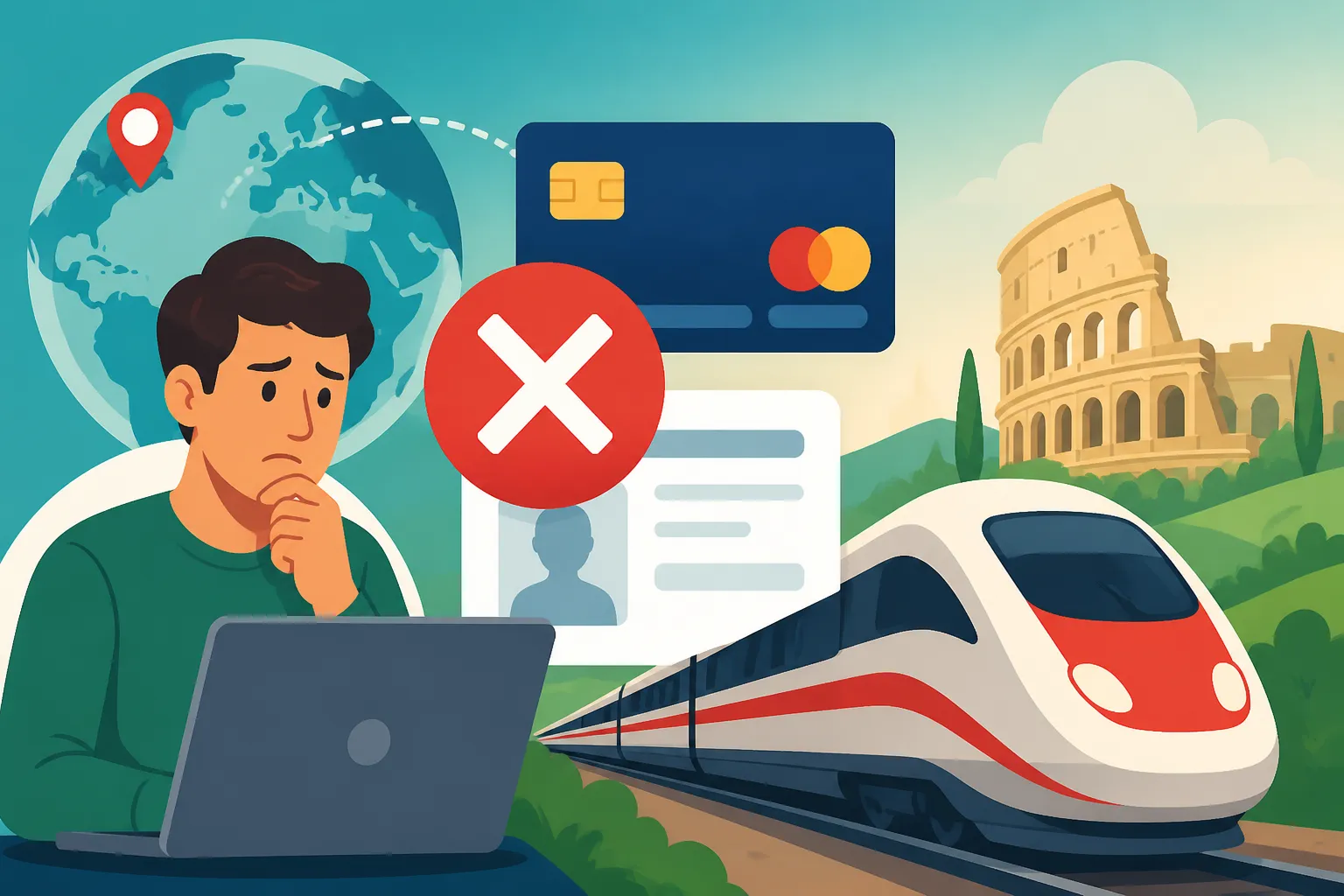
Booking Italian Trains From Abroad: Foreign Cards, Names, and Failures
Oh, the sheer joy of planning a trip to Italy! The rolling hills of Tuscany, the bustling piazzas of Rome, the serene canals of Venice… it’s all so romantic, isn't it? That is, until you hit the brick wall of booking train tickets from halfway across the world. You’re trying to secure those coveted high-speed seats, only to be met with cryptic error messages, foreign credit card rejections, or perplexing name field requirements. Trust me, you are absolutely not alone in this particular expat struggle. This guide is here to untangle the confusion and help you successfully book your Italian train journeys, no matter where you're starting from.
Disclosure: This post may contain affiliate links. We may earn a commission at no extra cost to you if you make a purchase through these links. Read full disclosure.
The Frustration is Real: Why Booking Italian Trains Can Be a Headache from Abroad
Navigating Italian bureaucracy and online systems from outside the country can feel like a labyrinth, and train bookings are no exception. Many expats and tourists quickly discover that what should be a straightforward transaction often turns into a lesson in patience and persistence. It's not just you; it's a systemic challenge many encounter.
The Payment Wall: When Foreign Cards Fail You
Picture this: you've found the perfect train, the ideal time, the discounted Super Economy fare. You meticulously fill in all your details, hit 'pay,' and then… nothing. Or worse, a vague "payment failed" message. Your perfectly valid credit card, which works everywhere else in the world, seems to be a complete stranger to the Italian train booking system. This isn't usually a problem with your card itself, but rather with the security protocols and sometimes outdated payment gateways used by some Italian platforms. They might not be set up to handle international transactions as smoothly as you'd expect, leading to frustration and missed deals.
Often, it's a combination of factors. Some Italian banks, which process these transactions, might have stricter fraud detection rules for foreign cards, especially if the transaction originates from a non-EU IP address. Or, your own bank might flag it as suspicious activity, given it's a cross-border transaction to a merchant they don't frequently see from your account. Before you pull your hair out, remember there are ways around this.
Name Games and Other Confusing Fields
Another common pitfall is the seemingly simple task of entering your name. In Italy, and on Italian websites, the standard format is usually "Nome" (First Name) and "Cognome" (Last Name). Sounds easy enough, right? Except for those of us with multiple first names, middle names, or hyphenated surnames. Trying to fit your entire legal name into these sometimes rigid fields can lead to errors. Should you include your middle name? What if your name is longer than the allowed characters? Then there’s the whole "title" dropdown, which might offer "Sig." (Mr.), "Sig.ra" (Ms.), or "Dott." (Dr.) – but sometimes those options aren't intuitive for international users.
These small details, if entered incorrectly, can potentially invalidate your ticket, especially for high-speed trains where identity checks are more common. It's not unheard of for a ticket inspector to query a name that doesn't exactly match your passport or ID. The key is understanding the most common practices and knowing when to simplify or adapt.
Understanding Italy's Major Train Operators and Their Quirks
Italy's train network is primarily run by two main companies, each with its own booking system and unique set of characteristics that are important for international travelers to grasp.
Trenitalia: The National Giant
Trenitalia is the behemoth of Italian railways, operating almost all routes, from the super-fast Frecciarossa high-speed trains that connect major cities like Rome, Florence, and Milan, to the regional (Regionale) and intercity services that crisscross the country. Their website and app have improved over the years, but they can still be… well, Italian in their usability for foreigners.
Booking on Trenitalia directly usually offers the full range of fares, including some of the cheapest Super Economy tickets if you book far enough in advance. However, the direct booking experience can be hit-or-miss with foreign credit cards. You might also find their website slightly clunky to navigate if you're not used to its layout. It’s always a good idea to create an account, as this can sometimes smooth out payment issues and keep your tickets organized, but even that isn't a silver bullet for foreign card woes. For extensive information on how to book directly, you might find a guide on how to buy Trenitalia and Italo tickets and save money helpful.
Italo Treno: The Sleek Challenger
Italo Treno is a private operator that competes directly with Trenitalia on many high-speed routes. Their trains are known for being modern and comfortable, and their booking process is often cited as slightly more user-friendly for international travelers than Trenitalia’s. They connect major cities efficiently and offer various classes of service, from Smart (economy) to Club Executive.
While Italo's website often handles foreign credit cards better than Trenitalia's, it's not foolproof. The main downside is that Italo's network is not as extensive as Trenitalia's. If you're traveling between smaller towns or need regional connections, Italo simply won't be an option. Therefore, you might find yourself needing to book with both operators depending on your itinerary, which can add to the complexity if you're trying to manage multiple bookings.
Navigating Online Booking Platforms: The Good, The Bad, and The Best
When booking Italian trains from abroad, you essentially have three main avenues: the train operators' direct websites, third-party global booking sites, and travel agents. Each has its pros and cons, especially concerning foreign payment methods and ease of use.
Direct Operator Websites: Max Choice, Max Potential Frustration
As discussed, booking directly with Trenitalia or Italo Treno can give you access to all available fares and routes. For example, if you're looking for cheap tickets, their Economy or Super Economy fares are often the best bet, but these are typically non-refundable and non-changeable. The main drawback, as many of us have experienced, is the payment issue. There's nothing quite like spending an hour planning your perfect journey, only to have your payment rejected repeatedly.
Additionally, if you're planning a complex journey involving regional trains or different operators, you might have to juggle multiple websites and booking processes. While it offers the most control and potentially the lowest prices for specific tickets, it also demands the most patience and problem-solving skills, especially with a foreign card.
Global Booking Platforms: The International Traveler's Ally (Often)
This is where platforms designed for international travelers really shine. While they might sometimes charge a small booking fee (which is often a small price to pay for sanity), they generally offer a much smoother experience. They act as intermediaries, processing your payment through their own international systems and then purchasing the tickets from the Italian operators on your behalf. This neatly bypasses many of the foreign credit card issues that plague direct bookings.
These platforms also often aggregate routes from both Trenitalia and Italo, allowing you to compare prices and times side-by-side without hopping between websites. This can be a huge time-saver and stress-reducer. For getting around Italian cities, knowing about these platforms is just as important as understanding how to use local public transport.
Omio: Your Hero for Seamless Italian Train Bookings
Now, if you're an international traveler constantly battling the payment gateways and linguistic quirks of European train systems, let me introduce you to Omio. This platform is, quite frankly, a godsend for booking Italian trains from abroad. They are the core solution for a reason, specifically designed to bridge the gap between travelers and often complex local booking systems.
Omio aggregates train tickets from both Trenitalia and Italo Treno, along with buses and flights, presenting them in one clear, English-friendly interface. But here's the kicker: their payment processing is incredibly robust for international credit cards. You can typically use your Visa, Mastercard, or American Express from anywhere in the world without the dreaded "payment failed" message. This alone saves you untold hours of frustration and allows you to grab those competitive fares without the headache. You get your tickets delivered straight to your email, and their app is fantastic for keeping everything organized. They genuinely make booking Italian trains from abroad simple, a feat that feels almost miraculous given the common challenges. Seriously, if you've been struggling, check out Omio.
Solving Payment Headaches: Foreign Cards, PayPal, and Alternatives
The payment barrier is arguably the biggest hurdle for international travelers. Understanding why it happens and having a toolkit of solutions is crucial.
Why Your Foreign Card Might Be Rejected (and What to Do)
Beyond the basic security checks, some Italian systems might struggle with cards that don't have a 3D Secure (Verified by Visa, Mastercard SecureCode) authentication system set up in a way they recognize, especially if your bank is outside the EU. Or, the currency conversion process can sometimes trigger flags.
Here's what you can try if you insist on booking directly with Trenitalia or Italo and your card is rejected:
- Contact Your Bank: Before attempting again, call your bank and let them know you're trying to make an international purchase with an Italian merchant. They can often pre-authorize the transaction or at least keep an eye out for it.
- Try Different Cards: If you have multiple credit or debit cards, try another one. Sometimes a Visa works where a Mastercard fails, or vice-versa.
- Use PayPal (If Available): Many Italian sites, including Trenitalia and Italo, offer PayPal as a payment option. This is often the most reliable way to bypass direct credit card issues, as PayPal handles the international transaction on your behalf. Just ensure your PayPal account is linked to a valid funding source.
- Consider a Virtual Credit Card: Some banks or fintech services offer virtual credit cards with specific spending limits, which can sometimes work where physical cards fail.
- Use a Global Booking Platform: This is truly the path of least resistance. As mentioned, Omio specializes in smooth international payments. They handle the conversion and the transaction securely, so you rarely run into the problems you would on a direct Italian site. It's designed to take the stress out of the process, ensuring your card works seamlessly.
The Ease of Using a Third-Party Service like Omio
This is where Omio really earns its stripes. They have optimized their payment gateways to accept a wide range of international credit and debit cards. Instead of you battling with Trenitalia's bank, you're interacting with Omio's sophisticated, internationally-friendly payment system. This simple shift alleviates so much anxiety. The slight service fee they might charge is often worth it for the peace of mind and the guarantee that your transaction will actually go through. Think of it as investing in your sanity and securing your travel plans without a hitch.
Name and Passenger Details: Getting It Right the First Time
Entering your personal information correctly is more than just good practice; it's essential for a valid ticket, especially when dealing with tickets that require ID verification.
First Name, Last Name, and Middle Names Explained
For most Italian train tickets, whether you book through Trenitalia, Italo, or Omio, you'll need to provide a first name (Nome) and a last name (Cognome).
- First Name (Nome): Enter your primary given name as it appears on your passport or ID. If you have multiple first names, some systems might allow you to enter them all. If not, stick to your primary first name.
- Last Name (Cognome): Enter your surname as it appears on your passport or ID. If you have a hyphenated surname, include the hyphen.
- Middle Names: This is where it gets tricky. Many Italian booking systems don't have a separate field for middle names. The general advice is to omit your middle name if there's no clear field for it, or if adding it makes the name too long or causes errors. What matters most is that your Nome and Cognome precisely match your identification. A missing middle name is rarely an issue, whereas an incorrect first or last name can be problematic. When you use a platform like Omio, their interface is often clearer about these fields, reducing ambiguity.
It's a small detail that can cause outsized worry for international travelers, especially when booking an important segment of their journey. Always prioritize matching the Nome and Cognome on your ticket to your passport exactly.
Group Bookings and Passenger Lists
When booking for multiple people, you’ll typically need to enter the first and last name for each passenger. Ensure you have everyone’s full, correct names ready. This is particularly important for group tickets where one person might be responsible for printing or showing all the tickets. Each ticket will often bear an individual's name.
Remember that for longer distance or high-speed trains, tickets are usually nominative, meaning they are tied to a specific passenger. If you're using your European Health Insurance Card (EHIC) for any health-related emergencies during your travels, always carry it, just as you would your train ticket and passport. It's a reminder that personal identification is paramount in Italy.
The Savvy Traveler's Secret Weapon: Why Omio Shines for International Bookings
Let's circle back to why Omio isn't just an option, but truly the best option for most expats and tourists trying to book Italian train tickets from abroad. It addresses almost every pain point we've discussed, making your travel planning significantly smoother.
Seamless Payment Processing for Global Cards
This cannot be stressed enough. The frustration of foreign card rejection is a tale as old as time for international travelers dealing with European booking sites. Omio virtually eliminates this problem. Their platform is built for global transactions, meaning your Visa, Mastercard, or Amex will almost certainly work without a hitch. You avoid the stress, the endless attempts, and the potential calls to your bank, freeing you up to focus on the exciting parts of your trip, like what amazing Italian food culture awaits you. This reliability is a huge differentiator and a major reason why I recommend it so highly.
Consolidating All Your Travel Needs
Beyond just trains, Omio also allows you to book bus and flight tickets. This is incredibly useful for planning more complex itineraries across Italy. Maybe you're taking a high-speed train from Milan to Naples, then a regional bus to a small coastal town. You can search, compare, and book all these segments within a single platform. No more opening a dozen tabs, trying to figure out which website does what. It makes planning day trips and longer excursions so much easier.
User-Friendly Interface and Multi-Language Support
Let's be honest, not everyone is fluent in Italian, and trying to navigate a website in a foreign language while also dealing with currency conversions and payment issues is a recipe for disaster. Omio's interface is intuitive, clean, and available in multiple languages, including perfect English. This reduces the chance of misinterpreting a field, booking the wrong ticket, or missing out on important information. Their customer support is also geared towards international travelers, offering assistance in languages you understand, which is a rare comfort when you're far from home. Whether you're trying to figure out how to use the Trenitalia app to plan train travel or just want to quickly grab a ticket, Omio simplifies it all.
Digital Tickets and Mobile Convenience
Once booked through Omio, your tickets are delivered digitally, usually as e-tickets or mobile tickets. This means no scrambling to print tickets at a hotel or worrying about losing paper copies. You can simply show the ticket on your phone or tablet when the conductor comes by. Their mobile app keeps all your bookings organized, sends you notifications about your journey, and often provides real-time updates. In a world where we rely on our phones for everything, this digital convenience is a game-changer. It integrates perfectly with the modern traveler's needs, whether you're managing mobile data and eSIMs for travel in Italy or just keeping your itinerary handy.
| Feature / Platform | Trenitalia (Direct) | Italo Treno (Direct) | Omio (Third-Party) |
|---|---|---|---|
| International Card Acceptance | Often problematic | Generally better, but not foolproof | Excellent |
| Language Options | Italian, English (sometimes less clear) | Italian, English | Multiple languages (excellent) |
| Aggregated Search (Trains) | Trenitalia only | Italo only | Trenitalia & Italo |
| Additional Services | Limited (train only) | Limited (train only) | Trains, Buses, Flights |
| User Interface | Can be clunky | Relatively modern | Clean, intuitive, user-friendly |
| Digital Tickets | Yes | Yes | Yes, via app & email |
| Booking Fees | None | None | Small service fee (usually worth it) |
| Customer Support | Operator specific | Operator specific | International-friendly |
Booking Italian trains from abroad doesn't have to be a source of stress. While the direct operator websites can be a bit challenging, services like Omio have streamlined the entire process, making it far more accessible and user-friendly for anyone planning to explore Italy by rail.
Disclaimer
Please note that while every effort has been made to provide accurate and up-to-date information, rules and procedures related to travel, booking, and payment systems in Italy can change. Always verify the latest information directly with official sources or your chosen booking platform before making definitive plans. This guide is for informational purposes only and does not constitute professional advice.