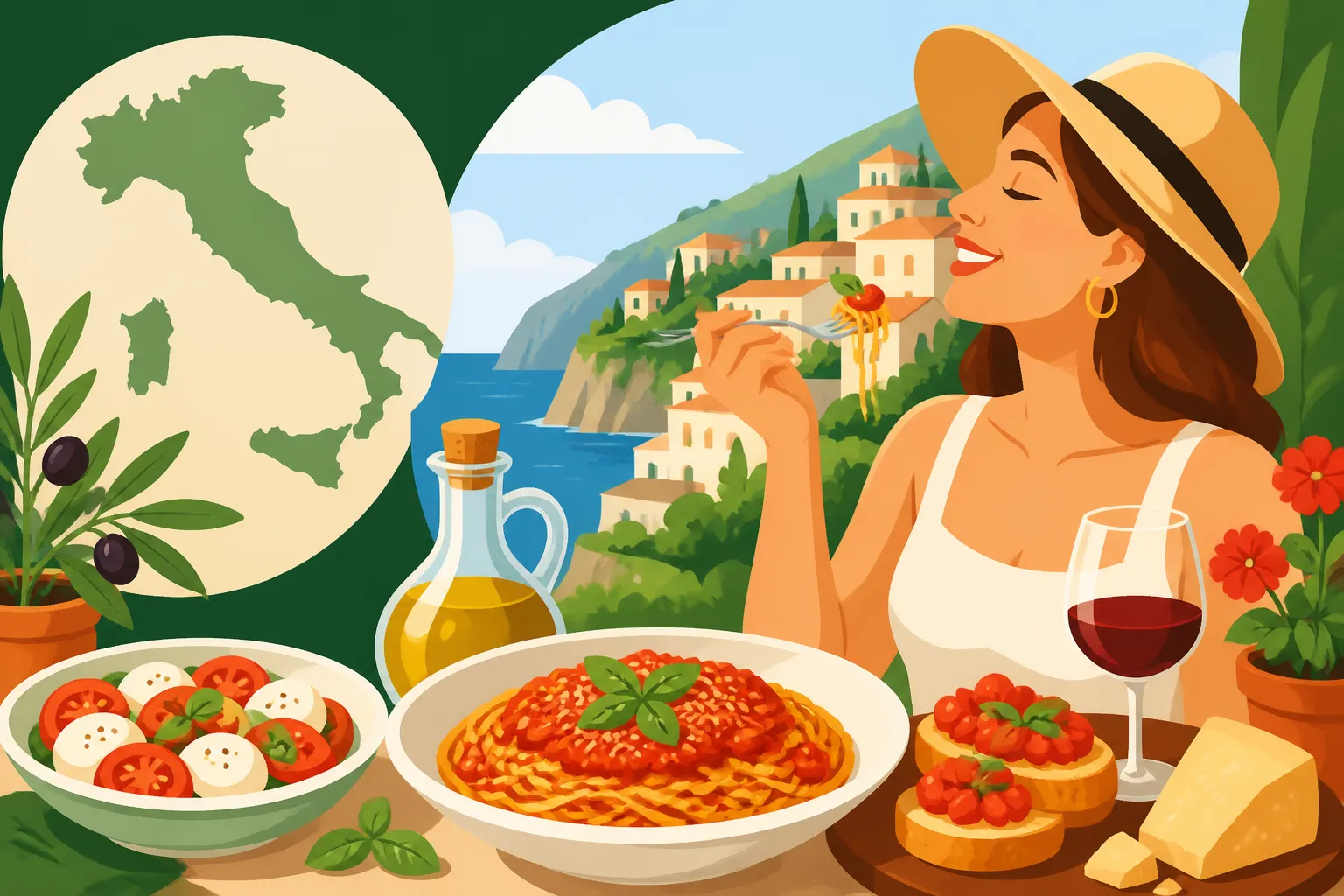
Italian Food Culture: Eating Well as a Visitor
Staring at a closed trattoria door at 3:30 PM while your stomach growls is a frustrating rite of passage for every newcomer in Italy. I spent my first month in Rome constantly mistiming my hunger, eventually realizing that the clock dictates the kitchen in this country, not your appetite. This guide deconstructs the complex, beautiful, and often rigid world of Italian food culture to ensure you eat like a local rather than a lost tourist.
Disclosure: This post may contain affiliate links. We may earn a commission at no extra cost to you if you make a purchase through these links. Read full disclosure.
The Sacred Daily Rhythm of Italian Meals
The first thing you have to accept is that eating in Italy is an exercise in punctuality. Unlike many other Western countries where "all-day dining" is the norm, Italian kitchens operate on a strict schedule. If you try to find a proper meal at 4:00 PM, you will likely be met with locked doors or a very disappointed waiter offering you a pre-packaged sandwich. This rigidity isn't meant to be hostile; it’s a reflection of a culture that views cooking as an art form that requires specific preparation times.
The Morning Ritual at the Bar
Breakfast in Italy is rarely a sit-down affair involving pancakes or eggs. It happens at the "Bar"—which, confusingly for some, is primarily a coffee shop during the day. Most Italians take their breakfast standing up at the counter. You’ll see locals tossing back an espresso and munching on a cornetto (a pastry similar to a croissant but often sweeter and denser) in under five minutes. I remember feeling incredibly self-conscious the first time I tried to linger over my coffee; the barista kept looking at me as if I were waiting for a bus that was never coming.
If you choose to sit down at a table, be prepared for the price to double or even triple. This is the "service price," and it’s a standard part of the culture. Standing at the bar is for the quick fuel-up; sitting at a table is for tourists or those with plenty of time and a larger budget. To master this, How to Order Coffee in Italy Like a Local is an essential skill. You pay at the cash register first, take your receipt (scontrino) to the counter, and then catch the barista’s eye to place your order. It feels chaotic, but there is a hidden order to the madness that you will eventually find rhythmic.
The Long and Mandatory Lunch
Lunch (il pranzo) is traditionally the most important meal of the day, though this is shifting slightly in busy hubs like Milan. Typically served between 12:30 PM and 2:30 PM, it is a time when shops close and the pace of the country grinds to a halt. Even if you are traveling between cities using Omio to catch a train, you should try to schedule your arrival to coincide with these windows, or you might find yourself relegated to station snacks.
A traditional lunch isn't a quick salad. It consists of multiple courses, starting with a primo (usually pasta or risotto) and followed by a secondo (meat or fish). In my early days, I made the mistake of ordering a huge pasta dish and then trying to add a side of potatoes, only to find the potatoes served forty minutes later. This is because sides (contorni) are brought with the meat, not the pasta. Understanding How to Order a Full Italian Meal: Courses Explained will save you from the awkwardness of having a table full of mismatched plates.
Aperitivo and the Late Night Dinner
As the sun begins to set, the ritual of the aperitivo begins. Usually between 6:30 PM and 8:30 PM, this is Italy’s version of happy hour, but with a much higher focus on food. You buy a drink—often a Spritz or a Negroni—and it comes with a spread of olives, chips, focaccia, or even a small buffet. It is meant to "open" the stomach for dinner, not replace it. I’ve seen many expats fill up on aperitivo snacks and then find themselves unable to finish a 9:30 PM dinner, which is considered a minor tragedy by the chef.
Dinner (la cena) starts late. In the north, 7:30 PM is acceptable, but as you move south towards Naples or Sicily, don't expect to see a restaurant full before 8:30 PM or 9:00 PM. Eating early is a neon sign that you are a tourist. If you’ve used Booking.com to find a charming apartment in a local neighborhood, watch the streets; they will be empty at 7:00 PM and suddenly teeming with life two hours later. This late-night culture is deeply social and rarely involves a television; the meal itself is the entertainment.
Navigating the Italian Menu and Courses
The structure of an Italian menu can be intimidating because it looks like you are expected to eat five full plates of food. While you don't have to order every course, understanding the sequence is vital for your social survival at the table. Waiters will often look confused if you ask for your pasta and your steak to come out at the same time—in their eyes, you are asking to ruin the flavor profile of both.
From Antipasto to Dolce
The meal begins with the antipasto, which literally means "before the meal." This could be bruschetta, cured meats, or fried artichokes. Following this is the primo piatto (first course), which is always starch-based. Think pasta, gnocchi, or soup. The secondo piatto (second course) is the protein. It’s important to note that the secondo is usually just the meat or fish on a plate—no vegetables, no potatoes. If you want those, you must look at the contorni section.
The meal ends with dolce (dessert), but it’s rarely the final step. After dessert comes the coffee—always an espresso, never a latte or cappuccino—and then the digestivo. This is a small glass of strong alcohol like Limoncello or Grappa intended to help your stomach process the feast you've just consumed. When I first moved here, I thought the digestivo was just an excuse for more drinking, but after a four-course Sunday lunch, you will realize it is a medical necessity. Knowing What Is the Coperto on an Italian Restaurant Bill is also helpful here, as it covers the bread and service that usually accompanies these courses.
Water and Wine Etiquette
In Italy, you don't just "get water." You will be asked if you want it naturale (still) or frizzante (sparkling). Tap water is perfectly safe to drink in most cities, but it is rarely served in restaurants. Ordering a bottle is expected. When it comes to wine, don't feel pressured to buy an expensive bottle every time. The vino della casa (house wine) is usually decent, locally sourced, and incredibly affordable.
There is also a specific etiquette to drinking. You’ll notice that Italians rarely drink soda or milk with their dinner; these are seen as "childish" or flavors that mask the quality of the food. Wine and water are the only acceptable companions for a savory meal. If you are exploring the hills of Tuscany, you might find a guided tour via GetYourGuide that explains the complex pairing of Chianti with Bistecca alla Fiorentina, but in a standard trattoria, just follow the "red with meat, white with fish" rule and you’ll be fine.
The Mystery of the Contorni
As mentioned, the contorno is a separate course. If you order a secondo of grilled chicken and expect a side of green beans, you will be disappointed when only a piece of chicken arrives. You have to actively choose your vegetables from the contorni list. Common options include patate al forno (roasted potatoes), cicoria (sautéed chicory), or a simple insalata mista (mixed salad).
One thing that surprised me was the order of the salad. In many countries, salad is an appetizer. In Italy, it is often eaten after the main course or alongside it to provide acidity and crunch to balance the heavy fats of the meat. If you want to dive deeper into these nuances, checking out How to Order a Full Italian Meal: Courses Explained is a great way to prep for your first big dinner out.
Why Italian Food Does Not Actually Exist
One of the biggest mistakes visitors make is looking for "Italian food." In reality, Italy is a collection of twenty distinct regions, each with its own culinary language. What you eat in the snow-capped mountains of the Aosta Valley has almost nothing in common with the sun-drenched flavors of Sicily. After years of living here, I've realized that the "national" dish is actually "local pride."
The North: Butter, Polenta, and Risotto
Northern Italy is the land of dairy and grains. Because of the cooler climate and the influence of neighboring France and Austria, you’ll find that butter often replaces olive oil, and polenta or risotto frequently replaces pasta. In Lombardy, the Risotto alla Milanese, flavored with saffron and beef marrow, is the gold standard.
If you head to the Piedmont region, the focus shifts to truffles and heavy, wine-based stews. This is not the place for a light tomato sauce. The food here is "mountain food"—meant to keep you warm and full. I once spent a weekend in the Dolomites and was shocked to find dumplings (canederli) on every menu; it felt more like Germany than the Italy I knew.
The Center: Truffles, Wild Boar, and Bread
Central Italy, encompassing Tuscany, Umbria, and Le Marche, is the heart of "peasant cooking" (cucina povera). Here, the food is simple, rustic, and incredibly high-quality. Tuscany is famous for its unsalted bread, which can be a shock to the palate. Legend has it that the salt tax was so high centuries ago that the Tuscans just stopped using it. Now, the bread is designed to be a neutral vessel for salty prosciutto or rich olive oil.
In Umbria, the wild boar (cinghiale) is king. You’ll find it in ragùs, sausages, and stews. This region is also a hotspot for black truffles. If you are staying in a rural villa found on Booking.com, you might even be able to join a local truffle hunt. The flavors here are earthy and intense, reflecting the rolling hills and dense forests of the "Green Heart of Italy."
The South: Seafood, Spice, and Citrus
Southern Italy is the Italy of the imagination: olive oil, tomatoes, garlic, and fresh seafood. The food here is vibrant and often carries a kick of heat, especially in Calabria where the ’nduja (spicy spreadable pork sausage) is a staple. In Campania, specifically Naples, the focus is on the simplicity of the pizza and the quality of the buffalo mozzarella.
Sicily is a world unto itself, with a culinary history influenced by Arab, Greek, and Spanish rulers. This is where you find the mix of sweet and savory, like Pasta chi Sardi (pasta with sardines, raisins, and pine nuts). The citrus here—blood oranges and lemons—is the best in the world. When you travel south using Omio, you can literally watch the landscape change from wheat fields to citrus groves, and the menu changes right along with it.
| Region | Key Starch | Primary Fat | Famous Dish |
|---|---|---|---|
| Lombardy (North) | Risotto | Butter | Risotto alla Milanese |
| Tuscany (Center) | Unsalted Bread | Olive Oil | Bistecca alla Fiorentina |
| Campania (South) | Pizza / Pasta | Olive Oil | Pizza Margherita |
| Sicily (Islands) | Pasta / Couscous | Olive Oil | Pasta alla Norma |
Avoiding Tourist Traps and Finding Authenticity
It is heartbreaking to see visitors eating frozen lasagna in front of the Pantheon when some of the world's best food is just two blocks away. The "tourist trap" is a highly developed industry in Italy, designed to catch those who haven't done their homework. My rule of thumb? If the menu has photos of the food, keep walking.
The Signs of a Great Eatery
Authentic Italian restaurants usually fall into three categories: Ristorante, Trattoria, and Osteria. Traditionally, a Ristorante is the most formal, a Trattoria is family-run and mid-range, and an Osteria was originally a place to drink wine with simple snacks (though many are now full-service restaurants). Look for places where the menu is short and written only in Italian—or scribbled on a chalkboard. This indicates the chef is using seasonal ingredients from the market that morning.
Another pro-tip: check the time. If a restaurant is full of people eating at 6:00 PM, they are all tourists. A local spot will be empty until at least 8:00 PM. I always look for a "no menu" strategy; if the waiter tells you what they have today instead of handing you a laminated book, you’ve hit the jackpot. You can find many of these hidden gems by booking a specialized food tour through GetYourGuide, which often takes you into the backstreets of neighborhoods like Trastevere in Rome or Oltrarno in Florence.
Spotting Fake Gelato
Gelato is a food group in Italy, but not all gelato is created equal. Many shops in tourist areas sell "industrial" gelato packed with air and artificial colors. To find the real stuff, look for the following:
- Color: If the pistachio is neon green or the banana is bright yellow, it’s fake. Real pistachio is a dull, earthy brownish-green. Real banana is grayish-white.
- Storage: Real gelato is kept in metal tins, often with lids (pozzetti). If it is piled high in fluffy mountains decorated with fruit, it’s full of stabilizers and air.
- Texture: Authentic gelato should be dense and creamy, not icy.
I remember my first "real" gelato in a tiny shop in Bologna; it was so intensely flavored that I realized I had been eating frozen sugar-water for years. For more tips on this, read How to Tell Real Gelato From Fake in Italy.
The "Menu Fisso" and the Workers' Lunch
If you are traveling on a budget, look for the Menu Fisso (fixed menu) or Pranzo di Lavoro (workers' lunch). These are usually offered at midday and include a primo, secondo, water, and coffee for a flat rate, often between 12 and 18 Euros. These are meant for local laborers and office workers, so the food is honest, fast, and filling. You won't get a fancy white tablecloth, but you will get a real taste of how Italians eat every day.
Practical Etiquette: The Unwritten Rules of the Table
Italian dining etiquette is less about which fork to use and more about the "flow" of the meal. There are social taboos that can make a waiter's skin crawl, and most of them revolve around digestion. Italians are obsessed with la digestione, and many of their "rules" are actually ancient health advice disguised as tradition.
The Cappuccino Crime
You have likely heard that you shouldn't order a cappuccino after 11:00 AM. This is not just a snobbish rule; it’s because Italians believe that hot milk and a full meal do not mix. Milk is seen as a "heavy" food that should be consumed only in the morning to provide energy. If you order a cappuccino after a plate of carbonara, the waiter will likely judge your stomach's ability to handle it. If you need a caffeine hit after lunch, order a caffè (espresso) or a caffè macchiato (espresso with a tiny drop of milk).
Requesting the Bill
In many countries, the waiter brings the bill as soon as they see you’ve finished your last bite. In Italy, this is considered incredibly rude—it’s like being told to leave. You are welcome to sit at your table for as long as you like after the meal is finished. However, this means you must actively ask for the bill (Il conto, per favore). Don't sit there waiting for it to magically appear; you could be there for hours.
Tipping and the Coperto
Tipping is not mandatory in Italy, nor is it expected in the way it is in North America. Service staff are paid a living wage. However, if the service was exceptional, leaving a few Euro coins is a nice gesture. What you will see on your bill is the coperto. This is a "cover charge" (usually 1.50 to 3.00 Euros per person) that covers the cost of the bread on the table and the washing of the linens. It is a standard practice and not a scam. Understanding What Is the Coperto on an Italian Restaurant Bill will help you budget your meals more accurately.
Special Dietary Needs in the Land of Gluten
It might seem like a nightmare to visit the land of pasta and pizza if you have dietary restrictions, but Italy is surprisingly accommodating. Because the food is based on fresh, whole ingredients, it is often easier to navigate allergies here than in countries reliant on processed foods.
Senza Glutine (Gluten-Free)
Italy has one of the highest rates of Celiac disease diagnosis in Europe, and as a result, the national health system takes it very seriously. Most restaurants are well-versed in senza glutine (gluten-free) cooking. You can find gluten-free pasta and pizza in almost every major city, and many pharmacies carry a wide range of specialized products.
When dining out, simply tell the waiter: "Sono celiaco/a" (I am Celiac) or "Ho un’intolleranza al glutine." They will often bring you a separate menu or point out exactly what can be modified. I’ve had friends with severe gluten allergies tell me they felt safer eating in Italy than in London or New York. For more advice, check How to Eat Gluten-Free in Italy (Senza Glutine Tips).
Vegetarian and Vegan Survival
Being a vegetarian (vegetariano) is incredibly easy in Italy. Many of the most famous dishes are naturally meat-free, such as Pasta alla Norma, Risotto ai Funghi, or Pizza Margherita. However, being vegan (vegano) is slightly more challenging, especially in the North where butter and cheese are prevalent.
In the South, you can find many vegetable-based dishes that use only olive oil. Look for "contorni" and create a meal out of three or four different vegetable plates. Also, don't forget the beans! Dishes like Pasta e Fagioli (pasta and beans) are hearty, delicious, and often vegan-friendly. If you’re staying in a place with a kitchen from Booking.com, the local markets are your best friend for fresh produce.
Food Shopping Like a Local
If you really want to understand Italian food culture, you have to see where it begins: the market. Shopping is a daily chore for most Italians, as they prefer to buy fresh ingredients in small quantities rather than doing one massive weekly haul.
The Mercato Experience
Every neighborhood has a mercato (open-air market). This is where you find the best seasonal produce. There is an unspoken rule: do not touch the produce yourself. Point to what you want, and the vendor will pick it for you. This is a matter of hygiene and respect for the vendor's goods. If you start squeezing the peaches, you will likely get a very loud earful in Italian.
Shopping at the market is also a social event. You’ll hear vendors shouting their prices and locals debating the quality of the tomatoes. It’s a sensory explosion that you shouldn't miss. If you are nervous about your language skills, Ordering Food and Drinks in Italian: A Practical Phrasebook can give you the confidence to ask for "un chilo di pomodori."
Specialized Shops: Panificio, Macelleria, and Alimentari
While supermarkets (supermercati) are common, many locals still visit specialized shops.
- Panificio: For fresh bread, pizza al taglio, and biscuits.
- Macelleria: For meat. The butcher can tell you exactly which cut you need for the dish you’re planning.
- Alimentari: A small grocery store that often has a deli counter for cheeses and cured meats. They will make you a fresh sandwich (panino) on the spot if you ask.
These shops are the backbone of the community. In my neighborhood, the lady at the alimentari knows exactly which cheese I like and always throws in a little extra for my "poor Italian." This level of personal connection is what makes living in Italy so special. For those looking for local experiences, check Italian Markets: Food, Antiques, and Flea Markets.
Disclaimer
The information provided in this guide is based on personal experience and general cultural practices in Italy. Regional variations exist, and individual establishments may have their own specific rules or schedules. Always check local opening times and regulations during your visit.