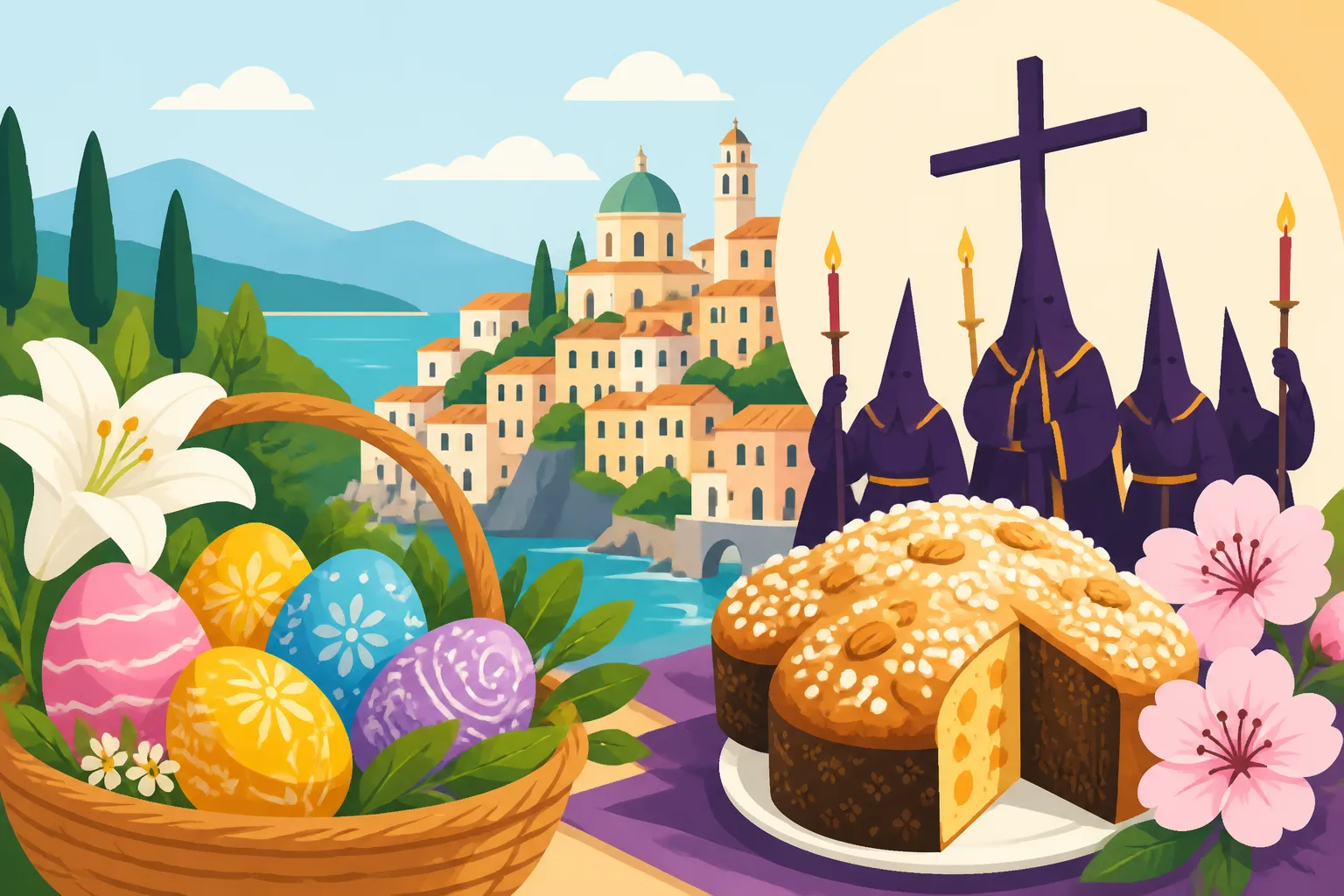
Easter (Pasqua) Traditions in Italy
For those of us who've packed up our lives and landed in Italy, or even just visited during the spring, you quickly learn that Italian holidays are an experience. And when it comes to Easter, or Pasqua, you're not just looking at a single day off; you're diving headfirst into a whirlwind of solemn rituals, joyous feasting, and nationwide relaxation. It can be a little overwhelming trying to understand all the nuances, especially if you're used to a different way of celebrating. But don't you worry, this guide is here to unravel the rich tapestry of Pasqua traditions, explaining everything from the deeply spiritual Holy Week observances to the mouth-watering culinary delights and the quintessential Pasquetta outings.
Disclosure: This post may contain affiliate links. We may earn a commission at no extra cost to you if you make a purchase through these links. Read full disclosure.
The Spiritual Heart of Pasqua: Holy Week in Italy
Italy, with its deep Catholic roots, transforms during Settimana Santa (Holy Week) leading up to Easter. It’s a time of profound reflection, ancient traditions, and solemn processions that truly set the tone for the celebration of Christ's resurrection. You’ll find that even in the most secular corners of Italy, there's an undeniable pull towards these time-honored customs, often blending religious piety with local folklore in the most fascinating ways.
Palm Sunday (Domenica delle Palme) and its Significance
The Sunday before Easter, Domenica delle Palme, marks the official start of Holy Week. It commemorates Jesus's triumphant entry into Jerusalem, where crowds waved palm branches. Here in Italy, churches overflow with parishioners clutching olive branches, and sometimes small palm fronds that have been intricately woven. You'll see families proudly carrying these blessed branches home, placing them above doorways or on altars as a symbol of peace and protection for the coming year. It's a beautiful sight, watching children clutch their olive sprigs, often tied with a small ribbon, as they exit mass. If you’re attending a service, you’ll be offered a small branch yourself, which is a lovely gesture and a tangible connection to this ancient tradition. The blessing of these branches is a truly communal experience, uniting congregations in a shared ritual that’s steeped in history.
Maundy Thursday (Giovedì Santo) and the Last Supper Commemoration
Giovedì Santo is a more subdued day, focusing on the Last Supper and the institution of the Eucharist. Many churches hold special masses, often including the lavanda dei piedi (washing of the feet) ceremony, where priests reenact Jesus washing the feet of his disciples. This act of humility is a powerful symbol. After the evening mass, a poignant tradition known as "visita ai Sepolcri" (visiting the Tombs) or "altari della reposizione" takes place. Parishioners visit at least three different churches, where the altars are beautifully decorated with flowers and candles, creating a quiet, contemplative atmosphere. It’s a moment for personal prayer and reflection, often lasting late into the night. Walking through dimly lit streets, moving from one hushed church to another, you truly feel the solemnity of the occasion. It's not a day for loud festivities, but rather for quiet contemplation and appreciation of deep-seated faith.
Good Friday (Venerdì Santo): Processions and Solemnity
Venerdì Santo is arguably the most solemn day of Holy Week, commemorating the crucifixion of Jesus. Across Italy, you'll witness breathtaking and often intensely moving processions. These aren't parades in the joyful sense; rather, they are deeply emotional reenactments and solemn tributes. In many towns, statues of Christ and the Virgin Mary are carried through the streets, often by hooded brotherhoods or local parishioners, accompanied by mournful music and flickering candlelight. The atmosphere is one of collective grief and reverence.
For instance, in Sicily, especially in towns like Enna and Trapani, the Processione dei Misteri can last for hours, involving ancient wooden sculptures depicting scenes from the Passion. Even in Rome, the Pope himself leads the Via Crucis (Stations of the Cross) procession at the Colosseum, a truly iconic event that draws thousands. If you plan to attend one of these, remember it’s a deeply religious experience, not a spectator sport, so observe respectful silence. These processions are incredible windows into Italy's soul, showcasing a profound connection to tradition and community. You might even stumble upon smaller, equally heartfelt processions in tiny villages, offering an intimate glimpse into local devotion.
Holy Saturday (Sabato Santo) and the Vigil
Sabato Santo is a day of quiet anticipation. The church remains in mourning, with no masses held during the day. It's a bridge between the sorrow of Good Friday and the joy of Easter Sunday. Many Italians spend the day in quiet reflection, perhaps preparing for the coming feast, or simply enjoying the calm before the storm of celebration. The true turning point comes with the Easter Vigil, held after sunset. This is a powerful, extended service that begins in darkness, with the blessing of new fire and the lighting of the Paschal candle, symbolizing Christ as the light of the world. Then, individual candles are lit throughout the church, gradually illuminating the space. It’s a beautiful moment, followed by readings from salvation history, the blessing of water, and finally, the joyous proclamation of Christ's resurrection. If you're looking for a profound spiritual experience, the Easter Vigil is truly something to behold. It’s a gradual shift from solemnity to exultation, culminating in the joyous return of "Gloria" and the ringing of church bells.
Easter Sunday (Pasqua): A Day of Joy and Feast
After the solemnity of Holy Week, Easter Sunday bursts forth with unbridled joy. It’s a day of vibrant celebration, marking the resurrection of Christ, and in Italy, this joy is often expressed through elaborate family gatherings and magnificent feasts that extend for hours.
Morning Mass and Papal Blessing (Urbi et Orbi)
The day typically begins with a festive morning mass, where hymns of praise replace the mournful chants of the preceding days. For many, especially those who make the pilgrimage to Rome, attending Mass at St. Peter's Basilica is a highlight. Following the Mass, the Pope delivers his traditional Urbi et Orbi (to the city and the world) blessing from the central balcony of St. Peter's, offering a message of peace and hope. The square below, often teeming with tens of thousands of people, creates an unforgettable atmosphere of unity and jubilation. Even if you don't attend in person, watching it on television is a national pastime, and the sounds of the Pope's address and the enthusiastic crowds echo through homes across the country. It's a communal event that transcends mere religious observance, becoming a moment of shared Italian identity and international connection.
The Grand Easter Lunch (Pranzo di Pasqua): Culinary Traditions
Perhaps the most universally cherished tradition on Easter Sunday is the Pranzo di Pasqua, the grand Easter lunch. This isn’t just a meal; it's a marathon of culinary delights, typically starting around 1 PM and lasting well into the afternoon. Families gather, often in their best attire, to share a feast that has been meticulously prepared over days. The table groans under the weight of traditional dishes, varying wildly from region to region, but always abundant and delicious. It’s a time for catching up, sharing stories, and simply reveling in the company of loved ones. No Italian Easter is complete without this cornerstone meal, where generations come together, and the aroma of roasted lamb, fresh pasta, and sweet pastries fills the air. Expect to spend hours at the table, savoring each course and good conversation.
Typical Easter Dishes Across Italy
The Easter menu in Italy is a true testament to the country's diverse regional culinary traditions. While some elements are ubiquitous, like lamb, the preparations differ significantly.
In Central Italy, particularly Lazio and Umbria, roasted lamb (agnello al forno) is king, often seasoned with herbs like rosemary and garlic. You'll also find Coratella con i Carciofi, a hearty dish of lamb offal with artichokes. Another essential is Pizza al formaggio, a savory cheese bread that's often eaten for breakfast on Easter morning or alongside cured meats.
Moving North, you might encounter different types of pasta, like Lasagne Verdi in Emilia-Romagna, or Agnolotti del Plin in Piedmont. Lamb is still common, but sometimes replaced by other meats like veal. The desserts here also vary, with specific regional cakes alongside the ubiquitous Colomba.
In the South, especially in Campania and Sicily, the cuisine becomes even more vibrant. Casatiello, a rich, savory bread stuffed with cheese and cured meats, and often topped with whole eggs, is a must-have in Naples. Lamb remains popular, often braised with peas or potatoes. For dessert, Sicilians indulge in Cassata Siciliana, a truly opulent ricotta cake, or Frutta Martorana, marzipan sweets shaped like fruits.
Here's a quick glimpse at some regional specialties:
| Region | Savory Main Dishes | Sweet Treats |
|---|---|---|
| Lazio | Agnello al Forno, Coratella con i Carciofi | Pizza al Formaggio Dolce, Maritozzi |
| Campania | Casatiello, Agnello al Forno con Piselli | Pastiera Napoletana, Bocconotti |
| Sicily | Agnello Pasquale, Falsomagro | Cassata Siciliana, Frutta Martorana |
| Tuscany | Agnello Arrosto, Torta Pasqualina (savory pie) | Schiacciata alla Fiorentina (sweet bread) |
| Emilia-Romagna | Lasagne Verdi, Arrosto di Vitello | Pinza Bolognese (sweet focaccia), Raviola Pasquale |
| Piedmont | Agnolotti del Plin, Arrosto di Vitello | Salame del Papa (chocolate salami), Baci di Dama |
No matter where you are, the sheer abundance and love poured into these dishes are palpable. If you’re visiting, try to find a local agriturismo or restaurant that offers a traditional Easter menu, but be sure to book well in advance as it's a very popular dining day. Services like Booking.com can be incredibly helpful for finding and securing a table or accommodation during this busy period.
Easter Monday (Pasquetta): Italian-Style Picnics and Outings
Just when you thought the feasting and celebrations were over, Italy throws in an extra holiday: Lunedì dell'Angelo, more commonly known as Pasquetta (Little Easter). This day is often even more relaxed and joyful than Easter Sunday itself, focusing on outdoor activities and good company.
The Tradition of "Gita fuori porta"
Pasquetta is synonymous with the "gita fuori porta," which literally means "trip out of the city gates." It’s a deeply ingrained tradition where friends and families pack up their leftover Easter lunch, or prepare fresh picnic fare, and head out to the countryside, beaches, or parks for a day of leisurely fun. This is where you really see Italians embrace their love for the outdoors and spontaneous gatherings. Think long, relaxed picnics on rolling hills, impromptu football games, or simply strolling by the sea. The idea is to enjoy the spring weather, shake off the post-feast stupor, and connect with nature and friends outside the formal family setting of Easter Sunday. It’s a fantastic way to experience a more informal, joyous side of Italian culture.
Activities and Destinations for Pasquetta
The options for a gita fuori porta are endless and depend entirely on where you are in Italy. If you're in Tuscany, you might find yourself among rolling vineyards, sharing a bottle of local wine. Near Rome, people often head to the Alban Hills or the coast at Ostia. In the north, the stunning Italian Lakes like Como or Garda become popular destinations for walks and boat rides. Further south, the beaches of Puglia or Sicily beckon. Historical parks, nature reserves, and even organized events like concerts or food fairs are common. Many towns will have their own local celebrations or markets on Pasquetta, offering a chance to explore smaller communities. If you're planning your own gita, pack comfortable shoes, a blanket, and plenty of food and drink! You could use a service like GetYourGuide to find organized day trips if you prefer not to plan everything yourself.
What to Expect: Crowds and Closures
Given that Pasquetta is a public holiday and a favorite for outings, expect crowds, especially in popular tourist spots, parks, and beaches. Roads leading out of major cities can experience significant traffic, and public transport might be running on a reduced holiday schedule. While many shops and businesses will be closed, you'll find that attractions geared towards tourism, like museums or archaeological sites, are often open, though it's always wise to check their specific holiday hours. Restaurants, especially those in popular outing destinations, will also be open, but booking is highly recommended. Don’t be surprised to see families with barbecues set up in designated areas or groups playing cards under the shade of olive trees. It's a day of collective enjoyment, so embrace the lively atmosphere, but plan your travel and activities with potential congestion in mind. For longer journeys, consider checking train or bus schedules on platforms like Omio well in advance.
Regional Variations of Easter Celebrations
While core themes of faith, family, and food unite Italy during Pasqua, the specific traditions vary wonderfully from region to region, showcasing the country's rich cultural tapestry. Each area adds its own unique flavor, from ancient pagan rituals woven into Christian observances to highly theatrical dramatic performances.
Northern Italy's Unique Customs
In Northern Italy, Easter traditions tend to be a bit more restrained compared to the fervent displays of the South, but they are no less significant. In Florence, Tuscany, you'll find the spectacular Scoppio del Carro (Explosion of the Cart). This centuries-old tradition involves a massive, elaborately decorated cart being pulled by oxen through the city to the Duomo. During Easter Sunday Mass, a "colombina" (a dove-shaped rocket) is launched from the altar and flies along a wire to ignite the cart, triggering a magnificent fireworks display. The success of the explosion is believed to guarantee a good harvest for the year. It's an incredible spectacle, blending religious symbolism with local folklore. In other northern regions, particularly in the mountainous areas, you might find unique Lenten fasts or blessings of food baskets filled with traditional Easter treats, brought to the church on Holy Saturday. The focus is often on communal meals and slightly quieter, more introspective observances.
Central Italy's Devotion and Folklore
Central Italy, particularly regions like Umbria, Lazio, and Marche, strikes a balance between solemn devotion and deeply rooted folk traditions. Assisi, the birthplace of St. Francis, naturally offers profoundly moving religious services and processions. In some towns, you might see reenactments of the Passion, often involving local townspeople dressed in period costumes. Orvieto, in Umbria, also has solemn processions during Holy Week. A common element is the blessing of the Easter breakfast, often consisting of the Pizza al formaggio mentioned earlier, along with cured meats and hard-boiled eggs, all taken to church to be blessed before being consumed on Easter morning. These practices underscore the strong sense of community and the intertwining of daily life with spiritual observance. The blending of ancient pagan spring rites with Christian Easter themes is also more evident here, giving rise to unique local customs.
Southern Italy's Passionate Observances
Southern Italy is where Easter truly explodes with passionate, dramatic, and often deeply emotional celebrations. The intensity of devotion here is palpable. In many towns, Good Friday processions are elaborate, involving hooded penitents, torch-lit parades, and life-sized statues carried through the streets, sometimes for hours on end. In Taranto, Puglia, the Processione dei Misteri involves barefoot "perdoni" who walk slowly, with a distinctive swaying gait, for over 12 hours. In Sicily, the aforementioned Processione dei Misteri in Trapani is a profound experience, and in Enna, thousands participate in a vast, silent procession, dressed in ancient confraternity robes. These are not just religious events but deeply cultural ones, passed down through generations. You might also encounter highly theatrical performances of the Passion, involving the entire community, transforming streets and squares into living stages. The blend of Catholic faith with echoes of ancient Mediterranean traditions creates a truly unique and powerful atmosphere, making Easter in the South an unforgettable experience.
Sweet Delights and Symbolic Foods of Easter
Beyond the main Pranzo di Pasqua, Italian Easter is also a time for specific symbolic foods, especially sweet treats, that hold special meaning and are eagerly anticipated each year. These aren't just desserts; they are edible symbols of spring, rebirth, and celebration.
Colomba Pasquale: The Dove-Shaped Cake
The Colomba Pasquale (Easter Dove) is undoubtedly the most iconic sweet of Italian Easter. This soft, sweet bread, traditionally shaped like a dove (colomba in Italian), symbolizes peace. It's similar in texture to Panettone but usually lighter, often enriched with candied orange peel and topped with a crunchy almond glaze and pearl sugar. You'll find these cakes everywhere, from supermarket shelves to artisan bakeries, starting weeks before Easter. Families often exchange them as gifts, and it's a staple at the Easter lunch and for breakfast or snack in the days following. Each bite feels like a taste of spring, and the gentle symbolism makes it a truly heartwarming treat. Be warned: once you start, it’s hard to stop!
Chocolate Eggs (Uova di Pasqua) and Surprises
While not unique to Italy, Uova di Pasqua (Easter chocolate eggs) are incredibly popular and taken to another level here. These aren't just plain chocolate eggs; they often contain a sorpresa (surprise) inside, making them a source of delight, particularly for children. The surprises can range from small toys to elaborate trinkets, or even jewelry in larger, more expensive eggs. You'll see eggs of all sizes, from small foil-wrapped ones to giant, beautifully decorated creations that can be quite pricey. Pastry shops and chocolatiers compete to create the most artistic and delicious eggs, often customized with ribbons and intricate designs. The joy of cracking open a chocolate egg to discover its hidden treasure is a cherished childhood memory for many Italians.
Savory Easter Breads and Pies
Beyond the sweets, there are also several savory breads and pies that feature prominently during Italian Easter. Casatiello from Naples, as mentioned, is a rich, dense bread filled with cheese and cured meats, often topped with hard-boiled eggs still in their shells. It's a meal in itself and a true symbol of Neapolitan Easter. Another widespread savory pie is Torta Pasqualina, particularly popular in Liguria and other central-northern regions. This is a delicate, savory pie made with puff pastry or thin dough layers, traditionally filled with ricotta cheese, spinach or chard, and whole eggs that are baked directly inside the filling, creating a beautiful pattern when sliced. These savory delights often act as starters or sides during the elaborate Easter lunch, balancing the sweetness of other treats. They are perfect for Pasquetta picnics too!
Practical Tips for Experiencing Easter in Italy
Experiencing Easter in Italy is truly special, but like any major holiday, it requires a bit of planning, especially for visitors. Knowing what to expect regarding crowds, transport, and availability can make all the difference to your trip.
Planning Your Visit: When and Where to Go
Easter dates vary each year, but it always falls between late March and late April. This period coincides with beautiful spring weather across much of Italy, making it a popular time for tourists. If your primary goal is to witness specific religious processions, research the schedules for towns like Florence, Naples, Taranto, or Sicily well in advance. Smaller towns often have incredibly authentic and moving events that are less crowded than major cities. For a mix of culture and relaxation, consider dividing your time between a city for Easter Sunday and then heading to a coastal or countryside area for Pasquetta. For example, you might enjoy the solemnity in Rome and then head to the rolling hills of Tuscany for a relaxing Pasquetta outing. Remember that during Holy Week, many museums and sites in larger cities will still be open, but be prepared for adjusted hours and larger crowds, especially at major religious sites. To get a good overview of events and plan your routes, consult local tourism boards or city websites.
Accommodation and Transport During Peak Season
Because Easter is such a popular time for both international tourists and domestic travelers, accommodation and transport can become scarce and more expensive. It's highly advisable to book flights, train tickets, and hotels or B&Bs several months in advance. Websites like Booking.com are excellent resources for finding a wide range of accommodation options, from luxury hotels to quaint agriturismi. When traveling between cities, especially on Pasquetta weekend, train services like Trenitalia or Italo can be a good option, but even these can sell out, so use platforms like Omio to book early. If you're renting a car, be aware of ZTLs (Limited Traffic Zones) in city centers and plan for potential traffic delays, particularly on Pasquetta. Public transport within cities will likely operate on holiday schedules, so check local timetables. Trying to find a spot last minute for a train from, say, Rome to Naples on Easter weekend can be a real headache!
Navigating Crowds and Making Reservations
Crowds are an inevitable part of Easter in Italy, especially in major cities and popular tourist destinations. Be prepared for longer lines at attractions, packed public transport, and bustling streets. Patience is key! If you plan to dine out, particularly on Easter Sunday or Pasquetta, making reservations well in advance is absolutely essential. Many restaurants will offer special Easter menus (menù di Pasqua), which can be a wonderful culinary experience. For popular attractions, consider purchasing skip-the-line tickets through services like GetYourGuide to save valuable time. Visiting churches during non-service hours can also offer a more peaceful experience. Embrace the vibrant energy, but also build in some downtime to avoid getting overwhelmed. Staying flexible with your itinerary and having backup plans can also reduce stress during this lively period. Remember, many businesses, especially small, family-run shops, will be closed on Easter Sunday and Pasquetta, so plan your grocery shopping or errands accordingly.
Disclaimer
The information provided in this guide is for general informational purposes only and is subject to change. While we strive to offer accurate and up-to-date advice, travel regulations, opening hours, and local customs can vary. Always verify details with official sources, local authorities, and service providers before making travel plans.