How to Take a Day Trip to Siena From Florence
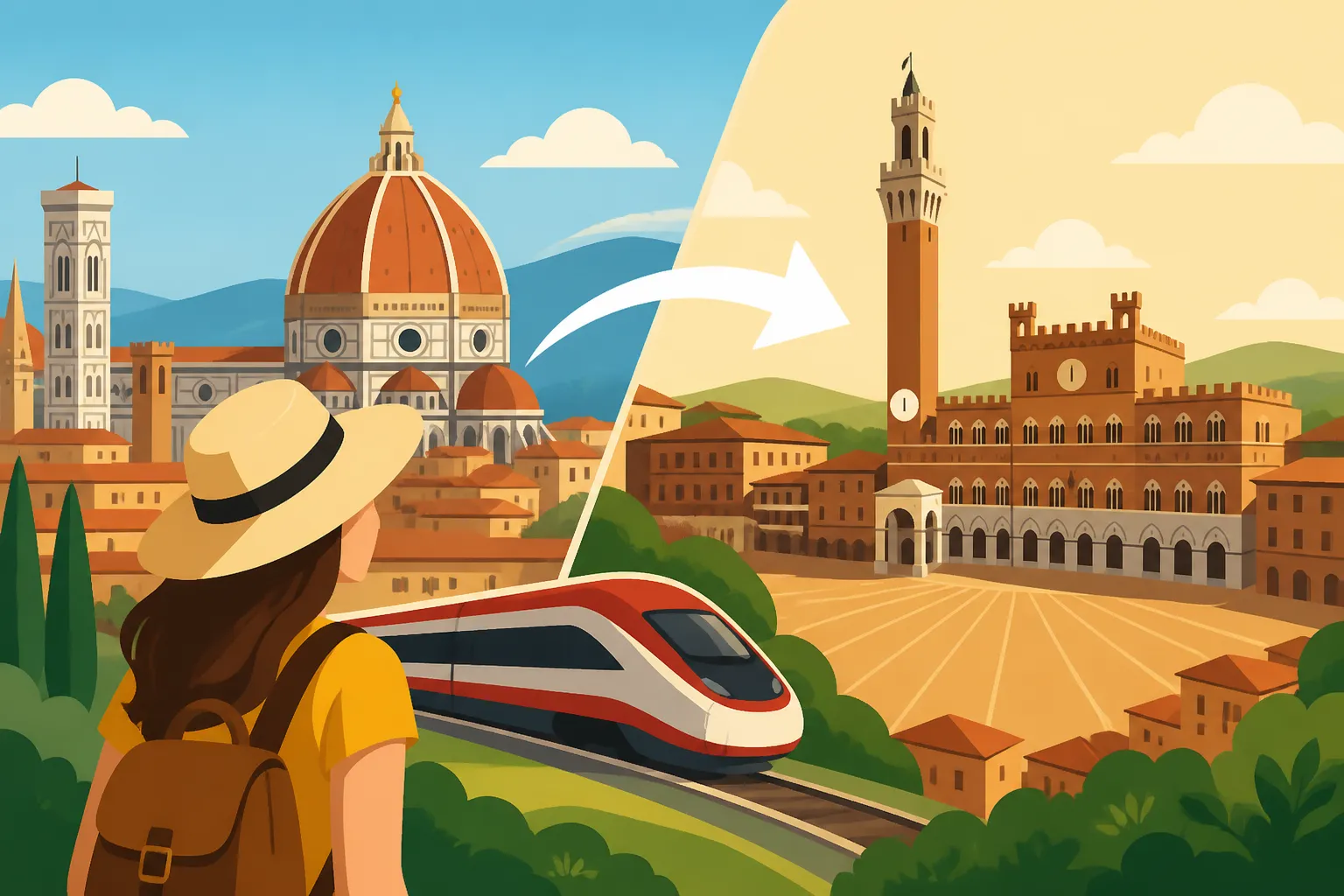
Picture this: you are standing in Florence’s Santa Maria Novella station with a coffee in hand. The departure board lists trains to Siena, someone mentions that the bus is faster, and you have no idea which ticket to buy. This guide explains the bus, the train, the car and the tour options for a Florence to Siena day trip. It also covers how to plan the hours once you arrive.
Disclosure: This post may contain affiliate links. We may earn a commission at no extra cost to you if you make a purchase through these links. Read full disclosure.
Choosing Your Route From Florence to Siena
My first trip to Siena was a mistake. I took the regional train because trains in Italy usually feel like the safe choice. I then discovered that Siena’s station sits at the bottom of a hill, well outside the medieval walls. I lost almost an hour working out the escalators and local buses before I saw a single Gothic façade.
Most people on this route get caught the same way. Siena is one of the few Tuscan day trips where the bus often beats the train, and nobody tells you that until you are already there.
The Rapida Bus Option
The express bus between Florence and Siena is known locally as the Rapida, and Autolinee Toscane operates it. It leaves from the bus area near Santa Maria Novella station. It then runs along the Firenze-Siena raccordo, a fast dual carriageway, without the winding stops of the slower Corsa Ordinaria services.
The real advantage is where it drops you. The bus arrives close to Piazza Gramsci, just inside the old town. From there you are a short, mostly flat walk from the main streets that lead down to Piazza del Campo.
To check Rapida departure times and buy tickets, use the Autolinee Toscane website or app, or the ticket office at the Florence bus station. This is a regional bus service, not a rail operator. Timetables change between weekdays, Sundays and holidays, so check the evening return times before you go.
One common frustration is that the Corsa Ordinaria and the Rapida can depart from the same area. The ordinary service makes many more stops, so it takes noticeably longer. Read the destination sign and ask the driver “Rapida per Siena?” before you board.
If you want to understand how Tuscany’s wider coach network fits together, read Intercity Buses in Italy: FlixBus and Regional Networks.
The Regional Train Option
Trains run from Firenze Santa Maria Novella to Siena on regional services. Some go direct, and others need a change at Empoli. The journey is scenic and comfortable, and you can stretch your legs and use a toilet, which the bus does not offer.
The catch is arrival. Siena station is in the valley below the city. You then need to ride a series of escalators through the shopping complex opposite the station, or take a local bus up to the centre. Neither is difficult once you know about it, but it adds time and confusion on your first visit.
Regional train fares are fixed rather than dynamic, so you do not need to book days in advance. You can buy at the station machines, through the Trenitalia app, or on a comparison platform such as Omio. Omio is handy if you want to see train times laid out alongside other options in English before you commit.
For more on how these tickets work, read Regional Trains in Italy: How to Use Them and Save. If you buy a paper ticket, remember the validation step covered in How to Validate a Regional Train Ticket in Italy. Inspectors on Tuscan lines do check.
Driving or Joining a Guided Tour
Driving gives you freedom, especially if you want to combine Siena with Monteriggioni or a Chianti winery on the way back. The raccordo between the two cities has no tolls.
Siena’s historic centre is a limited traffic zone, however. Rental car drivers regularly receive fines months after their trip. Park in one of the large car parks outside the walls, such as Il Duomo, Santa Caterina or the Fortezza area, and walk in. Before you set off, read What Is a ZTL in Italy and How to Avoid Fines.
A guided tour suits people who prefer not to think about logistics. Many tours from Florence combine Siena with San Gimignano and a Chianti wine stop. You can browse and compare these on GetYourGuide, where reviews help you spot whether a tour gives real time in Siena or just a rushed hour in the Campo.
The trade-off is flexibility. You follow the group’s schedule, and Siena often gets the shortest slot of the day.
| Option | Where It Arrives | Main Advantage | Main Drawback | Best For |
|---|---|---|---|---|
| Rapida bus | Near Piazza Gramsci, inside the old town | Fast, drops you close to the centre | No toilet, limited luggage space, fewer late returns | Most independent day trippers |
| Regional train | Siena station, below the city | Comfortable, scenic, easy ticketing | Uphill transfer to the centre | Travellers who prefer rail or have mobility needs on buses |
| Rental car | Car parks outside the walls | Freedom to add villages and wineries | ZTL fines, parking, no wine for the driver | Groups combining several stops |
| Guided tour | Coach drop-off near the centre | No planning, often includes other towns | Short time in Siena, fixed schedule | First-timers short on time |
Planning a Realistic Day in Siena
Visitors usually try to see everything in Siena and end up with sore legs and a blurry memory of brick. The city is compact, but it is built across three hills. Every street seems to lead downhill to the Campo and then uphill back out.
A Step-by-Step Day Plan
Here is the rhythm I recommend to friends visiting for the first time:
- Take an early Rapida or train from Florence so you arrive before the tour coaches.
- Walk from Piazza Gramsci along Banchi di Sopra, Siena’s elegant main street, towards the centre.
- Arrive at Piazza del Campo and take a few minutes to look at the shell-shaped square, the Fonte Gaia fountain and the Palazzo Pubblico.
- Climb the Torre del Mangia if you have the legs for it. Entry is timed and capacity is limited, so go early.
- Walk uphill to the Duomo complex. Visit the cathedral, the Piccolomini Library and, if time allows, the Museo dell’Opera with its panoramic viewpoint.
- Stop for a long lunch in a side street away from the Campo.
- Spend the afternoon in Santa Maria della Scala, the former hospital-turned-museum opposite the Duomo, or wander the contrada neighbourhoods.
- Finish at the Basilica of San Domenico near the bus area, then catch your return to Florence.
This plan keeps the walking logical. The Duomo and Santa Maria della Scala sit together on one hill, and San Domenico is close to where the Rapida departs.
Tickets and Timing at the Main Sights
The Duomo complex sells combined tickets that bundle the cathedral with several connected sites. Check the official Opera della Metropolitana website for current options and opening hours, because these change with the seasons. During certain periods the cathedral’s famous marble floor is fully uncovered, which is worth planning around if you love art.
Dress modestly for the Duomo, with shoulders and knees covered. If you are unsure what counts as acceptable, read How to Dress for Churches and Religious Sites in Italy before you pack.
For the Torre del Mangia, entry slots can sell out on busy days. The tower is narrow and crowded, and it is not suitable for anyone uncomfortable with tight stairways.
Eating Like a Sienese
Skip the restaurants with laminated menus facing the Campo. Walk two or three streets away and look for places serving pici, a thick hand-rolled pasta typical of southern Tuscany. Look for ribollita in cooler months and local Chianti or Brunello by the glass.
For something sweet to take back to Florence, Siena is famous for panforte, a dense spiced fruit and nut cake, and ricciarelli, soft almond biscuits. Most bakeries along Banchi di Sopra sell both.
Making the Most of Siena Beyond the Basics
Once you have seen the highlights, Siena has a quieter side that most day trippers miss entirely.
The Contrade and the Palio
Siena is divided into seventeen contrade, historic neighbourhoods with their own flags, churches, fountains and fierce loyalties. As you walk, look for the small animal symbols on street corners and the flags hanging from windows. They tell you which contrada you are in.
These neighbourhoods compete in the Palio, the bareback horse race around Piazza del Campo held twice each summer. Visiting on a Palio day is a completely different experience. The city is packed, emotional and loud, and transport back to Florence becomes harder.
If you want to plan around the race, read How to See the Palio di Siena Horse Race. If you want to stay overnight for it, book a room very early. Booking.com is useful for filtering by distance to the Campo, but expect limited availability.
Turning the Day Trip Into an Overnight Stay
Many people finish their Siena day thinking they should have stayed. The city empties dramatically once the tour coaches leave. Evenings in the Campo, with locals gathering and the brick glowing in the last light, are a different world from the crowded midday scene.
If you decide to extend, read Where to Stay in Siena and San Gimignano: Tuscan Hill Town Bases to compare neighbourhoods. Staying inside the walls means no bus logistics but more stairs with luggage. Staying just outside is easier for drivers.
Combining Siena With Other Tuscan Towns
A common question is whether you can combine Siena and San Gimignano by public transport in one day. It is possible, but tight, because San Gimignano usually requires a bus connection via Poggibonsi.
Most independent travellers enjoy both towns more on separate days. The route is explained in How to Visit San Gimignano Without a Car. For a broader list of options from your Florence base, read Best Day Trips From Florence Without a Car.
Practical Tips Before You Go
Season, Weather and Crowds
Siena in July and August can be brutally hot. The stone streets reflect heat and there is little shade in the Campo at midday. Spring and autumn are far more comfortable for walking hills.
To compare the seasons in more depth, read What’s the Best Month to Visit Tuscany? before you fix your dates.
Winter brings fewer crowds and lower demand for the express bus. It also brings shorter daylight hours, so plan an earlier return.
Strikes, Sundays and Holidays
Italian transport strikes can affect both regional trains and buses. Strikes are announced in advance, so check the news and operator notices the day before your trip. If one lands on your travel day, read Strikes in Italy: How Sciopero Days Work and How to Rebook.
Sunday and public holiday timetables are thinner on both bus and train. Always confirm your last return option before you leave Florence, not at five o’clock in Siena.
What to Bring
Bring comfortable shoes with real grip, because Siena’s steep, worn streets can be slippery after rain. Pack a refillable water bottle, as Siena has public drinking fountains. Carry a light layer for cathedral visits and some cash for small bakeries and bars.
Buy your return ticket in Siena before you start sightseeing, so you are not hunting for a ticket office at the end of a long day.
Siena rewards travellers who slow down. Take the bus, walk downhill to the Campo, eat lunch somewhere without a picture menu, and leave room for at least one unplanned street.
Disclaimer
This article is for general informational purposes only and does not constitute professional advice. Laws, prices and regulations vary by location and change over time. Consult a qualified professional for guidance on your specific situation.