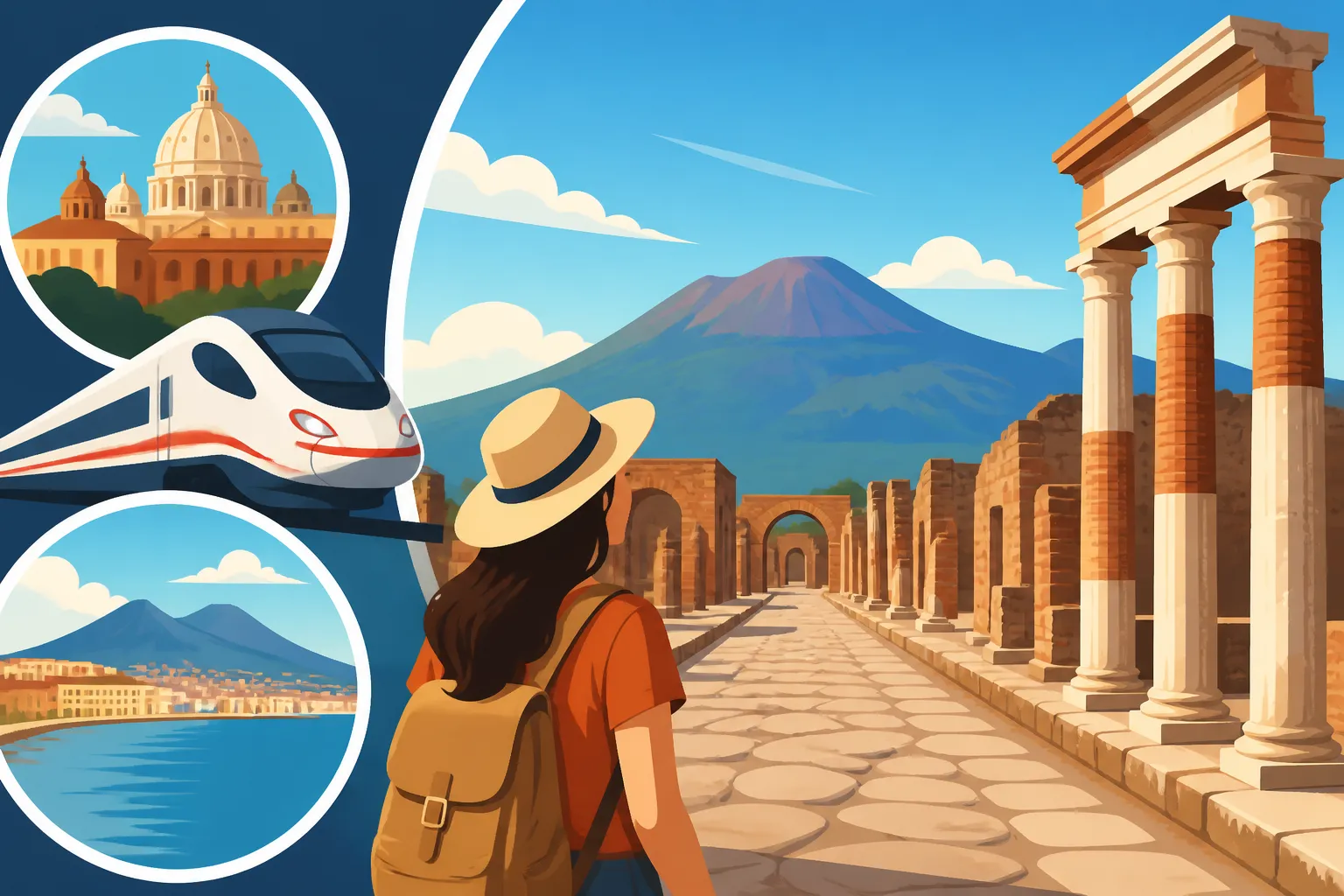
How to Visit Pompeii From Naples or Rome in a Day
Many travelers find themselves overwhelmed by the sheer scale of planning a visit to Pompeii, often underestimating the travel time from Rome or getting lost in the chaotic Naples train station. This guide solves those logistical nightmares by providing clear, veteran-tested paths from both cities, ensuring you spend your time walking through history rather than standing on a hot platform.
Disclosure: This post may contain affiliate links. We may earn a commission at no extra cost to you if you make a purchase through these links. Read full disclosure.
Starting Your Journey From Naples: The Quickest Route
If you are already based in Naples, you have a significant head start. Pompeii is a mere 25 kilometers away, but do not let the short distance fool you into thinking the commute is always a breeze. The most common way to reach the excavations is via the Circumvesuviana, a local commuter rail line that is notorious among expats for its grit and lack of air conditioning. It is a rite of passage for any visitor to the region, and while it can be frustrating, it is incredibly efficient when you know the ropes.
Navigating the Circumvesuviana and Campania Express
The Circumvesuviana departs from Napoli Piazza Garibaldi, which is located directly underneath the main Napoli Centrale station. When you arrive at the main station, follow the signs for "Circumvesuviana" downstairs. I always tell my friends to give themselves an extra fifteen minutes just to navigate the crowds and find the right platform. You will be looking for the line headed toward Sorrento. The station you need to exit at is Pompei Scavi-Villa dei Misteri. Do not get off at the "Pompei" station on the state railway line unless you want a very long, dusty walk to the main entrance.
For a slightly more civilized experience, keep an eye out for the Campania Express. This is a special tourist-oriented train that runs during the high season. It stops at fewer stations, offers guaranteed seating, and most importantly, it has air conditioning. You can check schedules on Omio to see if the timing aligns with your itinerary. While it costs a few euros more than the standard commuter train, the relief from the Neapolitan humidity is often worth every cent.
Tickets and Practical Platform Advice
Buying tickets for the local train can be a bit of a circus. There are ticket windows, but the queues are often long and the staff may not speak much English. I highly recommend using the automated machines or purchasing your tickets at a nearby "Tabacchi" shop if the station is too crowded. Remember that you must validate your ticket in the small machines before heading to the platform. If you forget this step, you risk a hefty fine from the inspectors who frequently patrol this line looking for unsuspecting tourists.
Once on the platform, keep a firm grip on your belongings. Because these trains are often packed to the rafters, they are prime territory for opportunistic pickpockets. It is a good idea to review some How to Avoid Pickpockets in Italy's Tourist Areas before you head out. Stand behind the yellow line and be prepared to move quickly when the train arrives; it waits for no one.
Traveling From Rome: The Long-Haul Day Trip
Visiting Pompeii from Rome is a Herculean task, but it is entirely possible if you are organized. You are looking at a minimum of four to five hours of total travel time, so an early start is non-negotiable. I usually suggest taking the 7:00 AM or 7:30 AM high-speed train from Roma Termini to reach Naples by 8:30 AM. This gives you the best chance of entering the ruins before the midday sun becomes unbearable.
High-Speed Rail to Naples Centrale
The first leg of your journey involves taking a Frecciarossa or an Italo train. These are the crown jewels of the Italian rail system—fast, clean, and incredibly punctual. You can learn How to Buy Trenitalia and Italo Tickets and Save Money by booking several weeks in advance, as last-minute prices can be staggering. Using a platform like Omio allows you to compare the two providers side-by-side to find the best rate for your specific morning.
When you arrive at Napoli Centrale, you will need to transition from the sleek world of high-speed rail to the more rustic world of the regional lines. Follow the signs for the lower level (Piazza Garibaldi) to find the Circumvesuviana. This transition is where most people get stressed. If you find the logistics too daunting for a single day, some travelers choose to stay overnight in Naples using Booking.com to find a hotel near the station, allowing for a much more relaxed visit to the ruins the following morning.
Organized Tours as a Stress-Free Alternative
If the thought of navigating two different train systems and a bustling Neapolitan station makes your head spin, an organized tour might be your best bet. Many companies offer day trips that depart directly from central Rome via private coach. This removes the "commuter" element entirely and usually includes your entrance fees and a guide.
I often point people toward GetYourGuide for these types of excursions. They have several "Rome to Pompeii" packages that include air-conditioned transport and a professional archeologist to lead you through the ruins. While you lose the flexibility of setting your own pace, you gain peace of mind. For many, the ability to nap on a bus after a long day of walking through ancient streets is worth the extra cost.
Maximizing Your Time Inside the Ruins
Once you finally pass through the gates at Porta Marina, the scale of Pompeii will likely hit you. It isn't a museum; it is a city. Without a plan, you will spend half your day just trying to find the exits. I recommend prioritizing a few key areas: the Forum, the Lupanare (brothel), the House of the Vettii, and the haunting plaster casts of the victims.
Strategic Entry and Guided Insights
If you haven't booked an all-in-one tour, I strongly suggest hiring a guide at the entrance or pre-booking a specialized tour through GetYourGuide. The signage inside the park is notoriously sparse and often only in Italian. A guide can breathe life into the stones, explaining the intricate social hierarchies and the daily lives of the people who lived there before the eruption of AD 79. Without this context, one ruined villa can start to look very much like the next after two hours.
Timing your visit is also crucial. If you are Visiting Italy in Summer: Heat, Crowds, and Coastal Escapes, you must be prepared for a complete lack of shade. The sun reflects off the ancient stones, creating a literal oven effect. Aim to see the most exposed areas, like the Forum and the Amphitheatre, early in the morning, and save the covered villas or the museum for the hottest part of the afternoon.
Essential Facilities and Survival Gear
Do not expect the amenities of a modern theme park. There is one main restaurant inside the ruins near the Forum, and it is exactly what you would expect: overpriced and crowded. I always suggest packing your own panino and plenty of water. There are several ancient "nasoni" (public fountains) throughout the site that still provide cold, drinkable water—a lifesaver when the temperatures spike.
Wear the most comfortable shoes you own. The original Roman streets are made of massive, uneven basalt stones with deep ruts from chariot wheels. This is not the place for sandals or fashionable flats. Also, be aware that while the site is magnificent, it can be physically draining. Take breaks often and don't feel like you have to see every single inch of the 66 hectares.
Comparing Your Travel Options
To help you decide which route fits your budget and energy levels, I’ve put together a quick comparison of what to expect from both Naples and Rome departures.
| Feature | From Naples (Regional Train) | From Rome (High-Speed + Regional) | From Rome (Private Coach Tour) |
|---|---|---|---|
| Travel Time (One Way) | 35–50 minutes | 2–2.5 hours | 3 hours |
| Average Cost | €3 – €15 | €40 – €90 | €120 – €160 |
| Comfort Level | Low (Commuter style) | High-speed (Luxury), Regional (Low) | High (Private AC Bus) |
| Flexibility | High (Trains every 30 mins) | Moderate (Based on booked rail times) | Low (Fixed schedule) |
| Stress Level | Moderate (Navigating Garibaldi) | High (Multiple transfers) | Low (Door-to-door) |
Final Practicalities for the Savvy Traveler
Before you set off, there are a few "expat secrets" that will make your day much smoother. First, if you have luggage, do not try to lug it through the ruins. There is a free luggage storage service at the entrance of the Pompei Scavi station and at the entrance to the site itself. Use it. The cobblestones will destroy your suitcase wheels within minutes.
Staying Fed and Hydrated
When you finally emerge from the ruins, you will likely be starving. The area immediately surrounding the entrance is filled with tourist traps that serve mediocre pizza at inflated prices. If you have the energy, walk ten minutes toward the modern town of Pompei (near the Sanctuary of the Virgin of the Rosary). Here you can Find Authentic Restaurants in Italy (Not Tourist Traps) that cater to locals rather than just day-trippers. A quick espresso at a local bar is also a great way to recharge. Make sure you know How to Order Coffee in Italy Like a Local to avoid the "tourist tax" at the counter.
Safety and Etiquette
While Pompeii is an archaeological site, remember to treat it with respect. It is essentially a massive cemetery. You should Dress for Churches and Religious Sites in Italy if you plan to visit the Sanctuary in the modern town afterward, but even inside the ruins, a modest approach is appreciated. Do not sit on the ancient walls or touch the frescoes; the oils from your skin cause irreparable damage over time.
Lastly, keep an eye on your return train times. The last Circumvesuviana trains back to Naples can get incredibly crowded as everyone tries to leave at once. If you are heading back to Rome, ensure you have a generous buffer between your local train arrival and your high-speed departure. Missing a Frecciarossa because the local train was delayed is an expensive mistake you want to avoid.
For more information on navigating the Italian rail system, you can check out my other guides on High-speed trains in Italy: Trenitalia, Italo, Routes, and Savings or how to manage travel logistics like How to Get From Rome Fiumicino Airport to the City Center for your arrival.
Disclaimer
The information provided in this guide is for educational and informational purposes only. While every effort has been made to ensure the accuracy of travel times, costs, and procedures, things in Italy can change rapidly—especially train schedules and site regulations. Always check official sources like Trenitalia or the Pompeii Archaeological Park website before your journey. This guide contains affiliate mentions for services like Omio, Booking.com, and GetYourGuide which help support the maintenance of this site.