Is It Rude Not to Tip in Italy?
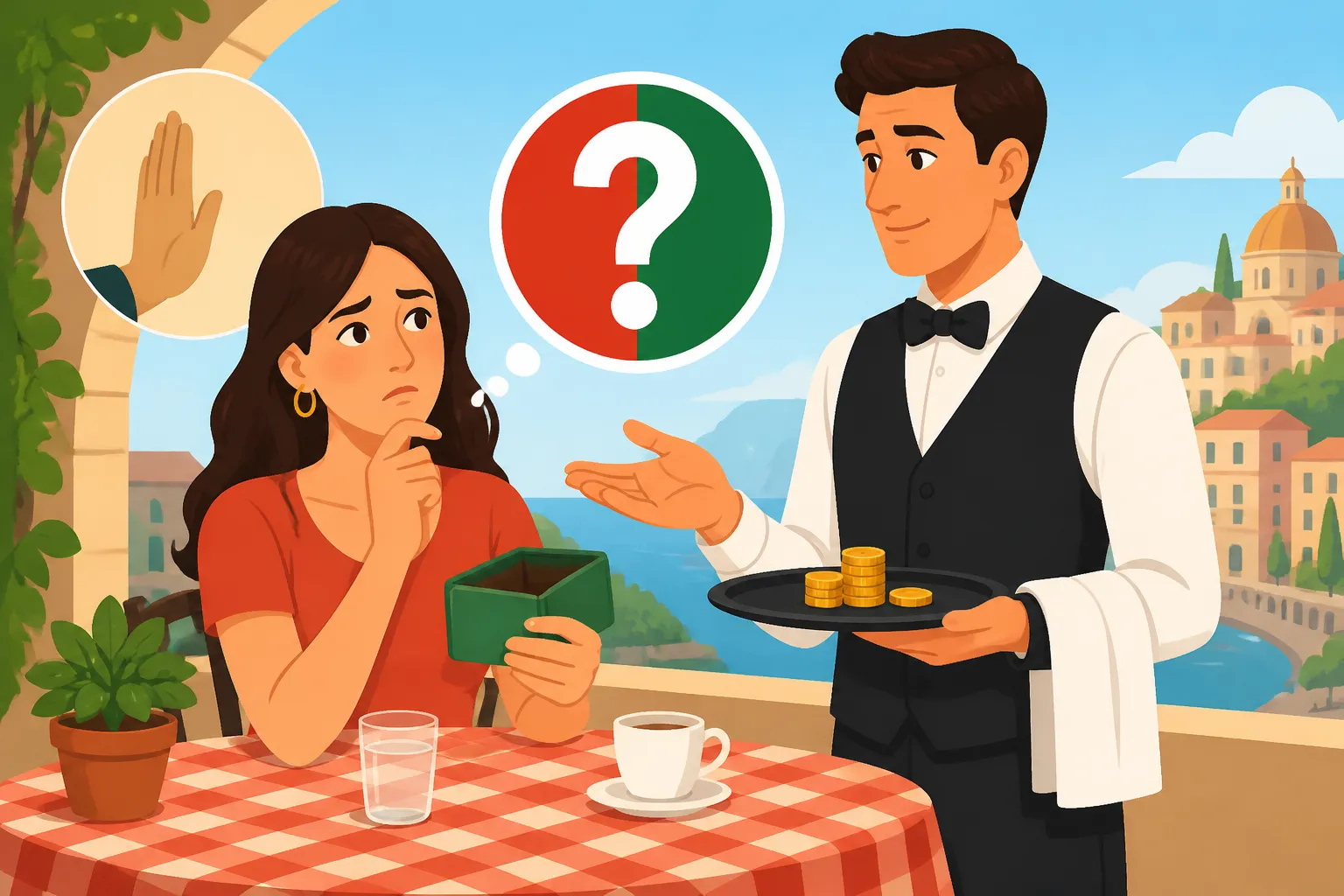
One of the most anxiety-inducing moments for any traveler or new expat in Italy isn't navigating the chaotic roundabouts or deciphering a train schedule; it is the moment the check arrives at a restaurant table. You find yourself hovering your hand over your wallet, wondering if the waiter will be offended if you don't leave extra cash, or if you are accidentally committing a social faux pas that marks you as an "ugly tourist." This guide meticulously breaks down the cultural DNA of tipping in Italy to ensure you never feel awkward at the end of a meal again.
Disclosure: This post may contain affiliate links. We may earn a commission at no extra cost to you if you make a purchase through these links. Read full disclosure.
The Cultural Philosophy of Service and Compensation in Italy
To understand whether it is rude not to tip, you first have to dismantle everything you know about the service industry in countries like the United States or Canada. In those regions, tipping is a mathematical obligation because service staff often rely on gratuities to make a living wage. In Italy, the philosophy is fundamentally different. Waiters, bartenders, and hotel staff are professionals who receive a standardized monthly salary, health insurance, paid vacations, and pension contributions.
When you sit down at a trattoria in Trastevere or a chic bistro in Milan, you are participating in a transaction where the service is already factored into the experience. The waiter does not view you as a walking percentage of their income. Instead, they view themselves as a host. Because of this, the frantic "service with a smile" common in North America—where waiters check on you every five minutes—is replaced by a more reserved, hands-off approach. This isn't rudeness; it is the Italian way of giving you space to enjoy your meal without interruption.
Because service is seen as a stable profession, tipping is viewed as a "gratuity" in the truest sense of the word: a small token of appreciation for service that went above and beyond the standard. If you do not tip, no one is going to chase you down the street, and no one is going to think you are a bad person. It is simply not part of the social contract. To get a better feel for the local lifestyle before you arrive, many expats use Booking.com to find stays in residential neighborhoods where they can observe these local interactions firsthand.
Understanding Your Restaurant Bill: Coperto, Servizio, and Mancia
The confusion for many foreigners stems from the mysterious extra charges that appear on the bill. You might see a few euros added per person that you didn't account for when looking at the menu prices. Before you decide whether to leave a mancia (tip), you need to know what you are already paying for.
The Infamous Coperto
The pane e coperto (bread and cover charge) is a historical relic that remains standard in almost every Italian restaurant. It usually ranges from 1.50 to 4.00 euros per person. Originally, this was a fee for people who brought their own food to an inn but used the host’s tables, linens, and cutlery. Today, it covers the cost of the bread brought to the table, the washing of the tablecloths, and the general "real estate" you occupy while dining. Since you are already paying a fixed fee just to sit down, the pressure to tip further is significantly diminished. You can learn more about these nuances in our guide on Restaurant Etiquette in Italy: Coperto, Courses, and the Bill.
Servizio Incluso
While less common than the coperto, some restaurants—particularly in high-traffic tourist areas like Venice or near the Duomo in Florence—will add a servizio (service charge) of 10% to 15% to the bill. If you see this on your receipt, you should absolutely not leave an additional tip. In fact, many locals find the servizio charge to be a bit of a "tourist trap" tactic, as it forces a gratuity that would otherwise be optional. If you are trying to stay away from these areas, researching How to Find Authentic Restaurants in Italy (Not Tourist Traps) can save you quite a bit of money and provide a much better culinary experience.
The Mancia
The word for tip in Italian is mancia. Unlike the rigid 20% rule in the US, a mancia in Italy is almost always a small, rounded-up amount of cash. If your bill is 47 euros and the service was pleasant, leaving the 3 euros of change to make it an even 50 is considered a generous gesture. If the bill is 100 euros, leaving a 5-euro note is more than enough to signal your satisfaction.
| Service Category | Standard Practice | What is Considered "Generous" |
|---|---|---|
| Espresso Bar (Standing) | No tip expected | Leaving the 10c or 20c change |
| Casual Trattoria/Pizzeria | Round up to the nearest 5 or 10 Euro | 5% of the total bill |
| Fine Dining | 5% to 10% (only if service was exceptional) | 10% of the total bill |
| Taxis | Round up to the nearest Euro | Leaving 1 or 2 Euros extra |
| Hotel Porter | 1 Euro per bag | 5 Euros total |
| Tour Guide | No tip expected | 5-10 Euros per person |
Practical Tipping Scenarios: From Coffee Bars to Tour Guides
The rules change depending on where you are and how you are being served. The most important thing to remember is that "standing" service and "sitting" service carry different expectations.
The Morning Coffee Ritual
If you are standing at the bar to drink your espresso—the most common way Italians consume coffee—you do not tip. At most, you might see a small glass jar near the cash register where people drop their 10 or 20-cent coins. If you choose to sit at a table in a piazza, you will likely be charged a higher price for the coffee (the "table price"), which already accounts for the service. For a deeper dive into these social norms, check out our article on How to Order Coffee in Italy Like a Local.
Taxis and Transportation
Taxi drivers in Italy do not expect tips. However, the convention is to round up. If the meter reads 14.20 euros, giving the driver 15 euros and telling them to "keep the change" (tenga il resto) is perfectly standard. If you are traveling between cities using services like Omio to book your trains or buses, you won't encounter tipping at all during the booking or boarding process. Even when using High-Speed Trains in Italy: Trenitalia, Italo, Routes, and Savings, the staff on board are salaried professionals who would likely be confused by a tip.
Guided Tours and Experiences
This is the one area where tipping has become more "internationalized." If you book a group tour through a platform like GetYourGuide, your guide is often a freelancer. While they don't demand tips, if they spent three hours walking you through the Vatican Museums or the ruins of Pompeii with passion and expertise, a tip of 5 to 10 euros per person is a lovely way to show appreciation. It is never rude to skip this, but it is highly appreciated in the gig economy of tourism. You can find many of these experts by browsing GetYourGuide for local experiences that fit your interests.
Avoiding Common Tourist Pitfalls and Tipping Scams
As Italy becomes more accustomed to American travel habits, some unscrupulous establishments in major "Art Cities" have started to nudge tourists toward tipping in ways that are decidedly un-Italian.
The "Service Not Included" Stamp
In some restaurants near the Colosseum or the Leaning Tower of Pisa, you might see "Service Not Included" stamped in English at the bottom of the bill. This is a psychological ploy aimed specifically at Americans and Brits. In Italy, the price on the menu is legally required to include all taxes and the costs of providing the meal. Unless there is a clearly stated coperto or servizio, you are under no obligation to add anything extra. If you are unsure of how to navigate these conversations, learning How to Ask for the Bill in an Italian Restaurant will help you handle the situation with the confidence of a local.
Credit Card Machine Prompts
A new phenomenon in Rome and Florence is the credit card machine that asks you to select a tip percentage (10%, 15%, 20%) before you enter your PIN. This is not a local custom; it is a software feature imported from abroad to capitalize on tourist guilt. Most Italians will simply bypass this screen or enter "0." If you feel the service was truly stellar, it is always better to leave a few euros in cash rather than adding it to the card, as the cash is more likely to go directly to the server rather than being swallowed by the restaurant's administrative costs.
The "Suggested" Tip
If a waiter verbally tells you that "the tip is not included," they are effectively breaking a social taboo. In most of Italy, this is considered quite rude and pushy. If this happens, it is often a sign that you are in a "tourist trap." In these instances, you should feel even less inclined to tip. Stick to the local habit: if the service was great, leave a couple of coins. If it was average or the waiter was aggressive about money, pay the exact amount on the bill and leave with a "Grazie, arrivederci."
To truly master the art of dining and living in the Bel Paese, it helps to read more on Italian Food Culture: Eating Well as a Visitor and general Tipping in Italy: When, Where, and How Much. Understanding the local rhythm will not only save you money but also earn you more respect from the locals who appreciate a visitor who takes the time to learn their customs.
How to Handle Exceptional Service
There are times when the service in Italy is so transformative that you genuinely want to give more. Perhaps the waiter helped you find a specific vintage of wine, or the concierge at your hotel (booked through Booking.com) spent an hour calling local pharmacies to help you find a specific medication.
In these cases, a tip is no longer about "not being rude"; it's about a human connection. A 10 or 20-euro note handed directly to someone who made your life easier is a powerful gesture. However, the beauty of Italy is that this is always your choice. The "rudeness" in Italy isn't about the money; it’s about your attitude. A customer who doesn’t tip but says "Grazie" with a genuine smile and tries to speak a few words of Italian is a thousand times more welcome than a customer who leaves a big tip but treats the staff like servants.
If you are worried about the logistics of your trip, using tools like the How to Use the Trenitalia App to Plan Train Travel guide can take the stress out of moving around, allowing you to focus on the culture rather than the bureaucracy.
Medical and Health Disclaimer
The information provided in this article is for informational purposes only and does not constitute professional medical, legal, or financial advice. While every effort is made to ensure the accuracy of the cultural and administrative details regarding life in Italy, regulations and social norms can change. Always consult with official government sources or qualified professionals regarding your specific health, visa, or financial situation while traveling or living abroad.