How to Visit Pompeii and Herculaneum
Planning a trip to Italy's ancient wonders like Pompeii and Herculaneum can feel a bit daunting, with so much history to absorb and transport logistics to figure out. It’s easy to get overwhelmed by all the choices – how to get there, what to see first, and whether to tackle both in one go. This comprehensive guide will walk you through everything you need to know to make your visit to these incredible archaeological sites smooth, insightful, and absolutely unforgettable, offering practical advice from a seasoned expat's perspective.
Disclosure: This post may contain affiliate links. We may earn a commission at no extra cost to you if you make a purchase through these links. Read full disclosure.
Why Visit Pompeii and Herculaneum: More Than Just Ruins
So, you’re thinking about visiting Pompeii and Herculaneum. Fantastic choice! These aren't just piles of old stones; they're perfectly preserved snapshots of daily life in the Roman Empire, tragically frozen in time by the eruption of Mount Vesuvius in 79 AD. As an expat who’s seen my fair share of ancient sites across Italy, I can tell you there's something uniquely haunting and deeply moving about walking these streets. It’s like stepping into a time machine, witnessing the final moments of thousands of lives.
What makes these two sites truly special, and why should you consider seeing both? Well, while they share the same catastrophic fate, they offer distinctly different experiences. Pompeii, the much larger and more famous of the two, was a bustling commercial hub, a city of around 11,000 to 20,000 residents, filled with shops, villas, public baths, and an amphitheater. Its size allows you to truly grasp the scale of a Roman city. Herculaneum, on the other hand, was a smaller, wealthier coastal town, likely home to about 4,000-5,000 people. It was buried under a much deeper layer of pyroclastic flow, a superheated avalanche of gas and volcanic debris, which paradoxically led to much better preservation of organic materials, including wooden structures, furniture, and even food.
Visiting both gives you a profound comparative understanding of Roman urban life and the sheer, indiscriminate power of nature. In Pompeii, you see the vast public spaces and the everyday grind, punctuated by the poignant plaster casts of victims. In Herculaneum, you get an intimate glimpse into domestic life, with vibrant frescoes and mosaics still clinging to walls, and even skeletons preserved in the boat houses by the ancient shoreline, showing the sheer horror of the event. To truly appreciate the story, and the differences in destruction and preservation, it's highly recommended to see both if you have the time and energy.
Planning Your Logistics: Getting There and Around
Alright, let's talk about getting there. This is where many first-timers, myself included, can feel a bit of a headache with Italian public transport. But fear not, once you get the hang of it, it's quite manageable. Both Pompeii (specifically "Pompei Scavi – Villa dei Misteri" station) and Herculaneum (Ercolano Scavi) are easily accessible by train from Naples, which is often your main gateway, especially if you're coming from further afield like Rome or Florence.
Getting to Naples from Major Cities
If you're starting your journey from Rome, Florence, or even further north, you'll want to take one of Italy’s high-speed trains to Naples Centrale station. Companies like Trenitalia (with their Frecciarossa trains) and Italo offer frequent, comfortable, and relatively fast services. Booking these tickets in advance, especially during peak season, is always a good idea to secure the best prices and ensure availability. Websites like How to Buy Trenitalia and Italo Tickets and Save Money or Omio can be incredibly helpful for comparing options and booking your tickets, especially if you're not comfortable navigating the Italian train operator sites.
The journey from Rome to Naples usually takes about 1 hour and 10 minutes to 1 hour and 30 minutes, depending on the train. From Naples Centrale, you’ll then transfer to the local Circumvesuviana line.
The Circumvesuviana: Your Local Link
The Circumvesuviana train is your workhorse for reaching both archaeological sites from Naples. It’s a local commuter train, so manage your expectations – it’s not the sleek, modern high-speed experience you might get with Frecciarossa! It can be crowded, a bit grimy, and isn't air-conditioned, especially in the sweltering summer months. However, it's incredibly cheap and gets the job done.
You’ll find the Circumvesuviana station downstairs from the main Naples Centrale platforms. Look for signs leading to "Circumvesuviana" or "Garibaldi." Purchase your tickets from the ticket windows or machines (often cash-only for smaller denominations, so be prepared). The line you need is the Napoli-Sorrento line.
- For Herculaneum: Take the train to Ercolano Scavi. The journey is about 15-20 minutes. From the station, it's a straightforward downhill walk for about 10-15 minutes to the entrance of the archaeological park.
- For Pompeii: Continue on the same line to Pompei Scavi – Villa dei Misteri. This takes about 35-40 minutes from Naples. The entrance to Pompeii is directly across the street from this station, which is super convenient.
Driving and Organized Tours
While driving offers flexibility, I generally advise against it for first-time visitors, especially if you're planning to stay in Naples or a larger city. Italian cities have notorious Zona a Traffico Limitato (ZTLs), restricted traffic zones that can lead to hefty fines if you enter without proper permits – and trust me, they’re camera-enforced and unforgiving. Parking near the archaeological sites can also be a challenge and expensive. If you absolutely must drive, be sure to research What Is a ZTL in Italy and How to Avoid Fines thoroughly.
For those who prefer a completely hands-off approach to logistics, organized tours are an excellent option. Companies often offer day trips from Naples, and even Rome, that include transport, entrance tickets, and sometimes a guide. GetYourGuide, for instance, has numerous options for combined Pompeii and Herculaneum tours, taking all the planning stress out of your hands. This can be particularly appealing if you're tight on time or simply want to relax and let someone else navigate the complexities.
Accommodation Near the Sites
If you're planning an early start or prefer to explore at a more leisurely pace, staying near Pompeii or Herculaneum overnight can be a great idea. The modern towns of Pompei and Ercolano (Resina) offer a range of hotels, B&Bs, and guesthouses. This allows you to beat the morning crowds and fully immerse yourself in the ancient atmosphere. Booking.com is a reliable platform to find suitable accommodation in Italy: Hotels, B&Bs, and Agriturismi in these areas, catering to different budgets and preferences. Alternatively, staying in Naples offers a wider array of dining and nightlife options, as explored in the Naples City Guide: Food, History, and the Bay.
Exploring Pompeii: A City Frozen in Time
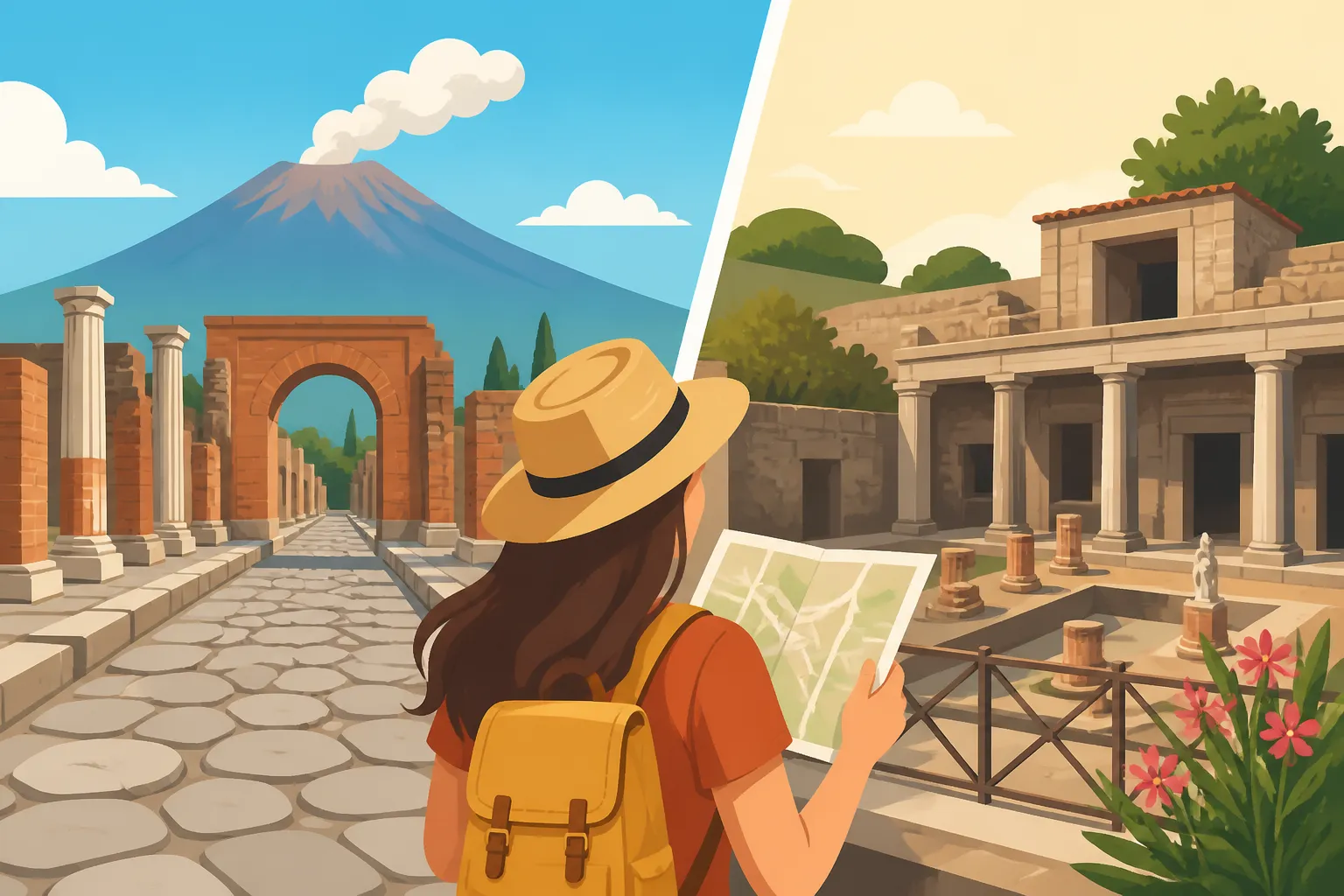
Pompeii is vast, sprawling across 66 hectares, with about two-thirds already excavated. You could easily spend a full day here and still not see everything. My biggest piece of advice: wear comfortable shoes, bring plenty of water, and pick up a map at the entrance! The paths are uneven, cobbled, and can be quite dusty or muddy depending on the weather.
Navigating the Ancient Streets
Upon entering near the Porta Marina gate, you’ll find yourself on the ancient city's main thoroughfares. It’s easy to get lost, but that's part of the adventure. The key is to pace yourself.
- The Forum: This was the heart of public life in Pompeii, a grand public square surrounded by important buildings like the Temple of Jupiter, the Basilica (law court), and the Macellum (meat and fish market). Standing here, you can almost hear the echoes of Roman chatter.
- The Amphitheatre: Located on the eastern edge of the city, this is one of the oldest surviving Roman amphitheatres in the world. It’s a powerful reminder of the gladiatorial games and public spectacles that entertained the citizens.
- Villas and Houses: Don’t miss the stunning private residences. The House of the Faun is famous for its immense size and intricate mosaic of Alexander the Great (a replica is there, the original is in Naples Archaeological Museum). The House of the Vettii offers incredibly well-preserved frescoes, depicting scenes from mythology and everyday life. Keep an eye out for the many fountains, bakeries with their ovens, and even ancient laundries.
- Lupanare (Brothel): This well-preserved two-story brothel provides a fascinating, if sometimes explicit, glimpse into a particular aspect of Roman society. The frescoes above the doorways depict the services offered.
- Plaster Casts: These incredibly poignant casts, made by archaeologists pouring plaster into the voids left by decomposed bodies, are scattered throughout the site and bring home the human tragedy of the eruption. They are stark, powerful reminders of the lives lost.
- Villa of the Mysteries: While technically outside the main city walls, it’s a must-see, especially if you enter near the "Pompei Scavi – Villa dei Misteri" train station. Its vividly colored frescoes depicting mysterious Dionysian rites are some of the best-preserved ancient paintings anywhere.
Consider hiring an official guide at the entrance for a few hours. Their insights can bring the stones to life and help you focus on the most important areas, especially if your time is limited. Otherwise, a good guidebook or audio guide is essential.
Exploring Herculaneum: Intimate Details and Preservation
Herculaneum offers a completely different, yet equally compelling, experience. While Pompeii was buried by ash and pumice, Herculaneum was enveloped by a swift, superheated pyroclastic flow. This hardened into a dense, volcanic rock, effectively sealing the town and preserving it in an astonishing state. It's much smaller and easier to navigate than Pompeii, making it possible to see the highlights in 2-3 hours.
Remarkable Preservation
Walking through Herculaneum, you'll immediately notice the difference. Timber framework in houses is still visible, carbonized but intact. Two-story buildings stand almost complete.
- The Decumanus Maximus: This was Herculaneum's main street, lined with shops and houses. You'll notice the intricate mosaic work on the floors, still vibrant after millennia.
- The Thermal Baths: The Forum Baths are beautifully preserved, allowing you to walk through the various changing rooms, frigidarium (cold bath), tepidarium (warm bath), and caldarium (hot bath). You can almost imagine the citizens relaxing here.
- House of the Deer: This is a fantastic example of a wealthy Roman villa, named for the statues of deer found within. It features a spacious courtyard, a beautiful peristyle garden, and rooms with stunning views over what would have been the ancient coastline.
- House of the Samnite: One of the oldest houses, it showcases a beautiful atrium with a large impluvium (rainwater basin) and intricate wall paintings.
- The Boat Houses and Skeletons: This is perhaps the most haunting and impactful part of Herculaneum. Down by the ancient shoreline, archaeologists discovered hundreds of skeletons of people who had sought shelter, only to be instantly vaporized by the pyroclastic flow. Their remains offer a stark, emotional connection to the tragedy.
- College of the Augustales: A well-preserved building dedicated to the imperial cult, with impressive frescoes and a large, open hall.
Herculaneum allows for a more intimate, detail-oriented exploration. The sense of discovery here, seeing everyday objects and architectural elements so perfectly preserved, is truly profound. Like Pompeii, consider a guide or a good audio tour to fully appreciate the intricacies.
Combining Both Sites in One Day: A Whirlwind, But Possible
Many visitors wonder if it’s feasible to see both Pompeii and Herculaneum in a single day. The short answer is yes, it's possible, but it will be a long and tiring day. You’ll need an early start, efficient planning, and plenty of stamina.
The Itinerary Push
If you're determined to see both, here’s a common approach:
- Morning (Herculaneum): Arrive at Herculaneum right when it opens (usually 9:00 AM). Spend 2.5 to 3 hours exploring. Herculaneum is smaller and more compact, making it a good place to start before the major crowds descend and the midday sun beats down.
- Midday (Travel to Pompeii): Head back to the Ercolano Scavi Circumvesuviana station and take the train a few stops south to Pompei Scavi – Villa dei Misteri. This will take about 15-20 minutes.
- Lunch: Grab a quick bite near the Pompeii entrance. There are casual cafes and snack bars, though quality can vary. Alternatively, pack a lunch to save time and money.
- Afternoon (Pompeii): Dedicate 3.5 to 4.5 hours to Pompeii. Focus on the main highlights: the Forum, a few key houses (like the House of the Faun or Vettii), the Amphitheatre, and the Villa of the Mysteries. It's impossible to see everything in that time, so prioritize.
- Evening: Head back to Naples (or your base) on the Circumvesuviana.
Pros and Cons of a Combined Visit
Pros:
- Maximizes your time if you have a tight itinerary in Southern Italy.
- Provides a powerful comparative experience of two different aspects of Roman life and volcanic destruction.
- Saves you another day of travel to and from Naples.
Cons:
- Exhausting: You'll be on your feet for most of the day, walking many kilometers, often in the sun.
- Rushed: You won't have the luxury of lingering in either site and will have to make tough choices about what to skip.
- Information Overload: It's a lot of history and visual information to process in one go, potentially leading to "ruins fatigue."
If you have two days, I highly recommend dedicating one full day to Pompeii and half a day to Herculaneum, perhaps combining the latter with a visit to the National Archaeological Museum in Naples, which houses many of the exquisite artifacts (frescoes, mosaics, statues) originally found in both sites. However, if time is your constraint, the combined visit is definitely doable, just prepare mentally and physically for it.
Essential Tips for a Smooth and Enjoyable Visit
As a seasoned expat, I've learned that planning for the little things can make a huge difference in Italy, especially when visiting major attractions. These sites are incredible, but they demand some foresight from visitors.
What to Bring and Wear
- Comfortable Walking Shoes: This is non-negotiable. You'll be walking on uneven ancient cobblestones for hours. Leave the sandals and high heels at home!
- Water and Snacks: There are cafes and vendors at Pompeii, but prices are higher, and choices can be limited. Bring at least a large bottle of water, especially in summer.
- Sun Protection: The sites offer very little shade. A wide-brimmed hat, sunglasses, and high SPF sunscreen are vital, even on cloudy days. Trust me, I've learned this the hard way.
- Small Backpack: To carry your essentials. Remember, large bags are often not allowed inside and may need to be checked, which can waste time.
- Map/Guidebook: While maps are usually provided, a detailed guidebook or a downloaded audio guide on your phone will greatly enhance your understanding.
- Portable Charger: Your phone will be working overtime with photos and navigation.
- First Aid Basics: Blister plasters, pain relievers, and any personal medications.
Food and Drink
Inside Pompeii, there are a few designated refreshment points, including a large cafeteria-style restaurant near the Forum. Options are basic but sufficient for a quick fuel-up. Outside the main entrances of both sites, you'll find more choices, from casual pizza places to small trattorias. If you're looking for more authentic, less touristy fare, venture slightly into the modern towns of Pompei or Ercolano. For more general advice on finding quality food, check out my guide on How to Find Authentic Restaurants in Italy (Not Tourist Traps).
Accessibility Considerations
Both Pompeii and Herculaneum are archaeological sites from ancient times, meaning they were not built with modern accessibility in mind. They feature uneven terrain, steep inclines, steps, and narrow pathways.
- Pompeii: There is a designated "Pompeii for All" accessible route, which is a paved path that covers some of the major highlights. However, many areas remain inaccessible to wheelchairs or those with significant mobility issues. Check the official park website for the latest information on accessible routes.
- Herculaneum: While smaller, Herculaneum also presents challenges with steep ramps and uneven surfaces. Some areas are more accessible than others, but it still requires a good level of mobility.
If mobility is a concern, researching specific routes or considering a private tour with an accessible focus is advisable.
Staying Safe and Sound
Italy is generally a safe country for tourists, but like any popular destination, it has its quirks and potential issues. For instance, the Circumvesuviana train is known for pickpockets, so always keep an eye on your belongings, especially in crowded carriages. Don’t keep valuables in back pockets, and consider a cross-body bag or a money belt. Be aware of your surroundings, particularly if you're traveling solo or returning late in the evening. For broader advice, my post on Staying Safe in Italy: Common-Sense Tips for Travelers is a useful resource.
Remember, both sites are archaeological parks, and you’re visiting ancient history. Be respectful, don't climb on structures, and follow all posted rules. These sites are treasures, and our collective responsibility is to preserve them for future generations.
Comparing Pompeii and Herculaneum
To help you decide how to allocate your time, here’s a quick comparison of the key characteristics of Pompeii and Herculaneum:
| Feature | Pompeii | Herculaneum |
|---|---|---|
| Size | Very large (66 hectares, ~2/3 excavated) | Smaller (4.5 hectares excavated) |
| Population | ~11,000 – 20,000 | ~4,000 – 5,000 |
| Burial | Buried by ash and pumice (up to 6 meters deep) | Buried by pyroclastic flow (up to 20 meters deep) |
| Preservation | Good, but mainly stone structures; plaster casts | Excellent, including organic materials, wood, frescoes, mosaics |
| Highlights | Forum, Amphitheatre, Basilica, Temple of Jupiter, House of the Faun, Villa of the Mysteries, Lupanare, Plaster Casts | Thermal Baths, House of the Deer, House of the Samnite, College of the Augustales, Boat Houses with Skeletons, exquisite frescoes |
| Time Needed | 4-7 hours (full day recommended) | 2-3 hours |
| Experience | Grand scale, bustling city life, human tragedy | Intimate, detailed, well-preserved domestic life |
| Crowds | Generally much more crowded | Less crowded, more relaxed |
| Train Station | Pompei Scavi – Villa dei Misteri (right at entrance) | Ercolano Scavi (10-15 min walk downhill to entrance) |
Disclaimer
Please note that while I strive to provide accurate and up-to-date information, circumstances such as opening hours, ticket prices, and transportation schedules can change. It is always advisable to check the official websites of the archaeological parks (Parco Archeologico di Pompei and Parco Archeologico di Ercolano) and transport providers before your visit. This guide offers general advice and personal insights based on typical expat experiences.