High-Speed Trains in Italy: Trenitalia, Italo, Routes, and Savings
Ah, the Italian train system. It can feel like a labyrinth at first, a bewildering mix of regional and high-speed lines, different operators, and an array of ticket types that would make anyone's head spin. Believe me, I've stood at countless ticket machines, frantically punching buttons and questioning my life choices, just trying to get from Milan to Florence without missing my connection. This guide is here to untangle the complexities of Italy's high-speed trains, helping you navigate Trenitalia, Italo, and everything in between with the confidence of a seasoned local.
Navigating Italy's High-Speed Rail System: An Expat's Perspective
When you first arrive in Italy, the idea of getting around without a car can be daunting. The public transport system in your home country might have been simple, but here, it's a whole different beast. Taxis are expensive, buses can be confusing, and driving comes with its own set of unique challenges, especially with those infamous ZTLs. But then, you discover the high-speed trains, and suddenly, the country feels much smaller and incredibly accessible.
Disclosure: This post may contain affiliate links. We may earn a commission at no extra cost to you if you make a purchase through these links. Read full disclosure.
Why High-Speed Trains Are a Game Changer for Expats
For us expats, the high-speed rail network isn't just a convenience; it's a lifeline. It means you can live in a smaller, charming town in Tuscany and still easily commute to a major city like Florence for work or cultural events. It means weekend trips to Rome or Venice become effortless adventures, not grueling road trips. The freedom to explore Italy's diverse regions without the stress of driving, parking, or deciphering local bus schedules is truly liberating. It allows you to embrace the Italian lifestyle more fully, making even spontaneous trips a delightful possibility.
Beyond the practicalities, it's also a fantastic way to experience Italy. You get to watch the stunning landscapes whiz by – from rolling vineyards to dramatic mountain ranges – all from the comfort of your seat. It’s a far cry from the cramped, often frustrating experience of airport security or navigating congested highways. Once you master the system, these trains become your preferred mode of travel, connecting you to the heart of Italy with speed and grace.
The Initial Jitters: Understanding the System
Let's be honest, the initial dive into Italian public transport can feel like baptism by fire. You're trying to figure out which website to use, whether to print your ticket or trust a QR code, and what the difference is between a Frecciarossa and an Italotreno. It's enough to make you want to just stay home. I remember my first time trying to buy a ticket, standing baffled at the self-service machine, wondering if I needed a Codice Fiscale just to go to Bologna. I didn't, thankfully, but the anxiety was real!
The key is breaking it down. There are two main operators, and understanding their offerings is the first step. Then, it's about knowing where to buy tickets and when to buy them to get the best prices. It's a learning curve, absolutely, but once you've done it a few times, it becomes second nature. And let me tell you, the reward of gliding smoothly from one incredible Italian city to another, feeling totally in control, is worth every initial headache.
The Big Players: Trenitalia vs. Italo
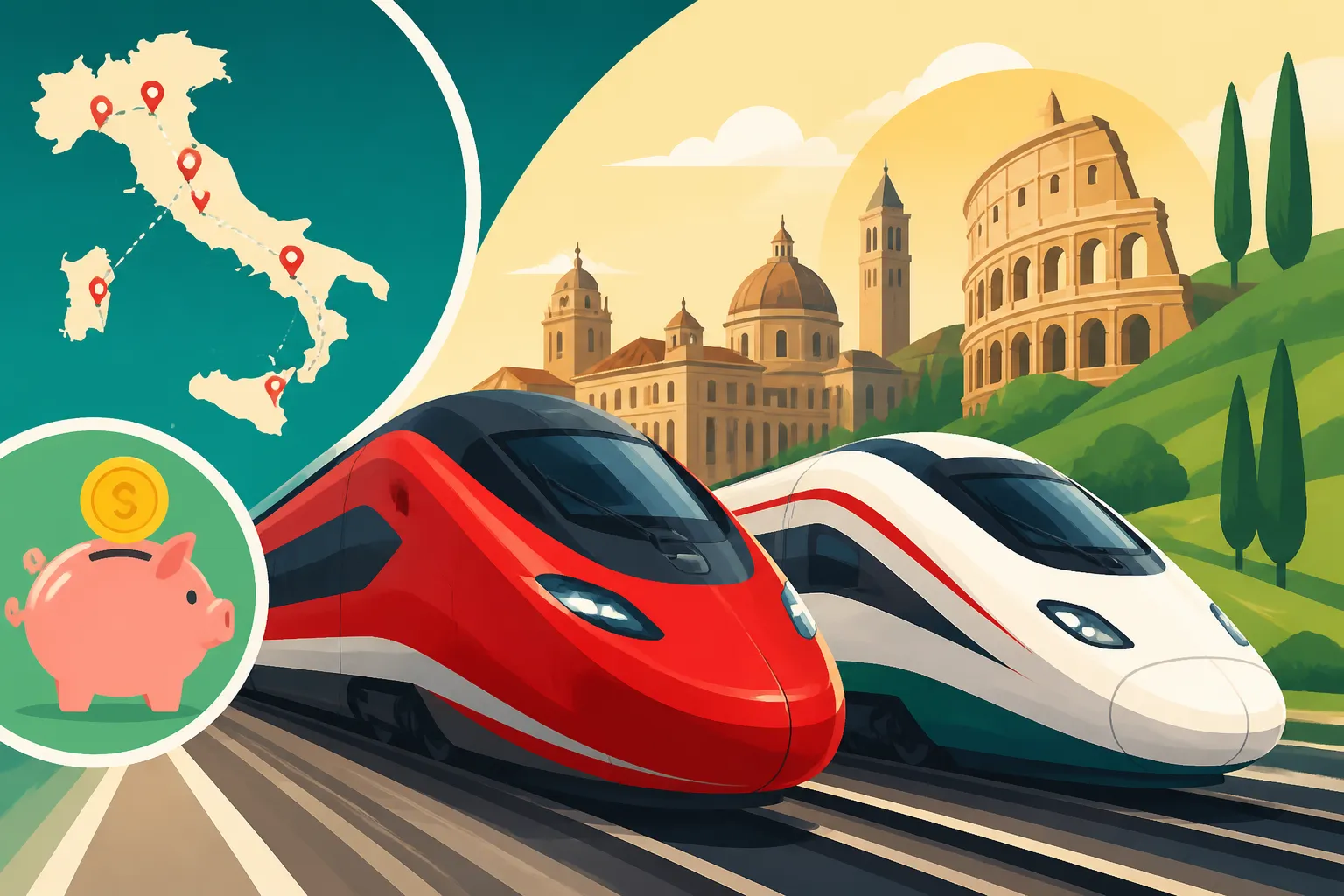
In Italy's high-speed train arena, two major companies dominate the tracks: Trenitalia and Italo. Think of them as competing airlines on a popular route, each with its own strengths, routes, and pricing structures. Understanding their differences is crucial for any expat or visitor planning to travel extensively by rail.
Trenitalia: The State-Owned Giant
Trenitalia is Italy's primary railway company, fully owned by the state. It operates a vast network that includes not only high-speed lines but also regional trains (Regionale and Regionale Veloce) and intercity services, meaning it can get you almost anywhere in the country. When it comes to high-speed, you'll be looking for their "Le Frecce" (The Arrows) trains:
- Frecciarossa: This is Trenitalia's flagship high-speed service, literally meaning "Red Arrow." These sleek, modern trains connect Italy's major cities at speeds of up to 300 km/h (186 mph). They are renowned for their comfort, punctuality, and extensive coverage, linking cities like Turin, Milan, Venice, Bologna, Florence, Rome, Naples, and Salerno. You'll find different classes of service, from Standard to Executive, each offering varying levels of amenities and space.
- Frecciargento: Meaning "Silver Arrow," these trains operate at slightly lower top speeds but still provide excellent connections, often reaching destinations not served by Frecciarossa, or serving them via slightly different routes. They often connect Rome to other major hubs like Verona, Lecce, and Syracuse (though the high-speed part ends much earlier).
- Frecciabianca: The "White Arrow" trains are the slowest of the high-speed offerings, connecting larger cities with medium-sized centers, utilizing conventional lines alongside high-speed ones for parts of their journey. While not as fast as their red and silver counterparts, they offer a comfortable option for broader coverage, often serving coastal towns or areas further off the main high-speed spine.
One of Trenitalia's major advantages is its sheer reach. If you're planning a trip that involves a mix of major cities and smaller towns, you'll likely use Trenitalia for all segments of your journey, making ticket booking and connections simpler. Their presence at virtually every train station, from tiny regional stops to grand central hubs, means you’re rarely far from a Trenitalia service.
Italo: The Private Competitor
Italo, officially NTV (Nuovo Trasporto Viaggiatori), burst onto the scene in 2012 as Italy's first private high-speed rail operator, challenging Trenitalia's long-standing monopoly. They run distinctive red and grey AGV and EVO trains that focus exclusively on high-speed routes between major Italian cities. Their network is slightly less extensive than Trenitalia's, concentrating on the most popular and profitable corridors like Turin-Milan-Florence-Rome-Naples, but they've been steadily expanding.
Italo prides itself on a premium travel experience, often perceived as being slightly more modern and stylish, with sleek interiors and a strong emphasis on customer service. They offer various "Ambienti" (environments or classes), from Smart to Club Executive, similar to Trenitalia's class structure, providing different levels of comfort and included services. Their onboard Wi-Fi is generally considered quite reliable, and they have often innovated with special offers and flexible ticketing options to attract passengers.
The competition from Italo has been a huge win for consumers, pushing both companies to offer more competitive pricing and better services. This means more options for you, the traveler, especially if your journey is between the big city hubs that both operators serve. Italo's trains are typically very new and well-maintained, offering a fresh, contemporary feel to your journey.
Choosing Your High-Speed Carrier: A Head-to-Head
Deciding between Trenitalia and Italo often comes down to a few key factors: your destination, price, schedule, and personal preference.
If your journey takes you to a less-traveled route or a smaller town that isn't on Italo's main high-speed corridors, Trenitalia is likely your only option for the entire journey. For instance, if you're heading deep into Puglia or Calabria, you'll almost certainly use Trenitalia, potentially transferring from a Frecciarossa to a Frecciargento or even a regional train for the final leg.
However, if you're traveling between major cities like Rome, Florence, Milan, or Naples, both operators offer frequent services. This is where you can shop around for the best deal. Italo often has slightly more aggressive pricing for last-minute tickets or specific promotions, but Trenitalia matches this with its own array of discounts like "Super Economy" or "Speciale Frecce" fares if booked in advance. I always recommend checking both. I've found incredible deals on both platforms, sometimes making a substantial difference in my travel budget. For a detailed guide on securing these bargains, you might want to look into How to Buy Trenitalia and Italo Tickets and Save Money.
Consider also the departure and arrival stations. In some cities, like Rome, both trains use the central Termini station. In others, like Milan, Italo might primarily use Centrale while Trenitalia uses both Centrale and Porta Garibaldi for certain routes. Always double-check your specific departure point. Ultimately, both companies offer a high-quality, efficient, and comfortable way to travel through Italy. It’s not uncommon for seasoned expats to mix and match, choosing the best option for each individual journey.
Key High-Speed Routes and Destinations
Italy's high-speed rail network is meticulously designed to connect the country's economic and cultural powerhouses, forming a central spine that makes inter-city travel incredibly efficient. For anyone living or traveling in Italy, understanding these routes is fundamental to planning their journeys.
Major North-South Corridors
The backbone of Italy's high-speed network primarily runs along the peninsula, connecting the industrial North with the historical and cultural centers of the South. This corridor is where you'll find the most frequent services and the fastest journey times.
- Turin – Milan – Bologna – Florence – Rome – Naples – Salerno: This is the quintessential high-speed artery, served extensively by both Trenitalia's Frecciarossa and Italo trains. It links some of Italy's most vibrant cities:
- Turin (Torino Porta Nuova): A grand, elegant city and a major industrial hub in Piedmont.
- Milan (Milano Centrale): The fashion and finance capital, a gateway to the north. Connecting to Milan by high-speed train is a breeze, especially if you're flying into one of its airports and need to reach the city center. How to Get From Milan Malpensa Airport to the City Center can guide you.
- Bologna (Bologna Centrale): A crucial interchange point and a gastronomic delight in Emilia-Romagna. Its central station is an underground marvel where trains converge.
- Florence (Firenze Santa Maria Novella): The heart of Tuscany, a city of Renaissance art and beauty. It's truly a marvel how quickly you can get here from Rome or Milan.
- Rome (Roma Termini): The eternal city, the national capital, and another major interchange. Arrival into Termini puts you right in the bustling heart of the city. For those arriving by air, knowing How to Get From Rome Fiumicino Airport to the City Center is invaluable.
- Naples (Napoli Centrale): The vibrant capital of Campania, gateway to Pompeii and the Amalfi Coast.
- Salerno (Salerno Centrale): A coastal city south of Naples, often used as a starting point for exploring the southern Amalfi Coast.
This route allows you to zip from Milan to Rome in under 3 hours, a feat that would be unthinkable by car or conventional train. The journey itself is a scenic blur, transforming what would be a long, tiring drive into a relaxing few hours where you can work, read, or simply enjoy the view.
Regional Connections and Beyond the Big Cities
While the main north-south axis gets most of the attention, the high-speed network also branches out to connect other significant Italian cities, broadening its reach and making many more destinations easily accessible.
- Milan – Venice (Venezia Santa Lucia): This crucial East-West link connects the Lombard capital to the iconic lagoon city, passing through cities like Brescia, Verona, Vicenza, and Padua. Both Trenitalia and Italo offer direct services, making a day trip to Venice from Milan perfectly feasible. The journey often runs just over 2 hours, a perfect amount of time to relax before diving into the magic of Venice.
- Rome – Venice: While not a direct high-speed line for its entire length (it often involves connecting in Florence or Bologna), dedicated services drastically cut down travel time between these two tourist magnets. Trenitalia's Frecciarossa services offer seamless connections, often just requiring a platform change.
- Rome – Bari/Lecce: Frecciargento and Frecciarossa services connect Rome to the heart of Puglia, reaching cities like Bari and Lecce. These trains primarily use conventional lines after the high-speed section to Naples or Bologna, but they are still much faster than regional alternatives and offer comfortable direct connections to the heel of Italy.
- Other Significant Connections: The high-speed network also extends to cities like Reggio Calabria (via Frecciargento services that eventually leave the high-speed lines further south), Trieste (from Venice), and Genoa (with ongoing upgrades to high-speed infrastructure). These connections ensure that even far-flung regions become more approachable for travelers relying on rail.
For expats, this means that almost no corner of Italy is truly "isolated" when it comes to travel. With a bit of planning, you can design an itinerary that takes you from the bustling markets of Palermo (via a connection and ferry from Calabria) to the snowy peaks of the Dolomites, all with the train as your trusted companion. Remember, for journeys that involve both high-speed and regional lines, booking through a single platform like Trenitalia or a comprehensive aggregator like Omio can simplify your ticketing, ensuring smooth transitions even if you have to switch trains. For more general travel tips, consider reading Getting Around Italy: Trains, Buses, Flights, and Car Hire.
Mastering Ticket Purchases and Finding the Best Deals
Buying train tickets in Italy can feel like an art form, especially if you're aiming for the best prices. It’s not like simply showing up at the station and expecting to get a cheap fare, particularly on high-speed routes. Advance planning and understanding the ticketing landscape are your best friends.
Online Booking Platforms and Apps
Gone are the days when you had to stand in line at the train station. Nowadays, booking your Italian high-speed train tickets is overwhelmingly done online, and it's by far the most convenient and cost-effective method.
-
Official Websites and Apps:
- Trenitalia.com and the Trenitalia App: This is your primary resource for all Trenitalia services, from high-speed Frecciarossa to regional trains. The website is intuitive, available in English, and offers real-time schedule information, various fare options, and the ability to select your seat. The app, also user-friendly, allows you to store your tickets digitally, check train status, and even make changes if your fare allows. I personally rely heavily on the Trenitalia app; it’s saved me countless times when I’m on the go.
- ItaloTreno.it and the Italo App: Similarly, Italo's official website and app are excellent for booking their high-speed services. They also provide comprehensive schedule information, fare classes, and seat selection. Italo often has flash sales or loyalty programs worth checking out if you plan to use them frequently.
-
Third-Party Aggregators: These platforms can be incredibly useful for comparing prices and schedules across both Trenitalia and Italo simultaneously, saving you the hassle of checking two different websites.
- Omio: This platform is a fantastic resource for comparing train, bus, and even flight options across Italy and Europe. It aggregates data from both Trenitalia and Italo, allowing you to see all available high-speed services for your chosen route side-by-side. It's especially handy when you're unsure which operator offers the better deal or more convenient schedule. Many expats swear by Omio for its ease of use and ability to present a clear overview of transport options.
- Booking.com and GetYourGuide: While primarily known for accommodation and tours, these platforms sometimes offer integrated train ticket booking services, particularly for popular routes. While they might not always show every single fare class, they can be a convenient option if you're already using them to organize other aspects of your trip. However, for dedicated train travel, the official operator sites or Omio are usually more comprehensive.
When booking online, you'll typically receive an email confirmation with a PNR code (Passenger Name Record) or a QR code. This is your ticket. You don't usually need to print it out for high-speed trains; simply show the QR code on your phone to the conductor when they come around. This digital convenience is a huge relief compared to older systems requiring physical validation.
Understanding Fares and Classes
Both Trenitalia and Italo offer a tiered pricing system with different "fares" (ticket types) and "classes" (levels of service). This is where the savings come in, but also where it can get a little confusing.
-
Fares (e.g., Base, Economy, Super Economy, Promo):
- Base: This is the most expensive and most flexible fare. It allows for unlimited changes to your ticket (date, time, class) and refunds, usually with a fee, up to a certain point before departure. If your travel plans are uncertain, this offers peace of mind.
- Economy/Super Economy (Trenitalia) / Low Cost/Economy (Italo): These are the discount fares. They are significantly cheaper but come with strict restrictions. Super Economy tickets, for instance, are non-refundable and non-changeable. Economy fares might allow one change for a fee. The earlier you book, the more likely you are to find these deeply discounted tickets. These are the "golden tickets" for budget-conscious travelers, but require certainty in your plans.
- Promo Fares: Both companies frequently offer special promotions for specific routes or travel periods. Keep an eye out for these.
-
Classes/Environments:
- Trenitalia (Frecciarossa):
- Standard: Similar to economy class on an airplane, comfortable seating, often with tables.
- Business: More spacious seats, usually in a quieter carriage, often includes a welcome drink and snack.
- Premium: A hybrid between Standard and Business, offering more space than Standard and a welcome drink, but without the full Business amenities.
- Executive: The highest class, offering luxurious leather recliners, a dedicated at-seat meal service, access to lounges, and a very spacious, quiet environment.
- Italo:
- Smart: Italo's entry-level class, comfortable and modern.
- Prima: More spacious seating than Smart, with priority boarding and a welcome service.
- Club Executive: Italo's most luxurious option, offering extra-wide leather seats, at-seat catering, access to lounges, and a truly exclusive experience.
- Trenitalia (Frecciarossa):
Choosing your class depends on your budget and how much comfort you desire. For short journeys, Standard or Smart is usually perfectly adequate. For longer trips or if you want to work, Business or Prima can be a worthwhile upgrade. I've often treated myself to a Business class ticket for longer trips, appreciating the extra space and peace and quiet to catch up on emails.
Strategies for Saving Money
The biggest secret to saving money on high-speed trains in Italy is booking in advance. Just like flights, the cheapest fares (Super Economy, Low Cost) are limited and sell out quickly. As the departure date approaches, only the more expensive Base fares remain.
- Book Early: Aim to book your tickets 2-4 weeks in advance, especially for popular routes and peak travel times (weekends, holidays). I've seen tickets from Rome to Florence double or even triple in price if booked just a few days before departure.
- Be Flexible with Travel Times: Mid-week travel (Tuesday-Thursday) and off-peak hours (early morning or late evening) are often cheaper than peak commuter times or Friday/Sunday afternoons.
- Consider Round Trips: Sometimes booking a return journey can be cheaper than two one-way tickets, though this is not always the case with Italian trains, so always check both options.
- Look for Promotions: Both Trenitalia and Italo regularly offer promotions, especially for groups or families. Sign up for their newsletters or check their "Offerte" (Offers) sections on their websites. Italo, in particular, has been known for its creative discount codes.
- Loyalty Programs: If you travel frequently, consider signing up for loyalty programs like Trenitalia's Cartafreccia or Italo Più. These can earn you points for discounts and exclusive offers.
- Group Discounts: If traveling with family or friends, explore specific group offers, like Trenitalia's "Speciale 2×1" (travel 2 for the price of 1) or "Famiglia" (family) fares, which are often available on Saturdays.
- Senior/Youth Discounts: If you qualify, check for age-based discounts.
- Compare Platforms: Always check both Trenitalia's and Italo's official sites, and then cross-reference with an aggregator like Omio. This ensures you're seeing the full range of options and not missing a better deal.
- Avoid Booking During Strikes (Sciopero): While strikes are often announced in advance, they can disrupt schedules and lead to higher prices on unaffected trains. Keep an eye on local news or official transport sites for strike announcements.
By employing these strategies, you can significantly reduce your travel costs and make high-speed train travel an incredibly affordable way to explore Italy.
Onboard Experience: What to Expect
Once you've navigated the booking process, the real treat begins: the journey itself. Italian high-speed trains are renowned for their comfort and efficiency, offering a far more relaxed travel experience than many other modes of transport.
Comfort, Amenities, and Services
Stepping onto an Italian high-speed train, whether it's a Frecciarossa or an Italo, you'll generally find modern, clean carriages designed for passenger comfort.
- Seating: Seats are typically comfortable and upholstered, often with adjustable recline, individual reading lights, and power outlets (both standard European two-pin and sometimes USB ports) so you can charge your devices. In most classes, seats are arranged in a 2×2 configuration, with some "face-to-face" seating options around a table, perfect for groups or families. In Business or Prima classes, the seating is more spacious, sometimes with individual armrests and increased legroom.
- Air Conditioning: All high-speed trains are air-conditioned, a welcome relief during Italy's hot summers.
- Restrooms: Clean and functional restrooms are available in every carriage.
- Quiet Zones: Both operators often have designated "Silent" or "Quiet" areas, usually in specific carriages in Premium or Business class, where passengers are asked to refrain from loud conversations and phone calls. These are a blessing if you need to work or simply enjoy some peace and quiet.
- Accessibility: Trains are generally designed to be accessible, with dedicated spaces for passengers with reduced mobility and accessible restrooms. It's always a good idea to inform the train company in advance if you require special assistance.
Trenitalia's Frecciarossa also offers access to Freccialounge and Frecciabistrò services. Freccialounges are executive lounges available at major stations for Executive and Business class ticket holders, as well as Cartafreccia loyalty program members with certain statuses. These offer a quiet place to wait, with Wi-Fi, snacks, and drinks. The Frecciabistrò is a bar car available on most Frecciarossa trains, serving coffee, snacks, sandwiches, and drinks.
Italo, not to be outdone, offers its own Italo Club Lounges at key stations for Club Executive passengers. Onboard, Italo's services also include a refreshment car or at-seat service depending on your class, ensuring you won't go hungry or thirsty on your journey.
Luggage, Wi-Fi, and Dining
One of the great advantages of train travel over flying is the relaxed luggage policy, though there are still some considerations.
- Luggage: Generally, there are no strict weight limits or extra fees for luggage on Italian high-speed trains, unlike airlines. You are expected to manage your own bags. There's typically ample space overhead for smaller bags and backpacks, and larger luggage racks are located at the ends of carriages. It's polite and practical to keep the aisles clear. I’ve traveled with everything from a small backpack to a huge suitcase and a guitar, and never had an issue finding space. Just remember, you'll be responsible for carrying it on and off the train yourself, so don't overpack!
- Wi-Fi: Both Trenitalia and Italo offer Wi-Fi services on their high-speed trains. While it has improved significantly over the years, it can still be a bit spotty, especially when traveling through tunnels or less populated areas. Speeds are usually sufficient for basic browsing, email, and social media, but don't expect to stream high-definition movies without interruption. In higher classes, the Wi-Fi tends to be more reliable. It's always a good idea to have some Mobile Data and eSIMs for Travel in Italy on your phone as a backup, just in case the train Wi-Fi decides to take a pausa.
- Dining: As mentioned, both operators provide options for food and drink onboard. Trenitalia has the Frecciabistrò bar car, where you can walk up and purchase items. Italo also has a snack and beverage service. In Business/Prima and Executive/Club Executive classes, a welcome drink and snack (or even a full meal in Executive/Club Executive) might be included as part of your ticket. For those in Standard/Smart, you can always bring your own snacks and drinks on board. There's no prohibition against outside food, which is great for saving money and catering to specific dietary needs. I often grab a panino and a bottle of water from a station cafe before boarding.
The overall experience is one of efficiency and comfort. You board, settle into your seat, and before you know it, you're gliding into your destination, refreshed and ready to explore.
Essential Tips for a Smooth High-Speed Train Journey
Even with the best planning, a few insider tips can make your high-speed train experience in Italy even smoother, helping you avoid common expat pitfalls and enjoy the journey to the fullest.
Station Navigation and Departures
Italian train stations, especially the major ones like Roma Termini or Milano Centrale, can be bustling and a little overwhelming. Knowing what to do can save you a lot of stress.
- Arrive Early, But Not Too Early: For high-speed trains, arriving about 20-30 minutes before departure is usually sufficient. This gives you time to find your platform (binario), grab a coffee, and locate your carriage without feeling rushed. There's no airport-style security to clear.
- Check the Boards: As soon as you arrive, look for the large electronic departure boards (partenze) to find your train number and binario. Platforms are usually only announced about 10-15 minutes before departure. Don't panic if you don't see it immediately.
- Locate Your Carriage (Carrozza): Your ticket will indicate your carriage number (carrozza) and seat number (posto). Once the platform is announced, look for the electronic displays on the platform or painted numbers on the ground that indicate where your carriage will stop. This helps you board quickly and efficiently without having to walk the entire length of the train.
- Mind Your Surroundings: Like any busy public place, train stations can be targets for petty theft. Keep an eye on your belongings, especially in crowded areas. This falls under general Staying Safe in Italy: Common-Sense Tips for Travelers.
Validating Tickets and Avoiding Fines
This is a crucial point, especially for those used to different train systems. While high-speed tickets bought online for a specific train generally don't need to be validated, understanding the rules for regional trains is essential to avoid hefty fines.
- High-Speed Tickets (Trenitalia "Le Frecce" and Italo): If you've purchased your ticket online or via an app for a specific high-speed train (e.g., Frecciarossa 9510 from Rome to Florence at 10:00 AM), your ticket is usually already "validated" by virtue of being linked to a specific reservation. You simply show the PNR or QR code on your phone or printed ticket to the conductor. There's no need to use the green or yellow validation machines (obliteratrice) on the platform.
- Regional Train Tickets: This is where many expats get caught out. If you buy a paper ticket for a Regionale or Regionale Veloce train from a ticket counter or machine, you MUST validate it before boarding. Look for the small green and yellow machines (obliteratrice) on the platform or in the station concourse. Insert your ticket into the slot until you hear a stamp or see it printed with the date and time. Failure to validate a regional ticket, even if purchased, is considered traveling without a valid ticket and will result in a fine. The conductor has no way of knowing when or where you bought it otherwise. This rule can be frustrating, but I’ve learned my lesson the hard way, so trust me on this one!
- Ticket Checks: Conductors on Italian trains are diligent. They will come through the carriages, often multiple times, to check tickets. Have your digital or physical ticket ready. If you have an electronic ticket, ensure your phone has enough battery.
- Changes and Refunds: Understand the terms of your ticket regarding changes and refunds. As mentioned, cheaper fares are often non-changeable and non-refundable. If you anticipate flexibility, invest in a Base fare or purchase a separate travel insurance policy.
High-speed trains are a fantastic way to discover Italy, offering speed, comfort, and breathtaking views. With a little preparation and these tips, you'll be navigating the tracks like a true local in no time. For more general advice on planning your rail adventures, check out How to Plan an Italy Itinerary by Train. The convenience and joy of Italian train travel are truly one of the best parts of living in or visiting this incredible country.
Disclaimer
The information provided in this guide is for general informational purposes only and is subject to change. While we strive to keep the content up-to-date and accurate, official policies, prices, and services for Trenitalia, Italo, and other transport providers can vary and may be updated without prior notice. Always consult the official websites of Trenitalia, Italo, and relevant Italian government agencies for the most current and authoritative information. Travel rules and regulations, including those related to visas and health, can also change frequently. We recommend verifying all details directly with the service providers or relevant authorities before making any travel arrangements.