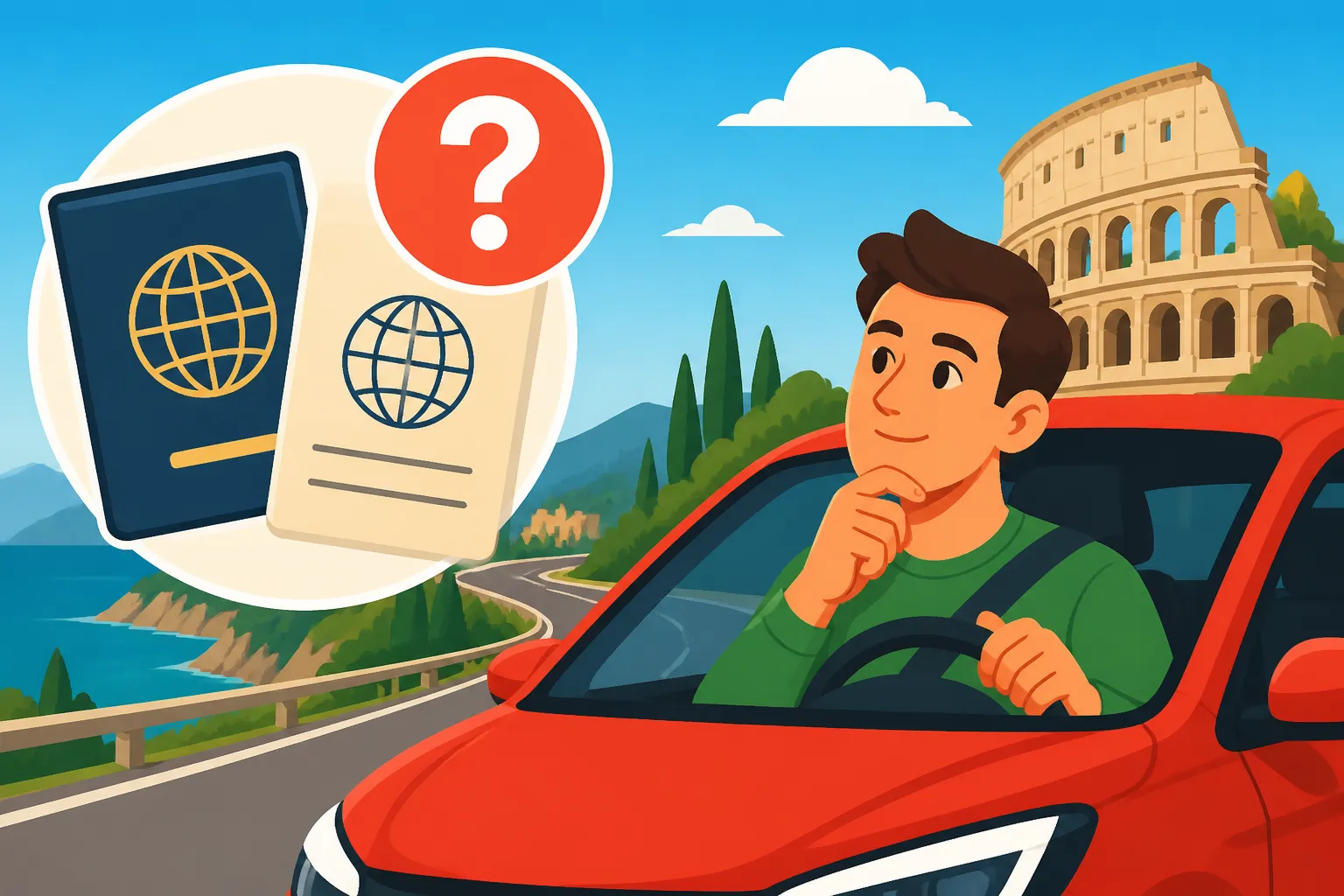
Do You Need an International Driving Permit to Drive in Italy?
Ah, the infamous Italian bureaucracy! Just when you think you've got a handle on things, a new question pops up, often related to something as seemingly simple as driving. One of the most common head-scratchers for us expats, and even short-term visitors, is whether you truly need an International Driving Permit (IDP) to get behind the wheel here. Trust me, many of us have stood at the rental counter, or even worse, at the side of the road with a Carabiniere, wishing we had a definitive answer. This guide is here to clear up that very confusion, sparing you potential headaches and fines.
The Short Answer: Yes, You Most Likely Do!
Let's cut right to the chase: if you're holding a driver's license issued by a non-EU or non-EEA country, you almost certainly need an International Driving Permit (IDP) to legally drive in Italy. This isn't just a suggestion; it's a requirement deeply rooted in Italian law, specifically the Codice della Strada (Highway Code). Many first-time visitors or new residents assume their national license is sufficient, especially if it's in English, but this is a common misconception that can lead to significant problems.
Disclosure: This post may contain affiliate links. We may earn a commission at no extra cost to you if you make a purchase through these links. Read full disclosure.
Why the Confusion?
The confusion surrounding IDPs is understandable. In many parts of the world, particularly for short visits, a valid national driver's license is generally accepted. The idea of needing an additional, translated document can seem redundant. Moreover, rules can differ wildly from country to country, and what applies in, say, France or Germany, might not apply here in Italy. Another source of misunderstanding comes from rental car agencies. While most reputable agencies will ask for an IDP, some might still rent you a car with just your national license and a credit card, especially if you book online. This can give a false sense of security, as their rental policy doesn't supersede Italian law. The onus is always on the driver to comply with local regulations, not just the rental company's terms.
The Legal Basis in Italy
Italy's Highway Code is quite explicit on this matter. Article 135 states that drivers holding a license issued by a non-EU/EEA country must accompany it with an International Driving Permit or a sworn translation into Italian. The purpose of the IDP is to serve as an official, multi-language translation of your national driver's license, verifying that you are legally permitted to drive in your home country. It ensures that Italian law enforcement officials can easily understand your driving credentials, regardless of the language your original license is issued in. Without it, your national license, no matter how official it looks to you, is effectively unintelligible and therefore invalid in the eyes of the Italian authorities.
Who Needs an IDP and When?
Understanding who needs an IDP in Italy boils down to your nationality and your residency status. It's not a one-size-fits-all situation, and getting this wrong can turn a beautiful Italian road trip into a bureaucratic nightmare.
Non-EU/EEA Citizens on Tourist Visas
If you are visiting Italy as a tourist from a country outside the European Union (EU) or the European Economic Area (EEA)—this includes common origins like the United States, Canada, Australia, and the United Kingdom (post-Brexit)—you absolutely must carry an International Driving Permit alongside your valid national driver's license. The IDP essentially acts as a certified translation of your home license. It's not a standalone document; it must always be presented with your original license. This requirement applies from the very first day you start driving and typically extends for the duration of your short-term stay, usually up to one year from your date of entry into Italy. So, whether you're just here for a week or planning a longer three-month exploration, get that IDP before you arrive. This is also a critical step for anyone who plans to Rent a Car or Scooter in Italy: First Steps.
Non-EU/EEA Citizens as Residents
For those of us making the big leap to live in Italy, the rules become a bit more nuanced. If you've moved here and established residency, you're generally permitted to use your non-EU/EEA driver's license, accompanied by your IDP, for a grace period of one year from the date of your official residency registration (the "residenza" at the Comune). This initial year is crucial. During this time, you should be making arrangements to either convert your foreign license to an Italian one or, if conversion isn't possible, apply for an Italian driving license from scratch. Many countries have reciprocal agreements with Italy that allow for direct conversion, which means you can swap your license without taking a new driving test. However, if your country does not have such an agreement, you'll need to go through the full Italian driving school process, including theoretical and practical exams. This administrative step is a key part of your Moving to Italy Checklist: Essential Tasks and links closely to understanding How to Obtain an Italian Driver’s License.
EU/EEA Citizens
Good news for our fellow Europeans! If you hold a valid driver's license issued by an EU or EEA member state (e.g., Germany, France, Spain, Sweden, Norway, Iceland, Liechtenstein), you generally do not need an International Driving Permit to drive in Italy. Your national license is recognized as valid throughout the EU/EEA. You can use it without any additional documentation for as long as it's valid. However, if you become a resident in Italy, you are encouraged to register your foreign license with the Italian authorities or convert it to an Italian one after a certain period, although it's not strictly mandatory unless your license is expiring. This makes things much simpler, aligning with the broader principle of free movement within the Union.
How to Get Your International Driving Permit
Getting an IDP isn't nearly as complex as some other Italian administrative tasks, thankfully! It's a fairly straightforward process, typically handled by motoring associations in your home country before you even step foot in Italy.
The Application Process Abroad
The process varies slightly depending on your home country, but it generally involves a few key steps.
- United States: In the U.S., you can obtain an IDP from either the American Automobile Association (AAA) or the American International Automobile Association (AITA). You'll usually need to complete an application form, provide two passport-sized photos, and submit a copy of both sides of your valid U.S. driver's license. There's a small fee, and you can often get it on the spot at a local office or by mail.
- United Kingdom: For UK residents, the Post Office is the primary issuer of IDPs. You'll need your valid UK driving license (photocard and paper counterpart, if applicable), a passport-sized photograph, and proof of identity. The process is usually quick, and you'll receive your IDP immediately.
- Canada: In Canada, IDPs are issued by the Canadian Automobile Association (CAA). Similar to the US, you'll need an application form, two passport photos, and your valid provincial driver's license.
- Australia: Australian citizens can obtain an IDP from their state or territory's motoring authority (e.g., NRMA in NSW, RACV in Victoria). Requirements are similar: application form, passport photos, and your Australian driver's license.
Always ensure you apply well in advance of your trip, especially if applying by mail, to account for processing and shipping times. You can't get an IDP in Italy if you're a foreign national; it must be issued by the country that issued your original driving license.
What an IDP Looks Like and What It Contains
An International Driving Permit is not a plastic card like your usual driver's license. Instead, it's typically a small, grey booklet, about the size of a passport, with several pages. Inside, you'll find a translation of your driver's license details into multiple languages, including English, French, Spanish, Russian, Chinese, German, Arabic, Italian, and Portuguese. It will show your name, address, date of birth, photo, and the categories of vehicles you are authorized to drive (e.g., car, motorcycle). Crucially, it will also state the issuing country and its validity period. The IDP's main function is to overcome language barriers, making your driving qualifications understandable to foreign authorities. Remember, it is only valid when presented alongside your original, valid national driver's license. Think of it as a companion document, not a replacement.
Important Considerations and Validity
An IDP is typically valid for one year from its date of issue. This is a crucial detail to remember, especially for longer stays or if you're planning multiple trips to Italy. If your IDP expires while you're in Italy, you'll need to renew it from your home country, which can be inconvenient. Therefore, plan accordingly! Also, be aware that an IDP cannot be issued for a longer period than your national driver's license. If your home license is due to expire in six months, your IDP will also only be valid for six months. Always carry both your IDP and your original national driver's license with you when driving. Failure to produce both documents upon request from Italian law enforcement can result in the same consequences as not having an IDP at all. This is vital whether you're taking a leisurely drive through Tuscany or navigating the vibrant chaos of a city like Rome, where understanding What Is a ZTL in Italy and How to Avoid Fines is equally critical.
Driving in Italy Without an IDP: Risks and Consequences
So, what happens if you decide to roll the dice and drive in Italy without an IDP, even though you know you probably need one? The short answer: don't. The consequences aren't just an inconvenience; they can be financially painful and cause significant stress.
Police Checkpoints and Fines
Italian police, including the Carabinieri and Polizia Stradale, routinely conduct roadside checks. If you're pulled over and cannot produce a valid International Driving Permit alongside your national license (if required for your nationality), you're looking at a hefty fine. The exact amount can vary, but generally, expect fines to range from around €400 to over €1,000, which can really put a damper on your vacation budget or your new life in Italy. These aren't warnings; they're immediate fines that need to be paid. Additionally, the police might even impound your vehicle until a properly licensed driver can take over, or in some cases, prohibit you from continuing your journey, leaving you stranded. Trust me, explaining your situation to a stern Italian officer who doesn't speak much English is not how you want to spend your afternoon.
Insurance Implications
This is perhaps the most serious, yet often overlooked, consequence. Your car insurance policy, whether it's through a rental company or your own Italian vehicle insurance, is likely contingent upon you being legally licensed to drive in Italy. If you're involved in an accident and it's discovered that you were driving without the legally required IDP, your insurance company could refuse to cover the damages or liability. This means you could be personally responsible for all costs, which could include significant medical bills, vehicle repairs, and even legal fees if someone else was injured. Imagine the financial ruin if you caused a serious accident and your insurance company denied coverage – it's a risk simply not worth taking for the small effort it takes to get an IDP. This underscores the importance of having proper Travel Insurance for Trips to and Within Italy that also considers driving requirements.
Rental Car Agencies
While some rental car agencies might initially hand you the keys with just your national license, this doesn't absolve you of the legal requirement for an IDP. If they do rent to you without checking for an IDP, and you later run into trouble with the law or an accident, they may well point to their terms and conditions, stating that it's the renter's responsibility to comply with local driving laws. In the event of an incident, the rental agency could hold you liable for any costs not covered by insurance due to your non-compliance. Always confirm the IDP requirement with your specific rental agency beforehand, but more importantly, know and adhere to Italian law. Don't let a rental agent's oversight become your expensive problem.
Beyond the IDP: Other Essential Driving Tips for Italy
Once you've sorted out your International Driving Permit, you're well on your way to exploring Italy's breathtaking landscapes and charming cities by car. However, there are a few other critical aspects of driving in Italy that every foreigner should be aware of to ensure a smooth and enjoyable journey.
Understanding ZTLs (Limited Traffic Zones)
This is perhaps the most common pitfall for foreign drivers in Italy, and it can lead to multiple, expensive fines. ZTLs, or Zone a Traffico Limitato, are restricted traffic areas found in the historic centers of many Italian cities and towns. They are designed to preserve historical areas, reduce pollution, and manage traffic flow. These zones are usually active during specific hours (e.g., morning to evening, or sometimes 24/7) and are monitored by cameras. If you drive into a ZTL during restricted hours without proper authorization (which is usually reserved for residents, public transport, or delivery vehicles), a camera will capture your license plate, and a fine will be mailed to you, often months later. Each entry into a ZTL is a separate fine! Always look for the white circular sign with a red border indicating "Zona a Traffico Limitato." If you're staying at a hotel within a ZTL, contact them in advance; they can often register your license plate with the local police to grant temporary access. For more in-depth information, check out What Is a ZTL in Italy and How to Avoid Fines.
Italian Road Signs and Rules
While many road signs are internationally recognized, some Italian specificities can catch you off guard.
- "Dare Precedenza" means "Give Way" (yield).
- "Stop" is universal.
- "Divieto di Sosta" means "No Parking," while "Sosta Vietata" often means "No Stopping" (even for a moment).
- Speed Limits: Generally 50 km/h in urban areas, 90 km/h on secondary roads, 110 km/h on main roads, and 130 km/h on autostrade (motorways). Pay close attention to varying limits, especially through tunnels or near construction.
- Headlights: On autostrade and strade extraurbane principali (main extra-urban roads), you must drive with your low-beam headlights on, even during the day.
- Right of Way: Generally, vehicles coming from the right have priority unless otherwise indicated by signs. This can feel different from countries where traffic on a main road always has priority.
- Toll Roads (Autostrade): Most autostrade are toll roads. When you enter, you'll take a ticket. When you exit, you'll pay at a toll booth. Look for lanes marked "Carte" for credit/debit cards or "Cash" (often with a person or machine) or "Telepass" (for automatic payment devices, not for visitors). Avoid the Telepass lanes if you don't have one!
Fueling Up and Parking
- Fuel Types: Benzina is petrol/gasoline (usually 95 or 98 octane). Diesel is diesel. GPL and Metano are LPG and CNG, less common for rental cars. You'll often find servito (full service) and self-service (self-service) pumps. Self-service is cheaper, but you might need to pre-pay at a machine, especially after hours.
- Parking: Parking in Italian cities can be a challenge.
- Blue lines indicate paid parking. Look for a nearby parcometro (parking meter) to buy a ticket to display on your dashboard.
- White lines usually indicate free parking, but these are rare in city centers and often reserved for residents (look for "solo residenti" signs).
- Yellow lines mean parking is prohibited or reserved for specific vehicles (e.g., disabled, taxis).
- No lines or double yellow lines mean absolutely no parking.
Always be very careful about where you park, especially in historical centers. An illegal parking fine, combined with potential towing, is another headache best avoided.
| Category | Requirement for Non-EU/EEA Citizens (e.g., USA, Canada, UK, Australia) | Requirement for EU/EEA Citizens | Duration of Validity | Notes |
|---|---|---|---|---|
| National License | Mandatory | Mandatory | As per national license | Must be valid and current. |
| International Driving Permit (IDP) | Mandatory alongside national license | Not required | 1 year from issue (max.) or exp. of national license | Serves as official translation. Must be issued in your home country. |
| For Tourists | IDP required for any driving duration. | National license sufficient. | For duration of tourist stay | Always carry both national license and IDP. |
| For Residents | IDP required for first year of residency. After 1 year, must convert or obtain Italian license. | National license sufficient; conversion encouraged after a period. | 1 year from residency registration (with IDP) | If no reciprocal agreement for license conversion, a new Italian license must be obtained. Failure to do so after one year can lead to severe penalties. Knowing How to Get a Codice Fiscale in Italy (and Why You Need One) is crucial for this process. |
| Rental Cars | Most reputable companies require IDP for non-EU/EEA drivers. | National license sufficient. | Varies by rental agreement | Even if a rental company doesn't ask, Italian law requires it. Your insurance may be void without it. |
| Legal Consequences of Non-Compliance | Fines from €400+, vehicle impoundment, insurance invalidation. | No direct penalty for not converting (unless expired), but administrative issues may arise. | N/A | Serious risks, including personal liability in accidents. |
Navigating Italy's roads is an incredible way to experience the country's diverse beauty, from the rolling hills of Tuscany to the coastal roads of the Amalfi Coast. Just make sure you've got all your documents in order, including that crucial International Driving Permit, to make sure your journey is memorable for all the right reasons! For a broader understanding of getting around, you might find our guide on Getting Around Italy: Trains, Buses, Flights, and Car Hire helpful. Remember, knowledge is power, especially when it comes to Italian bureaucracy!
Disclaimer
The information provided in this guide is for general informational purposes only and does not constitute legal advice. While we strive to keep the information accurate and up-to-date, laws and regulations in Italy can change. Always consult official Italian government sources, relevant consulates, or legal professionals for the most current and specific advice regarding your individual situation.