Reaching Como, Garda, and Maggiore: Rail Plus Boat Ticketing Explained
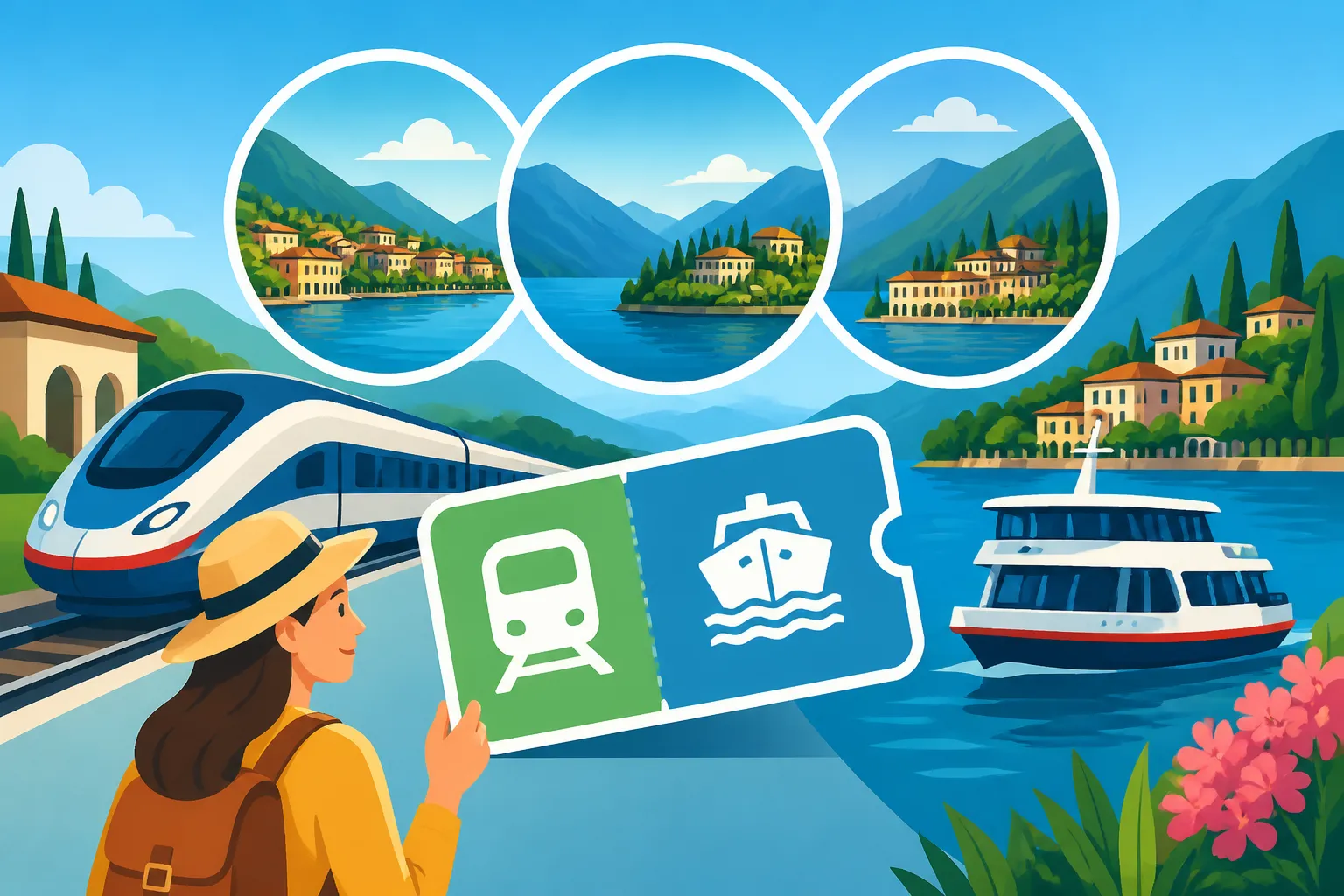
Oh, the Italian Lakes! Just the thought brings back memories of sun-drenched afternoons, the scent of lemon trees, and the gentle lapping of water against ancient stone. But getting there, especially if you're relying on public transport, can feel like navigating a labyrinth designed by a very unhelpful minotaur. Fear not, fellow travelers! This guide is here to untangle the complexities of combining train and boat travel to Lake Como, Lake Garda, and Lake Maggiore, showing you how to streamline your journey with tools like Omio.
Disclosure: This post may contain affiliate links. We may earn a commission at no extra cost to you if you make a purchase through these links. Read full disclosure.
The Lure of Italy's Lakes and Why Public Transport is Your Best Bet
Italy's great northern lakes are truly a jewel in its crown, each with its own distinct personality. From the dramatic, fjord-like beauty of Como to the vast, shimmering expanse of Garda, and the elegant, island-studded charm of Maggiore, they beckon with promises of relaxation, stunning vistas, and charming lakeside towns. But as idyllic as these destinations are, the logistics of reaching them, especially without your own wheels, can often daunt newcomers. That's where a strategic approach to public transport really shines.
The Allure of Como, Garda, and Maggiore: A Brief Overview
Lake Como, or Lago di Como as the locals call it, is arguably the most famous, synonymous with Hollywood glamour and picturesque villas clinging to steep hillsides. Think Bellagio, Varenna, and Menaggio – all postcard-perfect towns easily accessible by ferry once you reach the lake. Lake Garda, the largest of Italy's lakes, offers a diverse landscape, from the alpine north perfect for windsurfing to the gentle, olive-groved south with historic towns like Sirmione and Desenzano del Garda. It’s a vast playground, often split between Lombardy, Veneto, and Trentino-Alto Adige regions, giving it a unique cultural blend. Then there’s Lake Maggiore, stretching into Switzerland, known for its elegant Belle Époque architecture, botanical gardens, and the enchanting Borromean Islands near Stresa, a testament to aristocratic grandeur. Each lake offers a distinct slice of Italian beauty and a different pace of life.
Overcoming the Driving Dilemma: Parking, ZTLs, and Italian Roads
Now, I know what many of you might be thinking: "Why not just rent a car and drive?" And yes, while a car offers flexibility, the reality of driving in Italy, especially in popular tourist areas like the lakes, can be an absolute headache. Picture this: narrow, winding roads, limited and expensive parking (or worse, no parking at all!), and the dreaded ZTLs – those historic city center zones that are off-limits to unauthorized vehicles. One wrong turn could land you a hefty fine months after your trip, trust me, I've seen it happen to countless friends. Plus, who wants to spend their precious vacation time stressing about navigating unfamiliar roads, deciphering Italian road signs, and finding a place to leave the car?
Public transport, on the other hand, allows you to relax and soak in the scenery. The train journeys themselves can be incredibly scenic, and once you arrive at the lake, the local ferries and buses provide an effortless way to hop between towns, enjoy the views from the water, and arrive directly in the heart of each village without a parking drama in sight. Embracing the train and boat combination means less stress and more pure Italian joy.
Seamless Rail Journeys to Lake Como, Garda, and Maggiore
Italy's rail network, managed primarily by Trenitalia and also by high-speed operator Italo, is remarkably efficient and generally reliable, connecting major cities to towns near the lakes. This is where a fantastic platform like Omio becomes invaluable. It truly simplifies the entire booking process by allowing you to search, compare, and book tickets for trains across Italy, as well as buses and even flights, all in one place. You don't have to juggle between different railway websites, which, let's be honest, can be a bit clunky in English.
Getting to Lake Como by Train: Varenna, Como, and Lecco
For Lake Como, you have a couple of main access points by train. The most common and convenient is often to aim for Como San Giovanni station, located right in the city of Como. From Milan, frequent regional trains depart from Milano Centrale, Milano Porta Garibaldi, or Milano Cadorna (the latter is served by Trenord, the regional Lombardy operator). The journey to Como San Giovanni from Milano Centrale takes about 35-40 minutes on a direct regional train. Once you arrive, the ferry terminal is just a short walk from the train station, ready to whisk you away to those iconic lakeside towns like Bellagio or Cernobbio.
Another excellent option, particularly if you’re heading to the eastern shore and charming Varenna, is to take a regional train directly to Varenna-Esino. These trains also depart from Milano Centrale, and the journey takes about an hour. Varenna-Esino station is perched above the lake, a short downhill walk to the ferry dock, making it an incredibly convenient starting point for exploring the "golden triangle" of Varenna, Bellagio, and Menaggio. For those exploring the southern arm of the lake, Lecco is another hub, with direct trains from Milano Centrale taking around 40 minutes. Using Omio means you can easily see all these different route options from your starting point in Milan, check schedules, and compare prices at a glance. It really takes the guesswork out of planning. You can explore how to use the Trenitalia App to plan train travel or delve into the specifics of Regional Trains in Italy: How to Use Them and Save before you even leave home.
Reaching Lake Garda by Train: Southern Shores and Connections
Lake Garda is a bit more spread out, and its train access primarily focuses on its southern end. The main stations you'll want to look for are Desenzano del Garda-Sirmione and Peschiera del Garda. Both are on the main high-speed and regional train line connecting Milan and Venice. From Milan, you can catch direct regional or high-speed trains to either of these stations, with journey times ranging from about 1 hour for high-speed to 1.5 hours for regional services. These stations are perfectly situated for exploring the southern highlights of the lake.
From Desenzano del Garda-Sirmione, you can easily catch a local bus or ferry to the charming peninsula town of Sirmione. Peschiera del Garda is equally convenient, offering bus connections to destinations like Lazise, Bardolino, and Garda town. If you're coming from Verona, both stations are a quick 15-20 minute regional train ride away. Again, Omio allows you to input your origin and destination, say, "Milan to Desenzano del Garda-Sirmione," and it will present all available train times and prices, even showing you if there are bus options that might be more suitable for certain parts of the lake. This kind of multi-modal search capability is a game-changer when you're trying to figure out the best way to get around Italy without a car.
Traveling to Lake Maggiore by Train: Stresa and Other Gems
For Lake Maggiore, the town of Stresa is your prime destination by rail, especially if you're keen to explore the famous Borromean Islands. Stresa has its own train station, Stresa Centrale, which is well-connected by regional trains, primarily from Milan. From Milano Centrale, you can usually reach Stresa in about an hour to an hour and a half on a direct regional train. The station in Stresa is conveniently located within walking distance of the lakefront promenade and the boat departure points for the islands.
Other towns along Lake Maggiore like Arona and Verbania-Pallanza also have train stations, offering alternative entry points or connections. Arona, on the southern end, is another popular arrival point, especially if you're exploring that part of the lake. The beauty of using a booking platform like Omio is that you can visualize your entire journey. You can input your departure city, such as Milan, and your desired lake town, like Stresa, and immediately see the various train options, allowing you to choose based on speed, price, and convenience. This is far easier than trying to navigate the multiple regional and national train company websites. Planning your trip efficiently is crucial, and having a tool that aggregates all options is a blessing.
Navigating the Waters: Connecting from Train to Ferry
Once you’ve successfully reached your lakeside train station, the next glorious step is often to embrace the water. The local ferry services are not just a mode of transport; they are an essential part of the lake experience. Gliding across the water, feeling the breeze, and seeing the towns and mountains from a different perspective is truly magical. Plus, they save you from the hassle of constantly moving your luggage by road.
Navigating Boat Services on Lake Como: Ferry Types and Routes
Lake Como boasts an extensive and well-organized boat service, primarily operated by Navigazione Laghi. You'll find a few types of services: slow ferries (battelli) that stop at almost every town, fast ferries (aliscafi or catamarani) that make fewer stops and cut down travel time, and car ferries that connect Varenna, Bellagio, and Menaggio. If you arrive at Como San Giovanni station, the main ferry terminal for the city of Como is just a short stroll from the station, offering connections all the way up the lake to towns like Bellagio, Tremezzina, and Menaggio.
For those arriving at Varenna-Esino, the ferry dock is right below the train station, a super convenient setup. From here, the Varenna-Bellagio-Menaggio car ferry is your best friend. It’s a frequent, efficient service that quickly connects these three iconic towns, allowing you to explore each with ease. Fast ferries can take you further, north to Colico or south back towards Como. Boat tickets are generally purchased directly at the ferry terminals, either at ticket windows or vending machines, and usually cannot be pre-booked online through third parties (though Omio helps you get to the point of purchase efficiently). It's always a good idea to check the latest timetables at the dock or on the Navigazione Laghi website, as schedules can change seasonally.
Exploring Lake Garda by Ferry: From Desenzano to Riva del Garda
Lake Garda's ferry services, also run by Navigazione Laghi (under the specific brand Navigarda), are equally vital for exploring this enormous body of water. Given the lake's size, services tend to be concentrated and less frequent than on Como, especially for the longer routes, but they are still an essential way to experience the lake. From your arrival points at Desenzano del Garda-Sirmione or Peschiera del Garda, the ferry terminals are a short walk from the train stations. From these southern hubs, you can catch boats heading to picturesque towns like Sirmione, Salò, Limone sul Garda, Malcesine, and even all the way up to Riva del Garda in the north.
Similar to Lake Como, you’ll find both slow passenger ferries and faster hydrofoils. The faster services are perfect for covering longer distances across this large lake, while the slower boats offer a more leisurely cruise and more photo opportunities. It’s worth noting that if you plan to explore the northern, more mountainous parts of Garda (like Riva del Garda or Torbole), a bus from your train station might sometimes be faster than a long ferry ride, especially if you arrive at the very southern tip. Consult local bus schedules in addition to ferry times for optimal planning. You can often find information on getting around Italian cities: Metro, Tram, and Buses which might connect you to alternative transport options near the lakes.
Cruising Lake Maggiore: Stresa, Borromean Islands, and Beyond
Lake Maggiore's charm is intimately tied to its boat services, particularly around Stresa. The absolute highlight here is a trip to the Borromean Islands: Isola Bella, Isola dei Pescatori (Fishermen's Island), and Isola Madre. From Stresa, countless private and public boat services depart frequently. Navigazione Laghi operates the public ferries, and their main ticket office is prominently located along Stresa's lakefront promenade, just a short walk from the train station.
You can buy tickets for single islands, a multi-island hop, or a round trip. The slower public ferries are wonderful, allowing you to enjoy the full panorama of the lake and the elegant villas that line its shores. There are also many private boat operators along the waterfront who offer personalized tours, often with direct drop-offs at the islands and more flexible schedules, though usually at a higher price. Beyond the islands, ferries also connect Stresa to other towns on Maggiore, such as Verbania, Luino, and even Locarno in Switzerland, offering delightful international day trips. Make sure to check the seasonal schedules carefully, as services are reduced during the low season.
Your Ticketing Game Plan: Optimizing with Omio
Let's get down to the brass tacks of actually getting your tickets. Navigating Italy's transport system can be a bit of a dance, but with the right tools and a little know-how, you'll be waltzing your way to the lakes in no time.
Understanding Italian Train Tickets: Regional vs. High-Speed
When you're booking trains in Italy, you'll primarily encounter two types: regional trains (treni regionali) and high-speed trains (Frecce services by Trenitalia, or Italo trains). Regional trains are generally slower, make more stops, and connect smaller towns. Their tickets are unreserved, meaning you can use them on any regional train for a specific route within a certain timeframe (usually a few hours or a day). However, regional tickets must be validated before boarding – either at a green machine on the platform or by checking in on the Trenitalia app. Failure to validate can result in a fine!
High-speed trains, on the other hand, are faster, more comfortable, and require reserved seats. These tickets are for a specific train, date, and time, so no need to validate; your ticket is your reservation. Booking high-speed tickets in advance, especially using a platform like Omio, can often save you money, as prices tend to increase closer to the departure date. Omio clearly distinguishes between regional and high-speed options, showing you travel times and prices side-by-side, which makes comparing and choosing incredibly straightforward. For deeper dives, you might want to look at How to Buy Trenitalia and Italo Tickets and Save Money or explore the topic of High-Speed Trains in Italy: Trenitalia, Italo, Routes, and Savings.
| Train Type | Operator | Booking Flexibility | Validation Required | Typical Route | Cost Consideration |
|---|---|---|---|---|---|
| Regional (R) | Trenitalia | High (unreserved) | Yes | Milan-Como S.G. | Lower, fixed price |
| Regional Fast (RV) | Trenitalia | High (unreserved) | Yes | Milan-Varenna | Lower, fixed price |
| Intercity (IC) | Trenitalia | Medium (reserved) | No | Milan-Desenzano | Mid-range, variable |
| High-Speed (Freccia) | Trenitalia | Low (reserved) | No | Milan-Desenzano | Higher, variable |
| High-Speed | Italo | Low (reserved) | No | Milan-Desenzano | Higher, variable |
The Art of Boat Ticketing: Where to Buy and What to Expect
When it comes to boat tickets on the Italian Lakes, the process is decidedly more traditional. You'll typically purchase these directly at the ferry terminals (known as imbarcadero or pontile) in each town. Look for the ticket office (biglietteria) or automated ticket machines. While some larger ferry companies might offer online booking for specific routes or tourist passes, for standard point-to-point journeys, in-person purchase is the norm.
Cash and card payments are usually accepted. It's advisable to arrive a little before your desired departure, especially during peak season, to allow time for ticketing and boarding. Schedules are usually posted prominently at the docks and on the official Navigazione Laghi websites (which covers Como, Garda, and Maggiore). Keep an eye out for different types of tickets: single journey, return, or sometimes day passes that allow unlimited travel within a certain zone, which can be great value if you plan a lot of island hopping or town visits. The key here is not to expect to pre-book your boat journey months in advance, but rather to plan your train arrival and then smoothly transition to the water, knowing that tickets will be available at the dock.
Making Sense of Your Entire Journey with Omio
This is where Omio truly shines as your ultimate travel companion. Imagine planning a trip from Rome to Lake Como. You could spend hours bouncing between Trenitalia, Italo, and then the regional ferry websites. Or, you could simply input "Rome" and "Varenna" into Omio. It will then show you the entire journey: the high-speed train from Rome to Milan, and then the regional train from Milan to Varenna, complete with estimated travel times, layovers, and pricing. This integrated search and booking capability is what makes it a 'hero' solution for complicated multi-leg journeys across Italy.
Even though Omio generally handles train and bus bookings primarily, it empowers you to visualize the entire public transport portion of your adventure. It saves you precious planning time and reduces the stress of piecing together different transport options. By consolidating your train tickets, managing your bookings is a breeze. You’ll have all your e-tickets conveniently stored on your phone. So, for anyone looking to visit the glorious Italian Lakes by public transport, making Omio your first stop for planning and booking your train travel will ensure a much smoother, more enjoyable, and ultimately, more relaxing trip. It really is the smart way to travel between Italian cities without a car and make the most of your adventure.
Disclaimer
Please note that travel information, including schedules, prices, and operating procedures for trains and boats in Italy, can change. While every effort has been made to provide accurate and up-to-date information, it is always recommended to check the latest details directly with the service providers (e.g., Trenitalia, Italo, Navigazione Laghi, or Omio) before making travel plans. This guide is for informational purposes only and does not constitute professional advice.