Cycling in Italy: Routes and Bike-Friendly Areas
Cycling through Italy offers an unmatched way to experience its breathtaking landscapes, but navigating confusing regional transport rules, varied road conditions, and local traffic norms can quickly overwhelm newcomers. This guide breaks down Italy’s top cycling routes, the most bike-friendly regions, train logistics, rental tips, and practical road safety rules so you can confidently plan your ultimate Italian cycling adventure.
Disclosure: This post may contain affiliate links. We may earn a commission at no extra cost to you if you make a purchase through these links. Read full disclosure.
Iconically Italian: Premier Long-Distance and Scenic Cycling Routes
The Dolomite Passes and Northern Mountain Routes
For road cyclists who dream of sweeping hairpin turns, dramatic alpine limestone peaks, and legendary mountain passes made famous by the Giro d’Italia, northern Italy is an absolute paradise. Mountain routes around the Sella Group, including the Passo Gardena, Passo Sella, Passo Pordoi, and Passo Campolongo, represent the pinnacle of European road cycling. Riding these passes places you directly into living cycling history, surrounded by towering rock faces and alpine meadows that look almost painted onto the horizon.
However, conquering these northern routes requires respect for the elevation and careful planning regarding traffic. During peak summer months, motorbikes and tourist cars fill the narrow mountain passes. To experience these roads at their absolute best, plan your ride around organized car-free bike days, such as the Sellaronda Bike Day or the Maratona d’les Dolomites, when local authorities close the passes entirely to motorized traffic. The road surfaces in this region are generally immaculate, meticulously maintained by local autonomous provinces, but the steep gradients mean you will want compact chainsets and generous rear cassettes on your bike setup.
Before tackling these high-altitude climbs, spend time understanding the geography and seasonal access points of The Dolomites: A Traveler’s Introduction. Snow can linger on high passes well into late spring, and sudden afternoon thundershowers are common even in midsummer. Descending a high pass in the rain when the temperature drops rapidly requires thermal windproof layers, high-visibility lights, and excellent braking confidence.
Tuscan Gravel and Eroica Legends
Central Italy presents a completely different flavor of cycling, characterized by rolling hills, ancient cypress-lined avenues, and the world-renowned strade bianche—the unpaved white gravel roads of Tuscany. Cycling here is an immersive journey through vineyards, olive groves, and medieval hilltop towns like Montalcino, Pienza, and San Gimignano. The classic routes of the Val d’Orcia and Chianti offer challenging, punchy climbs that demand momentum and smooth cadence rather than steady high-altitude grinding.
The gravel culture in Tuscany is rooted in history, best embodied by L’Eroica, a vintage cycling event born in the town of Gaiole in Chianti. The permanent Eroica route covers over two hundred kilometers of mixed asphalt and gravel, marked by iconic red signs along the way. Riding these white roads requires a bike with wider tire clearances—at least thirty-two millimeters, though thirty-eight millimeters or wider provides significantly more comfort and traction over loose stones and dry summer dust.
If you are structuring a multi-day itinerary through these iconic landscapes, consult our comprehensive guide on How to Plan a Cycling Trip in Tuscany. You will discover that while the scenery is poetic, the physical demand of constant short, steep gradients can catch unconditioned riders off guard. Staying flexible with your daily distance goals allows you to stop and appreciate the culture, food, and wine along the way.
Coastal Cruising along the Adriatic and Ligurian Pistas
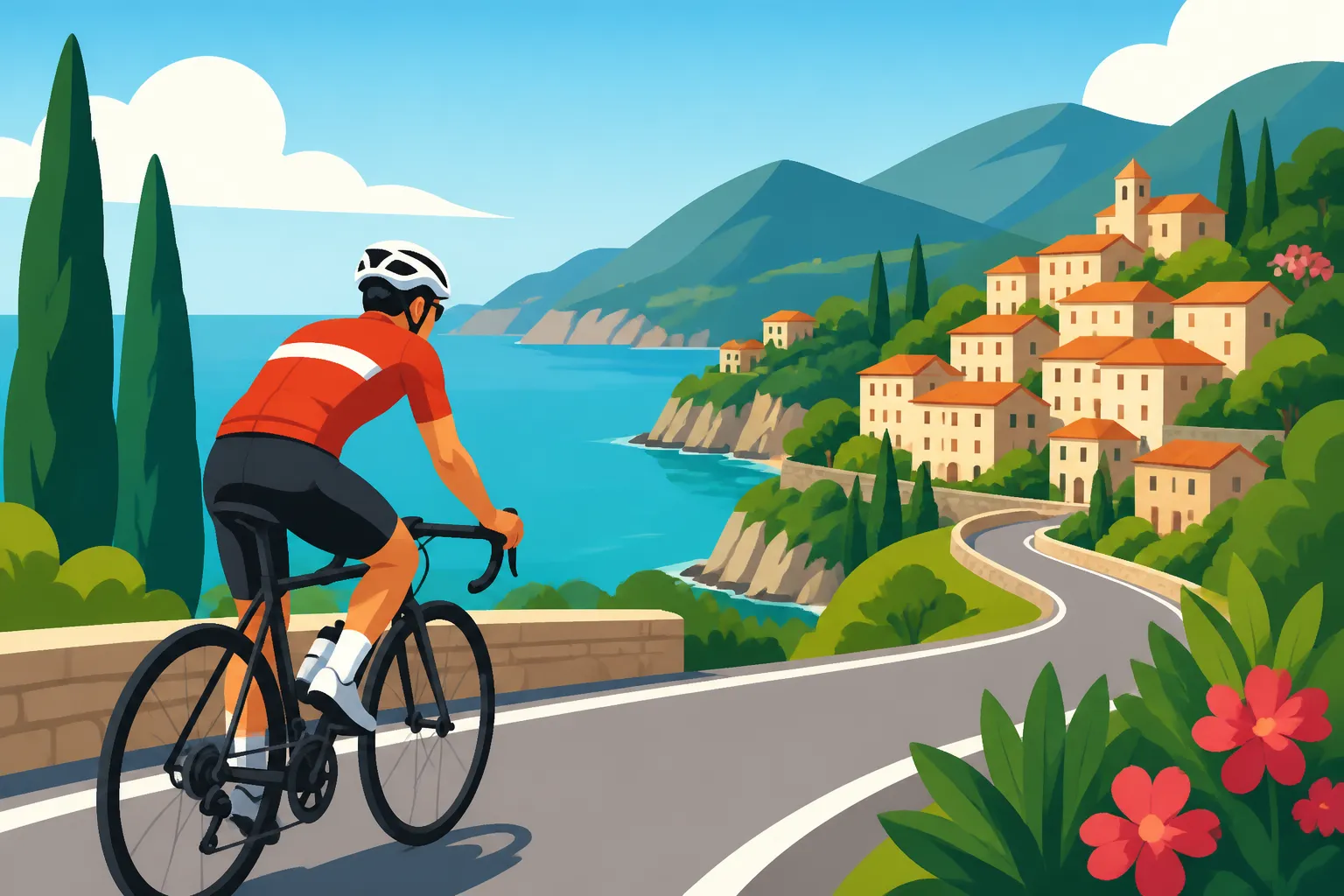
If gentle gradients, ocean breezes, and continuous sea views sound more appealing than grinding up mountain passes, Italy’s dedicated coastal cycle paths offer incredible long-distance touring opportunities. Chief among these is the Pista Ciclabile del Ponente Ligure in Liguria, built directly on a decommissioned coastal railway line stretching from Ospedaletti to Imperia. Entirely separated from motor traffic, this flat, paved trail winds through coastal tunnels, pristine Mediterranean parks, and charming seaside villages where you can stop for fresh focaccia right by the water.
On the eastern side of the peninsula, the Ciclovia della Costa dei Trabocchi in Abruzzo offers a similarly mesmerizing experience along the Adriatic Sea. Spanning former train tracks above the waves, this route is named after the traditional wooden fishing platforms (trabocchi) that dot the shoreline. The path links sandy beaches, rocky coves, and seaside nature reserves, providing a safe, accessible corridor for touring cyclists, families, and leisure riders alike.
These coastal paths demonstrate how successfully Italy is repurposing unused infrastructure into world-class greenways. The flat, protected environment makes them ideal for riders testing out multi-day pannier touring for the first time, or for travelers who prefer a relaxed pace punctuated by frequent gelato breaks and swims in the sea.
Top Bike-Friendly Regions and Cities in Italy
Trentino-Alto Adige: The Gold Standard for Infrastructure
When it comes to dedicated cycling infrastructure, seamless signposting, and integration with public transport, the northern autonomous region of Trentino-Alto Adige stands head and shoulders above the rest of the country. Influenced heavily by Germanic precision and alpine outdoor culture, this region boasts thousands of kilometers of interconnected cycle highways (piste ciclabili) that allow you to cross whole valleys without ever sharing space with a car.
The crown jewel of this network is the Ciclopista del Fiume Adige, which follows the Adige River from high up near the Austrian border down through Bolzano, Trento, and onward toward Verona. The path drops gently downhill for over two hundred kilometers, making it exceptionally popular for long-distance leisure touring. Along the route, purpose-built Bici Grill service stations cater specifically to cyclists, offering cold drinks, local meals, air pumps, basic tools, and shaded seating.
Visiting Trentino-Alto Adige gives cyclists a glimpse of what comprehensive cycling planning looks like in Italy. Municipalities invest heavily in asphalt maintenance, winter snow clearing on major commuting arteries, and clear bilingual signage (Italian and German). It is an ideal entry point for expats and travelers who want a stress-free cycling holiday before venturing onto busier southern roads.
Emilia-Romagna and Veneto: Flat Plains and Cycling Networks
Moving south into the vast Po River Valley (Pianura Padana), the terrain flattens dramatically, opening up expansive agricultural landscapes, river delta biospheres, and historic art cities across Emilia-Romagna and the Veneto. Cycling in this flat region is ideal for racking up high daily mileage without the physical strain of heavy climbing, making it accessible to touring enthusiasts of all skill levels.
In Emilia-Romagna, the Destra Po cycle route follows the southern bank of the majestic Po River for over one hundred and twenty kilometers toward its Adriatic delta. The path runs along raised river levees, providing elevated views of farmland, poplars, and secluded wetlands inhabited by diverse birdlife. Combined with the region’s legendary gastronomic heritage, riding here allows you to comfortably pair long, peaceful days on the saddle with unforgettable evening meals. For a deep dive into how meal schedules line up with your daily ride, read How to Eat Like a Local in Italy: Meal Structure and Timing.
Veneto similarly offers rich cycling corridors, such as the Anello dei Colli Euganei surrounding the volcanic Euganean Hills near Padua, or the Revine Lakes path in the Prosecco hills. The contrast between flat agricultural plain riding and nearby ancient hill towns allows cyclists to mix easy cruising with optional scenic climbs whenever the mood strikes.
Urban Cycling in Ferrara, Bologna, and Bolzano
Urban cycling culture in Italy varies dramatically from city to city, but certain historic towns have embraced the bicycle as the primary mode of personal transport. Ferrara, often called the “City of Bicycles,” is the most famous example in central Italy. Here, the absence of heavy car traffic inside the Renaissance city walls has created a sanctuary where locals of all ages—from suit-wearing professionals to university students—glide quietly along cobblestone streets.
Bolzano and Trento in the north are equally impressive, featuring dense, protected networks of commuter cycle lanes that seamlessly link residential neighborhoods, university campuses, and industrial zones to historic centers. City halls in these locations prioritize cycle parking, traffic-calming zones, and bike-first intersections, making urban riding safe, intuitive, and efficient.
By contrast, cycling in larger metropolises like Bologna requires a bit more situational awareness due to narrow porticoes, busy bus lanes, and active pedestrian zones. However, Bologna’s growing network of green cycle routes (Bicipolitana) is systematically connecting the urban core to surrounding suburban districts. When visiting these historic urban areas, renting a city bike is often the fastest, most joyful way to see the sights without wrestling with local parking regulations.
Navigating Logistics: Bikes on Public Transit and Rental Options
Taking Your Bike on Italian Trains and Buses
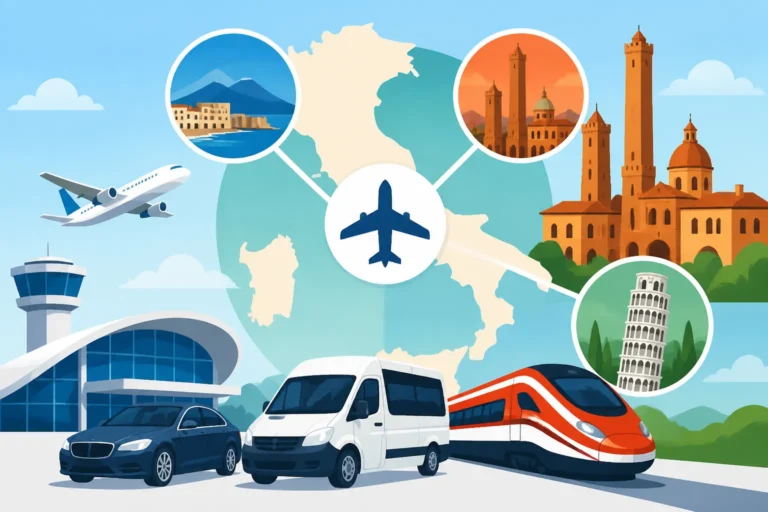
Combining train travel with cycling is one of the most effective ways to explore Italy without a personal vehicle. However, the rules regarding bikes on trains depend entirely on the type of train you are boarding. Regional trains (Treni Regionali) are the most bike-friendly options. Most regional services feature designated bike carriages marked with a bicycle symbol on the exterior doors, equipped with wall hooks or floor racks.
To bring an fully assembled bicycle onto a regional train, you must purchase a dedicated bicycle supplement ticket (supplemento bici) alongside your standard passenger ticket, or ensure your ticket explicitly includes bike carriage. For high-speed trains like Trenitalia’s Frecciarossa or Italo, fully assembled bikes are generally not permitted in standard passenger cars. However, you can bring a bicycle free of charge if it is dismantled, placed inside a padded bike bag, or if it is a compact folding bike, as long as it fits into the designated luggage racks.
Planning multi-segment train journeys with a bicycle can sometimes get confusing when switching between regional operators and high-speed connections. Using platforms like Omio helps you easily search, compare, and book train and bus connections across different Italian operators, allowing you to check travel times and route types before packing up your gear. For comprehensive details on navigating train tiers and booking tickets, check our guide on High-Speed Trains in Italy: Trenitalia, Italo, Routes, and Savings.
Bike Rentals, E-Bikes, and Guided Touring Logistics
You do not need to haul your own bicycle across the globe to enjoy Italy’s legendary routes. High-quality bike rental shops operate in nearly every major tourist hub, mountain resort, and wine region. Available equipment ranges from top-tier carbon fiber road bikes and lightweight gravel rigs to sturdy hybrid touring bikes equipped with pannier racks.
The explosive growth of electric bicycles (e-bikes) has revolutionized cycling tourism across Italy, particularly in hilly areas like Tuscany, Umbria, and the Amalfi Coast. E-bikes democratize access to challenging terrain, allowing riders of varying fitness levels to tackle steep village climbs together without exhaustion. When renting any bike, always ensure the shop provides a repair kit, spare tube, pump, and a high-security lock for town stops.
For travelers who prefer structured logistics, local guides, and luggage transfer between accommodations, organized tours are widely available. You can easily browse and reserve guided day rides, wine-tasting cycle trips, or e-bike countryside tours on GetYourGuide, which connects you with verified local operators who know the safest backroads and quietest scenic viewpoints in their respective regions.
Accommodation and Bike Hotels (Alberghi Amici Delle Bici)
Where you rest your head after a long day in the saddle can make or break a cycling trip. Italy has developed a robust network of specialized “Bike Hotels” (Alberghi Amici Delle Bici), certified by regional tourism boards or cycling federations like FIAB (Federazione Italiana Ambiente e Vitalità). These establishments are specifically tailored to meet the needs of traveling cyclists.
A certified bike hotel typically offers:
* A locked, secure bike storage room (deposito bici) with restricted access.
* A basic maintenance corner equipped with floor pumps, work stands, and tools.
* Bike washing facilities and daily cycling kit laundry services.
* Early, high-protein breakfast options tailored for endurance athletes.
* Detailed local paper maps, GPX route files, or in-house guiding services.
When searching for accommodation along your intended route, platforms like Booking.com allow you to filter properties by amenities like secure parking, bike rental services, or rural farm-stays (agriturismi). For more context on choosing the right lodging style for your journey, explore our full review of Accommodation in Italy: Hotels, B&Bs, and Agriturismi.
Rules of the Road, Safety, and Essential Italian Etiquette
Traffic Regulations, ZTLs, and Helmet Laws
Riding safely on Italian roads requires a solid understanding of local traffic laws and driving customs. Under the Italian Highway Code (Codice della Strada), bicycles are classified as vehicles. Cyclists must obey all standard traffic lights, stop signs, and direction indicators. Riding on sidewalks (marciapiedi) is strictly illegal unless a lane is explicitly designated as a shared pedestrian/cyclist path.
Key legal and safety requirements include:
1. Helmets: While adult cyclists are not legally mandated by federal law to wear helmets, doing so is universally recommended and standard practice among sports cyclists. Children under specific age thresholds or participating in organized events are required to wear certified protective headgear.
2. Visibility: High-visibility reflective vests or straps are mandatory when riding through tunnels and outside urban areas from half an hour after sunset to half an hour before sunrise. Your bike must be equipped with a functional white front light, red rear light, and red rear reflector.
3. Single File Riding: Cyclists are legally required to ride in single file whenever traffic conditions require it, and never more than two abreast. Out on narrow countryside roads with limited visibility, staying single file allows cars to pass safely.
Cyclists should also be mindful of historic town centers designated as Restricted Traffic Zones (Zona a Traffico Limitato or ZTL). While bikes are usually permitted inside ZTL boundaries, pedestrians always have absolute right of way. To understand how traffic restrictions function when pairing your bike trip with support vehicles, consult What Is a ZTL in Italy and How to Avoid Fines as well as our advice on Renting a Car in Italy: ZTLs, Insurance, and Driving Tips.
ITALIAN CYCLING ROAD RULES
| Item / Situation | Legal Requirement | Expat Practical Tip |
|---|---|---|
| Helmet (Adults) | Optional (Legally) | Wear one always. |
| Helmet (Minors) | Mandatory in specific contexts | Always enforce for kids. |
| Night Riding / Tunnels | Mandatory lights & reflector vest | Keep lights charged. |
| Riding Position | Single file in traffic | Yield to passing cars. |
| Sidewalk Riding | Prohibited | Walk bike in pedestrian zone |
Weather Considerations and Seasonal Riding Prep
Italy’s varied geography means weather conditions can shift dramatically depending on latitude, altitude, and proximity to the sea. Spring (April to June) and autumn (September to October) are widely considered the ideal seasons for cycling across most of the country. During these shoulder months, temperatures are mild, countryside flora is vibrant, and major tourist hubs are far less congested.
Summer (July and August) can bring intense, stifling heat to central and southern plains, as well as urban centers like Florence and Rome. If you choose to ride during midsummer, start your rides at dawn, carry double water bottles filled with electrolyte mix, and plan routes that stay shaded or head high into mountain regions. Conversely, alpine passes in the Dolomites and Alps remain chilly and prone to fast-moving weather fronts year-round, requiring riders to monitor local forecasts closely.
Regardless of where you ride, unexpected incidents like mechanical failures, sudden heat exhaustion, or lost service can happen. Reviewing general health and emergency protocols in Staying Safe in Italy: Common-Sense Tips for Travelers will ensure you are prepared for unexpected situations out on the road.
Essential Vocabulary and Roadside Hospitality Culture
Cycling culture in Italy is deeply rooted in local hospitality and social camaraderie. Out on the road, it is customary to greet oncoming cyclists with a friendly nod, a wave, or a cheery “Ciao!” or “Buondì!” If you see a fellow rider stopped on the side of the road working on a mechanical issue, offering a brief “Tutto bene?” (Is everything okay?) is a standard etiquette gesture that builds immediate goodwill.
The mid-ride coffee stop is a sacred institution in Italian cycling culture. Cyclists frequently pull up to small village bars, leaning their bikes within sight of the outdoor tables, to order an espresso or caffè macchiato paired with a fresh cornetto. When ordering at a busy counter, step up confidently, state your order clearly, and enjoy the brief buzz of local morning conversation before clipping back into your pedals.
A few basic Italian mechanical phrases to keep handy include:
* Pista ciclabile: Cycle path
* Ho bucato / Foratura: I have a flat tire
* Pompa per bici: Bike pump
* Camera d’aria: Inner tube
* Catena: Chain
* Freni: Brakes
* Officina per biciclette: Bike repair shop
Strategic Route Comparison for Cyclists in Italy
Choosing the Right Terrain for Your Skill Level
Matching your fitness level and technical handling skills to the appropriate Italian region is essential for an enjoyable journey. Beginners, leisure riders, and families traveling with children should lean heavily toward dedicated, traffic-free greenways in northern valley floors or flat coastal corridors. The Adige River trail, Ligurian coastal path, and Po River levees offer stress-free environments where you can build confidence without worrying about traffic speed or steep gradients.
Intermediate riders who enjoy a mix of scenic climbs, varied surfaces, and rich cultural stops will thrive in central Italy’s rolling landscapes. The gravel backroads of Tuscany, Umbria’s quiet olive-covered hills, and the historic lake loops of Lombardy provide a satisfying physical challenge paired with frequent opportunities to visit vineyard estates and hill towns. For a detailed comparison of lakeside riding options in the north, read our breakdown of The Italian Lakes: Como, Garda, and Maggiore Compared.
Advanced road cyclists and mountain bikers looking for endurance challenges will naturally gravitate toward the high Alps, the Dolomites, or the rugged interior mountains of Abruzzo and Sardinia. These destinations offer massive vertical gain, long sustained efforts, and technical descents that test your handling skills and physical stamina to the maximum.
Comparing Northern, Central, and Southern Cycling Hubs
To help you decide where to base your Italian cycling trip, the table below provides a comparative overview of key regions across the country, detailing their primary route styles, terrain profiles, and practical logistics considerations.
| Cycling Region | Signature Route / Trail Example | Primary Terrain Type | Ideal Skill Level | Infrastructure & Transport Highlights |
|---|---|---|---|---|
| Trentino-Alto Adige | Ciclopista del Fiume Adige | Flat valley path & alpine passes | All levels (Separate routes) | World-class cycle paths, Bici Grills, excelente train integration |
| Tuscany | L’Eroica Permanent Route / Chianti | Rolling asphalt & white gravel (strade bianche) | Intermediate to Advanced | Abundant Bike Hotels, gravel rentals, steep punchy hills |
| Liguria | Pista Ciclabile del Ponente Ligure | Flat, paved coastal greenway | Beginner to Intermediate | Completely car-free former rail trail, excellent ocean access |
| Emilia-Romagna | Ciclovia Destra Po | Flat river levees & paved country roads | Beginner to Intermediate | Flat terrain, incredible food culture, vast connected networks |
| The Dolomites | Sellaronda / Passo Pordoi | High mountain passes & alpine climbs | Advanced / Athletic | Meticulous roads, car-free bike days, extreme vertical gain |
| Abruzzo / Adriatic | Costa dei Trabocchi | Flat coastal paved trail | Beginner to Family | Peaceful coastal vistas, easy access from regional train stops |
Whether you are gliding along a disused coastal railway line in Liguria, traversing cypress-lined gravel roads in Tuscany, or ascending legendary alpine passes in the high Dolomites, cycling in Italy provides an intimate connection to the land, culture, and people that no car or tour bus can match. With a little advance planning around train schedules, regional terrain, and road safety rules, your time on two wheels will undoubtedly become one of the highlights of your Italian living or travel experience.
Disclaimer
This article is for general informational purposes only and does not constitute professional advice. Laws, prices and regulations vary by location and change over time. Consult a qualified professional for guidance on your specific situation.