Getting to Sardinia: Which Port, Which Operator, Which Season
Dreaming of Sardinia? You're not alone! This incredible island, with its emerald waters and rugged charm, calls to so many of us. But let's be honest, figuring out the logistics of actually getting there can feel like navigating a labyrinth, especially with all the talk about different ports, countless ferry operators, and the ever-changing tides of seasonal travel. Don't worry, friend, you're not going to feel lost at sea. This guide is here to untangle it all, helping you choose the right port, the best operator, and the perfect time of year, making your journey as smooth as a Sardinian sunset – and we'll even show you how tools like Omio can make the whole booking process utterly painless.
Disclosure: This post may contain affiliate links. We may earn a commission at no extra cost to you if you make a purchase through these links. Read full disclosure.
The Allure of Sardinia: More Than Just Beaches
Sardinia isn't just another pretty face in the Mediterranean. It's an island that gets under your skin, a place where ancient history, wild nature, and a fiercely independent culture converge. Expats and travelers alike are drawn to its unique blend of sophistication and untouched wilderness, from the glitzy Costa Smeralda to the rugged Barbagia region. But before you can lose yourself in its wonders, you first have to arrive.
Why Sardinia Remains a Top Destination
It’s easy to see why Sardinia consistently ranks high on travel lists. For starters, the beaches are legendary – think impossibly turquoise waters, fine white sand, and coves that feel like your own private paradise. But venture beyond the coast, and you'll discover a landscape dotted with ancient nuraghi, mysterious stone towers left by a civilization thousands of years old. The food is distinct, a delightful blend of mainland Italian influences and unique Sardinian traditions, focusing heavily on fresh seafood, roast pork (porceddu), and a delightful array of cheeses. The pace of life is slower, more connected to nature, offering a true escape from the hustle and bustle. Whether you're seeking adventure, relaxation, or cultural immersion, Sardinia truly has it all, making the journey well worth the effort. For ideas on what to see once you're there, check out our guide on Sardinia for Travelers: Beaches and the Interior.
Initial Hurdles: The "Where to Start?" Conundrum
When you first decide to go to Sardinia, the sheer number of options for reaching the island can feel overwhelming. Do you fly? Take a ferry? If a ferry, from where? Which port in Sardinia? Which company? Suddenly, your dreamy vision of crystal-clear waters is replaced by a spreadsheet of departure times and pricing algorithms. It’s a common frustration, believe me. Many an expat has sat at their computer, pulling their hair out trying to decipher ferry schedules that seem designed to confuse rather than clarify. This is precisely why having a clear understanding of your options, and a reliable platform to consolidate them, is so crucial. Instead of scrambling across multiple operator websites, imagine a single place where you can compare everything side-by-side. That's where a service like Omio becomes invaluable, streamlining your search so you can focus on the fun part: planning your actual Sardinian adventure.
Choosing Your Gateway: Sardinia's Main Ferry Ports
Sardinia is a big island, and its main ferry ports are strategically scattered around its coastline to serve different regions and mainland departure points. Choosing the right arrival port can significantly impact your onward travel time and convenience once you land, so it’s essential to consider your final destination on the island.
The Northern Hubs: Olbia and Porto Torres
If your Sardinian dream involves the dazzling beaches of the Costa Smeralda, the quaint charm of Gallura, or the rugged beauty of the northwest, you'll likely be heading to one of the northern ports: Olbia or Porto Torres.
Olbia is, without a doubt, Sardinia's busiest ferry port, especially during the peak summer months. It's perfectly positioned for those aiming for the northeast coast, including popular spots like Porto Cervo, San Teodoro, and La Maddalena archipelago. Ferries to Olbia depart frequently from mainland Italy, particularly from Livorno, Civitavecchia, and Genoa. The journey from Civitavecchia (near Rome) is a popular overnight option, allowing you to wake up refreshed on the island. Olbia itself is a bustling town with an international airport, making it a great multimodal travel hub. The port is very well-equipped, and you’ll find numerous car rental agencies right outside. The downside? During high season, it can be incredibly busy, leading to longer wait times for boarding and disembarking, especially if you’re traveling with a car.
Porto Torres, located on the northwest coast, serves a slightly different slice of Sardinia. It's the primary gateway for those looking to explore the historic city of Alghero, the wild beaches of Stintino, or the dramatic coastline of the Nurra region. Ferries to Porto Torres typically depart from Genoa, but also from Marseille (France) and Barcelona (Spain), making it a key international connection. While generally less frantic than Olbia, Porto Torres still sees substantial traffic, particularly from northern Italy. The port has good road connections, and its proximity to Sassari, Sardinia's second-largest city, offers additional amenities and services. If you're coming from mainland Europe or aiming for the west and northwest, Porto Torres is often the most logical choice. Compared to island travel in other parts of Italy, understanding these key arrival points is similar to learning about Sicily for Travelers: Cities, Coast, and Volcanoes.
The Southern Entrances: Cagliari and Arbatax
For those venturing to the island's vibrant capital, the untouched southern beaches, or the wild, mountainous interior, the southern ports of Cagliari and Arbatax are your best bet.
Cagliari, the capital of Sardinia, boasts a large, well-connected port right in the heart of the city. This is the ideal arrival point if your main destination is Cagliari itself, or if you plan to explore the south and southwest of the island, including beautiful areas like Chia, Pula, and the Costa Rei. Ferries to Cagliari primarily depart from Civitavecchia, Naples, and Palermo (Sicily). The journey from Naples is particularly popular, often taken overnight. Arriving in Cagliari is a truly immersive experience, as you disembark directly into the lively city center, with its historic Castello district towering above. The port area is well-serviced by public transport, and car rental options are plentiful. While it’s a major city port, it generally feels less chaotic than Olbia, offering a slightly smoother transition, especially outside of peak holiday weekends.
Arbatax, nestled on Sardinia's rugged central-eastern coast, is a smaller but incredibly picturesque port. It's the gateway to the stunning Ogliastra region, known for its dramatic cliffs, hidden coves, and the impressive Gennargentu mountain range. Ferries to Arbatax are less frequent than to the larger ports, typically departing from Civitavecchia and Genoa. The routes often involve longer travel times or stops along the way. While fewer options exist, arriving in Arbatax offers a direct entry into one of Sardinia’s most wild and beautiful areas, making it perfect for those who want to immediately immerse themselves in nature. It’s definitely a port for the more adventurous traveler, or for those whose final destination is specifically within the Ogliastra area, bypassing the busier northern or southern hubs.
Lesser-Known Ports: Golfo Aranci and Santa Teresa Gallura
Beyond the major entry points, Sardinia also has a couple of smaller, more specialized ferry ports that serve particular niches or specific routes. These might not be your first choice for a general trip, but they can be incredibly convenient depending on your exact travel plans.
Golfo Aranci, very close to Olbia on the northeast coast, primarily serves routes from Livorno. It's a charming coastal town in its own right, and for some, it offers a slightly less congested alternative to the bustling Olbia port, while still being ideally located for the Costa Smeralda and surrounding areas. The advantage here is often a slightly quicker disembarkation process, and if your accommodation is already in or near Golfo Aranci, it’s a no-brainer.
Santa Teresa Gallura, situated at the very northern tip of Sardinia, is a crucial link for travelers coming from Corsica. Ferries from Bonifacio, Corsica, make the short, scenic journey to Santa Teresa Gallura multiple times a day. This port is perfect if you’re planning a multi-island adventure, combining Corsica and Sardinia, or if you’re simply arriving from the French island. Its location makes it an excellent starting point for exploring northern Gallura and its exquisite beaches. While these smaller ports have fewer amenities and connections compared to the main hubs, their strategic locations can offer distinct advantages for specific travel itineraries.
Decoding Ferry Operators: Who Takes You There?
Once you've zeroed in on your ideal Sardinian arrival port, the next step is to choose the ferry operator. This isn't just about finding the cheapest ticket; it's about matching your travel style, budget, and needs with the services offered by different companies. Each operator has its own fleet, route network, and onboard experience, making the comparison process crucial.
The Big Players: Grimaldi Lines, Tirrenia, Moby Lines
These three companies are the giants of the Italian ferry industry, especially when it comes to Sardinia routes. You'll find their vessels plying the waters between the mainland and Sardinia with high frequency, particularly during the summer.
Grimaldi Lines is a powerhouse in Mediterranean shipping, known for its modern fleet and extensive network. They operate routes to Sardinia from Civitavecchia (to Olbia, Arbatax, and Porto Torres) and Naples (to Cagliari and Olbia), as well as international connections from Barcelona. Grimaldi often caters to both passenger and freight traffic, meaning their ferries are usually quite large and stable. Onboard, you’ll find a range of services, including restaurants, bars, shops, and sometimes even swimming pools or entertainment areas on their larger ships. They offer various cabin options, from basic internal cabins to more luxurious suites, making them a good choice for overnight journeys. Grimaldi is generally reliable, and their booking system, especially when accessed through a comprehensive platform like Omio, is user-friendly, allowing you to easily compare their offerings against competitors. They're a solid, dependable choice, often providing competitive pricing if you book in advance.
Tirrenia is another long-standing Italian operator, deeply ingrained in the country's maritime history. They focus heavily on routes from Genoa (to Porto Torres and Olbia) and Civitavecchia (to Olbia and Arbatax), and from Naples and Palermo (to Cagliari). Tirrenia's ships range from older vessels to more recently renovated ones, offering a mix of experiences. They are known for their frequent services and often provide a good balance of affordability and comfort. Onboard facilities usually include restaurants, cafes, and seating areas, along with various cabin types. If you're traveling with pets, Tirrenia typically has designated pet-friendly cabins or areas, which is a big plus for many expats. When you use Omio to look for tickets, you'll see Tirrenia's options clearly laid out, helping you weigh their value against other operators, especially if you're keen on transporting your furry friends, which our guide on Moving to Italy with Pets: Rules and Tips can tell you more about.
Moby Lines is instantly recognizable by its vibrant, cartoon character-emblazoned ferries – think Looney Tunes or Warner Bros. characters adorning the hull! They offer a fun, often family-friendly atmosphere, primarily operating routes from Livorno (to Olbia and Golfo Aranci) and Genoa (to Olbia and Porto Torres). Moby also has routes connecting Bonifacio (Corsica) to Santa Teresa Gallura. Their focus on the Livorno-Olbia route means they have a high frequency on this popular crossing, often using their newer, faster ships. Moby’s onboard experience is typically geared towards comfort and entertainment, with features like cinemas, video arcades, and kids' play areas, making longer journeys more enjoyable for families. They offer a good range of seating and cabin options, and their pet-friendly policies are also quite generous, often allowing pets in cabins with a small fee. For many, Moby Lines is the go-to for a lively and convenient crossing, and checking their availability and pricing through Omio is always a good starting point.
Other Notable Operators: GNV, Corsica Ferries, Saremar
While Grimaldi, Tirrenia, and Moby are the big three, a few other operators offer valuable services to Sardinia, often filling specific niches or providing alternative routes.
Grandi Navi Veloci (GNV) is another major player in the Mediterranean, offering routes to Sardinia, primarily from Genoa to Porto Torres. GNV ships are generally large and well-equipped, often feeling more like cruise ships with extensive amenities like restaurants, bars, shops, and sometimes even mosques or prayer rooms on longer international routes. They are a good option for those seeking a comfortable journey with plenty of onboard distractions. If you're coming from northern Italy or even further afield and heading to the northwest of Sardinia, GNV offers a competitive option.
Corsica Ferries might sound like they only serve Corsica (and they do, extensively!), but they are also a key operator for Sardinia. Their main routes connect Livorno to Golfo Aranci and Civitavecchia to Golfo Aranci/Olbia, and crucially, they are the primary operator for the short but frequent crossing between Bonifacio (Corsica) and Santa Teresa Gallura. Their fleet is modern, and they emphasize speed and efficiency, offering a comfortable experience with various services on board. If you're considering a multi-island trip or value a direct route from Livorno to a convenient northern Sardinian port, Corsica Ferries should definitely be on your radar.
Saremar is a regional Sardinian company that primarily operates inter-island routes, connecting Sardinia with smaller islands like La Maddalena and Carloforte, and occasionally seasonal routes to Corsica. While they don't typically run mainland Italy to Sardinia ferries, they are essential for internal island travel, so it's good to be aware of them once you've arrived. If you're planning on island hopping within Sardinia, you'll likely encounter Saremar.
Considerations When Choosing an Operator
Selecting the right ferry operator isn't just about finding a ticket; it's about optimizing your travel experience. There are several key factors to weigh before you hit that "book now" button.
First and foremost is price. This is often the biggest driver, and prices can fluctuate wildly based on the season, how far in advance you book, and whether you're traveling with a vehicle. Booking platforms like Omio are a godsend here, as they allow you to input your travel dates and instantly see a comparison of prices across all major operators. You might find significant savings by shifting your departure time by a few hours or choosing a slightly less popular operator.
Next, consider comfort and onboard services. Are you looking for a budget-friendly seat for a short daytime crossing, or do you need a private cabin for an overnight journey? Some operators offer more extensive amenities like à la carte restaurants, cinemas, or even pet-friendly cabins, which can make a huge difference, particularly on longer routes or if you're traveling with children or furry companions. Each operator has a different philosophy, from Moby's lively, family-focused atmosphere to Grimaldi's more utilitarian approach.
Vehicle transport is another critical factor. Most people traveling to Sardinia by ferry bring a car, as it's the best way to explore the island's remote beaches and rugged interior. Ensure the operator you choose has ample car deck space and clear procedures for vehicle boarding. Check the height and length restrictions if you have an oversized vehicle.
Finally, think about pet policies. If you're bringing your dog or cat along, research each operator's rules for pets. Some allow them only in kennels, others offer specific pet-friendly cabins, and some have dedicated outdoor areas. Understanding these rules beforehand will save you a lot of stress on embarkation day. With so many variables, using a platform that aggregates all this information, like Omio, truly simplifies the decision-making process, allowing you to filter and compare based on your specific needs. It's the modern way to plan journeys that involve multiple modes of transport, just like when planning general Getting Around Italy: Trains, Buses, Flights, and Car Hire.
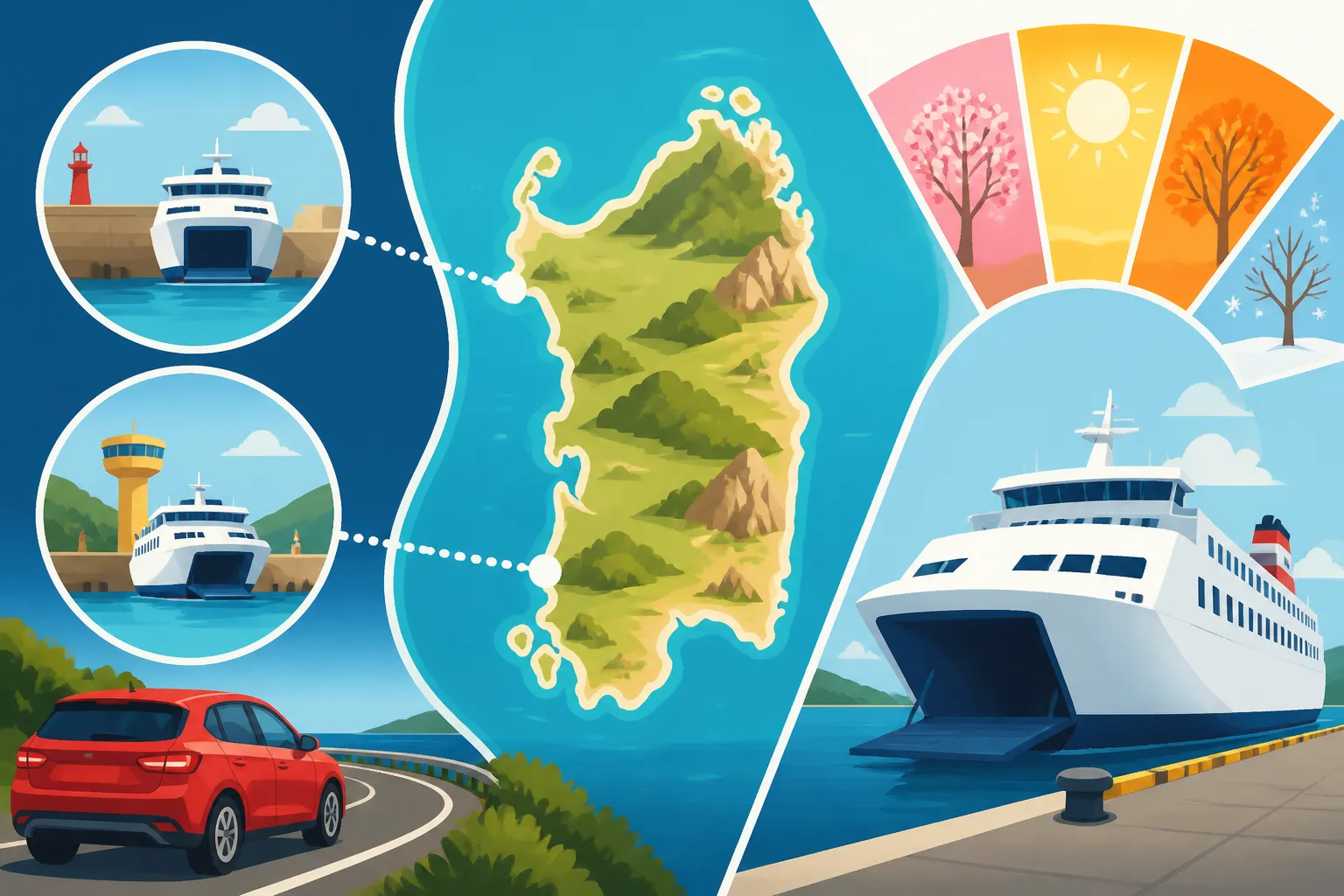
Timing Your Trip: Sardinia's Seasons and Their Impact on Ferries
The time of year you choose to visit Sardinia profoundly affects not just your experience on the island, but also the availability, frequency, and cost of ferry services. Sardinia has distinct seasons, each with its own charm and logistical considerations for ferry travel.
High Season Hustle: Summer Travel (July-August)
Ah, Italian summer! July and August are the quintessential high season months for Sardinia, and for good reason. The weather is glorious, the sea is warm and inviting, and the island is buzzing with life. However, this popularity comes with significant implications for ferry travel.
During these months, especially the two central weeks of August (around Ferragosto), ferries operate at their absolute maximum capacity. You'll find the highest frequency of departures from all major mainland ports to Sardinia's main hubs like Olbia and Cagliari. Every major operator, from Moby to Grimaldi, will have multiple daily crossings, often including fast ferries to cut down travel time. But here's the catch: prices skyrocket. What might be a reasonable fare in May can be double or triple in August, particularly for vehicles and cabins. Furthermore, booking well in advance becomes not just a recommendation, but an absolute necessity. If you wait until a few weeks before your desired travel date, you risk finding sold-out ferries, or only the most expensive options remaining.
The ports themselves become incredibly busy, resembling bustling international airports. Expect longer queues at check-in, extended waiting times for boarding and disembarking your vehicle, and potentially crowded onboard spaces. While the atmosphere can be lively and festive, it’s certainly not for those who prefer peace and quiet. If you're aiming for a summer escape, embrace the energy, book your ferry (and accommodation!) through Omio as soon as your dates are firm, and mentally prepare for the crowds. Understanding the general trends for travel in Italy during different times of the year, as explored in Seasonal Italy: When to Visit and What's On, will help set your expectations.
Shoulder Season Serenity: Spring and Autumn (May-June, September-October)
For many savvy travelers and expats, the shoulder seasons – late spring (May and early June) and early autumn (September and early October) – offer the perfect balance of good weather, fewer crowds, and more manageable ferry logistics.
During these months, the weather is still wonderfully pleasant. You'll enjoy warm, sunny days ideal for beach outings and exploring, but without the intense heat of high summer. The sea is usually warm enough for swimming from late May through October. Critically, ferry prices are significantly lower than in peak summer, and you'll find more availability for both passenger tickets and vehicle spaces. Operators still offer a good frequency of routes, although perhaps not quite as many as in August. The ports are noticeably less congested, making for a much smoother and more relaxed boarding and disembarkation experience.
May and June are fantastic for seeing the island in bloom, enjoying nature walks, and experiencing local culture before the tourist rush. September and October, meanwhile, offer the benefit of still-warm waters, excellent conditions for hiking and cycling, and often a more authentic local experience as the peak season winds down. Restaurants and attractions are still fully open but less crowded. If your schedule allows, aiming for these shoulder months will give you a more serene and often more affordable Sardinian adventure. Plus, you can often find great deals on Omio during these periods by comparing different times and operators.
Low Season Lull: Winter Voyages (November-April)
Traveling to Sardinia in the low season, from November to April, is a completely different experience. This is when the island truly hibernates, and many coastal resorts and tourist-oriented businesses close down.
Ferry services are drastically reduced during these months. Routes become less frequent, with some connections ceasing entirely until spring. For example, some direct routes might only run a few times a week instead of daily. This means you'll have fewer options for departure times and specific ports, and you'll need to plan your journey with more precision. On the upside, ticket prices are at their lowest, and there's usually ample availability, even for vehicles and cabins. The ferries themselves will be much quieter, offering a peaceful journey.
While the weather can be cooler, sometimes rainy or windy, winter in Sardinia offers a unique appeal for those seeking solitude, authentic local experiences, and outdoor activities like hiking in the mountains (especially inland, where snow is possible!). Cities like Cagliari and Sassari remain vibrant, and you can delve into the island’s rich history and cuisine without the tourist throngs. If you’re visiting for work, family, or specific events, and you're not solely focused on beach tourism, low season travel can be surprisingly rewarding and budget-friendly. Just be sure to check the exact ferry schedules carefully, as they are less flexible. For those used to planning multi-modal trips, the strategies are similar to comparing High-Speed Trains in Italy: Trenitalia, Italo, Routes, and Savings on the mainland.
Here’s a quick overview of how the seasons impact your ferry options:
| Season | Typical Months | Ferry Frequency | Price Range | Crowd Levels at Ports | Onboard Atmosphere | Ideal For |
|---|---|---|---|---|---|---|
| High Season | July – August | Very High | $$$$ (Highest) | Very High | Lively, Busy | Beach holidays, vibrant nightlife, family fun |
| Shoulder Season | May – June, Sep – Oct | High – Medium | $$ (Moderate) | Moderate | Relaxed, Pleasant | Active holidays, cultural visits, good balance |
| Low Season | Nov – April | Low | $ (Lowest) | Very Low | Quiet, Peaceful | Authentic experiences, budget travel, hiking, solitude |
Practicalities of Booking Your Ferry to Sardinia
Once you’ve made your decisions on where you’re going and when, the next step is the actual booking. This is where attention to detail really pays off, ensuring a smooth journey without any unexpected hiccups.
Essential Information for Booking
Before you even start looking at booking websites, gather all the necessary information. This will save you time and frustration during the process.
First, passenger details. You’ll need the full names, dates of birth, and nationality for all travelers in your party. For infants and children, this is just as crucial. Make sure the names match those on your official identification (passport or national ID card).
Second, if you're bringing a vehicle, you'll need comprehensive vehicle information. This includes the make, model, and crucially, the exact dimensions (length and height) of your car, motorcycle, or campervan. Don't guess here; measure it, especially if you have a roof box, bike rack, or any modifications that might add to the height. Different ferry companies have different pricing tiers based on vehicle size, and an inaccurate declaration could lead to issues or additional charges at the port. You'll also need your vehicle's license plate number. When considering driving on the island, remember to consult guides like Renting a Car in Italy: ZTLs, Insurance, and Driving Tips for practical advice.
Third, think about cabin options. For overnight crossings, a private cabin is almost essential for a good night's sleep. Cabins come in various configurations: internal (no window), external (with window), and sometimes suites. They can be 2-berth, 3-berth, or 4-berth, often with bunk beds. Book cabins well in advance, especially during high season, as they are often the first to sell out. If you opt for just a deck passage or a seat, remember that these can become quite uncomfortable on longer journeys.
Finally, consider pet options. If you're bringing your beloved pet, specify this during booking. As mentioned earlier, operators have different policies, some offering pet-friendly cabins, others requiring pets to stay in onboard kennels. There's almost always an additional fee for pets. Having all this information readily available before you start your search will make the booking process significantly faster and less stressful, letting you focus on the excitement of your upcoming trip.
The Booking Process Simplified with Omio
Now, let's talk about making this entire booking ordeal as simple as possible. Trying to navigate individual ferry operator websites, each with its own interface, language options, and pricing structures, is enough to make anyone throw their hands up. This is precisely why a platform like Omio is a game-changer for booking ferries to Sardinia.
Omio acts as a central hub, aggregating real-time information from all the major ferry operators – Grimaldi Lines, Tirrenia, Moby Lines, GNV, Corsica Ferries, and more. Here’s how it simplifies your life:
- One-Stop Search: Instead of opening multiple browser tabs, you simply enter your departure port (e.g., Civitavecchia, Livorno), your arrival port in Sardinia (e.g., Olbia, Cagliari), your travel dates, and whether you're bringing a vehicle or pets. Omio then pulls up all available options from all relevant operators.
- Instant Comparison: This is where Omio truly shines. You immediately see a side-by-side comparison of prices, departure times, travel durations, and even the basic amenities offered by each ferry company for your chosen route. This makes it incredibly easy to identify the cheapest, fastest, or most convenient option that fits your specific needs. You can filter results by price, duration, operator, or even by whether a cabin is available.
- Transparent Pricing: Omio shows you the total cost upfront, including any vehicle or cabin fees, so there are no surprises at checkout. This transparency is a huge relief when dealing with potentially complex pricing structures.
- Multi-Language Support: For expats still grappling with Italian bureaucracy, Omio offers its service in multiple languages, making the booking process much more accessible and less prone to misunderstandings.
- Simplified Booking: Once you've selected your preferred option, you can complete the booking directly through Omio's platform. It streamlines the input of passenger and vehicle details, reducing the chances of errors and making the entire transaction smooth and efficient.
Imagine you're trying to figure out if it's cheaper to take an overnight ferry from Genoa to Porto Torres with GNV or a daytime one from Livorno to Olbia with Moby, and then drive south. Omio will not only show you those ferry options but also connect the dots to other forms of transport if you need to reach your departure port from another city, or vice-versa on arrival. It's truly a comprehensive tool for all your travel planning, allowing you to quickly compare and book with confidence. Using Omio helps take the headache out of what can otherwise be a frustrating process, liberating you to enjoy the anticipation of your Sardinian getaway.
Boarding Day: Tips for a Smooth Journey
The day of your ferry departure can be chaotic if you're not prepared. A little planning goes a long way to ensure a stress-free boarding experience.
First, arrive early. Ferry companies typically recommend arriving at least 90 minutes to 2 hours before departure, especially if you’re traveling with a vehicle. During high season, or on busy holiday weekends, give yourself even more buffer time. This allows for check-in procedures, security checks, and the sometimes lengthy process of marshaling vehicles onto the ferry decks. Rushing will only add to your stress levels.
Second, have your documents ready. Keep your tickets (printed or on your phone), passports/ID cards, and vehicle registration documents easily accessible. You’ll need them at check-in and potentially again when boarding.
Third, understand the boarding process. If you’re driving, you’ll be directed into specific lanes based on your destination and the type of vehicle. Follow the instructions of the port staff (the personale del porto) carefully; they’re dealing with a lot of vehicles and need cooperation. Once on board, pay attention to where you park your car and what deck you’re on. You won’t have access to your vehicle during the journey, so take everything you need (overnight bag, snacks, entertainment, pet supplies) with you.
Finally, settle in. Once you’ve stowed your belongings, find your cabin or designated seating area. Explore the ship, locate the restaurants, bars, and any other amenities you might want to use. Familiarize yourself with emergency exits. A calm start to your ferry journey will set the tone for a relaxing trip to Sardinia.
Beyond the Ferry: Onward Travel in Sardinia
Once you've disembarked from your ferry onto Sardinian soil, your adventure truly begins! However, unlike some other parts of Italy, public transportation on the island can be quite limited, particularly if you want to explore the more remote and beautiful areas. Planning your onward journey from the port is just as crucial as booking the ferry itself.
Renting a Car on Arrival
For the vast majority of visitors to Sardinia, renting a car is not just a recommendation, it's almost a necessity. The island's public transport network, while existent, doesn't reach many of the stunning beaches, ancient archaeological sites, or charming inland villages that make Sardinia so special. Relying solely on buses or trains would severely limit your ability to explore freely and spontaneously.
It's highly advisable to book your rental car in advance, especially if you're traveling during the high season or if you have specific preferences for vehicle type. Major car rental agencies (Hertz, Avis, Europcar, Sixt, Budget, etc.) have offices at or very near all the main ferry ports (Olbia, Porto Torres, Cagliari) and at the airports. Some smaller, local agencies might also be available, potentially offering more competitive rates. Picking up your car right at the port means you can drive off the ferry and be on your way without delay. Just remember to have your driver's license (and an International Driving Permit if required, for example, for US and Canadian citizens), credit card, and booking confirmation ready. While Omio helps get you to the island, it also often offers car rental options to complete your journey, linking your ferry arrival directly with your car pickup. For more detailed advice on navigating Italian roads and car rentals, our guide on Renting a Car in Italy: ZTLs, Insurance, and Driving Tips is an excellent resource.
Public Transport Connections
While a car is ideal, there are limited public transport options from the main ferry ports, primarily in the form of local and regional buses.
From Olbia, for instance, you can find local buses connecting the port to the city center and the train station, and regional ARST (Azienda Regionale Sarda Trasporti) buses that connect to major towns in the north like Sassari, Arzachena, and even as far south as Cagliari, though with longer travel times.
From Porto Torres, similar ARST bus services connect the port to Sassari and Alghero, which are good hubs for further connections.
In Cagliari, the port is directly in the city center, so you can easily access local CTM city buses and the city's small metro-tram network, as well as ARST regional buses and trains from the main train station.
However, these services are much less frequent than on the mainland, especially on Sundays and public holidays, and they often don't serve the smaller coastal towns or national parks directly. If you plan to rely on public transport, you'll need to meticulously research schedules (the ARST website is the official source) and be prepared for longer journey times and potential connections. This approach is much more feasible if you plan to stay in one of Sardinia's larger cities or a well-connected town. For comparison, it's a bit like learning about How to Get Around Sicily Without a Car, where planning is everything.
Planning Your Sardinian Itinerary
Your arrival port should ideally align with the region you intend to explore first, minimizing unnecessary travel time across the island.
- If you arrive in Olbia or Golfo Aranci, you're perfectly positioned for the glamour of the Costa Smeralda, the stunning archipelago of La Maddalena, or the ancient sites of Gallura.
- Arriving in Porto Torres puts you close to the medieval charm of Alghero, the breathtaking beaches of Stintino, and the wild beauty of the Nurra region.
- Cagliari is the natural entry point for exploring the vibrant capital city itself, the beautiful beaches of the south (Chia, Pula), and the rugged interior of the Sulcis-Iglesiente area.
- Arbatax is your direct access to the dramatic Ogliastra coastline, ideal for hiking, climbing, and discovering secluded coves.
Consider how long you have on the island and what kind of experience you're seeking. Sardinia is large enough to warrant a focused approach – trying to see too much in a short time will leave you feeling rushed. Instead, pick a region or two and explore them deeply. And while you're meticulously planning your movements, don't forget the practical aspects of accommodation. Having a look at Accommodation in Italy: Hotels, B&Bs, and Agriturismi can help you find the perfect place to lay your head after a day of exploring.
Disclaimer
Please note that while every effort has been made to provide accurate and up-to-date information, ferry schedules, prices, and regulations can change frequently, especially with regards to seasonal adjustments or unforeseen circumstances. It is always recommended to double-check information directly with ferry operators or on trusted booking platforms like Omio before making any travel plans. This guide is for informational purposes only and does not constitute professional advice.