Reaching the Amalfi Coast: Train, Bus, and Ferry Combinations
Ah, the Amalfi Coast! Just hearing those words conjures images of vibrant cliffside towns, sparkling turquoise waters, and that intoxicating scent of lemons. It’s a dream for so many, a place that practically demands to be on everyone's Italy bucket list. But, and let's be real here, actually getting there can feel like a labyrinth designed by a bored Roman emperor. You've heard the horror stories of confusing schedules, crowded buses, and missed connections, haven't you? Don't fret, because as a seasoned expat who's navigated these very waters (and roads!), I'm here to demystify the journey. This comprehensive guide will walk you through all the train, bus, and ferry combinations, helping you piece together the perfect route to this iconic Italian paradise. And trust me, with a little know-how and the right tools, like Omio, it's far less daunting than it seems.
Disclosure: This post may contain affiliate links. We may earn a commission at no extra cost to you if you make a purchase through these links. Read full disclosure.
Why the Amalfi Coast Demands Smart Travel Planning
The Amalfi Coast, or Costiera Amalfitana as it's known in Italian, is undeniably stunning. Its dramatic landscapes, picturesque villages like Positano, Amalfi, and Ravello, and the vibrant culture draw millions every year. But this very charm also presents a unique set of logistical challenges for visitors, especially those relying on public transport.
The Charm and the Challenge of Amalfi Logistics
Imagine winding roads, carved into the cliffsides, offering breathtaking panoramas at every turn. That's the Amalfi Coast. Now imagine those same narrow roads packed with tour buses, local cars, and scooters, especially during the high season from June to August. Suddenly, the charm can quickly turn into a headache. Parking is incredibly scarce and expensive, making driving a car yourself a potentially regrettable decision for many.
For those of us coming from outside Italy, or even just from Rome or Milan, the idea of figuring out how to get from a major train station to a specific town like Praiano or Atrani can feel overwhelming. There isn't a direct train line snaking through the coast itself; the terrain simply doesn't allow for it. This means you'll almost certainly need to combine different modes of transport – trains to a gateway city, then buses or ferries to your final destination. Each leg might have its own ticketing system, its own schedule, and its own quirks. It’s easy to feel lost, and believe me, I've seen plenty of frustrated faces at the bus stops in Sorrento. This is where a unified platform like Omio becomes a real lifesaver, allowing you to see and book these disparate options in one place.
Navigating Italy's Public Transport Maze
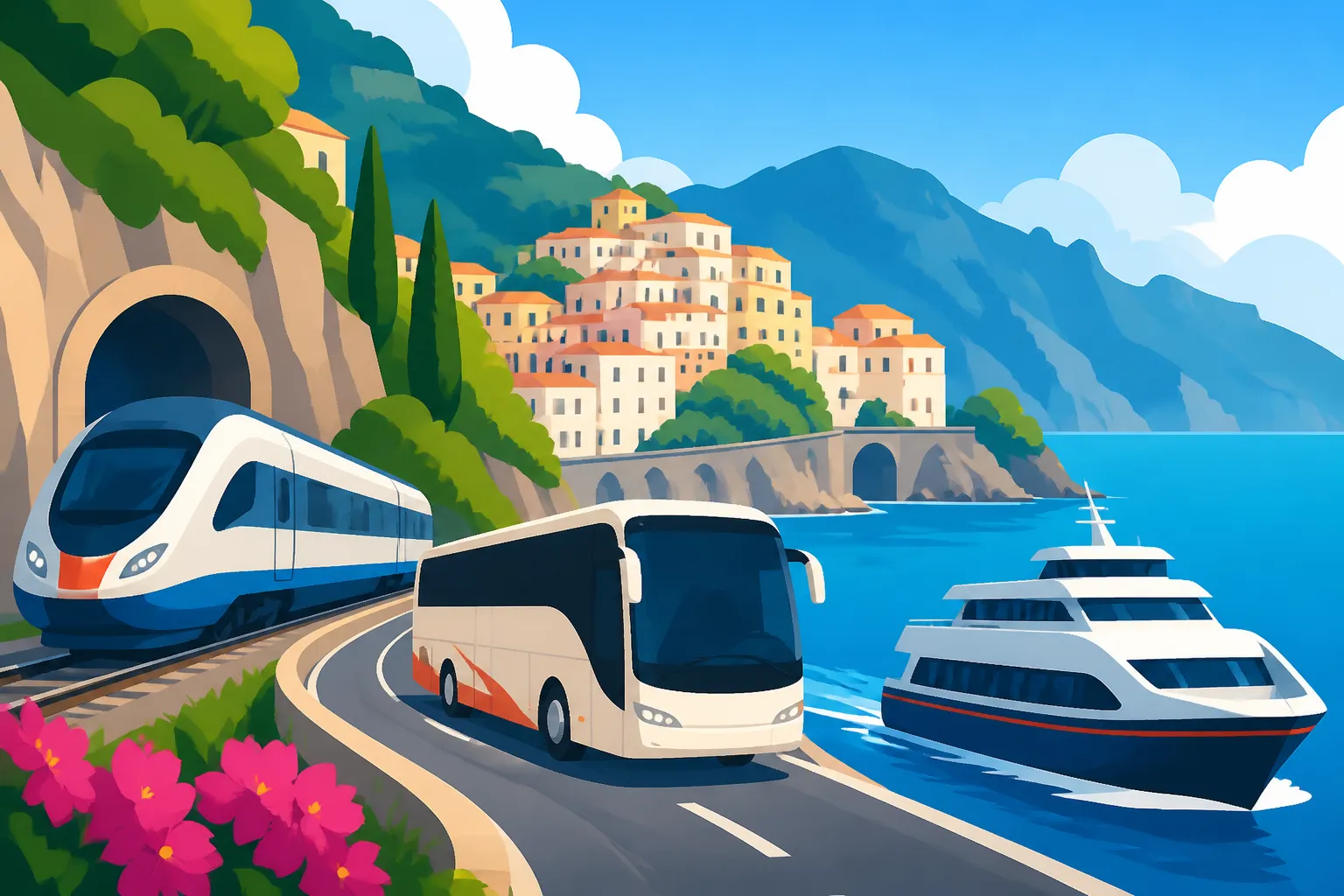
Italy's public transport network is generally efficient, but it's not always designed with seamless international connections in mind, especially when you get to more regional routes. For the Amalfi Coast, you're looking at a multi-leg journey that typically involves:
- A high-speed train to a major hub like Naples or Salerno.
- A local train (Circumvesuviana) if you're heading to Sorrento from Naples.
- A SITA Sud bus for coastal travel between towns.
- A ferry or hydrofoil for a scenic (and often less traffic-prone) approach.
Trying to piece together schedules, purchase tickets from different operators – Trenitalia for the main train, EAV for Circumvesuviana, SITA Sud for buses, and various private companies for ferries – can be incredibly time-consuming and confusing. Language barriers don't help, especially when local information might only be posted in Italian or when a spontaneous strike alters schedules. This complex web of options is precisely why a service that aggregates these choices and allows you to book them together, like Omio, is such a game-changer for planning your trip to the Amalfi Coast.
Your Gateway City: Naples or Salerno?
When planning your journey to the Amalfi Coast, your first major decision will be choosing your primary arrival point in southern Italy. Most travelers opt for either Naples (Napoli) or Salerno, both bustling port cities with good connections to the coast. Each has its own distinct advantages and disadvantages, depending on where exactly on the coast you're headed and your tolerance for chaos.
Arriving in Naples: The Southern Hub
Naples, with its grand central station (Napoli Centrale) and international airport (Capodichino), is often the first stop for many travelers heading south. It's a vibrant, chaotic, and utterly captivating city, but navigating its transport links can be an experience in itself.
If you arrive at Naples Centrale by train, your most common next step towards the Amalfi Coast, particularly if your destination is Sorrento or the western part of the coast (like Positano), is the Circumvesuviana train. This local train line, operated by EAV, departs from a separate station underneath Napoli Centrale, called Napoli Garibaldi. The Circumvesuviana is infamous: it's incredibly cheap, but also notoriously crowded, often without air conditioning, and can be a prime spot for pickpockets. It makes numerous stops, including the archaeological sites of Pompeii and Herculaneum, before reaching its final destination, Sorrento. The journey to Sorrento takes about an hour and ten minutes, and from Sorrento, you'll transfer to a SITA bus or a ferry for further travel along the coast.
Alternatively, especially during the warmer months, you can catch a ferry directly from Naples' Molo Beverello port to Sorrento, Positano, or Amalfi. This is a far more comfortable and scenic option, bypassing the Circumvesuviana entirely. If you're flying into Naples Capodichino Airport, you can take the Alibus shuttle directly to Napoli Centrale or Molo Beverello. While Naples offers more direct international connections, be prepared for a higher energy environment and the need to be vigilant with your belongings.
The Salerno Advantage: Smoother Connections
Salerno, situated to the south of the Amalfi Coast, often presents a less chaotic and arguably smoother entry point, especially if your final destination is Amalfi, Ravello, or any of the towns on the eastern side of the coast. Salerno's train station is conveniently located right in the city center, making onward travel much simpler.
High-speed trains from major Italian cities offer direct connections to Salerno. Upon arrival, you have excellent options:
- SITA Buses: The main SITA bus terminal in Salerno is just outside the train station or at Piazza Concordia, a short walk from the station and the ferry port. From here, you can catch direct buses to Amalfi, Ravello, Maiori, and Minori. These buses traverse the scenic coastal road but typically experience less congestion than the Sorrento-Positano stretch.
- Ferries: Salerno's Concordia dock, located directly opposite the train station, is a major hub for ferries and hydrofoils. You can easily catch a boat to Amalfi, Positano, and even further destinations like Capri, bypassing the winding roads entirely and enjoying stunning sea views.
Many expats I know actually prefer Salerno as their gateway. It feels a bit more manageable, less intense than Naples, and its connections, especially for ferries, are incredibly efficient. If you're coming from Rome and heading to Amalfi or Ravello, a direct train to Salerno followed by a ferry or bus is often the quickest and most pleasant route. Remember to check all schedules and ideally book your tickets in advance through a reliable platform like Omio to ensure smooth transitions.
The Train Leg: Getting to Your Starting Point
The journey to the Amalfi Coast almost always begins with a train ride, as Italy boasts an impressive and efficient rail network connecting its major cities. This initial leg sets the tone for your trip, offering comfort and speed before you transition to more local transport.
High-Speed to Naples or Salerno
Italy's high-speed trains are a joy to behold. Companies like Trenitalia with their iconic Frecciarossa (Red Arrow) and Italo Treno offer frequent, comfortable, and fast connections from virtually every major city in Italy. Whether you're coming from the bustling fashion capital of Milan, the artistic heart of Florence, or the eternal city of Rome, you can whisk yourself down to either Naples or Salerno in style.
- From Rome: Rome Termini offers abundant high-speed connections to both Naples Centrale (approx. 1 hour 10 minutes to 1 hour 30 minutes) and Salerno (approx. 2 hours to 2 hours 20 minutes). These trains are modern, air-conditioned, and provide a range of classes from standard to executive, often with Wi-Fi and power outlets.
- From Florence: A high-speed journey from Florence Santa Maria Novella to Naples Centrale takes around 3 hours, and to Salerno, about 3.5 to 4 hours.
- From Milan: Expect a longer journey from Milan Centrale, typically around 4.5 hours to Naples and 5 to 5.5 hours to Salerno.
Booking these high-speed tickets in advance is absolutely crucial, not just to guarantee a seat, but to secure the best prices. Fares can significantly increase closer to the departure date. I always tell newcomers to use a platform that lets you compare all the options easily. This is where Omio shines; you can input your starting point and desired gateway city (Naples or Salerno), and it will show you all available trains from both Trenitalia and Italo, allowing you to choose the best time and price. It’s an invaluable tool for planning the longest leg of your journey efficiently. You can also explore options for High-Speed Trains in Italy: Trenitalia, Italo, Routes, and Savings to dive deeper into the nuances of booking and saving.
Local Trains: The Circumvesuviana Experience
Once you arrive in Naples, if your plan is to head towards Sorrento, you'll likely encounter the infamous Circumvesuviana. Let me paint a realistic picture: this isn't your sleek, modern high-speed train. The Circumvesuviana is a regional, privately operated commuter train that connects Naples with various towns on the Sorrentine Peninsula and the ruins of Pompeii and Herculaneum.
You'll find the Circumvesuviana station, Napoli Garibaldi, on the lower level of Napoli Centrale. The trains are old, often graffiti-covered, and notoriously lacking in amenities like air conditioning, which can be a real test of patience in the summer heat. They are also known for being very crowded, particularly during peak tourist season and commuter hours. Unfortunately, this line also has a reputation for pickpocketing, so being extra vigilant with your belongings is essential.
Despite its drawbacks, the Circumvesuviana is indispensable if you're traveling from Naples to Sorrento by rail. It's incredibly cheap, costing just a few euros for the full journey. You purchase paper tickets from dedicated windows or newsstands within the station, and it's vital to validate them at the machines before boarding. The journey to Sorrento takes roughly 1 hour and 10 minutes, making about 28 stops along the way. While it might not be the most comfortable ride, it's a quintessential part of the local experience for many visitors to the region, and it gets you where you need to go to access the western parts of the Amalfi Coast.
The Bus Leg: Navigating the Coastal Roads
Once you've reached your gateway city, be it Naples or Salerno, the SITA Sud bus network becomes your primary mode of transport for traversing the breathtaking, yet challenging, coastal roads of the Amalfi Coast. This is where the real adventure of winding cliffside journeys begins.
SITA Sud Buses: The Backbone of Amalfi Transport
The SITA Sud public bus service is the lifeblood of transport on the Amalfi Coast. These distinctive blue buses connect all the major towns from Sorrento in the west, through Positano, Praiano, Amalfi, Ravello, Minori, and Maiori, all the way to Salerno in the east. They offer the most comprehensive network for getting between these picturesque villages when you're not on a ferry.
The experience of riding a SITA bus is unique. The roads are incredibly narrow and winding, often hugging the cliff face with dramatic drops to the sea below. If you're prone to motion sickness, be sure to take precautions. For the best views, try to grab a seat on the right side of the bus when traveling south from Sorrento towards Amalfi. The views are truly unparalleled, but they can be distracting for the driver!
Here’s the catch with SITA Sud buses: you must purchase your ticket before boarding. You cannot buy tickets from the driver. Tickets are sold at local tabaccherie (tobacco shops, marked with a blue 'T'), newsstands, and some cafes or bars in the towns. Always buy a return ticket if you know you’ll need one, or several single tickets if you plan on hopping between towns. Once you have your ticket, remember to validate it using the machine on board immediately after you get on. Failure to do so can result in hefty fines, and trust me, they do check!
Schedules can be a bit tricky to decipher, with varying frequencies depending on the season. During peak summer, buses run more often but are incredibly crowded. In the off-season, services are reduced. Online resources and apps like Omio can often provide the most up-to-date schedule information, showing you which SITA Sud bus to take and from where, which is a massive help when you're trying to figure out connections. For more general advice on bus travel in Italy, you can look into Intercity Buses in Italy: FlixBus and Regional Networks.
From Sorrento to Amalfi Towns
Sorrento acts as a critical transfer hub for the western side of the Amalfi Coast. Once you arrive in Sorrento (likely via the Circumvesuviana train or a ferry from Naples), you'll head to the main bus station, conveniently located next to the train station. From here, SITA Sud buses depart regularly for Positano, Praiano, and Amalfi.
During the high season, queues for these buses can be very long, and buses can fill up quickly. If you're traveling with luggage, be prepared for a tight squeeze, as storage space is minimal. The journey from Sorrento to Positano is about 40-50 minutes, and to Amalfi, it's roughly 1 hour 30 minutes to 2 hours, depending on traffic. It's a bumpy but beautiful ride, offering constant postcard-perfect views.
From Salerno to Amalfi Towns
On the eastern side, Salerno serves a similar role to Sorrento, providing bus connections to Amalfi, Ravello, and the towns further east like Minori and Maiori. If you arrive in Salerno by high-speed train or ferry, the SITA Sud bus terminal is easily accessible, often located near Piazza Concordia or directly outside the main train station.
Buses from Salerno to Amalfi take approximately 1 hour 15 minutes to 1 hour 30 minutes. This route, while still scenic, is often slightly less congested than the Sorrento-Positano stretch. From Amalfi, you can then connect to other towns, including a shorter, uphill SITA bus ride to Ravello. Again, ensure you have your tickets purchased and validated to avoid any unpleasant surprises from inspectors.
The Ferry/Hydrofoil Leg: The Scenic Route
While the bus offers a unique perspective of the winding coastal roads, the ferry provides an entirely different, often more relaxing, and certainly no less spectacular way to experience the Amalfi Coast. This sea-faring option is a favorite for many, including myself, especially during the bustling summer months.
Why Choose the Ferry?
Opting for a ferry or hydrofoil is often the most pleasant way to travel along the Amalfi Coast, particularly when the roads are jammed with traffic. Imagine skipping all those hairpin turns and the constant acceleration and braking of a bus. Instead, you're gliding across the azure waters of the Tyrrhenian Sea, feeling the gentle sea breeze, and watching the colorful cliffside villages slowly reveal themselves. It's truly an unparalleled experience, offering panoramic views that simply can't be seen from the road. For many, it's also a gentler ride than the sometimes-queasy bus journey.
There are different types of boats available:
- Slow Ferries: These are larger boats, more stable, and often have outdoor deck space. They take longer but are generally more comfortable, especially for those prone to seasickness. They also usually allow more luggage.
- Fast Hydrofoils (Aliscafi): These are smaller, enclosed vessels that travel at much higher speeds. They cut down travel time significantly but can be bumpier if the sea is rough, and offer less opportunity to stand outside. Luggage allowances are often stricter and may incur an extra fee.
Major departure and arrival ports include Naples, Sorrento, Salerno, Positano, and Amalfi. From any of these hubs, you can connect to most other coastal towns. The ferry option is such a distinct and enjoyable way to travel that I often recommend it as the primary method between towns once you're on the coast. It’s part of the quintessential Amalfi experience, much like enjoying the local limoncello! Discover more ways to get around Italy by checking out Getting Around Italy: Trains, Buses, Flights, and Car Hire.
Key Ferry Routes and Operators
Several ferry companies operate services along the Amalfi Coast, with routes expanding significantly during the peak tourist season (typically April/May to October). Prominent operators include Travelmar, Alicost, NLG (Navigazione Libera del Golfo), and SNAV.
Here are some of the most popular routes:
- Naples to Sorrento/Amalfi/Positano: While direct ferries from Naples to Positano or Amalfi exist, they are less frequent. More common is a ferry from Naples (Molo Beverello) to Sorrento, and then connecting to another ferry or bus from Sorrento.
- Salerno to Amalfi/Positano: This is a very popular and efficient route. Ferries from Salerno (Concordia Dock) offer frequent services directly to Amalfi, Positano, and even further to Capri. This route is often less crowded than those originating from Sorrento.
- Sorrento to Positano/Amalfi: This is perhaps the most heavily utilized coastal ferry route. Services run frequently, especially in summer, connecting Sorrento's port to Positano and Amalfi.
It's crucial to remember that ferry services are highly seasonal and weather-dependent. In the off-season (roughly November to March), many routes are significantly reduced or suspended entirely. Even during the high season, rough seas can lead to cancellations, so always check the latest conditions before heading to the port. Booking ferry tickets online in advance is highly recommended, especially for popular routes and during busy times, as they can sell out. Once again, using a platform like Omio allows you to see all the available ferry operators, compare prices and times, and book your tickets seamlessly, often avoiding long queues at the ticket kiosks.
Practical Ferry Tips
To make your ferry journey as smooth as possible, here are a few pointers:
- Arrive Early: Especially if you haven't booked online, arrive at the ticket office at the port well in advance, particularly for early morning departures or popular routes. Queues can be long.
- Luggage: Be mindful of luggage. While ferries are generally more accommodating than buses, larger suitcases might incur an extra fee, and you'll need to handle them yourself on and off the boat. Pack light if possible!
- Weather Watch: Keep an eye on the weather forecast. If strong winds are predicted, there’s a higher chance of cancellations. Have a backup plan (like the SITA bus, if it’s running) just in case.
- Tickets and Validation: Purchase your ticket before boarding from the port kiosks or online. No need to validate on board for ferries, but hold onto your ticket for inspection.
- Consider the Cost: Ferries are generally more expensive than buses, but the trade-off in comfort, speed (for hydrofoils), and scenery is often worth it.
Crafting Your Perfect Itinerary with Omio
When planning a trip to the Amalfi Coast, you quickly realize that it's rarely a single-mode journey. To truly navigate this stunning region, you'll almost certainly need to combine trains, buses, and ferries. This multi-modal approach, while offering flexibility and diverse scenic experiences, can also be the most complex aspect of your travel planning.
The Power of Multi-Modal Planning
Imagine trying to get from Florence to a charming B&B tucked away in Praiano. You'd need a high-speed train from Florence to Salerno, then perhaps a ferry from Salerno to Positano, and finally a local SITA bus from Positano to Praiano. That's three different modes of transport, potentially three different operators, and three separate booking systems. The schedules rarely align perfectly, and searching each one individually, then trying to find connection times, can quickly turn into a full-time job. It's enough to make even the most seasoned traveler want to throw their hands up in exasperation!
This is the exact pain point that platforms like Omio were designed to solve. They act as your personal travel assistant, cutting through the bureaucratic red tape and disparate information sources to give you a clear, consolidated view of all your options.
How Omio Simplifies Your Journey
Omio is an absolute game-changer for anyone planning complex journeys in Europe, and especially for multi-modal trips like those to the Amalfi Coast. Here’s how it transforms a potentially stressful planning process into a smooth, efficient one:
- All-in-One Search: Instead of opening multiple tabs for Trenitalia, Italo, various bus companies, and a handful of ferry operators, Omio aggregates everything into one single search. You just enter your origin and your final destination (e.g., "Florence" to "Praiano"), and it does the heavy lifting, pulling together all relevant train, bus, and ferry options.
- Comparing Routes and Times: You’ll instantly see various combinations of transport modes, travel times, and prices. This allows you to easily compare a route that's faster but costs more, versus one that's cheaper but takes longer, or perhaps one that incorporates a scenic ferry ride. It's about finding the balance that works for your travel style and budget.
- Seamless Booking: Once you've chosen your preferred itinerary, you can book all the tickets directly through Omio in one transaction. No more juggling different websites, currency conversions, or payment gateways. This not only saves a huge amount of time but also reduces the chance of errors in booking individual legs. Need to compare ticket prices for trains? Check out How to Buy Trenitalia and Italo Tickets and Save Money.
- Real-time Information (where possible): While Italian local transport can be unpredictable, Omio strives to provide the most up-to-date schedules available. This is crucial when you're dealing with seasonal changes or last-minute adjustments, giving you a better sense of what to expect.
- Mobile Convenience: Your tickets are often accessible directly on your phone through the Omio app, making boarding and ticket checks much simpler. This is particularly handy for navigating bustling stations or ports. You can even check out how apps like Using the Trenitalia App to Plan Train Travel integrate into this kind of planning.
Using Omio for your Amalfi Coast journey means you can stop stressing about the logistics and start dreaming about those lemon groves and endless sea views. It empowers you to build the most efficient and enjoyable route without becoming an honorary Italian public transport expert overnight. It’s definitely a tool to have open as you embark on your planning process!
Essential Tips for a Smooth Amalfi Coast Journey
Navigating the Amalfi Coast, as beautiful as it is, requires a certain level of preparedness, particularly when relying on public transport. As an expat who’s learned these lessons the hard way, I can tell you that a few insider tips can make all the difference between a dream vacation and a logistical nightmare.
Timing is Everything: Seasonal Considerations
When you choose to visit the Amalfi Coast profoundly impacts your travel experience, especially regarding transport.
- Peak Season (June to August): This is when the Amalfi Coast truly buzzes. The weather is glorious, but so are the crowds. Buses are packed, ferries sell out, and the coastal roads are often gridlocked. If you must travel during this time, book everything – accommodation, high-speed trains, and even major ferry legs – months in advance. Be prepared for longer waits, slower journeys, and higher prices across the board. The sheer volume of people can make getting around a test of patience.
- Shoulder Seasons (April-May, September-October): In my opinion, these are the golden months to visit. The weather is fantastic, the sea is warm enough for swimming, and the crushing crowds of summer have thinned out significantly. Public transport runs frequently, but it’s less chaotic. You’ll still want to book high-speed trains and popular ferries in advance, but you’ll have more flexibility with local buses. Many services are still fully operational, offering the best balance of accessibility and serenity.
- Low Season (November to March): The coast becomes incredibly quiet, almost sleepy. Many hotels, restaurants, and shops close for the winter. While you'll experience a tranquil beauty, public transport options, especially ferries, are drastically reduced or suspended entirely due to weather and lack of demand. It's not ideal if you plan to hop between towns frequently, as you might find yourself stranded or relying on expensive private transfers.
Tickets, Luggage, and Local Etiquette
Beyond the timing, there are crucial practicalities to consider for your Amalfi adventure.
- Tickets and Validation: I cannot stress this enough: for SITA Sud buses, always buy your ticket before boarding. Seriously, always. Look for tabaccherie (tobacco shops) or newsstands. And once you're on the bus, immediately validate it in the small machine. If you don't, and a ticket inspector gets on, you'll face a hefty fine that could easily fund a fabulous Italian meal. For trains and ferries, booking in advance online through a platform like Omio is best, and for trains, remember to validate regional paper tickets at the green/yellow machines on the platform before boarding.
- Luggage: Pack light, my friends, pack light! Hauling a massive, wheeled suitcase up and down cobbled streets, onto crowded buses, or maneuvering it onto a ferry gangplank is no fun. Many Amalfi Coast towns involve stairs and uphill walks. Large bags also take up precious space on buses and ferries, potentially incurring extra fees on the latter. A backpack or a smaller, easily managed carry-on is your best bet.
- Punctuality: While Italian high-speed trains are generally very punctual, local buses and regional trains can be a bit more… relaxed with their schedules. Build in buffer time, especially if you have a tight connection. Don't assume a bus will be exactly on time; it might be a few minutes early or late.
- Sitting for the Views: When taking the SITA bus from Sorrento south towards Positano and Amalfi, try to sit on the right side of the bus. You’ll be rewarded with uninterrupted, jaw-dropping views of the coastline and the sea. If you're coming from Salerno going west, sit on the left.
- Patience is a Virtue: Things might not always go exactly to plan. Buses can be late, ferries can be cancelled, and crowds can be overwhelming. Embrace the dolce vita mentality, take a deep breath, and remember you're in one of the most beautiful places on earth.
Alternatives to Public Transport (Briefly Mentioned)
While this guide focuses on public transport, it's worth briefly mentioning alternatives:
- Private Transfers: The most comfortable and stress-free option, especially if you're traveling in a group or have a lot of luggage. They pick you up directly from your arrival point (airport, train station) and drop you at your accommodation. It’s expensive, but often worth it for the peace of mind.
- Car Rental: This gives you maximum freedom, but comes with significant headaches: extremely narrow, winding roads, aggressive local drivers, limited and expensive parking, and the dreaded ZTLs (Limited Traffic Zones) in many towns that can lead to hefty fines if you enter unknowingly. I generally advise against renting a car unless you’re planning extensive travel beyond the coast itself and are very confident driving in challenging conditions. You can read up on Renting a Car in Italy: ZTLs, Insurance, and Driving Tips and What Is a ZTL in Italy and How to Avoid Fines if you're still considering it.
- Scooter Rental: An adventurous and often quicker way to get around, but only recommended for experienced scooter riders who are comfortable on winding, cliffside roads shared with buses and cars. Helmets are mandatory.
Comparing Transport Modes to the Amalfi Coast
To give you a quick overview and help you decide which transport option suits your needs best, here's a handy table comparing the various modes of travel to and along the Amalfi Coast:
| Transport Mode | Pros | Cons | Best Use Case |
|---|---|---|---|
| High-Speed Train | Fast, comfortable, reliable. Connects major Italian cities to Naples/Salerno. | Doesn't go directly to Amalfi Coast towns. | Long-distance travel to gateway cities (Naples or Salerno). |
| Circumvesuviana Train | Very cheap, direct to Sorrento from Naples. | Old, crowded, no A/C, prone to pickpockets, frequent stops. | Budget travel from Naples to Sorrento (and Pompeii/Herculaneum). |
| SITA Sud Bus | Extensive network along the coast, relatively inexpensive. Amazing cliffside views (if you sit right). | Can be very crowded, prone to traffic delays, winding roads (motion sickness risk), limited luggage space. | Inter-town travel along the coast (e.g., Sorrento to Positano, Amalfi to Ravello). Good for off-season. |
| Ferry/Hydrofoil | Scenic, avoids road traffic, comfortable, less motion sickness for some. Direct port-to-port. | More expensive, weather-dependent, seasonal (reduced/suspended off-season), stricter luggage rules. | Between major coastal towns (e.g., Salerno to Amalfi, Sorrento to Positano). Highly recommended in peak season. |
| Private Transfer | Door-to-door convenience, stress-free, comfortable, perfect for groups/heavy luggage. | Most expensive option. | Luxury, convenience, or for those with specific needs or lots of luggage. |
Reaching the stunning Amalfi Coast might involve a bit more planning than a simple train ride, but believe me, every bit of effort is rewarded tenfold by the breathtaking views and the unique charm of this Italian gem. By combining high-speed trains to Naples or Salerno, then strategically using local buses and especially ferries, you can navigate the coast efficiently and comfortably.
Don't let the thought of multiple transport changes deter you. The key is to consolidate your planning and booking, making the entire process far less intimidating. This is precisely where a tool like Omio proves invaluable. By allowing you to search, compare, and book all your train, bus, and ferry tickets in one place, Omio takes the guesswork and stress out of piecing together your journey. It lets you focus on the excitement of your upcoming adventure, rather than the logistics. So, pack light, embrace the winding roads and sparkling seas, and let Omio help you unlock the magic of the Amalfi Coast.
Disclaimer
Please note that travel information, including schedules, prices, and availability of services, can change rapidly due to various factors such as seasonal demand, weather conditions, local events, or public transport strikes. While every effort has been made to provide accurate and up-to-date information in this guide, it is always recommended to double-check specific details with service providers or reliable booking platforms like Omio before making your final travel arrangements. This guide is for informational purposes only and does not constitute professional travel advice.