How to Plan an Italy Itinerary by Train
Many travelers arriving in Italy envision a sun-drenched road trip through Tuscany, but they quickly realize that navigating Restricted Traffic Zones known as ZTLs and aggressive local drivers is a recipe for a vacation-ending fine. This guide solves that anxiety by providing a comprehensive, veteran-tested strategy for planning a seamless Italy itinerary by train, ensuring you see the best of the peninsula without the stress of a rental car.
Disclosure: This post may contain affiliate links. We may earn a commission at no extra cost to you if you make a purchase through these links. Read full disclosure.
The Anatomy of the Italian Rail System
To plan a successful trip, you first have to understand that not all Italian trains are created equal. In fact, thinking of them as a single entity is the first mistake most newcomers make. The system is split primarily between high-speed glamour and the gritty, reliable workhorses of the provinces. When you start looking at how to move between major hubs like Rome, Florence, and Milan, you are entering the world of the "Alta Velocità" or high-speed lines.
There are two main players here: Trenitalia, the state-owned giant, and Italo, the private competitor. Both offer a sleek, modern experience with air conditioning, Wi-Fi, and speeds topping 300 kilometers per hour. For a veteran expat, the choice between them usually comes down to price and schedule. Trenitalia’s flagship is the Frecciarossa, which connects the major cities with surgical precision. Italo, on the other hand, often runs aggressive promotions and sometimes uses secondary stations, so you have to be careful when booking. For a deep dive into these differences, you might want to look at High-Speed Trains in Italy: Trenitalia, Italo, Routes, and Savings to see which fits your budget.
Then there is the Regionale. These trains are the lifeblood of the country, connecting the small hilltop towns and coastal villages that high-speed tracks can’t reach. They are slower, they don’t have reserved seating, and the air conditioning is—to put it politely—subject to the whims of fate. However, they are incredibly cheap and offer a window into the "real" Italy that you miss from a high-speed tunnel. Understanding Regional Trains in Italy: How to Use Them and Save is essential if you plan on visiting places like Lucca, Assisi, or the villages of the Cinque Terre.
Strategic Planning and Booking Mastery
The secret to a stress-free itinerary is knowing when to commit and when to stay flexible. In Italy, tickets for high-speed trains work like airline tickets; the price fluctuates based on demand. If you wait until the morning of your trip to buy a ticket from Rome to Venice, you might pay three times the price of someone who booked a month in advance. I always tell my visiting friends to lock in their "big" legs as early as possible. You can easily use a platform like Omio to compare the prices of Trenitalia and Italo side-by-side in English, which saves a lot of headache when the official sites get wonky with foreign credit cards.
For high-speed legs, booking about 60 to 90 days out is the sweet spot for the "Super Economy" fares. However, for the Regionale trains, there is absolutely no financial benefit to booking in advance. The price is fixed. This is where your flexibility comes in. You can decide on a whim to stay an extra two hours in a vineyard in Montepulciano because you aren't tethered to a specific departure time. For more on the timing, check out How Early Should You Book High-Speed Trains in Italy? to avoid overpaying.
When you are planning your stops, try to avoid the "one-night stand" itinerary. Moving luggage in and out of Italian train stations—many of which have stairs and lack elevators—is exhausting. Instead, pick hub cities and do day trips. For example, stay in Florence for four nights and use the train to visit Pisa, Siena, and Arezzo. This approach allows you to find a great apartment on Booking.com and actually unpack your bags. It also means you spend less time hovering over a departures board and more time at a cafe. If you are starting in the capital, there are dozens of incredible Best Day Trips From Rome by Train that can keep you busy for a week.
| Train Category | Booking Window | Seating | Best Use Case |
|---|---|---|---|
| Frecciarossa / Italo | 2-4 Months in Advance | Reserved Only | Long distances (e.g., Naples to Milan) |
| Intercity | 1-2 Months in Advance | Reserved | Medium distances with fewer stops |
| Regionale | No Advance Needed | Open Seating | Short hops and small town exploration |
Survival Guide for the Italian Train Station
The station, or "Stazione," is a place of high drama. To the uninitiated, it can feel like a chaotic swarm, but there is a logic to it. The most important thing to watch is the "Tabellone," the giant orange or black electronic board. Do not look for your destination city; look for your train number. A train going from Rome to Florence might actually be the train to Milan that just happens to stop in Florence. If you look for "Florence" on the board and don't see it, you will panic. Look for the number on your ticket, and that will tell you which "Binario" or platform you need.
One of the biggest traps for tourists is the validation of paper tickets. If you have a physical ticket for a regional train, you must "stamp" it in the small green or yellow machines before you board. If you forget, the conductor will not be moved by your tourist status; you will be hit with a fine that can exceed 50 Euros on the spot. This is why How to Validate a Regional Train Ticket in Italy is one of the most clicked resources for a reason—it’s the difference between a cheap ride and an expensive lesson. Note that if you have a digital ticket on your phone with a QR code, you usually just need to "check in" on the app. Using the official tools is vital, so knowing How to Use the Trenitalia App to Plan Train Travel will save you a lot of physical paperwork.
Lastly, be prepared for the "Sciopero" or strike. They are a cultural staple of Italian life. They are usually announced in advance and often happen on Fridays. If a strike is called, the high-speed "Frecce" trains usually still run on a guaranteed schedule, but the regional lines might shut down completely. Always have a backup plan or a flexible hotel cancellation policy. It’s part of the authentic experience, even if it feels like a hurdle at the time. Master the art of How to Travel Between Italian Cities Without a Car by staying informed and keeping your cool.
Sample Itineraries and Regional Logic
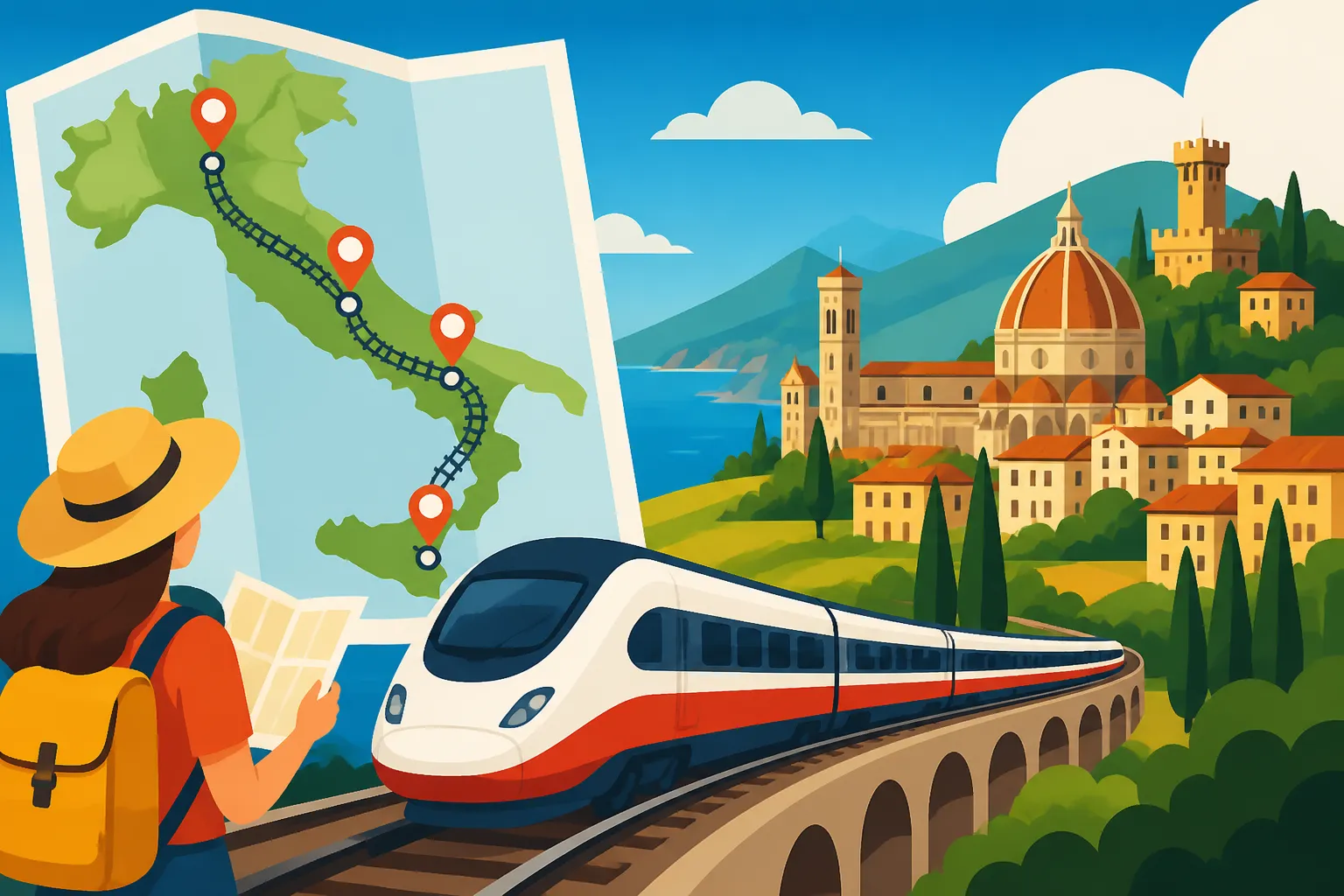
Designing the perfect loop depends on your entry and exit points. Most people fly into Rome (Fiumicino) or Milan (Malpensa). If you have 10 days, the classic "Holy Trinity" is your best bet: Rome, Florence, and Venice. These are perfectly connected by high-speed rail. You can spend three days in Rome, take a 90-minute zip to Florence for three days, and finish with two days in Venice before flying home. To make the most of these cities, I suggest booking a guided skip-the-line experience through GetYourGuide for the Vatican or the Uffizi, as the train station crowds are nothing compared to the museum lines.
If you are a repeat visitor, consider the Northern Lakes or the Southern Coast. The trains from Milan can whisk you to Lake Como (Varenna-Esino station) in about an hour. From there, the ferry system takes over. In the south, the train gets you to Naples or Salerno, which serve as the gateways to the Amalfi Coast. However, remember that the high-speed line stops at Salerno. Beyond that, you are on the "Circumvesuviana" or local buses. If your heart is set on the tiny villages, learning How to Reach Italy's Hilltop Borghi by Public Transport is the key to unlocking the hidden gems.
Before you commit to the rail life, consider the trade-offs. While the train is superior for city centers, it is not great for deep exploration of the Val d'Orcia in Tuscany, where the vineyards are miles from the nearest station. In those specific cases, you might want to look at Renting a Car in Italy: ZTLs, Insurance, and Driving Tips for a two-day stint before returning to the tracks. But for 90% of a standard Italian holiday, the train is faster, cheaper, and allows you to watch the rolling hills of Umbria with a glass of wine in your hand instead of white-knuckling a steering wheel. Master the basics of How to Buy Trenitalia and Italo Tickets and Save Money and you are ready to conquer the peninsula like a local.
Disclaimer
The information provided in this guide is for informational purposes only. While every effort has been made to ensure the accuracy of train schedules, pricing, and regulations for 2026, Italian rail policies and strike schedules are subject to change without notice. Always verify your specific travel details on official transport websites before departure.