What Are the Best Family Beaches in Italy?
Planning a beach holiday in Italy with young children often sounds like a dream until you realize many of the most famous "Instagrammable" spots involve steep cliffside stairs, jagged volcanic rocks, or water that turns deep after just two steps. This guide solves that frustration by identifying the specific stretches of coastline where soft sand, shallow entries, and high-quality amenities make a family vacation actually feel like a vacation.
Disclosure: This post may contain affiliate links. We may earn a commission at no extra cost to you if you make a purchase through these links. Read full disclosure.
Understanding the Italian Beach Scene: Lidos vs. Free Beaches
One of the first culture shocks you will encounter as a parent in Italy is the concept of the stabilimento balneari, or simply, the "lido." Unlike many beaches in North America or Northern Europe where the coast is wide open, much of the prime Italian coastline is divided into private clubs. While the idea of paying to access a beach might grate on your nerves at first, for families, these are often a godsend. A veteran expat knows that the "free" beach (spiaggia libera) often lacks toilets, showers, and shade, which are non-negotiable when you are managing a toddler in 35-degree heat.
When you book a spot at a lido, you are typically getting two sun loungers and a parasol for the day. But the real value lies in the infrastructure. Most family-oriented lidos have playgrounds, changing tables, and small restaurants that serve kid-friendly pasta dishes. If you are Traveling Italy With a Baby or Toddler, these facilities transform a logistical nightmare into a manageable afternoon. Furthermore, many of these establishments are awarded the "Bandiera Verde" (Green Flag), a specific certification given by Italian pediatricians to beaches that are particularly suited for children based on water cleanliness, sand quality, and the presence of lifeguards.
The free beaches, while beautiful, require significantly more preparation. You will need to haul your own umbrellas, coolers, and chairs across the sand. If you are staying in a major city and heading out for the day, you might use Omio to compare train and bus prices to reach these coastal towns, but once you arrive, consider whether the cost of a private lido is worth the reduction in stress. Often, the peace of mind knowing there is a clean bathroom twenty yards away is worth every Euro.
The Adriatic Riviera: The Gold Standard for Kids
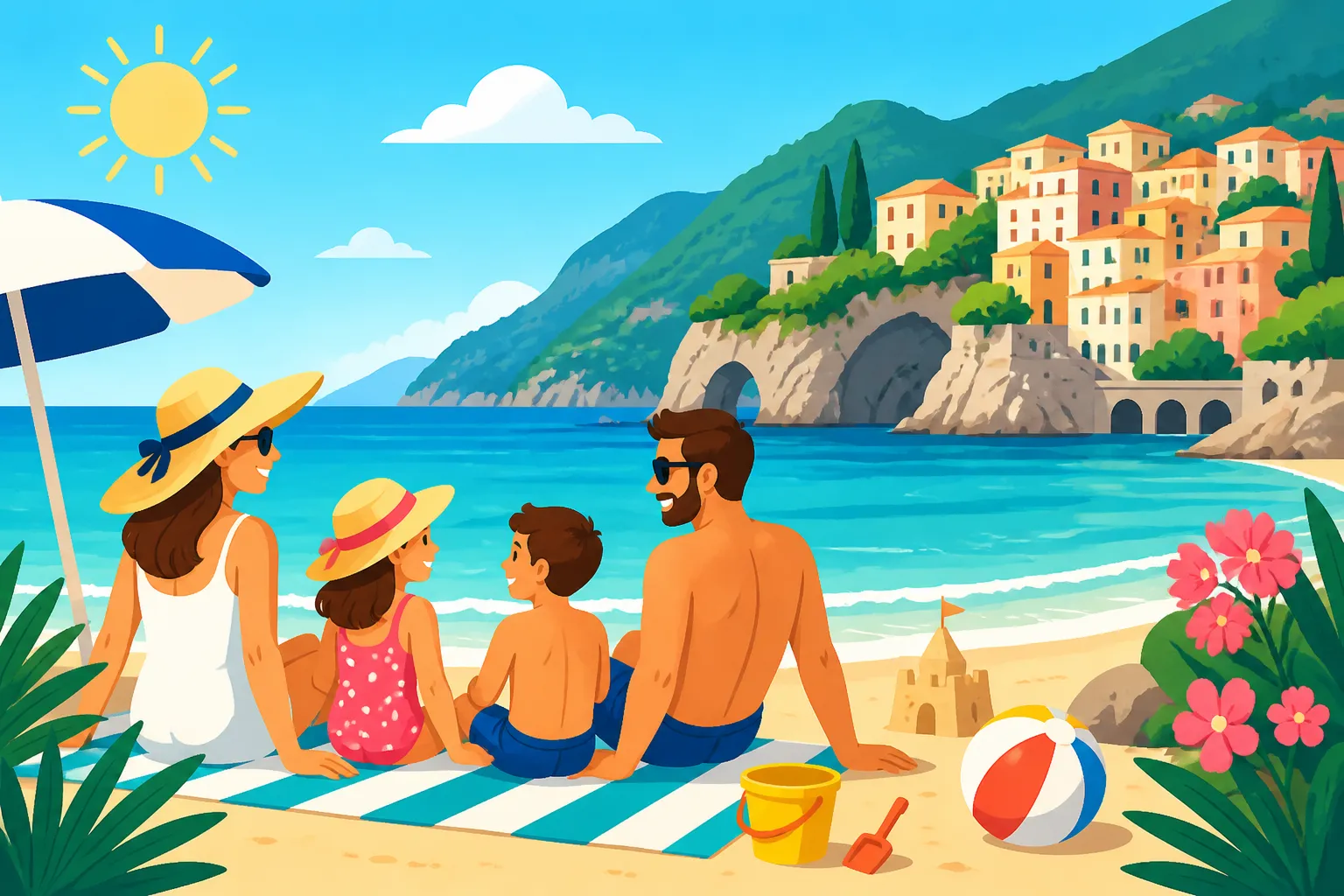
If your priority is safety and ease of use, the Adriatic coast—specifically the region of Emilia-Romagna—is unbeatable. Towns like Rimini, Riccione, and Cattolica have been catering to families for over a century. The sand here is fine and golden, and the shelf of the seabed is incredibly shallow. A child can walk out fifty meters and still only be waist-deep in water. This allows parents to breathe a bit easier while their little ones practice swimming or play with buckets and spades.
Rimini, in particular, is a masterclass in family logistics. The entire beachfront is lined with organized lidos that often feature "baby clubs" where entertainment staff organize games for the children. While the water isn't the crystalline turquoise of the Caribbean, it is clean, calm, and monitored by a dense network of lifeguards. For those who want to mix beach time with other activities, this area is also home to several theme parks. When you are Getting Around Italy: Trains, Buses, Flights, and Car Hire, the Adriatic coast is one of the easiest to navigate because the rail line runs almost parallel to the beach, meaning you rarely need a car to get from your hotel to the water.
Beyond the sand, the boardwalks in these towns are wide and stroller-friendly. In the evenings, these areas turn into a vibrant parade of families enjoying gelato. It is a very safe environment where the "Passeggiata" (evening stroll) is a sacred ritual. You can find excellent family-centric resorts on Booking.com that offer half-board or full-board options, which is a life-saver when you don't want to hunt for a dinner table with a cranky five-year-old at 8:00 PM.
Tuscany and the Maremma: Wild Beauty with Modern Comforts
Tuscany is famous for its rolling hills, but its coastline, especially the Maremma area in the south, offers some of the most spectacular family beaches in the country. Castiglione della Pescaia is a frequent winner of the "Five Sails" award for environmental quality. The beaches here are backed by dense pine forests (pinete), which provide natural shade and a cooler microclimate during the peak of the afternoon heat. This is a massive advantage if you need to take a break from the sun without heading all the way back to your accommodation.
The water in the Maremma is famously clear and stays shallow for a significant distance. Unlike the high-energy vibe of the Adriatic, the Tuscan coast feels a bit more "slow life." You will find a mix of high-end lidos and large stretches of protected free beach. For a truly memorable day, many families look at GetYourGuide to find small boat excursions that depart from the local harbors, taking you to hidden coves that are still accessible enough for kids but feel like a world away from the crowds.
Living here as an expat, I’ve found that the Maremma offers a better balance for those who want "real" Italy alongside their beach time. You are never far from a medieval hilltop village where you can explore a castle after the sun goes down. However, keep in mind that the popular spots fill up fast in August. If you are Visiting Italy in Summer: Heat, Crowds, and Coastal Escapes, booking your beach umbrella a few days in advance is a necessity, not a suggestion.
Sardinia and Puglia: The Tropical Paradise of the South
If you are looking for the kind of water that looks like a postcard, you have to head south. Sardinia is often cited as having the best beaches in Europe. For families, the area around San Teodoro, specifically "La Cinta" beach, is legendary. It is a long, thin crescent of white sand with turquoise water that looks like a swimming pool. Because the beach is so long, even in the height of summer, you can usually find a spot if you are willing to walk a bit further from the main parking areas.
Puglia, the "heel" of Italy's boot, offers the "Maldives of Salento" near Pescoluse. This area is characterized by incredibly fine sand and dunes covered in Mediterranean scrub. The water is warm and exceptionally calm, making it ideal for infants and toddlers. Puglia is also generally more affordable than Sardinia, though the secret is out, and it has become very popular with Italian families in recent years. Understanding Regional Healthcare Differences in Italy: North vs South is important if you are staying in more remote parts of Puglia, but the main tourist hubs are well-serviced with pediatric clinics and pharmacies.
One thing to watch out for in the south is the wind. The "Maestrale" in Sardinia or the "Tramontana" in Puglia can turn a calm sea into a choppy one in a matter of hours. Always check the local weather apps before heading out. When you are How to Choose Between Northern and Southern Italy, remember that the south is significantly hotter. The sun is intense, and the "siesta" hours (1:00 PM to 4:00 PM) are not just a suggestion—they are a survival tactic. Most locals take their children off the beach by noon and don't return until 4:30 PM.
| Region | Recommended Beach | Sand Type | Best Feature |
|---|---|---|---|
| Emilia-Romagna | Rimini / Riccione | Fine Golden Sand | Ultra-shallow water and massive playgrounds. |
| Tuscany | Castiglione della Pescaia | Golden Sand | Pine forests providing natural afternoon shade. |
| Sardinia | San Teodoro (La Cinta) | Sugar-white Sand | Crystal clear, lagoon-like turquoise water. |
| Puglia | Pescoluse | Fine White Sand | Known as the "Maldives of Italy" for its clarity. |
| Sicily | San Vito Lo Capo | White Coral Sand | Spectacular backdrop with very calm, sheltered bay. |
Practical Tips for Your Italian Beach Days
The administrative and cultural hurdles of the Italian beach can be confusing. For example, did you know that it is technically illegal to "reserve" a spot on a free beach by leaving your towel there overnight? Local police (Polizia Municipale) frequently do sweeps and confiscate umbrellas left before 8:00 AM. Also, be prepared for the "Vucumrà"—the wandering beach vendors. They are generally harmless and sell everything from kites to sarongs, but a polite "No, grazie" is usually enough if you aren't interested.
Packing for an Italian beach day requires a few specific items. Beyond the standard sunscreen, make sure to bring "scarpe da scoglio" (water shoes). Even on sandy beaches, there can be rocky patches or the occasional sea urchin if you go snorkeling near the breakwaters. If you are Finding and Using Pharmacies in Italy, look for "Crema Solare" specifically formulated for children (often labeled "Bimbi") which usually has a higher SPF and fewer perfumes.
Finally, don't forget about the food. While lidos have restaurants, many Italians bring a "Pranzo al Sacco" (packed lunch). This often consists of focaccia, panini, or cold pasta salads. If you decide to eat at a beachfront restaurant, remember to check What Is the Coperto on an Italian Restaurant Bill? so you aren't surprised by the service charge. Most family-friendly places are more than happy to provide a "Pasta al Pomodoro" or "Cotoletta" (breaded veal/chicken) for children, even if it isn't explicitly on the menu.
Handling the Heat and Logistics
The Italian sun is no joke, especially in July and August. Heat exhaustion is a common issue for tourists who aren't used to the Mediterranean climate. Always ensure your children are wearing hats and that you have plenty of water. If you are Acclimating to Italian Climate: Heat, Humidity, and Health, you'll learn that hydration is key. Most Italian towns have "nasone" or public water fountains where the water is cold and perfectly safe to drink; however, these are less common directly on the sand.
Transportation to the beach can also be a headache. Parking near popular beaches is often expensive and limited. Look for the blue lines, which indicate paid parking, and make sure you find the "parcometro" to get a ticket. If you are Renting a Car in Italy: ZTLs, Insurance, and Driving Tips, be careful not to drive into restricted "ZTL" zones in coastal town centers, as the fines are steep and often arrive in your mailbox months after you've returned home. Using public transport where possible is often the smoother path.
Ultimately, the best family beach in Italy is the one that fits your family's specific rhythm. Whether you want the high-energy, full-service experience of the Adriatic or the wild, turquoise lagoons of Sardinia, the country offers a variety that is hard to match anywhere else in Europe. By planning around the "Bandiera Verde" beaches and utilizing the local lido culture, you can ensure a holiday that is safe, comfortable, and truly rejuvenating for everyone involved.
Disclaimer
The information provided in this guide is for informational purposes only and reflects the personal experiences and research of the author. Travel conditions, local regulations, and beach certifications (such as Blue Flag or Green Flag status) can change annually. Readers are encouraged to verify specific details, such as opening times, fees, and safety warnings, with local authorities or official tourism boards before their trip. The author and publisher are not responsible for any changes in services or incidents that may occur during travel.