How to Choose Between the Amalfi Coast and Cinque Terre
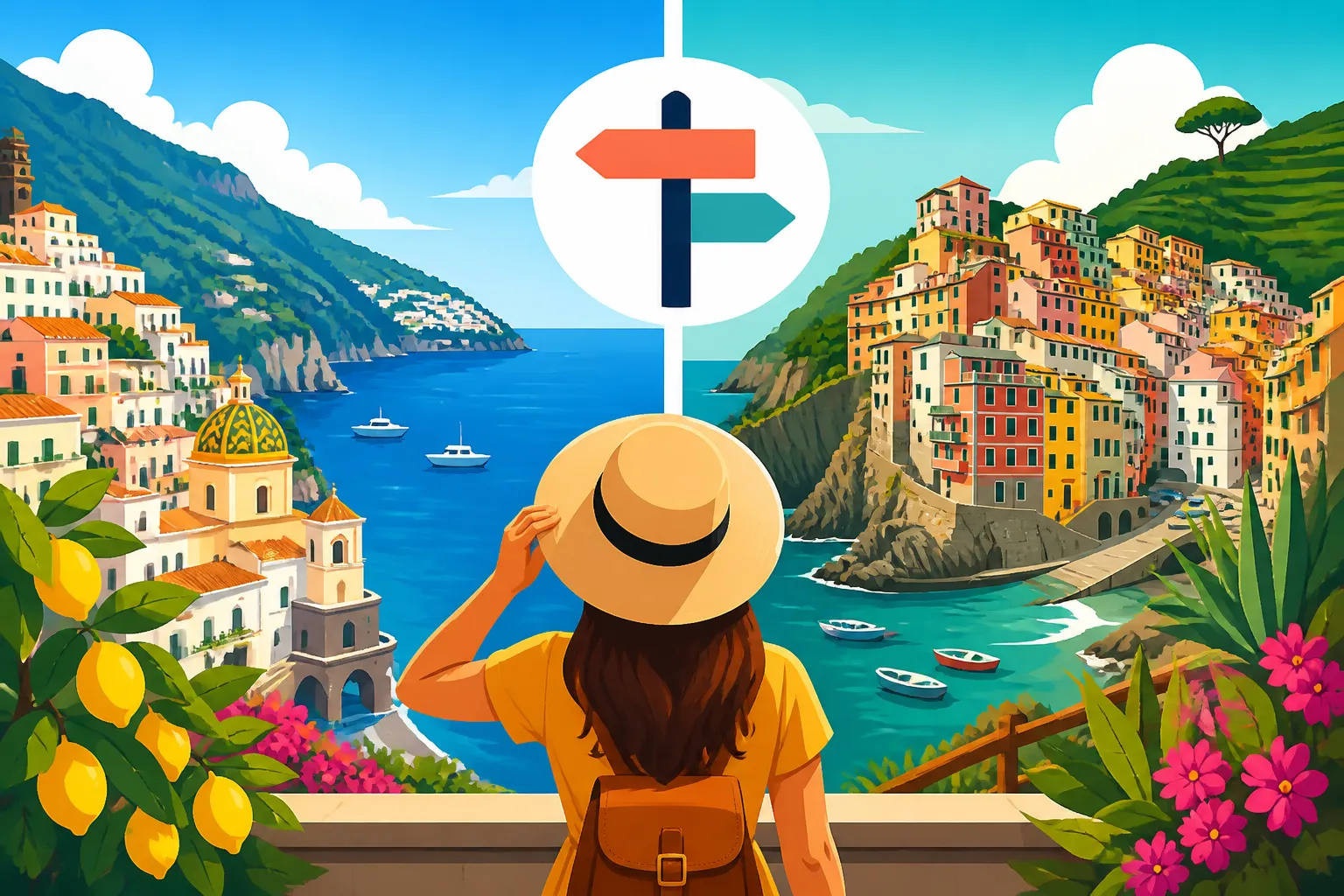
Deciding between the Amalfi Coast and Cinque Terre is a classic travel dilemma that often leaves visitors paralyzed by choice. While both offer stunning Mediterranean vistas and colorful cliffside villages, they provide fundamentally different experiences in terms of logistics, atmosphere, and cost. This guide breaks down these two iconic destinations to ensure you choose the one that aligns with your travel style and expectations.
Disclosure: This post may contain affiliate links. We may earn a commission at no extra cost to you if you make a purchase through these links. Read full disclosure.
Location and Accessibility: Getting There and Around
One of the first hurdles you’ll face as a traveler in Italy is the sheer logistics of reaching these coastal gems. Cinque Terre is located in the northern region of Liguria, tucked between Genoa and La Spezia. It is exceptionally well-connected by rail, making it a favorite for those who prefer the efficiency of the Italian train system. Most travelers arrive via Florence or Milan, and once you reach the gateway of La Spezia, you transition to the Cinque Terre Express. If you are coming from further away, using a platform like Omio can help you compare the high-speed options against regional milk-runs to save both time and money. For a deeper look at the rail system, you might find our guide on High-Speed Trains in Italy: Trenitalia, Italo, Routes, and Savings particularly useful.
The Amalfi Coast, situated in the southern region of Campania, is a different beast entirely. It’s located south of Naples and Sorrento, and reaching it requires a bit more grit. There are no direct train lines that run through the heart of the Amalfi Coast; instead, you’ll likely take a train to Salerno or Sorrento and then rely on the SITA bus network or private ferries. For many, the dream of driving a vintage Vespa along the coast is high on the bucket list, but the reality involves hair-raising hairpin turns and aggressive local drivers. Before you commit to a rental, I highly recommend reading up on Renting a Car in Italy: ZTLs, Insurance, and Driving Tips to understand the complexities of the Limited Traffic Zones (ZTL) that plague these narrow roads.
Once you are actually "on-site," the way you move between towns differs significantly. In Cinque Terre, the five villages—Riomaggiore, Manarola, Corniglia, Vernazza, and Monterosso—are minutes apart by train. You can easily hop from one to the next with a day pass. On the Amalfi Coast, travel is much slower. A bus ride from Positano to Amalfi might take 40 minutes on a good day, but during the peak summer months, traffic can turn that into a two-hour ordeal. Ferries are the preferred way to travel here, offering a scenic and much faster alternative to the clogged roads.
Atmosphere and Vibe: Hiking Trails vs. High-End Glamour
The "vibe" of these two regions is perhaps the most significant differentiator. Cinque Terre feels rugged, grounded, and unpretentious. Historically, these were fishing and wine-producing villages, and that rustic charm still permeates the air. It is a hiker’s paradise. The Blue Trail (Sentiero Azzurro) connects the villages and offers some of the most rewarding views in Europe. You’ll see people in trekking gear, carrying backpacks, and stopping for a slice of focaccia. If your idea of a perfect vacation involves active exploration and a casual dress code, the northern coast is for you. You can check out more on the regional differences in our article How to Choose Between Northern and Southern Italy.
Conversely, the Amalfi Coast is the epitome of "La Dolce Vita." This is the land of luxury boutiques, five-star hotels perched on cliffs, and high-end beach clubs. Towns like Positano and Ravello have a polished, jet-set feel that attracts celebrities and honeymooners alike. While there is a famous hiking path called the Path of the Gods (Sentiero degli Dei), the primary focus here is on leisure—long lunches at seaside trattorias, boat excursions to Capri, and evening aperitivos in the piazza. It’s a place where you’ll want to dress up a bit more for dinner.
The crowds also feel different. Because Cinque Terre is so concentrated, the villages can feel incredibly claustrophobic during the day when the cruise ships dock at La Spezia. However, once the sun sets and the day-trippers leave, the villages regain a quiet, magical stillness. The Amalfi Coast is more spread out, so while it is arguably busier in terms of sheer numbers, the crowd is distributed across larger towns like Sorrento, Amalfi, and Vietri sul Mare. Regardless of which you choose, managing your expectations regarding tourist volume is key.
Accommodations and Dining: Where to Sleep and What to Eat
Finding a place to stay requires two very different strategies. In Cinque Terre, you won't find many massive resorts or international chains. Instead, the market is dominated by small guesthouses, apartments, and family-run "pensione." I usually head to Booking.com to filter for properties with sea views, but be warned: "sea view" in Cinque Terre often means climbing 200 stairs with your luggage. Monterosso is the only village with a proper beach and larger hotel structures, making it the best choice for families or those with mobility issues.
The Amalfi Coast offers a much wider spectrum of accommodation, ranging from modest B&Bs in the hills to world-famous luxury estates. Booking.com is again the hero here, especially for finding villas in towns like Praiano or Minori, which are slightly more affordable than Positano. If you are staying in the heart of the action, be prepared for high price tags. The cost of a room in Positano during July can easily quadruple the price of a similar room in Cinque Terre. For those on a tighter budget, staying in Sorrento or Salerno and commuting into the coast is a common veteran expat strategy.
Gastronomy is another area where the regions diverge beautifully. In Cinque Terre, it’s all about the pesto. Liguria is the birthplace of Pesto alla Genovese, and you’ll find it served over trofie pasta with green beans and potatoes. The seafood is fresh and simple, often served in a "fritto misto" cone to eat while walking. On the Amalfi Coast, the lemon is king. The Sfusato Amalfitano lemons are huge, sweet, and used in everything from scialatielli pasta to the famous Delizia al Limone dessert. The seafood here is often more elaborate, featuring the daily catch cooked "all’acqua pazza" (in crazy water). To get a better sense of how to budget for these meals, take a look at our guide on Cost of Living in Italy 2026: Budgeting for Expats.
| Feature | Cinque Terre | Amalfi Coast |
|---|---|---|
| Primary Transport | Train and Hiking | Ferry and Bus |
| Vibe | Rugged, Active, Casual | Glamorous, Luxurious, Relaxed |
| Key Towns | Vernazza, Manarola, Monterosso | Positano, Amalfi, Ravello |
| Food Specialty | Pesto, Focaccia, Anchovies | Lemons, Seafood, Limoncello |
| Accessibility | Very High (Train-centric) | Moderate (Road/Sea-centric) |
| Best Activity | Hiking the coastal trails | Private boat tours and beach clubs |
| Budget Level | Mid-range | High/Luxury |
Practical Planning and Activities: Making the Final Call
If you are still on the fence, think about the specific activities you want to fill your days with. In Cinque Terre, the "must-do" is the hike between villages. If you are a fan of organized experiences, I recommend checking GetYourGuide for guided vineyard tours. The vineyards here are "heroic," meaning they are grown on incredibly steep terraces that require manual labor and small monorail systems to harvest. Tasting the local Sciacchetrà dessert wine while overlooking the Ligurian Sea is an experience you won't soon forget.
On the Amalfi Coast, the quintessential experience is getting out on the water. A private or semi-private boat tour is the only way to truly appreciate the scale of the cliffs. You can use GetYourGuide to book a full-day excursion to the island of Capri, which usually includes a visit to the Blue Grotto and time to explore the town’s high-end boutiques. For those who prefer land-based culture, the town of Ravello offers the stunning Villa Cimbrone and Villa Rufolo, which host world-class music festivals in the summer. If you’re coming from Rome for just a day, you should consult our guide on Best Day Trips From Rome by Train to see if the Amalfi Coast is feasible for your timeline.
Timing is also crucial. Both regions are essentially "closed" during the winter. From November to March, many hotels and restaurants shut down, and ferry services are suspended due to rough seas. The hiking trails in Cinque Terre can also become dangerous and are often closed during rainy weather. The sweet spot for both is May/June or September/October. During these shoulder seasons, the weather is warm enough for swimming but the oppressive heat and the worst of the crowds have dissipated. If you find yourself in the middle of a crowded summer trip, you might want to learn How to Find Uncrowded Beaches in Italy to escape the madness.
Ultimately, the choice comes down to your personality. If you want to sweat on a trail, eat focaccia on a pier, and jump into the water from a rocky outcrop, go to Cinque Terre. If you want to sit under a striped umbrella, sip a spritz, and marvel at the most dramatic coastline in the world from the deck of a boat, the Amalfi Coast is waiting for you. Many people try to see both in one trip, but given they are on opposite sides of the country, I always advise picking one and doing it deeply. If you are traveling with a young family, be sure to check How to Plan a Stress-Free Family Trip to Italy before you decide, as the stairs in both regions can be a challenge with strollers.
Disclaimer
This guide is intended for informational purposes only. Travel conditions, transportation schedules, and local regulations in Italy can change rapidly. While we strive to provide the most accurate and up-to-date advice based on personal experience and real-time data, always verify specific details with official sources or local service providers before making bookings or embarking on your journey. We are not responsible for any changes in service, closures, or travel disruptions that may occur.