How to Reach Italy’s Hilltop Borghi by Public Transport
You step off a regional train at a quiet station in Umbria or Tuscany, look up, and see the village you came for perched on a ridge with no obvious way up. The bus timetable on the wall is in Italian, the ticket office is closed, and the bar next door has run out of tickets. This guide explains how to plan the climb with confidence.
Disclosure: This post may contain affiliate links. We may earn a commission at no extra cost to you if you make a purchase through these links. Read full disclosure.
Why Reaching Hilltop Borghi Feels So Hard
The Station Is Rarely in the Village
Nobody warns you about this. Medieval towns were built high for defence, and the railways came centuries later along the valley floors. So the station called “Montepulciano” sits in the countryside, a good distance below the town. “Assisi” station is in Santa Maria degli Angeli, down on the plain. Orvieto’s station is at the foot of the tufa cliff. Even when the station shares the village’s name, you often still have a ride ahead of you.
My first time, I assumed “Montepulciano Stazione” meant I could stroll into town. I spent a long afternoon at the stop learning otherwise. Before you book any train, assume there is a second leg, and find out what that leg looks like.
Rural Bus Timetables Follow Schools, Not Tourists
Most buses that climb to hilltop villages exist to carry students and commuters. Tourist convenience is not the reason they run. That one fact explains almost everything that frustrates visitors. Departures cluster early in the morning, when pupils head to secondary schools in the bigger towns, and again around 1:00 to 1:30 PM, when those pupils come home. Between roughly 1:30 PM and 4:30 PM, many rural routes go almost silent. Service picks up a little in the late afternoon for workers, then fades early in the evening.
So the busiest windows for catching a bus are early morning and around 1:00 to 1:30 PM. If you miss the lunchtime run, you may wait until after 4:30 PM for the next one. Plan your morning so you are at the stop before that midday wave ends. Do not arrive at 2:00 PM expecting a bus to be waiting.
Timetable Vocabulary That Trips People Up
Italian bus timetables use a few words you must recognise:
- Feriale: working days. This usually includes Saturday.
- Festivo: Sundays and public holidays. Service is often much thinner, and some routes do not run at all.
- Scolastico: runs only during the school term.
- Estivo or non scolastico: the summer or holiday timetable. It is often reduced.
- Capolinea: the end of the line, where the bus starts or terminates.
A route marked “scolastico” can disappear completely in July and August, which is exactly when most visitors arrive. Always check which version of the timetable applies to your travel dates. For holiday weeks, read How to Plan Travel Around Italian Public Holidays.
Step-by-Step: Planning Your Journey to a Hilltop Village
Build the Route From the Top Down
The most reliable approach is to start with the village and work backwards.
- Identify the regional bus operator. Tuscany is served by Autolinee Toscane, Umbria largely by Busitalia, and Lazio by Cotral. The operator’s own website or app holds the authoritative timetable.
- Find the nearest bus hub. This is usually a larger town or railway station, such as Orvieto, Siena, Poggibonsi, Perugia or Chiusi.
- Check the return bus first. Find the last departure back down on your travel day. That time decides how long you can stay.
- Choose the outbound bus. Pick one that gives you enough time in the village before that return.
- Only then book the train. Arrive at the hub with a comfortable margin for your bus.
Booking platforms such as Omio are useful for comparing train and long-distance coach options to the hub town. They can also show some regional connections in English. For the final rural bus leg, though, cross-check against the local operator’s timetable, because small route changes do not always reach aggregators quickly. For the rail side of the trip, see Regional Trains in Italy: How to Use Them and Save.
Buying and Validating Bus Tickets
On many rural routes you cannot count on buying a ticket from the driver. Where onboard sales exist, they often cost more, and some drivers simply will not sell one. The traditional places to buy are:
- Tabaccherie, marked by the blue or black “T” sign.
- Edicole, the newsstands.
- Station bars near the bus stop.
- The operator’s official app, which is increasingly the easiest option for visitors.
Buy your return ticket at the same time as your outbound ticket. The village tabaccheria may be closed for the long lunch break or on Sunday. Once on board, validate a paper ticket in the machine near the door. An unvalidated ticket counts the same as no ticket if an inspector boards. The habit is identical to trains; see How to Validate a Regional Train Ticket in Italy.
Reading the Bus Stop Itself
Rural bus stops can be nothing more than a yellow sign on a lamp post, sometimes with no shelter and no timetable. Ask at the bar beside the stop which side of the road buses leave from for your direction. The locals there know. Stand visibly at the stop and raise a hand as the bus approaches. On some country roads, drivers will not stop unless they see you signal.
Real Routes to Famous Hilltop Towns
Common Approaches Compared
The table below summarises how travellers typically reach several well-known hilltop villages without a car. Patterns can change, so always confirm with the operator before you set out.
| Village | Usual Hub | Final Leg | Watch Out For |
|---|---|---|---|
| San Gimignano | Poggibonsi or Siena | Autolinee Toscane bus | Crowded midday buses in high season |
| Civita di Bagnoregio | Orvieto | Cotral bus to Bagnoregio, then walk to the footbridge | Very thin Sunday service |
| Orvieto | Orvieto station | Funicular up the cliff | Funicular maintenance closures |
| Assisi | Assisi station | Busitalia bus up to town | The station is far below the old town |
| Montepulciano | Chiusi or Montepulciano station | Autolinee Toscane bus | Infrequent links from the station |
| Spello | Spello station | Short uphill walk | Steep streets with luggage |
San Gimignano and Civita di Bagnoregio
San Gimignano is the classic example. Trains run to Poggibonsi, and a regular bus climbs from the area outside the station to Porta San Giovanni. In summer, the buses that coincide with the late-morning tour crowd can fill up. Going early makes a real difference. The full walkthrough is in How to Visit San Gimignano Without a Car.
Civita di Bagnoregio involves more planning. Cotral buses leave from Orvieto, including from Piazza Cahen at the top of the funicular, and run to Bagnoregio. From there you walk to the viewpoint and the long pedestrian bridge into Civita. The bus pattern follows the school rhythm described above. If you miss the lunchtime return around 1:00 to 1:30 PM, expect a long wait until after 4:30 PM. On Sundays, check whether your bus runs at all before you commit.
Assisi, Spello and Umbria’s Valley Towns
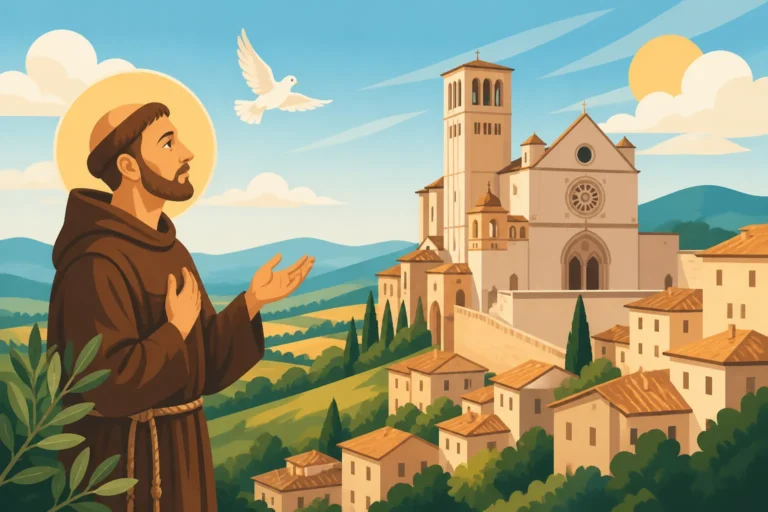
Umbria is kinder to car-free travellers. Several hill towns, including Spello, Foligno’s surrounding villages and Assisi, sit along the Foligno to Perugia rail line. Spello’s station is close enough to walk, though the cobbled streets climb hard. Assisi needs a Busitalia bus from the station to the old town. Buses here run more often than on remote Tuscan routes because the town draws pilgrims year-round. For timing your visit around the basilica, see How to Visit Assisi and the Basilica of St. Francis.
If you want to see several of these towns, basing yourself in one valley town and using the train is far less stressful than moving every night. The trade-offs between bases are covered in Where to Stay in Umbria: Perugia, Assisi, and the Valleys.
Making It Work: Practical Strategies and Backup Plans
Stay Overnight in the Village
The single biggest upgrade to any hilltop trip is sleeping there. Day-trippers race the last bus down and see the village at its most crowded. Overnight guests get the quiet evening passeggiata and the soft morning light, and they can catch the early school-run bus out without stress. When searching on Booking.com, check the property’s exact location on the map. Some listings with the village’s name are actually down in the valley, which brings back the very problem you were trying to solve. For the bigger picture on unhurried itineraries, see Slow Travel in Italy: Staying Longer in One Place.
When a Guided Tour Makes Sense
There is no shame in using a tour for the harder villages. If you want to see several remote borghi in a single day, or you are travelling on a Sunday when buses barely run, a small-group excursion booked through GetYourGuide can link places that public transport simply cannot connect in one day. I treat tours as a tool for specific gaps. They do not replace the bus everywhere, but they can rescue a day when timetables will not cooperate.
Taxis, Strikes and Signal Problems
Keep a few backup plans in your pocket:
- Local taxis: Many small towns have only one or two licensed taxis, often run by a single family. Ask your accommodation or the station bar for the number before you need it. Do not expect to hail one on the street.
- Strike days: Regional bus and rail strikes are announced in advance. Guaranteed services usually cover the commuter peaks only. See Strikes in Italy: How Sciopero Days Work and How to Rebook.
- Offline timetables: Download or screenshot the timetable and your tickets. Mobile signal can be patchy in deep valleys and on ridgelines.
- The walk option: Some villages, such as Spello or Orvieto via the footpaths, can be reached on foot from the station. Only attempt it in cool weather with light luggage.
A Realistic Day Plan
Here is the rhythm that works for me on a typical weekday:
- Take an early train to the hub town.
- Catch a morning bus up to the village.
- Explore during the late morning while the light is good.
- Have lunch before the 1:00 to 1:30 PM return wave, or commit to staying until after 4:30 PM.
- If you stay, enjoy a slow lunch and an afternoon wander. Accept that no bus will come before then.
- Return to the hub and take an evening train.
Once you accept the school-run logic behind rural timetables, hilltop borghi stop feeling unreachable. For ideas on which villages to try next, browse Italy’s Most Beautiful Borghi (Small Villages) to Visit.
Disclaimer
This article is for general informational purposes only and does not constitute professional advice. Laws, prices and regulations vary by location and change over time. Consult a qualified professional for guidance on your specific situation.