Mobile Data and eSIMs for Travel in Italy
Oh, the joy and exasperation of arriving in Italy! You've landed, you're buzzing with excitement, but then reality hits: how do you actually stay connected? It’s not just about posting stunning photos to make your friends jealous; it’s about navigating those charmingly confusing streets, translating menus, finding that perfect trattoria, and, heaven forbid, handling an actual emergency. This guide is here to walk you through the labyrinth of mobile data options in Italy, focusing on both traditional physical SIM cards and the increasingly popular eSIMs, so you can pick the best way to keep your digital lifeline humming without the usual expat headaches.
Disclosure: This post may contain affiliate links. We may earn a commission at no extra cost to you if you make a purchase through these links. Read full disclosure.
The Connectivity Conundrum in Italy for Travelers
Let's be real, stepping off that plane in Fiumicino or Malpensa, the last thing you want is to be immediately plunged into a digital blackout. The romantic idea of getting lost is lovely until you're actually lost, hangry, and your battery is at 5%. Italy is a beautiful, old country, but its infrastructure and bureaucracy can sometimes feel equally ancient, especially when it comes to getting something as simple as a phone working.
Why Staying Connected is Crucial in Italy
Think about it: maps are indispensable. Google Maps, Apple Maps, or even the local transport apps – they're your digital compass in a country where street names change on a whim and historical centers can be a maze. Forget the days of unfolding paper maps; you need real-time navigation. And then there's the language barrier. While many Italians in tourist areas speak some English, venture off the beaten path and you'll quickly rely on Google Translate to decipher menus, ask for directions, or even just order your morning cappuccino senza lattosio.
Beyond the practical, there's the sheer convenience and peace of mind. Want to book a last-minute train ticket? Check train schedules on Omio? Find out when the Uffizi Gallery closes? All of these require data. And if you're like me, you'll want to share those incredible moments with friends and family back home, whether it’s a panoramic shot of the Dolomites or a video of a bustling Roman market. Plus, let's not forget safety. In an emergency, having a working phone is non-negotiable, whether you're calling a taxi, your travel insurance, or even the emergency services. Reliable access to information about local services and points of interest can make or break your trip. If you're planning on exploring the country by rail, checking train schedules and purchasing tickets via an app like Omio will definitely make your journey smoother.
Traditional SIM Cards vs. The Rise of eSIMs
For years, the standard approach for travelers was to grab a local physical SIM card. You'd land, hunt down a phone shop, present your documents, and after a bit of faff, you'd have a local number and data. It worked, but it often came with a side of bureaucracy and time spent that you'd rather spend sipping Aperol Spritz.
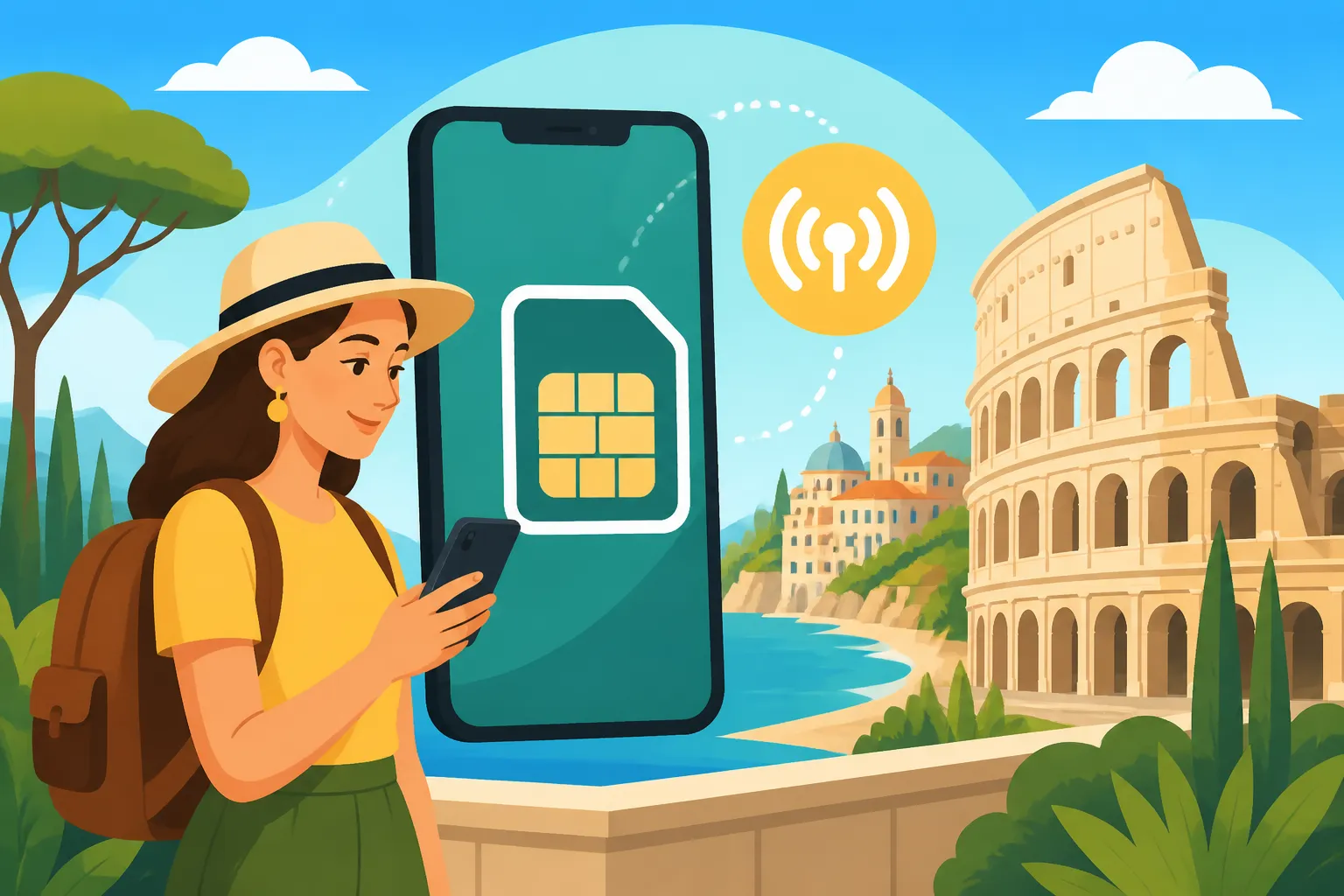
Enter the eSIM. This isn't a physical card you insert; it's an embedded SIM, a small chip already built into most newer smartphones. Instead of swapping plastic, you simply download a digital "profile" from an eSIM provider. It's essentially a virtual SIM card. This technology has been a game-changer for digital nomads and frequent travelers, promising instant connectivity and less hassle. But is it always the best option for Italy? That's what we're here to figure out. It’s a bit like choosing between a classic Fiat 500 you have to crank start or a sleek, modern electric scooter – both get you around, but one requires a bit more hands-on effort.
Decoding Traditional Italian SIM Cards
Ah, the good old physical SIM card. It's a tried and true method, and for many, still the most familiar. But just because it's familiar doesn't mean it's entirely straightforward in Italy. Expect a bit of a dance with paperwork, but once it's done, you're typically good to go.
Where to Buy a Physical SIM Card in Italy
Your main options are generally at the airport, dedicated phone stores, or sometimes even larger supermarkets.
- Airports: When you first arrive, you'll likely spot kiosks or small stores from major providers like TIM, Vodafone, or WindTre right at the airport, for example, at Rome's Fiumicino Airport (FCO) or Milan Malpensa (MXP). This is often the easiest and most convenient option immediately after landing. The staff here are usually more accustomed to dealing with tourists and foreign passports, and they might even speak a bit of English, which is a massive relief. The downside? You often pay a premium for this convenience. The plans might be slightly more expensive, and activation fees can be higher than what you'd find in a city store. But for immediate connectivity, it's often worth it.
- Official Phone Stores: In any Italian town or city, you'll find standalone stores for TIM, Vodafone, WindTre, and Iliad. These are typically where you'll get the best deals and a wider range of plans. The staff are knowledgeable about their products, but be prepared for a potential language barrier if you're outside a major tourist hub. You'll definitely need your passport and probably your codice fiscale (Italian tax code) for registration. More on that shortly! They can also help with any setup issues, which can be invaluable if you're not tech-savvy.
- Supermarkets/Hypermarkets: Some larger supermarkets or electronics stores might sell SIM cards, particularly for budget operators. While this can sometimes be cheaper, the staff usually aren't equipped to help with activation, registration, or troubleshooting. It's really only an option if you're very comfortable setting things up yourself and have all your documentation in order. I’d personally stick to the official stores for peace of mind.
Italian Mobile Operators: A Quick Rundown
Italy has a few major players, each with its own strengths and quirks.
- TIM: Often considered one of the largest and oldest operators, TIM generally boasts excellent coverage, particularly in more rural or mountainous areas. Their tourist plans can be quite competitive, offering a decent chunk of data for a reasonable price. You'll find TIM stores everywhere. They have a reputation for solid performance, though their customer service can sometimes be a bit… Italian (meaning, charmingly inefficient at times, depending on who you get).
- Vodafone: Another major network with very strong coverage, especially in urban centers and along major transportation routes. Vodafone plans tend to be slightly pricier than some competitors, but they often come with robust data allowances and good international roaming options if you're planning trips outside Italy. Many expats find Vodafone's English-speaking customer service options a bit more accessible.
- WindTre: This is a merger of two previous operators, Wind and Tre. They've invested heavily in their network, and their coverage is now generally very good across most of Italy. WindTre often offers attractive deals, especially for new customers, and their pricing can be very competitive. They're a popular choice for budget-conscious travelers and residents alike.
- Iliad: The newest major entrant to the Italian market, Iliad disrupted things with incredibly cheap plans. Their philosophy is simplicity and low cost. While their network coverage has improved dramatically since their launch, it's still occasionally seen as slightly less extensive than TIM or Vodafone in very remote areas. However, for most urban and well-trafficked tourist routes, Iliad is a fantastic value proposition. Just be aware that their customer service model is heavily online, which might not suit everyone.
Activation and Registration Hurdles
This is where the bella figura sometimes falls apart for foreigners. Buying a physical SIM card in Italy isn't like popping into a convenience store in some other countries and walking out with an activated card. Italy, bless its bureaucratic heart, requires proper registration.
-
Documents, Documents, Documents: You absolutely must have your passport with you. A photocopy often isn't enough; they want to see the original. The staff will take a copy for their records. The second crucial document is your Codice Fiscale, which is Italy's tax code. While some airport kiosks might let you slide without one for a short-term tourist SIM (using your passport details instead), most official stores for any reputable operator will insist on it. If you plan on staying longer, or if the store insists, you can get a Codice Fiscale relatively easily at any Agenzia delle Entrate office. It's a single sheet of paper, but it's essential for virtually any administrative task in Italy, including getting a phone contract or even opening a bank account. Check out our guide on How to Get a Codice Fiscale in Italy (and Why You Need One) for more details.
-
The Wait: Once you've presented your documents and chosen a plan, there's usually a short wait for activation. It's rarely instantaneous. The process involves the store staff entering your details into the national system, which can take anywhere from a few minutes to an hour or so, depending on the system's speed and how busy they are. Don't expect to just walk in and out. Plan for at least 30-60 minutes for the whole process.
-
Language Barrier: Unless you're in a highly touristy area, don't assume the staff will speak fluent English. Knowing a few basic Italian phrases related to phone plans, data, and activation will go a long way. Or, better yet, have Google Translate ready on your existing device before you even step into the store!
Embracing the Future: eSIMs for Italy Travel
Now, let's talk about the elegant solution that many modern travelers are gravitating towards: the eSIM. This little piece of digital wizardry can save you a lot of fumbling and frustration, making your arrival in Italy much smoother.
What is an eSIM and How Does It Work?
As I mentioned before, an eSIM is an embedded Subscriber Identity Module. Instead of a physical chip that you insert into a slot, the "SIM" functionality is built directly into your phone's hardware. Think of it like a blank slate that can be programmed digitally. When you purchase an eSIM plan, you're essentially downloading a profile to this embedded chip via a QR code or an activation code.
Most flagship smartphones released in the last few years (iPhone XS onwards, many Samsung Galaxy models, Google Pixel phones, etc.) are eSIM compatible. It works seamlessly alongside your physical SIM, allowing your phone to be a "dual SIM" device. This means you can keep your home country's physical SIM active for calls and texts (or emergencies) while using the Italian eSIM for data, without ever having to physically swap cards. No more fiddling with tiny trays and worrying about losing your home SIM!
Advantages of Using an eSIM in Italy
The benefits of going digital with your connectivity are quite compelling, especially for short-term visits to Italy.
- Instant Activation, Anywhere: This is arguably the biggest selling point. You can purchase and activate an eSIM plan from your couch at home before you even leave, or while waiting for your luggage at the airport, or even from your hotel room. There's no need to find a physical store, queue up, or deal with paperwork. As soon as you land, you can connect.
- Avoid Bureaucracy: No passports, no codice fiscale, no forms to fill out in a language you don't fully understand. The entire process is handled online, making it incredibly convenient for travelers who just want to get connected without the hassle.
- Dual SIM Functionality: This is huge for many. You can keep your primary number active on your physical SIM to receive important calls or texts from home, while the eSIM handles all your data needs in Italy. This means no missed messages from your bank or family, and you avoid expensive international roaming charges on your primary line.
- Flexibility and Choice: eSIM providers often offer a wide range of plans, from short-term data bundles to longer-term options, allowing you to tailor your connectivity to your exact trip duration and data needs. You can switch providers easily, too, if you find a better deal or need more data – no unlocking phones or swapping tiny pieces of plastic.
- Eco-Friendly: A small, but nice bonus: no plastic SIM card means less waste. Every little bit helps!
Choosing an eSIM Provider for Italy
While traditional mobile operators like TIM, Vodafone, and WindTre are now offering eSIM options in Italy, for tourists, it's often easier to go with a dedicated global eSIM provider. These companies specialize in offering easy-to-use data plans for travelers worldwide.
- Airalo: A very popular choice among expats and travelers. Airalo offers various regional and country-specific eSIMs, including several attractive packages for Italy. Their app is user-friendly, and activation is typically a breeze via QR code. You can choose from different data allowances and validity periods. Their coverage generally uses one of the major Italian networks, providing reliable service.
- Holafly: Another strong contender, Holafly is known for offering unlimited data plans in many countries, including Italy. This can be a huge peace of mind for heavy data users who don't want to worry about running out. While often a bit pricier than limited data plans, the unlimited aspect is a definite draw for some.
- Other Providers: Companies like Nomad, GigSky, and others also offer competitive eSIM plans for Italy. It's worth comparing their offerings, checking reviews, and looking at the specific network they partner with in Italy (as not all eSIMs are created equal in terms of local network access).
When choosing, consider:
- Data Allowance: How much data do you realistically need? Browsing maps and social media is different from streaming videos.
- Validity Period: Do you need data for 7 days, 15 days, or a month? Match the plan to your trip.
- Network Coverage: Most reputable eSIM providers will use one of Italy's main networks (TIM, Vodafone, WindTre), so coverage should be reliable in most areas.
- Price: Compare the cost per GB and the overall value for your needs.
- Customer Support: Having access to quick support can be vital if you encounter any activation issues.
Comparing Your Options: SIM vs. eSIM for Italy
Okay, so you've seen the rundown for both physical SIM cards and eSIMs. Now, let's stack them against each other so you can make an informed decision about which option is best for your Italian adventure.
Cost Analysis: SIM Card vs. eSIM Plans
This is often the deciding factor for many travelers, and it's a bit of a mixed bag, to be honest.
- Physical SIM Cards: Generally, if you're staying for a longer period (a month or more) and are willing to deal with the registration process, a local physical SIM from an Italian operator like Iliad or WindTre might offer the best value for money in terms of data per euro. You can sometimes find monthly plans for around €10-€20 that include a generous amount of data (50GB-100GB or even more) and unlimited calls/SMS within Italy. However, remember the initial activation fees, which can add another €5-€10 to the upfront cost.
- eSIM Plans: For shorter trips (7-15 days), or if convenience is your top priority, eSIMs are often comparable in price, or even cheaper, than the tourist-specific physical SIMs you find at airports. For example, you might find a 10GB plan for 30 days for around $15-$25 (or around €14-€23). While the cost per GB might sometimes be slightly higher than a long-term local physical SIM, the lack of activation fees, physical store visits, and bureaucratic hurdles often makes the overall value proposition very strong for short-term visitors. Unlimited data eSIMs, like those from Holafly, are fantastic for peace of mind but usually come at a premium price, potentially starting from $30-$40 for a week.
In summary:
- Best for long stays (1 month+), budget-conscious, willing to deal with bureaucracy: Physical SIM from a local provider like Iliad or WindTre.
- Best for short stays (under 1 month), convenience, instant connectivity: eSIM from a dedicated provider like Airalo.
Convenience and Flexibility: Which Wins?
Without a doubt, eSIMs take the crown here. The sheer ease of purchasing and activating a plan from anywhere, at any time, without needing to speak Italian or present documents, is unparalleled. Imagine landing in Italy, turning on your phone, and being instantly connected – no searching for stores, no queuing, no language barriers. It's a frictionless experience that vastly reduces travel stress.
Physical SIM cards, on the other hand, require a dedicated effort. You need to locate a store, go during opening hours, potentially wait in line, and complete the registration. While not insurmountable, it's a time commitment and can be a source of frustration, especially after a long flight. The flexibility of having dual SIM capability with an eSIM also means you're not locked into one number or one network; you can easily add another eSIM if your needs change or if you travel to another country. For example, if you've used Booking.com to secure your accommodation, you can instantly confirm details or communicate with your host without needing to find Wi-Fi.
Coverage and Reliability: Are They Different?
In terms of actual network coverage and reliability within Italy, there isn't a significant difference between a physical SIM and an eSIM. This is because most reputable eSIM providers "roam" on one of the major Italian networks (TIM, Vodafone, WindTre). So, if your eSIM uses the TIM network, your coverage will be as good as if you had bought a physical TIM SIM card.
The critical factor isn't whether it's a physical SIM or an eSIM, but which underlying Italian network the service uses. All three major networks (TIM, Vodafone, WindTre) offer excellent 4G/5G coverage in urban areas, tourist hotspots, and along major roads and train lines. You might notice slight differences in very remote villages or mountainous regions, but for the vast majority of travelers, any of these networks will provide reliable service. Iliad, while improving, might have marginally less coverage in the most isolated spots, but for most travel purposes, it's perfectly fine.
So, when comparing, focus on the provider's reputation and the network they utilize, rather than the format of the SIM itself.
Here's a quick comparison table to help you visualize:
| Feature | Traditional Physical SIM Card | eSIM (e.g., Airalo, Holafly) |
|---|---|---|
| Purchase & Activation | In-store, requires passport & codice fiscale, waiting time | Online, instant download via QR code, no documents needed |
| Convenience | Lower convenience, physical store visit, potential language barrier | High convenience, activate from anywhere, no language issues |
| Dual SIM | Possible if your phone supports it (hybrid slot or two physical SIMs) | Common feature (physical SIM + eSIM), allows keeping home number |
| Cost (Short-term) | Often higher tourist rates at airports, activation fees | Competitive for short stays, no activation fees |
| Cost (Long-term) | Potentially better value for money with local monthly plans (1 month+) | Can be more expensive for very high data or long-term usage |
| Coverage | Excellent, directly on major Italian networks | Excellent, uses major Italian networks via roaming agreement |
| Flexibility | Locked into one provider until next purchase | Easy to switch plans/providers, buy multiple eSIMs |
| Phone Compatibility | All unlocked phones with SIM slot | Newer smartphone models (iPhone XS+, Pixel 3+, Samsung S20+ etc.) |
Practical Tips for Staying Connected in Italy
Beyond just getting your data, there are a few other tricks and considerations for keeping yourself well-connected and making the most of your mobile device while exploring Italy.
Navigating Wi-Fi Hotspots and Roaming
While having your own mobile data is king, sometimes you'll find yourself needing or wanting to use Wi-Fi, especially if you’re trying to conserve your data allowance.
- Public Wi-Fi: Many hotels, B&Bs, cafes, and restaurants in Italy offer free Wi-Fi for customers. It's generally reliable, though speeds can vary wildly. Always be cautious when using public Wi-Fi networks, especially for sensitive transactions like banking, as they are often less secure. A VPN (Virtual Private Network) can add an extra layer of security if you plan on relying heavily on public Wi-Fi. Many cities also offer limited free public Wi-Fi in central squares or designated zones, but don't count on it being universally available or super fast.
- EU Roaming (for EU/EEA citizens): If you're an EU/EEA citizen, your home mobile plan likely includes "Roam Like At Home" benefits, meaning you can use your data, calls, and texts in Italy at no extra cost, just as you would back home. This is incredibly convenient and often negates the need for a separate Italian SIM or eSIM. However, be mindful of fair usage policies – if you spend too much time roaming, your home provider might eventually impose surcharges. Check your specific plan details before you travel. For non-EU citizens, traditional roaming on your home network will almost certainly be prohibitively expensive. Seriously, don't do it unless it's an absolute emergency – those bills can sting!
Essential Apps for Your Italian Journey
Having reliable data means you can fully leverage some fantastic apps that will enhance your Italian experience.
- Mapping & Navigation: Google Maps or Apple Maps are indispensable. Not just for driving directions, but for walking directions, public transport routes, and finding nearby attractions, restaurants, or pharmacies. You can even download offline maps as a backup.
- Translation: Google Translate is a lifesaver. You can use it to translate text, speech, and even images (like restaurant menus or museum signs). Having instant translation in your pocket dramatically improves communication.
- Transportation: For trains, the Trenitalia and Italo apps are crucial. You can check schedules, book tickets, and store them digitally. For buses and local transport, checking city-specific apps (like ATAC for Rome or ATM for Milan) can be helpful. And of course, for booking trains, buses, and flights across Europe, Omio is a fantastic, user-friendly platform that aggregates options and allows you to book directly.
- Accommodation: Booking.com is a standard for finding and managing hotel or apartment reservations. Many accommodations communicate check-in details or offer local tips directly through the app.
- Tours & Activities: GetYourGuide and Viator are great for discovering and booking last-minute tours, museum tickets, and unique experiences, often with instant confirmation.
- Food & Drink: Apps like TheFork (for restaurant reservations, often with discounts) or TripAdvisor (for reviews) can help you find that perfect meal.
- Communication: WhatsApp is the dominant messaging app in Italy. Many tour operators, B&Bs, and even local shops use it for communication. It's essential for staying in touch with new friends or contacts you make.
Troubleshooting Common Connectivity Issues
Even with the best planning, sometimes things go wrong. Here are a few quick tips if you hit a snag:
- No Service/Data: First, check your phone settings. Is cellular data enabled? Is your eSIM or physical SIM selected as the primary for data? Try restarting your phone. Sometimes a simple reboot can resolve connectivity issues.
- Slow Data: If your data is unusually slow, try toggling airplane mode on and off. This can force your phone to reconnect to the nearest cell tower. If you're in a very crowded area (like a major monument), network congestion might be the cause, so moving to a less dense area might help.
- Activation Problems (eSIM): Double-check that you scanned the QR code correctly or entered the activation code precisely. Ensure your phone is connected to Wi-Fi during the activation process. If issues persist, contact your eSIM provider's customer support – they often have online chat or email support.
- Physical SIM Issues: If your physical SIM isn't working after activation, revisit the store where you bought it, or call their customer service number (if you have another working phone). Make sure the SIM is inserted correctly.
- Need More Data: If you run out of data on your eSIM, most providers allow you to purchase "top-ups" directly through their app. For physical SIMs, you can usually top up online via the operator's website/app, or at a tabaccheria (tobacco shop) or supermarket by buying a recharge voucher.
Staying connected in Italy doesn't have to be a source of stress. By understanding your options and coming prepared, you can ensure your trip is as smooth and digitally connected as possible, allowing you to focus on the truly important things – like which gelato flavor to try next! And trust me, having reliable data will make booking those amazing tours via GetYourGuide or finding your next charming hotel on Booking.com so much easier.
Disclaimer
Please note that telecommunication plans, prices, and regulations in Italy can change. While every effort has been made to provide accurate and up-to-date information, it is always advisable to check the latest offerings directly with service providers or official sources before making any commitments. This guide is for informational purposes only and does not constitute professional advice.