How to Get From Rome Fiumicino Airport to the City Center
Arriving at Rome Fiumicino Airport (FCO) after a long flight can be exhilarating, but let's be honest, it can also be a bit overwhelming, especially if it's your first time navigating Italy. That immediate jolt of "Okay, I'm here, now how do I actually get to my apartment or hotel in the city center?" is a universal expat and tourist experience. Forget about relaxing for a moment; your brain instantly switches to logistics mode. Don't worry, I've been there, fumbling with maps, trying to decipher Italian signs, and just wanting to drop my luggage. This guide is designed to cut through that initial confusion, giving you a clear, empathetic breakdown of every single way to get from Fiumicino straight into the heart of Rome.
Disclosure: This post may contain affiliate links. We may earn a commission at no extra cost to you if you make a purchase through these links. Read full disclosure.
Navigating Fiumicino: Your First Taste of Italian Logistics
Fiumicino Leonardo da Vinci Airport (FCO) isn't just a landing strip; it's a massive, bustling gateway, and your first real introduction to Italian infrastructure. It can feel a little chaotic, especially after a long-haul flight. But once you get your bearings, it's actually quite efficient. Understanding its layout is the first step to a stress-free onward journey.
The Layout and Arrival Experience
When you land at FCO, you'll typically arrive at one of its main terminals. Terminal 1 and Terminal 3 handle the majority of international and domestic flights. If you're coming from outside the Schengen Area, you'll go through passport control, which can sometimes be a test of patience – welcome to Italian bureaucracy! After that, it's off to baggage claim. Keep an eye on the screens for your carousel number. Once you've wrestled your luggage off the belt, you'll clear customs (usually a walk-through unless you have something to declare) and emerge into the arrivals hall.
The arrivals hall itself is a hive of activity. You'll see car rental desks, information points, coffee bars (because, Italy), and various kiosks selling train and bus tickets. It’s vibrant, loud, and sometimes a little disorienting. Take a deep breath. This is where your journey truly begins, and where you'll choose your weapon of choice against Rome's traffic and distance. Resist the urge to follow the first person who offers you a "taxi" – always look for official signs and designated areas, which we'll cover in detail.
Initial Thoughts on Transportation
Before diving into the specifics, it's worth considering what matters most to you right now. Are you on a tight budget after paying for your flight, and every euro counts? Is speed your absolute priority because you've got a crucial meeting or are just plain exhausted? Or perhaps you're traveling with a family, a mountain of luggage, or have accessibility needs, making convenience paramount? Each mode of transport from Fiumicino offers a different balance of these factors.
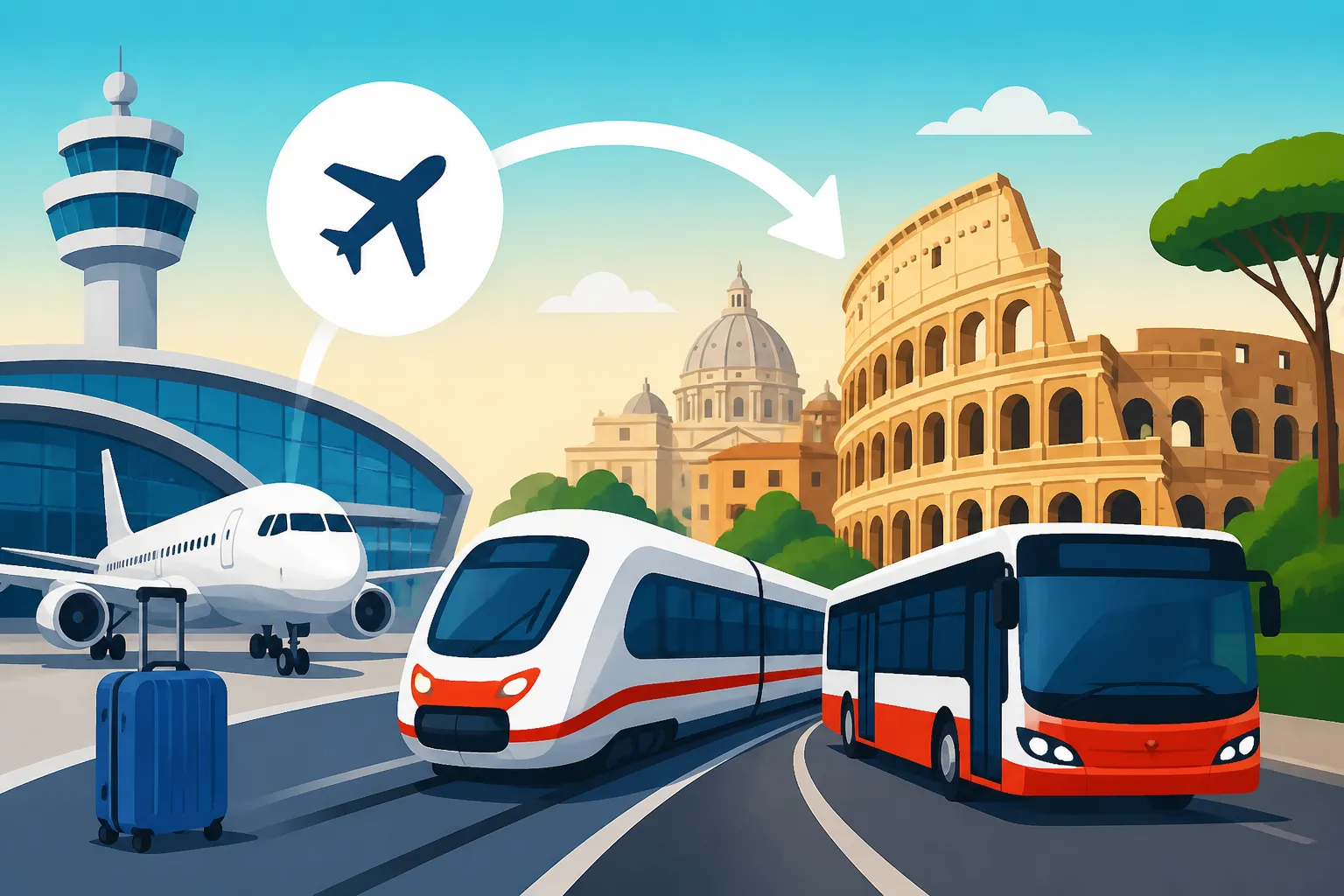
For many years, the journey from FCO to Rome city center felt like a minor ordeal, but the options have improved significantly. You've got express trains, regional trains that hit different neighborhoods, a fleet of airport buses, and of course, taxis and private car services. The "best" option isn't one-size-fits-all; it truly depends on your final destination in Rome, your budget, and your travel style. Let's break down each one so you can make an informed choice that feels right for you.
Direct and Speedy: The Leonardo Express
When speed and directness are your top priorities, the Leonardo Express train is usually the first thing expats and seasoned travelers recommend. It's the most straightforward way to get from Fiumicino straight to Rome's central Termini Station.
What it is and Why it's Popular
The Leonardo Express is a non-stop, dedicated train service that connects Fiumicino Airport to Roma Termini. This is key: non-stop. It means you won't be making any detours or unexpected stops along the way. The journey typically takes about 32 minutes, which, when you're battling jet lag, feels like a blink of an eye. Trains run frequently, usually every 15-30 minutes, from early morning until late evening, making it a reliable option no matter when your flight lands.
Its popularity stems from this reliability and speed. Termini Station is a major transportation hub in Rome, connecting you to the Metro lines (A and B), countless city buses, and regional and high-speed trains to other parts of Italy. So, if your accommodation is near Termini, or easily accessible by metro from there, the Leonardo Express is often your best bet for a quick, hassle-free transfer. It's also usually less susceptible to traffic, a huge plus during peak hours in Rome. Many expats rely on it for weekend trips or when they're Getting Around Italy: Trains, Buses, Flights, and Car Hire.
Buying Tickets and Boarding
Getting your ticket for the Leonardo Express is pretty straightforward, but it's important to do it correctly. You have a few options:
- Online: You can purchase tickets in advance through Trenitalia's official website (the national railway company) or through third-party platforms like Omio. Booking online can save you a few minutes upon arrival and sometimes offers slightly better flexibility with changes. You'll receive a digital ticket, often with a QR code, which you can show on your phone.
- Ticket Machines: Located throughout the airport (follow signs for "Treni" or "Railway"), these self-service machines are multi-lingual and relatively easy to use. They accept cash and credit cards. Just select "Leonardo Express" as your destination.
- Ticket Kiosks/Desks: There are staffed ticket offices near the train platforms at FCO. While sometimes there's a queue, it's a good option if you prefer human interaction or have specific questions.
Crucial Step: Validation! If you purchase a physical ticket (from a machine or kiosk), you must validate it before boarding the train. Look for small green or yellow machines on the platforms. Insert your ticket into the slot until you hear a stamp or see a mark. Failure to validate can result in a hefty fine, and Italian train conductors are not usually lenient with tourists who claim ignorance. It’s one of those uniquely Italian quirks you quickly learn. Digital tickets purchased online or via apps usually don't require physical validation, as they're time-stamped upon purchase for a specific travel window.
Once validated, head to the platforms. The Leonardo Express departs from its own dedicated platforms within FCO (usually Platform 23 or 24), clearly signposted from the arrivals hall.
Pros and Cons
Like any travel option, the Leonardo Express has its ups and downs:
Pros:
- Speed: At 32 minutes, it's the fastest way to Termini, hands down.
- Reliability: It runs frequently and is not affected by road traffic, making delays rare.
- Directness: Non-stop service to the central transportation hub.
- Comfort: Modern, air-conditioned trains with luggage racks.
- Ease of Use: Well-signposted from the airport, and tickets are easy to purchase.
Cons:
- Cost: At €14 per person, it's one of the more expensive public transport options. If you're a family of four, this can quickly add up.
- Destination Limitations: It only goes to Termini. If your final destination is in Trastevere, Ostiense, or another area not directly served by Termini's metro, you'll need an additional connection, adding time and potentially cost.
- Crowds: During peak travel times, trains can get quite crowded, especially during tourist season.
For many, the peace of mind and speed justify the cost, particularly after a long flight. It's truly a direct shot to the heart of Rome's transit network.
Budget-Friendly Alternatives: Regional Trains and Buses
If the Leonardo Express's price tag makes your wallet wince, or if Termini isn't your ideal drop-off point, fear not! Rome offers several more economical options that might even get you closer to your final destination in certain neighborhoods.
Regional FL1 Train
This is often overlooked, but the regional FL1 train is a fantastic alternative, especially if you're staying in areas like Trastevere, Testaccio, Ostiense, or the Tiburtina area. Unlike the Leonardo Express, the FL1 is a local commuter train that makes several stops along the way.
Route and Stops: The FL1 train departs from the same Fiumicino Airport train station as the Leonardo Express, usually from a different platform (check the signs for "Treni Regionali"). It doesn't go to Termini! Instead, its main stops include:
- Roma Trastevere: Perfect if you're staying in the charming Trastevere neighborhood.
- Roma Ostiense: A good option for Testaccio or the Piramide area.
- Roma Tuscolana: Further south-east.
- Roma Tiburtina: Rome's second-largest train station, a major hub for regional and high-speed trains, and well-connected by Metro B.
Cost and Journey Time: A ticket for the FL1 train typically costs around €8, significantly cheaper than the Leonardo Express. The journey time varies depending on your stop, but it takes about 27 minutes to Trastevere, 30 minutes to Ostiense, and around 48 minutes to Tiburtina. Trains run about every 15-30 minutes, though less frequently on Sundays and holidays.
When to Choose the FL1: This is your go-to if your accommodation is near one of its stops and you want to save money. It means avoiding Termini, which can be chaotic, and potentially reducing your need for additional public transport or a taxi once you arrive. Just like the Leonardo Express, if you buy a physical ticket, remember to validate it at the green/yellow machines before boarding!
Airport Bus Services
For the absolute lowest cost, a network of private bus companies operates services directly from Fiumicino Airport to Rome city center. While slower due to road traffic, they are incredibly budget-friendly.
Companies and Routes: Several companies offer this service, including:
- Terravision: One of the most popular, usually dropping off at Termini Station.
- SIT Bus Shuttle: Offers routes to Termini and Piazza Cavour (near the Vatican), which can be convenient for certain areas.
- TAM Bus: Also typically goes to Termini and sometimes Ostiense.
- Rome Airport Bus (Autostradale): Another reliable option for Termini.
All these buses generally depart from designated stops just outside Terminal 3 Arrivals. Follow the signs for "Bus Station" or "Coach Parking."
Buying Tickets: Tickets can be purchased:
- Online: Most companies have their own websites, and you can also find tickets on platforms like GetYourGuide or Omio. Booking in advance can sometimes secure a slightly lower price and guarantees you a seat.
- At Kiosks: There are kiosks for each bus company in the arrivals hall and at the bus stops themselves.
- On the Bus: Sometimes you can buy directly from the driver, but it's not always guaranteed, and cash might be required.
Cost and Journey Time: Bus tickets typically range from €6 to €7 per person one-way, making them the cheapest motorized option. However, the journey time is highly dependent on Rome's notorious traffic. It can take anywhere from 45 minutes to well over an hour and a half, especially during rush hour. Patience is key here.
Pros and Cons of Budget Options
Let's weigh the advantages and disadvantages of these more economical choices:
Pros (FL1 Train & Buses):
- Affordability: Significantly cheaper than the Leonardo Express or taxis.
- Alternative Drop-off Points: The FL1 train serves non-Termini areas, which can be ideal. SIT Bus Shuttle also offers a Vatican stop.
- Luggage Space: Buses often have dedicated luggage compartments, making it easier than hauling bags on a crowded train during peak times.
- Scenic (sometimes): Buses offer a street-level view of Rome as you approach, though usually from the highway.
Cons (FL1 Train & Buses):
- Slower Travel Time: Buses are prone to traffic delays, which can be considerable. The FL1, while reliable, makes more stops than the Express.
- Comfort: Buses can be less comfortable than trains, particularly if crowded.
- Less Frequent (FL1): The FL1 runs less often than the Leonardo Express, especially on weekends.
- Bus Stops Can Be Unclear: Finding the exact bus stop at FCO can be a bit tricky for first-timers, and city drop-off points might require a short walk or another connection.
- Termini Chaos (for buses): While cheaper, arriving at Termini by bus still leaves you in Rome's busiest station, requiring further navigation, just like if you were finding Public Transportation in Italian Cities: A Guide.
For those on a budget, or with a destination well-served by an FL1 stop or specific bus route (perhaps near accommodation found on Booking.com), these options provide excellent value, requiring a little more time and flexibility.
Private and Convenient: Taxis and Ride-Shares
Sometimes, after a long flight, navigating public transport is the last thing you want to do. Or perhaps you're traveling with a group, making a private transfer surprisingly cost-effective. This is where taxis and private car services come in.
Official Taxis
Rome operates a fixed-fare system for taxis traveling between Fiumicino Airport and the city center (within the Aurelian Walls). This is vital to know to avoid scams.
The Fixed Fare: As of early 2026, the fixed fare from FCO to anywhere within the Aurelian Walls (the historic center) is €50-€52. This price should be all-inclusive for up to four passengers and luggage. Always confirm the fixed fare with the driver before you depart. For destinations outside the Aurelian Walls but still within the city of Rome, the meter will be used, or a higher fixed rate might apply to specific districts like the GRA (Grande Raccordo Anulare).
Identifying Official Taxis: This is crucial. Only take official white Roman taxis. They have a "TAXI" sign on the roof, a Comune di Roma (Rome Municipality) shield on the side doors, and a taxi meter inside (though for the fixed fare, the meter often isn't used, or it's set to the fixed fare at the start). Do NOT accept rides from touts inside the terminal or unofficial drivers approaching you. Head directly to the official taxi stands outside the arrivals area of your terminal. There will usually be a queue, but it moves quickly. Using these official services helps you avoid common pitfalls and ensures transparent pricing.
Pros and Cons of Official Taxis:
- Pros: Door-to-door service, fixed fare (to city center), no luggage hassle, convenient for groups or those with heavy bags.
- Cons: More expensive than public transport for solo travelers, potential for scams if you don't use official taxis, fixed fare only applies to specific zones.
Ride-Share and Private Transfers
The ride-share landscape in Italy, particularly Rome, can be a bit different from what you might be used to in other countries. Uber exists, but it's primarily Uber Black, Uber Van, or NCC (Noleggio Con Conducente) services, which means licensed private drivers, rather than casual drivers in their personal cars.
Uber/NCC: You can typically book an Uber Black or Uber Van via the app at FCO. These services operate under the NCC license, which adheres to different regulations than standard taxis. They are generally reliable, comfortable, and often offer a pre-determined price through the app, which can be reassuring. The price will often be comparable to or slightly higher than the fixed taxi fare, but you get the convenience of booking through an app and knowing the cost upfront. For NCC services booked directly with a company, the driver will usually meet you inside the terminal with a sign bearing your name.
Pre-booked Private Transfers: Many companies offer pre-booked private transfers. This is perhaps the most stress-free option. You arrange it before you even leave home, and a driver will be waiting for you in the arrivals hall, often holding a sign with your name. They'll assist with your luggage and drive you directly to your accommodation. You can find these services through hotel recommendations, online search, or platforms like Booking.com. This option is fantastic for peace of mind, especially if you're arriving very late, very early, or with small children.
When to Splurge
Private options definitely cost more than public transport, but they are absolutely worth the splurge in certain situations:
- Late Night/Early Morning Arrivals: When public transport is less frequent or non-existent, a taxi or private transfer offers invaluable convenience and safety.
- Heavy or Bulky Luggage: Hauling multiple suitcases up and down stairs or onto crowded trains and buses is no fun.
- Traveling with Children or Elderly Family Members: The direct, door-to-door service reduces stress and physical exertion.
- Group Travel: If you're traveling with 3-4 people, the cost per person often becomes comparable to or even cheaper than the Leonardo Express, offering a much higher level of comfort.
- Time Sensitivity: If you're on a very tight schedule, a direct transfer removes many potential delays.
- Accessibility Needs: For travelers with mobility issues, a private car can be essential for comfort and ease of access.
While public transport saves money, don't underestimate the value of convenience and peace of mind, especially at the beginning of your Italian adventure.
Making Your Choice: A Quick Comparison Table
To help you quickly decide which option is best for your arrival at Rome Fiumicino Airport, here's a handy comparison table. Remember, prices are estimates and can change.
| Transportation Method | Approximate Cost (one-way) | Journey Time (to city center) | Convenience Level | Ideal For |
|---|---|---|---|---|
| Leonardo Express | €14 | 32 minutes | High (direct, fast) | Solo travelers, couples, business travelers, those near Termini |
| Regional FL1 Train | €8 | 27-48 minutes (dep. on stop) | Medium (multiple stops) | Budget travelers, those staying in Trastevere, Ostiense, Tiburtina areas |
| Airport Buses | €6-€7 | 45-90+ minutes (traffic dep.) | Medium (prone to traffic) | Budget travelers, those not in a rush, accommodation near Termini/Vatican |
| Official Taxi | €50-€52 (fixed fare) | 30-60 minutes (traffic dep.) | High (door-to-door) | Groups (3-4 people), families, heavy luggage, late/early arrivals, specific zones |
| Private Transfer/NCC | €55-€70+ | 30-60 minutes (traffic dep.) | Very High (pre-booked, meet & greet) | Ultimate convenience, groups, families, late/early arrivals, specific addresses |
This table should give you a quick visual overview to help you weigh your priorities and choose the best route from FCO to Rome.
Essential Tips for a Smooth Journey
Even with all the options laid out, a few general tips can make your arrival in Rome even smoother. These are the little lessons I've learned over the years living here.
Validating Tickets: Do Not Forget!
I cannot stress this enough, especially for newcomers to Italy. If you buy a physical train ticket for any regional or intercity journey, including the Leonardo Express or FL1, you must validate it before you board. Look for the small, usually green or yellow, machines on the platforms or at the entrance to the platform area. Insert your ticket into the slot until you hear a stamp or see the date and time printed on it. If you have an e-ticket on your phone or printed from an online purchase (like through Omio), it's generally pre-validated for a specific time slot, so you don't need to do anything further. But for paper tickets, a fine for non-validation can be steep, and trust me, they do check. This applies not just to airport transfers but to most regional train travel in Italy, a key piece of advice you'll find in Regional Trains in Italy: How to Use Them and Save.
Italian Language Basics
While Fiumicino and Termini are major international hubs, a few basic Italian phrases can go a long way. Don't expect everyone to speak fluent English, especially as you move beyond the main tourist arteries.
- "Dov'è il treno per Termini?" (Doh-VAY eel TREH-noh per TAIR-mee-nee?) – "Where is the train for Termini?"
- "Un biglietto per…" (Oon bee-LYET-toh per…) – "One ticket for…"
- "Grazie" (GRAHT-see-eh) – "Thank you"
- "Scusi" (SKOO-zee) – "Excuse me"
Even a small effort can make interactions friendlier and clearer. It also prepares you for navigating daily life, like Ordering Food and Drinks in Italian: A Practical Phrasebook.
Navigating Rome from Termini/Drop-off
Once you've arrived at Termini Station (by Leonardo Express or bus) or another train station like Tiburtina, your journey isn't quite over. You still need to reach your final accommodation.
- Metro: Both Termini and Tiburtina are major Metro stations. Rome has two main lines, A (red) and B (blue), which intersect at Termini. If your destination is near a Metro stop, this is often the fastest way to get there. Metro tickets can be bought at machines or tobacco shops (Tabacchi).
- Buses: Termini is a huge bus hub. You'll find dozens of local bus lines departing from the piazza in front of the station. Google Maps or Rome's ATAC website/app are your best friends for planning bus routes. Remember, local bus tickets (BIT tickets) must be bought before boarding and validated on board.
- Taxis: There are official taxi stands outside all major stations. Be aware that taxis from the city to the airport have a fixed rate, but taxis within the city will run on a meter. Ensure the meter is on when you start your journey.
If you've opted for a private transfer, you'll be dropped directly at your door, avoiding this extra step entirely!
Staying Connected
Having a working phone with data is incredibly useful for navigation, booking, and emergencies. Consider getting a local Italian SIM card upon arrival or setting up an eSIM before you travel. Major providers like TIM, Vodafone, and WindTre have kiosks at FCO. This will help you use navigation apps, translate on the fly, and confirm details with your accommodation. It’s also crucial for feeling safe and connected when exploring Emergency Medical Services in Italy: 112 and Hospitals if needed.
Getting from Fiumicino to Rome city center doesn't have to be a daunting task. With these options and tips, you'll be enjoying your first Roman espresso in no time!
Disclaimer
The information provided in this guide is for general informational purposes only and is subject to change. Transport schedules, prices, and regulations can vary based on season, public holidays, and policy updates. Always verify current details with official sources (e.g., Trenitalia, specific bus company websites, official taxi information) before your journey. While every effort has been made to ensure accuracy, we cannot guarantee that all information is completely up-to-date at the moment of your travel.