How to See the Palio di Siena Horse Race
If you have ever tried to navigate the labyrinthine streets of Siena during the summer, you know that the Palio is more than just a horse race; it is an overwhelming, beautiful, and chaotic explosion of medieval passion. This guide solves the logistical nightmare of planning your visit, from securing a viewing spot to understanding the unwritten rules of Sienese neighborhood pride.
Disclosure: This post may contain affiliate links. We may earn a commission at no extra cost to you if you make a purchase through these links. Read full disclosure.
Understanding the Stakes: Why the Palio is Not a Tourist Attraction
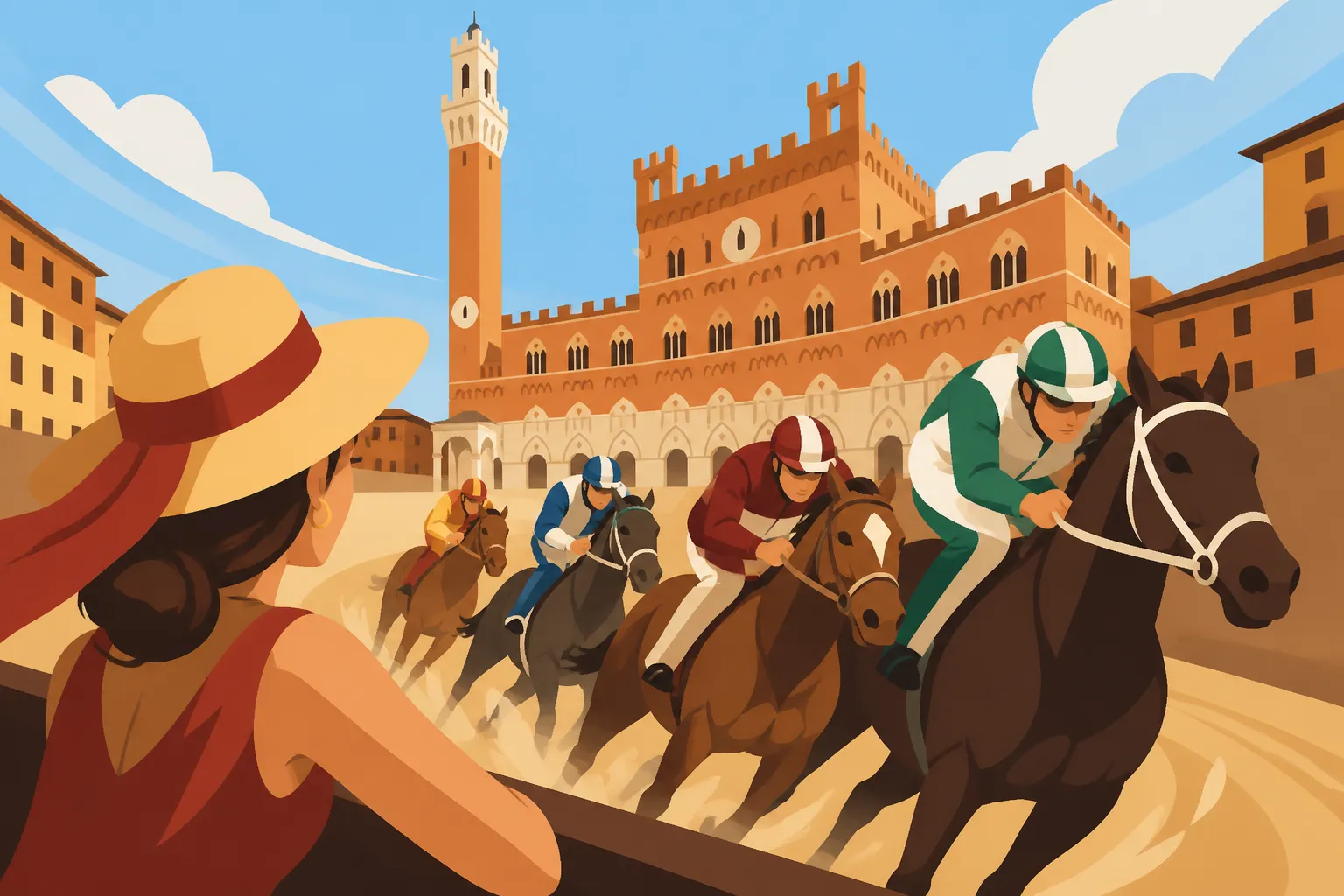
To the people of Siena, the Palio is life. I’ve lived in Italy long enough to know that while we expats might see a ninety-second horse race, the Sienese see a year’s worth of rivalry, diplomacy, and spiritual warfare. The race takes place twice a year: July 2nd (Palio di Provenzano) and August 16th (Palio dell'Assunta). It is held in the Piazza del Campo, the shell-shaped heart of the city, which is transformed into a dirt track for the occasion.
The race involves ten of the city’s seventeen Contrade (neighborhoods). Each Contrada has its own flag, colors, and church. The rivalry between them is centuries old and incredibly fierce. When you are standing in that square, you aren't just a spectator; you are witnessing a tribal ritual. If you want to understand the broader context of where you are, reading up on Italy's Regions: A Traveler's Overview will help you realize why Tuscany, and Siena specifically, holds onto these traditions so tightly.
Do not expect a polished, Disney-like experience. It is hot, it is crowded, and the emotions are raw. If a horse falls or a jockey is thrown, the reaction from the crowd is visceral. You need to enter the city with a sense of respect. You are a guest in their living room during the most important family argument of the decade.
Logistics and Getting to Siena
Siena is a hill town, which means logistics require a bit of forethought. Most travelers arrive from Florence or Rome. During the Palio days, the city's population swells significantly, and parking becomes a Herculean task. I always recommend using public transport to avoid the dreaded ZTL (Zona Traffico Limitato) zones, which can result in hefty fines. You can check Renting a Car in Italy: ZTLs, Insurance, and Driving Tips if you are brave enough to drive, but honestly, the train or bus is your best friend here.
Using a platform like Omio is a lifesaver for comparing the regional bus schedules against the train times. Often, the bus from Florence (the "Rapida") is actually faster than the train because it drops you closer to the city center. If you are coming from further afield, perhaps after landing and figuring out How to Get From Rome Fiumicino Airport to the City Center, make sure you book your tickets well in advance.
Accommodation is the biggest hurdle. If you want to stay within the city walls, you should be looking at Booking.com at least six to eight months in advance. Many veteran expats prefer staying in the surrounding hills of Tuscany for Travelers: Cities, Hills, and Coast and taking a taxi into town, as the noise of the Contrada drums and chanting continues deep into the night within the walls.
Securing Your Vantage Point: Free vs. Paid Options
There are essentially two ways to see the race: for free from the center of the piazza or by paying for a seat on the bleachers (palchi) or balconies overlooking the track. Each has its pros and cons, and your choice will define your entire experience.
Standing in the "Il Campo" (Free)
If you choose the free option, you must enter the center of the Piazza del Campo by mid-afternoon. Once the square is full, the police close the entrances, and you are "locked" in the center until the race is over. There are no toilets in the center of the square, and the Tuscan sun is unforgiving. You will be packed in like sardines with thousands of others. However, the energy is incomparable. You are right at eye level with the horses and the frantic Sienese fans.
Booking a Seat (Paid)
If you have a larger budget or are traveling with children or the elderly, buying a seat on the palchi is the only way to go. These seats are managed by individual shop owners and residents who set up wooden stands around the perimeter of the track. There is no central booking office. You often have to find a local contact or use specialized agencies. You can sometimes find guided experiences through GetYourGuide that include historical context and help with navigating the city's complex layout, though they rarely include actual race tickets.
| Option | Cost | Comfort Level | Arrival Time |
|---|---|---|---|
| Inside the Square | Free | Low (Standing, No Toilets) | 4:00 PM or earlier |
| Bleachers (Palchi) | €200 – €600+ | Medium (Cramped Seating) | 5:30 PM |
| Private Balcony | €800 – €2,000+ | High (Best Views, Drinks) | 6:00 PM |
The Four Days of the Palio: More Than Just the Race
The actual race on July 2nd or August 16th is just the climax. The Palio is a four-day event. If you only show up for the race, you’re missing the heart of the festival.
The festivities begin with the Tratta, the selection of the horses. Ten horses are chosen and assigned to the Contrade by lottery. This is a moment of high drama; if a Contrada gets a "good" horse, the crowd erupts. Over the next few days, there are six trial races (prove). The fifth trial, the Prova Generale, is followed by massive outdoor dinners in each neighborhood. These dinners are legendary. Long tables line the streets, wine flows, and the Contradaioli sing their traditional songs.
On the day of the race, head to one of the Contrada churches for the Benedizione del Cavallo (the blessing of the horse). It is one of the few times you will see a horse inside a church. The priest ends the blessing by shouting "Va' e torna vincitore!" (Go and return a winner!). It is a solemn, quiet moment before the chaos. Remember to follow Italian Social Customs: Greetings, Gestures, and Personal Space and stay silent and respectful during these ceremonies.
Survival Tips for Race Day
The heat in Siena in July and August is no joke. I have seen many tourists faint in the middle of the square because they underestimated the dehydration. If you are standing in the center of the piazza, bring more water than you think you need. Wear a hat, use plenty of sunscreen, and try to find a sliver of shade against the brick walls if you arrive early.
Safety is also a concern in such large crowds. While violent crime is rare, pickpockets do operate in heavy tourist areas. I always tell friends to check Staying Safe in Italy: Common-Sense Tips for Travelers for general advice, but specifically for the Palio, keep your belongings in a front-facing bag and avoid carrying large amounts of cash.
The race itself starts with the Corteo Storico, a massive historical parade with flag-wavers and people in medieval costumes. It’s beautiful but long—it takes about two hours. The race doesn't start until the parade finishes and the horses are brought to the mossa (the starting line). The start can take forever because the jockeys are busy bribing each other and jockeying for position. Don't get frustrated; this "waiting" is actually part of the strategic game of the Palio.
Dress Code and Etiquette for Foreigners
While there isn't a formal dress code for standing in the square, you should still keep Dress Codes and Bella Figura in Italy in mind. Comfortable shoes are a must—you will be standing on uneven bricks for hours. Avoid wearing the colors of a specific Contrada unless you are actually invited to their dinner or have a genuine connection. You don't want to accidentally walk into a rival neighborhood wearing their enemy’s scarf.
Most importantly, do not cheer until the race is officially over and you see who has won. And if you are in the middle of a Contrada that just lost, be prepared for tears and anger. This is not a "good game" type of atmosphere. The losers are genuinely devastated. If you want to celebrate, do it quietly until you are out of the immediate vicinity of the distraught fans.
After the race, the winning Contrada will march to the Duomo (in August) or the Collegiate di Provenzano (in July) to sing the Te Deum. Following the winning crowd is an incredible experience and much more rewarding than rushing to find a restaurant. If you do need to find a place to stay after the adrenaline dies down, checking Booking.com for nearby towns like Monteriggioni can be a quieter, more affordable alternative to the post-race madness of central Siena.
Frequently Asked Questions for First-Timers
Can I bring my dog?
Absolutely not. The noise, heat, and crowds are dangerous for animals. The city actually has strict regulations about animals during these days.
Is it okay for kids?
In the center of the square? No. It’s too hot and too crowded. If you have seats on the bleachers, then yes, but be aware that the race is loud and the crowd's energy can be scary for small children.
What happens if a horse loses its jockey?
In the Palio, the horse can win even without its rider. This is called a cavallo scosso. If the horse crosses the finish line first, the Contrada still wins. This happened recently and led to one of the most chaotic celebrations I’ve ever seen.
How do I get out of the city after the race?
Slowly. The streets will be packed with people celebrating or mourning. If you used Omio to book a late bus or train, give yourself at least an hour to get from the Piazza to the station.
Disclaimer
This guide is intended for informational purposes and reflects the personal experiences of an expat living in Italy. Event schedules, security regulations, and ticket prices for the Palio di Siena can change without notice. Always verify the latest official announcements from the Comune di Siena before planning your trip. Travel insurance is highly recommended for any major international trip.