Staying Connected on the Via Francigena: eSIM Coverage Across Central Italy
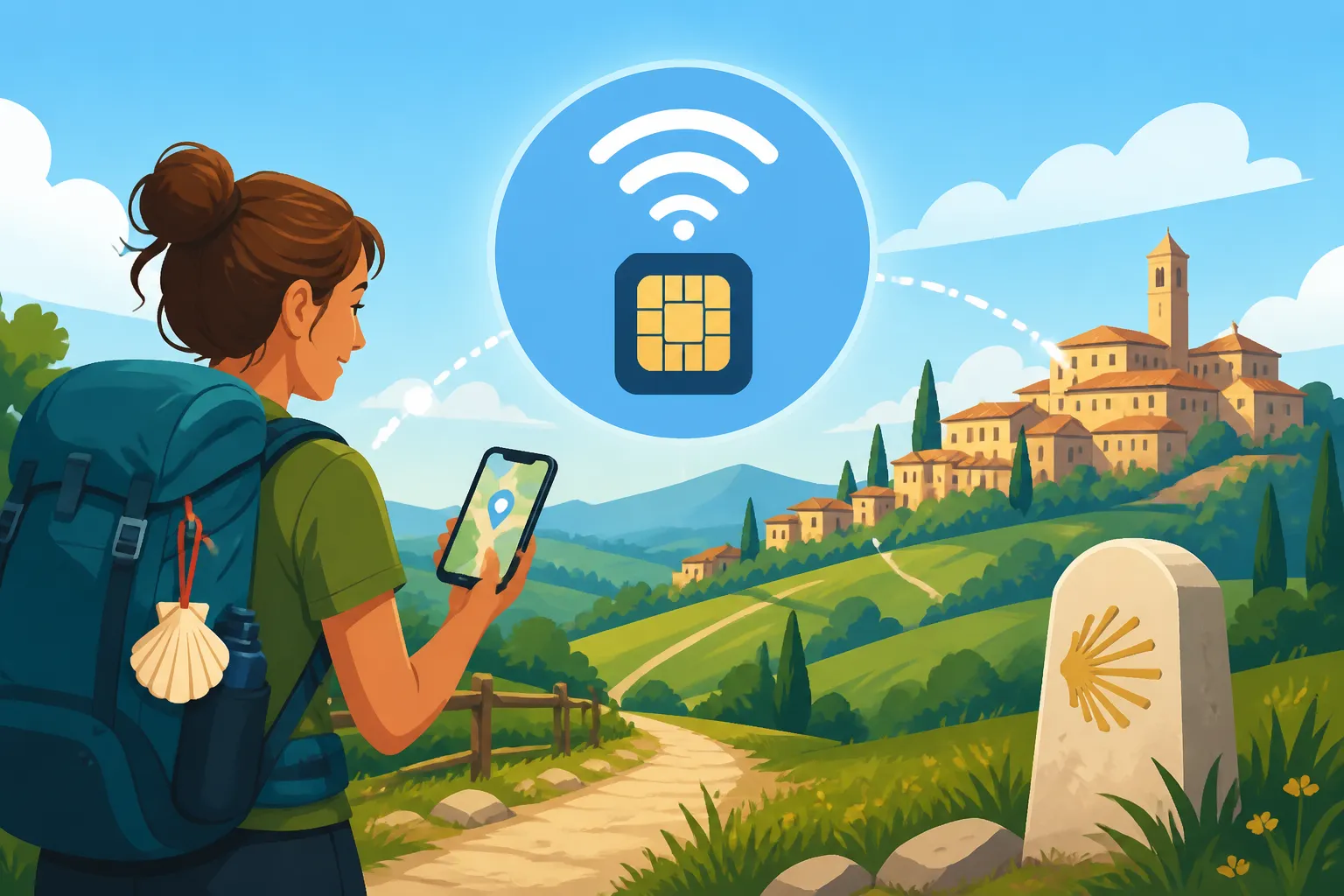
Trekking the historical Via Francigena through Italy is an incredible journey, but let's be honest, one of the biggest modern-day headaches for any long-distance pilgrim or hiker is staying reliably connected. From navigating unmarked trails in rural Tuscany to checking in with your next agriturismo in Lazio, losing signal or running out of data can turn a beautiful experience into a stressful ordeal. This guide will walk you through how eSIM technology, particularly a service like Airalo, offers a reliable, cost-effective, and surprisingly simple solution to ensure seamless connectivity throughout your Italian pilgrimage, especially through the diverse landscapes of Central Italy.
Disclosure: This post may contain affiliate links. We may earn a commission at no extra cost to you if you make a purchase through these links. Read full disclosure.
The Connectivity Conundrum on the Via Francigena in Central Italy
The Via Francigena, a network of ancient pilgrimage routes from Canterbury to Rome, offers a profound journey through the heart of Italy. But unlike urban travel, connectivity here is a different beast entirely. You’re not always near a bustling city with robust infrastructure, and many stretches lead you through tranquil, often remote, countryside.
The Via Francigena: A Pilgrim's Path Through Diverse Landscapes
Imagine this: you've just left San Gimignano, walking through rolling Tuscan hills, vineyards stretching as far as the eye can see, with the next town, Colle di Val d'Elsa, hours away by foot. Or perhaps you're deep in Lazio, approaching Monte Mario with Rome finally within reach after weeks of walking, but your trail app suddenly stops loading. This route, particularly through the central regions of Italy like Tuscany and Lazio, is renowned for its breathtaking scenery and historical significance, passing through tiny borghi, dense forests, and open fields.
The very charm of the Via Francigena — its untouched nature and isolation — is precisely what makes consistent mobile coverage a significant concern. You might find great 4G in Siena or Viterbo, but venture a few kilometers outside, and suddenly, you're back to edge-of-a-cliff signal bars, or worse, none at all. Pilgrims rely heavily on their phones for GPS navigation, checking local weather, finding open restaurants or farmacie, and, crucially, for safety in case of an emergency. Relying solely on intermittent Wi-Fi at your evening stop simply isn't a viable strategy for a multi-day trek.
Why Traditional SIM Cards Fall Short for Pilgrims
When you're planning a trip like the Via Francigena, the thought of sorting out a local SIM card might seem like the simplest solution. But let me tell you, as a veteran expat, the process can be anything but simple, especially when you're a tired pilgrim with limited Italian skills.
First, finding a dedicated phone store in small towns along the route can be a challenge in itself. You might waste precious walking time trying to locate a shop that sells SIM cards from major Italian providers like TIM, Vodafone, or WindTre. Then comes the purchase: navigating different plans, understanding the activation process, and providing your passport and codice fiscale (Italian tax code), which can be an extra hurdle if you don't have one readily available or activated. Believe me, waiting around for a SIM to activate when all you want to do is recharge your phone and your body is incredibly frustrating.
Beyond the initial hassle, traditional SIM cards often come with short-term contract complexities or require topping up in specific ways that might not be convenient when you’re literally in the middle of nowhere. Plus, if you're traveling through multiple countries on the longer Via Francigena route, you'd be dealing with multiple physical SIM cards, which is just a logistical nightmare. For those who frequently visit Italy, understanding the nuances of how to get an Italian SIM card or even how to obtain the Italian Health Card (Tessera Sanitaria), which requires residency, can be a steep learning curve.
The Need for Reliable Data for Navigation, Safety, and Communication
Reliable data isn't just a convenience on the Via Francigena; it's often a necessity. Your phone is your lifeline. Think about these scenarios:
- Navigation: While guidebooks and trail markers are invaluable, GPS apps like Maps.me, Google Maps, or dedicated pilgrim apps are crucial for confirming your path, finding alternative routes, or simply locating the nearest water fountain. Without data, these tools are significantly hampered, leading to potential detours or getting lost.
- Safety: Imagine a twisted ankle on a secluded path, or sudden adverse weather. Being able to access emergency medical services in Italy, whether by calling 112 (the unified European emergency number) or quickly looking up a local clinic, depends on having a working phone. Even something as simple as alerting your next pensione that you're running late can prevent them from worrying or giving away your room.
- Communication: Staying in touch with loved ones, other pilgrims you've met along the way, or your support team is paramount for morale and coordination. WhatsApp, email, and social media become essential tools for sharing updates, photos, and ensuring everyone knows you're safe and sound. Moreover, quick access to translation apps can be a lifesaver when you're trying to communicate in a small village where English isn't widely spoken.
Without consistent connectivity, you’re not just missing out on Instagram opportunities; you’re compromising your efficiency, comfort, and potentially, your safety on the trail.
Embracing eSIM Technology for Seamless Travel
It's clear that traditional connectivity solutions have their drawbacks for the modern pilgrim. This is where eSIM technology swoops in like a guardian angel, offering a truly hassle-free way to stay online.
What Exactly is an eSIM and How Does it Work?
So, what exactly is an eSIM? Think of it as a digital SIM card, embedded directly into your phone or smart device. Unlike the physical plastic card you're used to slotting in, an eSIM is a small chip that allows you to download and activate a mobile plan digitally. No more fumbling with tiny trays, no more worrying about losing your home SIM card, and certainly no more trying to find a paperclip to open the slot on the side of your phone.
Most newer smartphone models, including many iPhones, Google Pixels, and Samsung Galaxies, come equipped with eSIM capability. It means your phone can switch between different network providers simply by downloading a new data plan. You can even have multiple eSIM profiles stored on your device and switch between them as needed, which is fantastic for international travelers. For example, you could keep your home country SIM active for calls and texts, while using an eSIM purely for data when you're trekking through Italy.
The Unbeatable Advantages of eSIMs for Long-Distance Trekkers
For someone undertaking the Via Francigena, the advantages of eSIMs are simply unparalleled.
- Instant Activation, Anywhere: The biggest relief is that you can purchase and activate an eSIM data plan before you even leave home, or while sitting in a quiet café in Florence. No need to hunt for a store, no queues, no language barriers. You simply buy the plan online, scan a QR code, and voilà, you're connected.
- No Physical Swapping: Your physical SIM stays in your phone, ensuring you don't miss important calls or messages from your primary number. The eSIM works alongside it, providing data. This is particularly useful if you want to keep your main number active for banking two-factor authentication or urgent contacts.
- Multi-Network Access (Potentially): Many eSIM providers, like Airalo, partner with multiple local network operators. This means your eSIM might automatically connect to the strongest available signal, which is a huge benefit when you're traversing rural areas where one network might be strong and another weak. It effectively gives you a better chance of consistent coverage.
- Cost-Effectiveness: eSIM plans are often tailored for travelers, offering competitive rates for data bundles, without the overheads or complexities of long-term contracts. You only pay for what you need, whether it's 1GB for a quick weekend or 10GB for a multi-week pilgrimage.
- Flexibility and Control: Need more data mid-trip? No problem. Most eSIM apps allow you to easily top up your plan with just a few taps. This flexibility means you're never caught off guard and always have control over your spending and connectivity.
Getting Started with an eSIM Before You Even Land
Getting an eSIM set up is surprisingly straightforward, taking much of the stress out of arrival. Here’s how you typically do it:
- Check Compatibility: First, make sure your phone supports eSIM technology. A quick search online for your specific phone model will tell you. Most newer iPhones (XS and later), Google Pixel phones (3 and later), and many Samsung Galaxy flagships are compatible.
- Choose a Provider: There are several eSIM providers out there, but for extensive travel in Italy and Europe, Airalo is a widely trusted and recommended option. They offer specific plans for Italy and even broader European plans that cover multiple countries, which is perfect if your Via Francigena journey starts or ends outside Italy.
- Select Your Plan: Browse the available data packages. Consider how much data you anticipate using for navigation, communication, and occasional browsing. For a multi-week trek, you might want a larger plan, or plan to top up.
- Purchase and Install: Once you’ve selected your plan, purchase it through the provider’s app or website. You'll then receive an email with a QR code or manual installation details. Follow the instructions to add the eSIM to your device settings. It usually involves scanning the QR code, which automatically configures the eSIM profile.
- Activate: Most plans activate upon connecting to a supported network in your destination country. So, once you land in Italy, simply turn on the eSIM line in your phone settings, and you should be good to go.
This simple process means you can land in Italy, bypass the queues at the airport phone shops, and immediately have access to data for those crucial first navigation steps or to let family know you’ve arrived safely.
Airalo: Your Connectivity Companion Across Central Italy's Via Francigena
Among the various eSIM providers on the market, Airalo has truly carved out a niche for itself, especially for travelers exploring diverse regions like those found along the Via Francigena. It's the kind of solution that makes you wonder how you ever managed without it.
Why Airalo Stands Out for the Via Francigena Pilgrim
When you're facing a long walk through Italy, you need a connectivity solution that's robust, reliable, and user-friendly. Airalo hits all these marks, making it an ideal choice for the Via Francigena pilgrim.
Firstly, Airalo offers excellent coverage throughout Italy by partnering with major local networks. This means that even when you’re trekking through a less populated stretch of the Francigena in Umbria or Lazio, your chances of catching a strong signal are significantly higher because your eSIM can intelligently switch to the best available network. This multi-network capability is a huge advantage over being tied to a single local provider’s coverage map.
Secondly, the flexibility of Airalo’s data packages is perfect for pilgrims. You can choose from various data amounts and validity periods, from a few gigabytes for a short section of the route to larger bundles for a month-long journey. This prevents you from overpaying for data you won't use or, worse, running out when you need it most. The convenience of topping up directly from the app, without needing to find a physical store or understand Italian instructions, is a godsend when you're tired and just want to keep moving.
Lastly, the sheer ease of use is what sets Airalo apart. The app is intuitive, guiding you through every step from plan selection to installation and usage monitoring. It removes the stress of dealing with local bureaucracy, language barriers, and finding physical SIM cards, allowing you to focus on the spiritual and physical journey of the Via Francigena. It truly simplifies your Travel Logistics in Italy: Money, Safety, and Connectivity.
Practical Steps to Using Airalo on Your Italian Pilgrimage
Once you’ve got your Airalo eSIM installed, actually using it on your pilgrimage is a breeze.
- Choose the Right Plan: Before you leave, or even as you start your journey, consider whether an Italy-specific plan or a broader European plan is best for you. If you're only staying in Italy, an "Italy" plan might be more cost-effective. If you're crossing borders, say, starting in Switzerland or France, a "Eurolink" regional plan will ensure seamless transition without needing to buy another eSIM.
- Installation and Activation: As mentioned, you'll purchase your plan through the Airalo app or website. You'll receive a QR code, which you scan with your phone. Your phone guides you through adding the cellular plan. Make sure "Data Roaming" is enabled for your eSIM line in your phone settings, as this is how it connects to local networks in Italy. The plan usually activates as soon as it connects to a network in the destination country.
- Monitoring Data Usage: The Airalo app allows you to easily track your data consumption. This is invaluable on a long trek. You can see how much data you have left, helping you budget your usage for navigation, booking accommodation, or contacting emergency services if needed.
- Topping Up: If you find yourself running low, simply open the Airalo app, navigate to your active eSIM, and select a top-up package. The new data is usually added almost instantly. This means no more frantically searching for a phone store in a tiny village – a few taps and you're back online.
Imagine being able to use your maps, send a quick update on WhatsApp, or even use a translation app for a tricky conversation at a local trattoria without a second thought. This reliable connectivity helps you plan your next leg of the journey, discover nearby points of interest, and keep you safe and connected. You might even find some great spots for a quick Aperitivo in Italy: The Pre-Dinner Ritual Explained.
Comparing Airalo with Other Connectivity Options
Let's put Airalo into perspective against other ways of staying connected on the Via Francigena.
| Feature | Local Italian SIM (e.g., TIM, Vodafone) | Roaming from Home Provider | Airalo eSIM (e.g., Eurolink, Italy) | Public Wi-Fi Hotspots |
|---|---|---|---|---|
| Difficulty of Purchase | High (requires store, passport, possibly codice fiscale, language barrier) | Very Low (automatic, but check fees) | Very Low (online purchase, QR code scan) | Medium (requires finding hotspot, often captive portal) |
| Activation Time | 30 mins – 1 hour (in-store) | Instant | Instant (upon landing/network connection) | Varies (logging in, accepting terms) |
| Cost | Moderate (good value for long stays) | Very High (can be exorbitant, "bill shock") | Low to Moderate (flexible, pay-as-you-go) | Free (but limited availability, security risk) |
| Coverage | Good (single network) | Varies (home network's roaming partners) | Excellent (multi-network aggregation) | Very limited (only in specific locations) |
| Flexibility | Low (tied to one provider/plan) | Low (tied to home plan) | High (easy top-ups, multiple profiles) | Low (unreliable, unstable) |
| Convenience | Low (physical SIM swap, store visit) | High (no effort needed) | High (digital, no physical interaction) | Very Low (unreliable, not for navigation) |
| Security | High | High | High | Low (unencrypted, open access) |
As you can see, for a pilgrim on the Via Francigena, Airalo offers a sweet spot between convenience, cost, and crucial reliability. While local SIMs can be good for very long stays, the initial hassle is real. Roaming is convenient but can be incredibly expensive. Public Wi-Fi is rarely available when you actually need it on the trail, and it's notoriously insecure. The Airalo eSIM delivers consistent, manageable connectivity that supports your journey without adding unnecessary stress or cost.
Maximizing Your eSIM Experience While Trekking
Having an eSIM like Airalo is fantastic, but like any technology on a long trek, you need to manage it smartly to get the most out of your connectivity.
Battery Life and Power Banks: Essential for Staying Online
Your phone is your digital compass, communication device, and emergency tool. Therefore, ensuring it stays charged is paramount. GPS navigation, checking maps, and constantly searching for a signal (which your phone does automatically, especially in areas with patchy coverage) are all significant battery drains.
- Invest in a Good Power Bank: This is non-negotiable. Carry a high-capacity power bank (at least 10,000 mAh, ideally 20,000 mAh or more) and make sure it’s fully charged every morning. Consider one that can charge multiple devices or offers fast charging.
- Keep Your Phone Warm (But Not Hot): Extreme cold can drain your phone battery faster. Keep your phone in an inside pocket during cooler weather. Conversely, direct sunlight can overheat it, which is also bad for battery life.
- Optimize Phone Settings: Turn off unnecessary apps running in the background. Reduce screen brightness. Put your phone on low power mode when you don't need full functionality. If you know you'll be in an area with no signal for an extended period, consider switching to airplane mode (though this will disable emergency calls) or manually turning off cellular data for a while.
Data Saving Strategies on the Trail
Even with generous data bundles from Airalo, it's wise to conserve data, especially when you're unsure when your next top-up might be or if you're passing through a particularly remote area.
- Download Offline Maps: This is critical. Apps like Maps.me and Google Maps allow you to download entire regions for offline use. Do this before you start your trek. Even if your data drops, your GPS will still pinpoint your location on the downloaded map.
- Pre-download Entertainment: If you enjoy podcasts, audiobooks, or music, download them before you hit the trail. Streaming uses a lot of data.
- Limit Social Media and Video: Scrolling through Instagram or watching YouTube videos is a major data drain. Save these activities for when you have Wi-Fi or when you’re taking a long break and can afford the data usage.
- Manage Background App Refresh: Many apps refresh content in the background, consuming data. Go into your phone settings and disable background app refresh for apps that aren’t essential.
- Use Wi-Fi When Available: Whenever you stop for the night, or find a café with reliable Wi-Fi, connect to it. Use this time to upload photos, download updates, or do any heavy browsing. This also helps save your Airalo data for when you’re truly out on the trail and need it most.
Troubleshooting Common eSIM Issues
While eSIMs are generally reliable, encountering issues can happen. Here are some quick troubleshooting tips:
- No Service: First, check your phone settings to ensure your Airalo eSIM line is turned on and selected for cellular data. Also, confirm "Data Roaming" is enabled for that line. If still no service, try restarting your phone. Sometimes, a quick reset is all it takes for your device to re-register with the network.
- Slow Data: If your data is working but agonizingly slow, it might be due to network congestion or poor signal in your current location. Move to a different spot, if possible. If you're using a regional eSIM (like Eurolink), check if your phone has options to select a preferred network operator manually in your settings (though usually, the eSIM does this automatically).
- Activation Problems: If your eSIM isn't activating upon arrival, double-check that you've followed all installation steps correctly. Make sure the QR code was scanned properly, and that your phone's date and time settings are set to "automatic" and reflect the local time in Italy. If you're still stuck, reach out to Airalo support immediately; they are generally very responsive.
- Running Out of Data: If you're out of data, simply use the Airalo app to purchase a top-up. If you can't access data to do so, try to find a Wi-Fi hotspot, or use a companion's phone if they have service, to get online and top up your plan.
Remember, preparation is key. By understanding how to manage your device's power, conserve data, and quickly troubleshoot minor glitches, your Airalo eSIM will be your steadfast companion, keeping you connected every step of the way on your incredible Via Francigena adventure. This peace of mind is truly priceless.
Disclaimer
Please note that while every effort has been made to provide accurate and up-to-date information, connectivity, network coverage, and specific eSIM plan details can change. Always verify the latest information directly with service providers like Airalo and consult official Italian government or pilgrimage resources for the most current travel requirements and safety guidelines. The information provided here is for general guidance only and does not constitute professional advice.