Are Italy’s Beaches Free, or Do You Pay for a Lido?
Walking onto an Italian beach for the first time can be a confusing, and frankly, expensive shock for many foreigners. You see a pristine coastline, but it is covered from end to end in perfectly synchronized rows of colored umbrellas, all behind a gated entrance. This guide solves the mystery of the Italian "Lido" system, explains your legal rights to the sand, and shows you how to find the elusive free spots.
Disclosure: This post may contain affiliate links. We may earn a commission at no extra cost to you if you make a purchase through these links. Read full disclosure.
The Great Italian Divide: Lidi vs. Spiaggia Libera
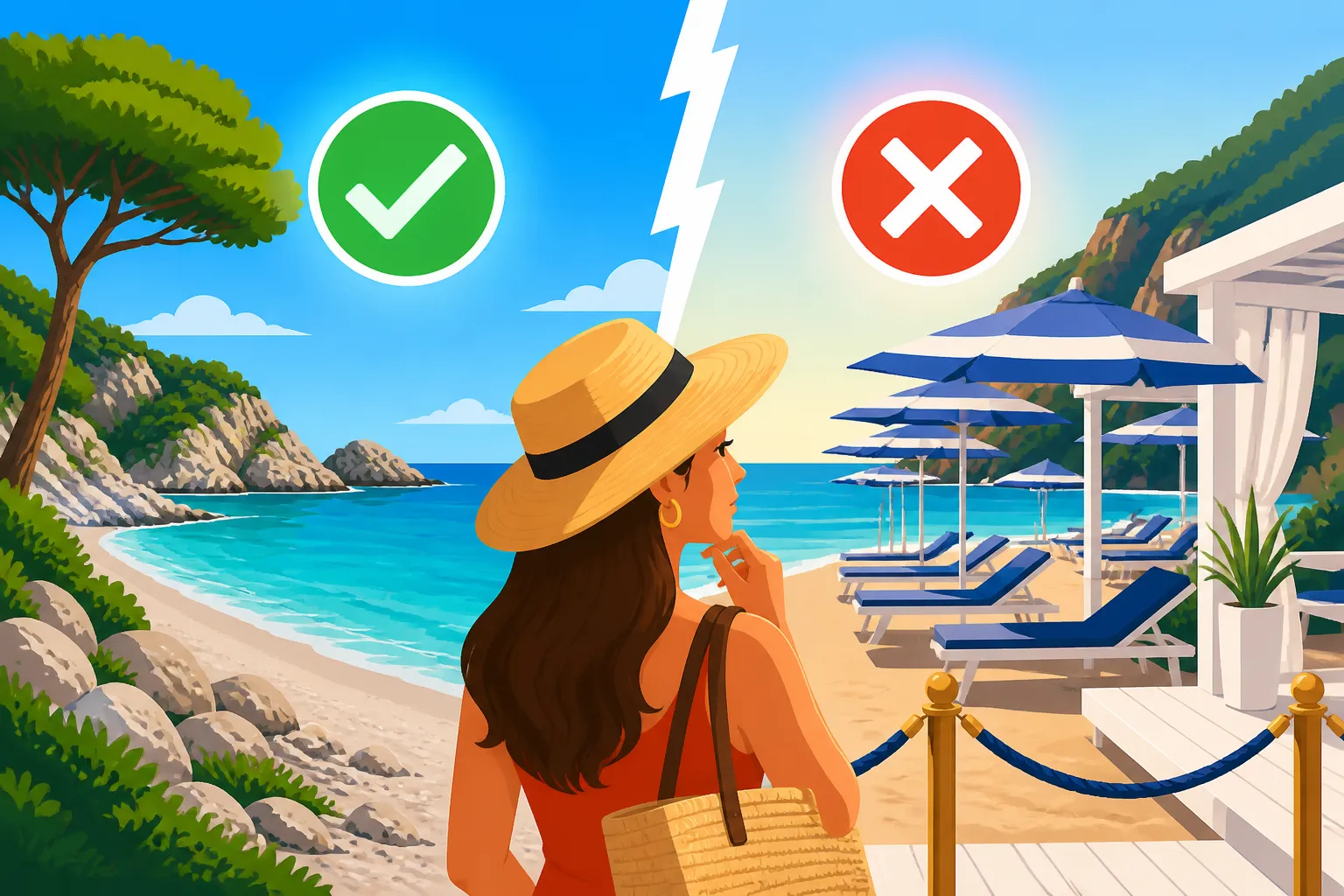
If you have spent any time scrolling through postcards of the Amalfi Coast or Rimini, you have seen the iconic images of orange and green umbrellas marching toward the sea in perfect military precision. This is the "Lido" or stabilimento balneare. For a veteran expat, the first realization is that in Italy, the beach is often treated more like a private club than a public park. Most of the prime real estate along the coast is leased by the government to private operators.
A Lido is essentially a beach club. When you enter, you aren't just paying for the sand; you are paying for a "postazione" (a station), which typically includes an umbrella and two sunbeds (lettini). These establishments also provide essential infrastructure that makes a long day in the Mediterranean sun much more bearable: changing cabins, toilets, hot and cold showers, and usually a bar or restaurant serving everything from espresso to spaghetti alle vongole. For families, these are often a godsend, as they frequently include lifeguards and play areas for children.
On the other side of the fence—sometimes literally—is the spiaggia libera, or free beach. These are the patches of coastline where no one has a concession. You can walk on, throw down your towel, and stick your own umbrella in the sand without paying a cent. The trade-off is often stark. Free beaches are frequently the narrowest strips of sand, located near river mouths or rocky outcrops, and they rarely have trash collection, toilets, or lifeguards. Finding a good one requires local knowledge and a willingness to hike a bit further from the main town center.
Understanding the Costs: What Are You Paying For?
The cost of a day at a Lido can vary wildly depending on where you are and what month it is. If you are using Booking.com to find a hotel in a high-end area like Forte dei Marmi or Capri, expect to pay a premium for your beach access. In these elite enclaves, a single day for two people can easily exceed 60 or 100 Euros. However, in more "normal" coastal towns in regions like Abruzzo or parts of Sicily, you might find a set for 20 to 30 Euros.
Pricing is also highly "seasonalized." June and September are the sweet spots where prices are lower and the crowds are thinner. July sees a price hike, and August—the month when all of Italy goes on vacation—is the peak. During August, not only do prices skyrocket, but many Lidi will refuse "daily" guests entirely, reserving their spots for "abbonati" (seasonal pass holders) who have been renting the same umbrella for generations.
It is also important to note that the price usually changes based on your "fila" (row). The first row, right in front of the water, is the most expensive. As you move back toward the road or the bar, the price drops. When you check in at the desk, they will often show you a map of the beach with the available spots. If you are looking to save money while still enjoying the comforts of a Lido, ask for a spot in the last row; you still get the shower and the bathroom, but for a fraction of the front-row price.
| Feature | Lido (Stabilimento Balneare) | Spiaggia Libera (Free Beach) |
|---|---|---|
| Cost | 20€ – 150€ per day | 0€ |
| Equipment | Provided (Umbrellas/Sunbeds) | Bring your own |
| Facilities | Toilets, Showers, Changing Rooms | None (usually) |
| Dining | On-site Bar/Restaurant | Pack your own cooler |
| Safety | Professional Lifeguards | Often unpatrolled |
| Crowds | Organized but dense | Chaotic and very packed in summer |
Your Legal Rights: The Five-Meter Rule
One of the biggest frustrations for expats is the feeling that the sea has been "stolen" by private businesses. However, Italian law actually provides some protections that many Lido owners won't tell you about. Legally, the first five meters of sand from the waterline is considered public property for the purpose of "transit." This means you have the right to walk along the shore, even if you are walking through a private Lido.
You can also technically use this shoreline to reach the water if you want to swim. However, "transit" does not mean "stay." You cannot legally plant your umbrella or spread your towel in that five-meter zone if you are within the boundaries of a private concession. The owners are very protective of their "view" and their paying customers, and they will likely ask you to move if you try to settle in.
Understanding these nuances is vital for Staying Safe in Italy: Common-Sense Tips for Travelers who want to avoid unnecessary confrontations. If you are exploring the coast and find a beautiful hidden cove that happens to have a Lido on it, remember you can walk through it to get to the rocky edges where the concession ends. Those rocky perimeters are often the best places to snorkel and are almost always free.
How to Find the Best Free Beaches
Finding a quality spiaggia libera is an art form in Italy. Most municipalities are required by law to keep a certain percentage of their coastline free, but they often fulfill this requirement by giving the "bad" sand to the public. To find the gems, you need to look beyond the city limits. Using Omio to find train or bus connections to more remote stations is a great way to escape the urban beach clubs.
Look for "Riserve Naturali" (Nature Reserves). Places like the Vendicari Reserve in Sicily or the Maremma Regional Park in Tuscany offer stunning, kilometer-long stretches of completely free sand. Because these are protected areas, no private concessions are allowed. The catch? You will have to carry everything in—water, food, and umbrellas—and usually hike 20 to 30 minutes from the parking lot. For many, this is a small price to pay for a "wild" Mediterranean experience.
Another hybrid option is the spiaggia libera attrezzata. These are "equipped" free beaches. You don't have to pay to enter or to sit on your own towel, but there is a small kiosk that rents umbrellas and sunbeds on a first-come, first-served basis if you want them. They also usually provide basic toilet and shower facilities. These are the perfect middle ground for those who find the full Lido experience too expensive but hate the lack of facilities on a totally wild beach. You can find many of these when exploring Italy's Best Beaches by Region as you plan your summer itinerary.
Cultural Etiquette and the "Posto" Struggle
The Italian beach day is a ritual. If you choose the Lido route, it is highly recommended to book in advance, especially for weekends. You can often use GetYourGuide to find boat tours that include beach stops, but for a standard day on the sand, calling the Lido directly is best. If you show up at 11:00 AM on a Sunday in July without a reservation, be prepared to be turned away with a polite but firm "Tutto esaurito" (Everything is full).
For those heading to the free beach, the etiquette is different. It is a land grab. People will arrive at 7:00 AM to stake out their territory. If you are traveling with children, check out Family Travel in Italy: Kid-Friendly Cities and Activities for tips on how to manage the logistics of a free beach day. You will need a "carrello" (a small trolley) to haul your gear, as the walk from the car or bus stop can be brutal in the midday heat.
Also, be mindful of the "Pennichella" (the afternoon nap). Between 1:00 PM and 4:00 PM, the beach actually gets quieter as many Italians head to the shaded Lido restaurant for a long lunch or retreat to their hotels for a nap. This is often the best time to find a spot on a free beach, as the early birds might give up their space to head home for lunch.
Practical Logistics: Transportation and Gear
Getting to the beach is often the hardest part of the day. Coastal parking in Italy is a nightmare and can sometimes cost as much as the Lido itself. Whenever possible, use the "Treno del Mare" (Sea Train) services. Many coastal towns are perfectly connected by rail, and the walk from the station to the sand is often less than ten minutes. This allows you more freedom to explore different towns along the coast without worrying about ZTL zones or expensive parking meters.
If you are a long-term resident or an expat staying for a month, consider buying your own beach gear. A decent umbrella and two foldable chairs from a local "fai-da-te" (hardware store) or a large supermarket like Conad or Coop will pay for themselves in just two or three days. Carrying your own gear gives you the freedom to hop between Quiet Beaches in Italy: Where to Escape the Crowds and the more popular spots without checking your bank balance every time you want to see the sea.
When packing for the day, don't forget that many Lidi have strict rules about "pranzo al sacco" (packed lunches). While they can't legally stop you from eating a sandwich on the beach, it is considered poor form to spread out a massive picnic in the middle of a private club where they are trying to sell you a 15-Euro salad. On the free beach, however, the "panino" is king. Stop at a local "alimentari" on your way to the coast and get a freshly made panino with prosciutto and mozzarella—it is the authentic way to do an Italian beach day on a budget.
Maximizing Your Budget and Experience
If you really want the Lido experience but the prices are daunting, look for "Mezza Giornata" (half-day) rates. Many establishments offer a discounted price if you arrive after 2:00 PM or 3:00 PM. This is actually a great strategy because the sun is less intense, the morning crowds are starting to thin out, and you still get several hours of prime swimming time before the sun sets.
For those who are moving to Italy for work or study, check if your employer or university has "convenzioni" (agreements) with local Lidi. It is very common for local residents to get a "prezzo residenti," which is significantly lower than the tourist price. You might need to show your identity card or residency permit to claim this, but it can save you hundreds of Euros over a summer season. This is just one of the many nuances covered in our guide on Cost of Living in Italy 2026: Budgeting for Expats.
Ultimately, whether you pay for a Lido or stick to the free sand depends on what you value most: comfort and convenience or savings and seclusion. Italy offers both in abundance, provided you know how to navigate the system. The coastline is vast, and with a bit of planning and Tuscany for Travelers: Cities, Hills, and Coast knowledge, you can find your perfect slice of the Mediterranean.
Important Notice for Travelers
This guide is intended for informational purposes and reflects the general coastal regulations and cultural practices in Italy as of 2024-2026. Beach laws, especially regarding concessions and public access, are currently subject to significant legal debate and potential changes due to EU directives (such as the Bolkestein directive). Always check local municipal signage at the beach entrance for the most current rules regarding fees, safety, and public access. Individual establishment prices and policies are subject to change without notice. Stay informed about regional environmental alerts, such as jellyfish warnings or water quality notices, by checking official local government websites before swimming. For more specific regional advice, see Italy's Beaches, Lakes, and Coastal Escapes or How to Travel Between Italian Cities Without a Car.
Disclaimer
This article is for general informational purposes only and does not constitute professional advice. Laws, prices and regulations vary by location and change over time. Consult a qualified professional for guidance on your specific situation.