How to Choose Between a Hotel and an Agriturismo in Italy
Navigating accommodation options in Italy can feel like trying to choose a single pasta shape in a country with hundreds – delightful, yet utterly overwhelming. Do you stick with the familiar comfort of a hotel, or dive into the charm of an agriturismo? This guide will break down the nuances of each, helping you decide which style of stay will best enhance your Italian adventure, ensuring your trip is exactly what you dreamed of.
Disclosure: This post may contain affiliate links. We may earn a commission at no extra cost to you if you make a purchase through these links. Read full disclosure.
Hotels in Italy: The Familiar Comfort Zone
For many, a hotel is the default choice when traveling, and Italy offers a vast array, from sleek modern establishments in bustling city centers to quaint family-run alberghi nestled in historic villages. The familiarity of standardized services can be a huge comfort, especially when you're already dealing with the glorious chaos of a new country.
What to Expect from an Italian Hotel
Italian hotels, much like those anywhere else, generally provide a certain level of predictability. You'll find a reception desk, often staffed with someone who speaks at least some English, ready to assist with check-in, local recommendations, or calling a taxi. Housekeeping services are standard, ensuring your room is tidied daily. Many hotels offer breakfast, sometimes included in the room rate, ranging from a simple cornetto and coffee to a full buffet spread. Amenities can vary wildly, of course, from basic rooms to luxurious suites with spas, pools, and multiple restaurants.
What sets Italian hotels apart, beyond their often charming architecture and prime locations, is the cultural emphasis on hospitality, or ospitalità. Even in a smaller, no-frills hotel, you'll often encounter a genuine warmth from staff who treat you more like a guest in their home than a mere transaction. However, don't expect the same exact standards as a chain hotel in your home country; rooms can sometimes be smaller, older buildings might have quirks (like tricky plumbing or smaller elevators), and air conditioning might be seasonal. Always check reviews on platforms like Booking.com for specific details on amenities and recent guest experiences.
When a Hotel is the Right Choice for Your Trip
A hotel often shines brightest when your travel style prioritizes convenience, location, and a certain level of hands-off service. If your itinerary involves hopping between major cities like Rome, Florence, or Venice, a hotel centrally located near train stations or major attractions can be invaluable. You can easily drop your bags, head out for a day of sightseeing, and return to a clean room without a second thought about cooking or coordinating activities.
Hotels are also ideal if you prefer a predictable experience, especially after a long day of navigating unfamiliar streets and speaking a foreign language. Having a concierge or reception staff to help with directions, restaurant reservations, or simply to answer questions in English can alleviate stress. Furthermore, if you're planning an Italy trip by train, proximity to transport hubs is key, making a city hotel a practical choice. Families with small children or travelers with specific accessibility needs might also find hotels more accommodating due to their standardized facilities and readily available staff assistance.
Navigating Hotel Bookings and Finding the Right Fit
The sheer volume of hotels in Italy can be daunting, but a bit of research goes a long way. Consider your priorities: location, budget, amenities, and overall vibe. Do you want to be right in the thick of the action, or prefer a quieter side street? Are you looking for a luxury experience, or something clean and comfortable for sleeping?
Many travelers find success using major booking websites, which allow you to filter by location, price, and specific amenities like parking or breakfast. Reading recent reviews is critical; they offer real insights into noise levels, cleanliness, and staff helpfulness. For example, if you're planning a stay in a popular area like the historic center of Florence, reviews can tell you if the hotel is genuinely quiet despite its central location. Don't be afraid to check the hotel's direct website too; sometimes they offer special deals or packages not available elsewhere. When searching for flights or train tickets, you might also use a platform like Omio, which allows you to consider how easy it will be to reach your chosen hotel from various transport hubs.
Agriturismi in Italy: An Authentic Countryside Experience
If the thought of bustling cityscapes or cookie-cutter accommodations leaves you yearning for something more serene and rooted in local life, then an agriturismo might just be your ideal Italian escape. These unique properties offer a truly immersive experience that goes far beyond just a place to sleep.
What Exactly is an Agriturismo?
The term agriturismo is a portmanteau of "agricoltura" (agriculture) and "turismo" (tourism), and it precisely describes what these establishments are: working farms that offer accommodation and, often, meals to guests. They are regulated by Italian law, meaning there are strict criteria they must meet. A significant portion of the business must come from agricultural activities – be it olive oil production, winemaking, raising livestock, or growing fruits and vegetables. This isn't just a quaint B&B in the countryside; it's an authentic rural enterprise.
Guests at an agriturismo aren't just staying on a farm; they're often invited to experience farm life. This could mean sampling homemade wine, learning about olive oil pressing, participating in cooking classes using fresh farm ingredients, or simply enjoying the tranquil rhythm of the countryside. Think of it as a chance to truly connect with the land and the people who work it, offering a deeper dive into Italian Food Culture: Eating Well as a Visitor and local traditions. The accommodation itself can range from rustic farmhouses to beautifully restored villas with modern amenities, all while retaining a charming, rural aesthetic.
The Unique Charm and Challenges of Agriturismo Stays
The charm of an agriturismo is undeniable. Imagine waking up to the sounds of nature, enjoying breakfast with eggs laid that morning, and spending your days exploring vineyards or ancient olive groves. Many agriturismi have swimming pools, offer cooking classes, or provide guidance for local hikes and excursions. It's a chance to slow down, breathe deeply, and savor the simpler pleasures of life. You'll often find yourself sharing meals with other guests and the family who runs the farm, leading to memorable cultural exchanges and a sense of community that hotels rarely offer.
However, this unique charm comes with its own set of considerations. Location is key; agriturismi are, by definition, in rural areas. This means you almost certainly need a car to get around. Public transportation might be nonexistent or very limited, making it difficult to reach nearby towns or attractions without your own wheels. If you're hesitant about Renting a Car in Italy: ZTLs, Insurance, and Driving Tips, an agriturismo might present logistical challenges. Language can also be more of a barrier, as owners in more remote areas might not speak much English, though a willingness to try a few Italian phrases usually goes a long way in fostering warmth and connection. They are not typically found in city centers, so if your goal is solely to explore the urban highlights of, say, Milan or Venice, an agriturismo won't be suitable.
When an Agriturismo Will Make Your Trip Unforgettable
An agriturismo is the perfect choice for travelers seeking a slower pace, an authentic cultural experience, and a deep connection with Italy's culinary and agricultural heritage. If you dream of exploring the rolling hills of Tuscany for Travelers: Cities, Hills, and Coast, savoring balsamic vinegar in Emilia-Romagna: Italy's Food Heartland, or relaxing amidst the vineyards of Piedmont, an agriturismo is unparalleled.
It's ideal for those who enjoy farm-to-table dining, where meals are prepared with ingredients sourced directly from the property or neighboring farms. Many agriturismi offer half-board options, including dinner, which can be a truly exquisite experience, showcasing regional specialties and family recipes. This type of accommodation is also fantastic for families, as children often delight in seeing farm animals, exploring open spaces, and participating in simple farm activities. For those seeking tranquility, beautiful landscapes, and a genuine taste of rural Italian life beyond the tourist crowds, an agriturismo provides an unforgettable backdrop to your Italian story.
Key Differences and How to Decide
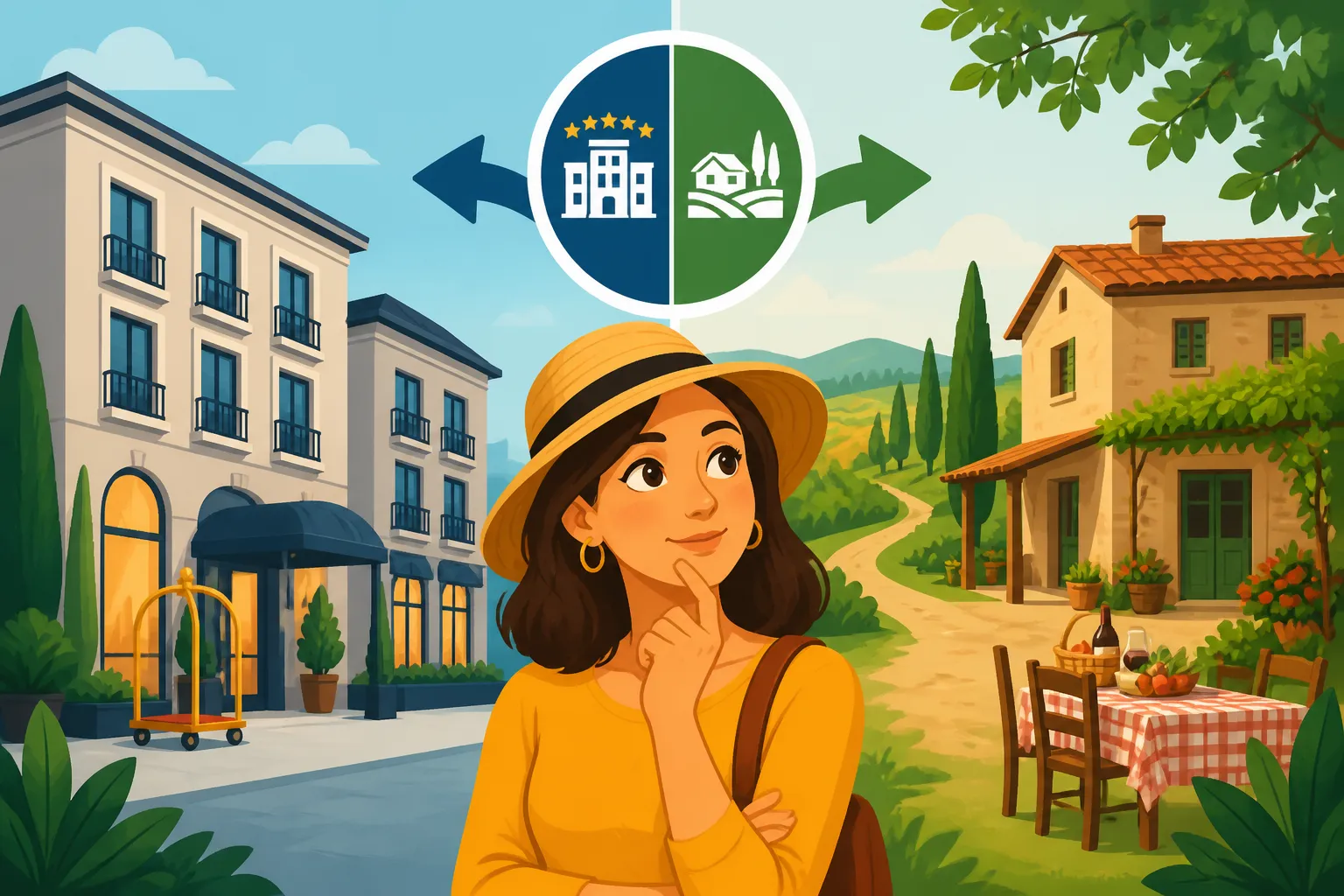
Choosing between a hotel and an agriturismo really boils down to your travel style, priorities, and what kind of experience you're hoping to cultivate during your time in Italy. They offer fundamentally different ways to experience the country.
Location, Ambiance, and Service Style
The most immediate difference often lies in location. Hotels are predominantly found in cities, towns, or along major coastlines, providing easy access to urban attractions, public transport, and commercial centers. Their ambiance can be anything from anonymous modern chic to classic grandeur, but generally, they aim for efficiency and a streamlined guest experience. Service is typically formalized, with designated staff for various needs, and often, a degree of professional detachment, albeit with Italian warmth.
Agriturismi, on the other hand, are inherently rural. They are nestled in the countryside, often requiring a drive down winding roads. Their ambiance is rustic, tranquil, and deeply connected to nature and traditional farm life. The service style is much more personal and familial. You'll often interact directly with the owners, who might also be your hosts, chefs, and tour guides. This can lead to incredibly rich and personal interactions, but it also means less "on-demand" service compared to a 24-hour hotel reception. For an overview of how diverse Italy's regions are and how that impacts your experience, consider reading Italy's Regions: A Traveler's Overview.
Dining Experiences: From Room Service to Farm-to-Table
Dining is another major differentiator. In hotels, you'll typically find a breakfast service, and often an in-house restaurant or bar. Room service might be an option, and you're surrounded by numerous external dining choices, from casual pizzerias to Michelin-starred restaurants. The cuisine can be varied, offering international options alongside Italian classics.
At an agriturismo, dining is often a highlight and central to the experience. Meals, especially dinner, are usually communal affairs, served in a charming dining room or al fresco. The food is almost always homemade, featuring seasonal ingredients harvested directly from the farm or sourced locally. This is true farm-to-table dining, often reflecting deep regional traditions. Expect hearty, authentic dishes and local wines. While incredibly delicious and genuine, the menu might be fixed or limited to what's available seasonally, offering less choice than a city restaurant. It's an experience, not just a meal.
Cost Implications and Value for Money
When it comes to cost, both hotels and agriturismi can range from budget-friendly to luxury, but their value propositions differ. Hotels in prime city locations, especially during peak season, can be quite expensive, though you're paying for unparalleled access and convenience. Expect to pay extra for amenities like parking or a full breakfast.
Agriturismi often offer excellent value, particularly if you opt for half-board (breakfast and dinner included). While the nightly rate might seem comparable to a mid-range hotel, the inclusion of authentic, high-quality meals, often with wine, can significantly reduce your overall daily expenses. However, you must factor in the cost of a rental car and fuel, which is usually essential for an agriturismo stay. Also, consider that some agriturismi have minimum stay requirements, especially during high season, which might not suit short, fast-paced itineraries. Ultimately, value depends on what aspects of your trip you prioritize.
Making Your Booking: Platforms and Considerations
Once you've weighed the pros and cons and decided which type of accommodation aligns best with your travel dreams, it's time to actually make that booking. The process can be straightforward, but a few insider tips can help you secure the perfect stay.
Using Popular Booking Platforms
For both hotels and agriturismi, online travel agencies (OTAs) are often the first port of call. Websites like Booking.com, for example, have extensive listings across Italy, allowing you to filter by location, price, amenities, and property type (including specific "farm stay" filters for agriturismi). They offer a wealth of user reviews and photos, which are invaluable for getting a real sense of a place before you commit.
When using these platforms, pay close attention to the details. For hotels, check cancellation policies, breakfast inclusions, and any additional fees like city taxes (tassa di soggiorno), which are common in Italy. For agriturismi, specifically look for information on meal options (B&B only, half-board, full-board), whether a car is recommended or essential, and if they offer activities you're interested in, such as cooking classes or wine tastings. While less common for accommodation, you can also use platforms like GetYourGuide to explore tours and activities that might complement your agriturismo stay, such as local food tours or countryside excursions. Remember, if you're traveling across regions, platforms like Omio can help you sort out your journey, making sure your chosen accommodation is accessible via public or private transport.
Direct Bookings and Local Insights
While OTAs are convenient, sometimes booking directly with the hotel or agriturismo can offer advantages. Many establishments provide small discounts or added perks (like a complimentary welcome drink or a room upgrade) for guests who book directly through their website or by phone. This is particularly true for smaller, independent hotels and most agriturismi, where building a personal relationship with guests is highly valued.
Moreover, direct communication allows you to ask specific questions that might not be covered on booking sites. For an agriturismo, you might want to inquire about gluten-free meal options, the best way to reach them from a specific train station, or if they have any special events planned during your stay. This direct interaction can be incredibly helpful and sometimes even more effective for understanding Italian Customs, Etiquette, and Social Life and ensuring your expectations are met. Sometimes, for unique properties, you might even discover an Accommodation in Italy: Hotels, B&Bs, and Agriturismi listing only on their private website. Don't be shy about reaching out via email or phone; even if your Italian isn't perfect, most will have someone who can communicate in English.
Disclaimer
Please remember that travel information, policies, and regulations in Italy can change. While every effort has been made to provide accurate and up-to-date details in this guide, it is always advisable to verify specific requirements with official sources, such as embassy websites, local tourism boards, or the individual accommodation providers, before making your final arrangements.