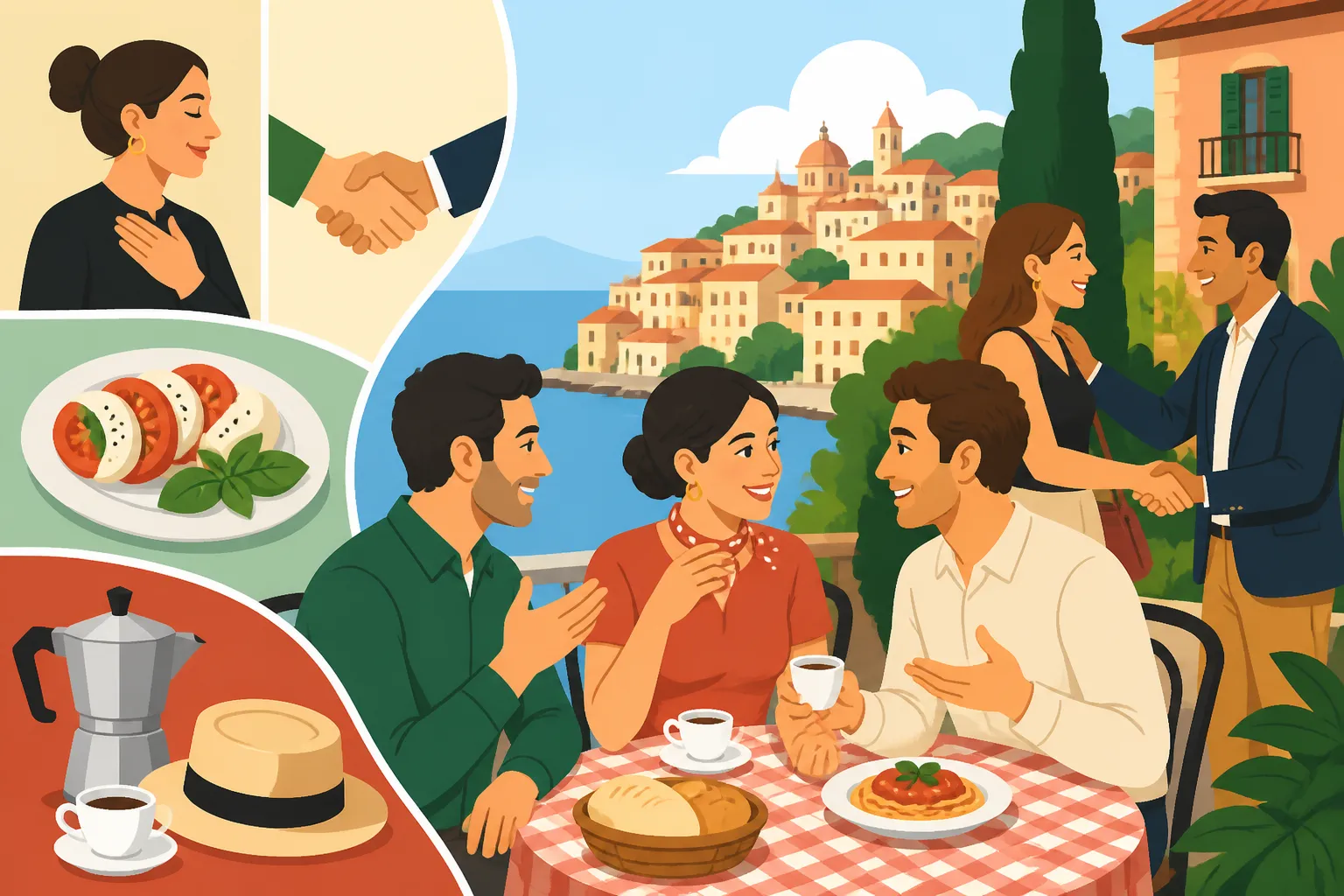
Italian Customs, Etiquette, and Social Life
Navigating the invisible social minefield of Italy often feels like trying to solve a Rubik’s Cube while everyone is shouting at you in a beautiful, melodic language you don’t quite understand yet. I remember the absolute mortification I felt during my first week in Florence when I walked into a historic cathedral wearing a tank top, only to be met with the sternest "no" I’ve ever heard from a diminutive Italian grandmother. This guide is your roadmap to mastering the nuances of Italian life so you can move from "clueless tourist" to "respected guest."
Disclosure: This post may contain affiliate links. We may earn a commission at no extra cost to you if you make a purchase through these links. Read full disclosure.
The Concept of Bella Figura and Aesthetic Social Grace
In Italy, the concept of bella figura is the foundation upon which almost every social interaction is built. It is often misunderstood by outsiders as mere vanity or "dressing up," but it goes much deeper than that. It is about a sense of dignity, grace, and how you present yourself to the world in a way that shows respect for others. When you master this, you notice that doors—sometimes literally—start opening for you.
Dressing for the Occasion and the Environment
The way you dress is the first signal you send to an Italian about how much you value their presence and their culture. You don't need to wear a three-piece suit to buy groceries, but showing up in gym shorts and flip-flops in a city center is considered a "brutta figura" (a bad impression). I’ve learned that Italians value harmony in their surroundings; if you are in a beautiful, historic piazza, they expect you to look like you belong there.
When visiting religious sites, the rules are non-negotiable. Shoulders and knees must be covered, and men should remove their hats. If you are planning a day of sightseeing, I often recommend using GetYourGuide to find tours that include specific entry requirements in their descriptions so you aren't caught off guard at the door. Following Dress Codes and Bella Figura in Italy isn't just about fashion; it’s a sign that you acknowledge the sanctity of the space you are entering.
Public Behavior and Emotional Restraint
While Italians are known for being passionate, there is a specific type of public decorum they uphold. Loud, drunken behavior is generally looked down upon, especially in residential neighborhoods. You will notice that even during a lively aperitivo hour, the atmosphere is sophisticated. People are there to see and be seen, to talk, and to enjoy a drink—not to lose control.
Maintaining a sense of composure, even when you are frustrated by bureaucracy or a delayed train, will get you much further than throwing a tantrum. I spent my first year in Rome huffing and puffing at every delay until I realized that the locals simply shrugged and used the time to have another espresso. Adopting that "pazienza" (patience) is part of maintaining your own bella figura.
Master the Art of Italian Greetings and Formalities
One of the most confusing hurdles for any expat is knowing exactly how to say hello. Is it a wave? A handshake? A double-cheek kiss? Getting this wrong can lead to some very awkward mid-air collisions. The general rule is that Italians are a high-touch culture, but there are layers of formality that dictate when and how you should initiate physical contact.
The Nuances of the Italian Cheek Kiss
The "double kiss" is the standard greeting among friends and family, but it’s rarely used in professional or first-time encounters. Usually, it’s a light graze of the cheeks—starting with the right cheek—accompanied by a kissing sound. If you are a newcomer, wait for the Italian to initiate. I once leaned in for a kiss with a bank manager and felt the collective temperature of the room drop by ten degrees.
For men meeting other men for the first time, a firm handshake is the safest bet. As you get to know people, How to Greet People in Italy: Handshake or Kiss? becomes more intuitive. Just remember that it isn't about the kiss itself; it's about the acknowledgment of the relationship. When you leave a group, it is also polite to say goodbye to everyone individually rather than throwing a general "ciao" over your shoulder.
Formal vs Informal Address
The Italian language has two ways of saying "you": the informal tu and the formal Lei. This is a major stumbling block for English speakers. As a rule of thumb, always use the formal Lei with anyone older than you, anyone in a position of authority, or people you don't know personally, such as shopkeepers or waiters.
Using the formal address shows that you are a person of education and culture. It signals that you respect the other person's boundaries. I find that when I use Lei with the local baker, she is far more likely to slip an extra pastry into my bag. It’s a small linguistic shift that pays massive social dividends in your daily life.
Navigating the Rituals of the Italian Table
Dining in Italy is not just about caloric intake; it is a sacred social ritual that follows a very specific set of unwritten laws. If you want to blend in, you have to understand that the table is where the most important business of life—family, friendship, and politics—is conducted. Rushing a meal is considered an insult to the chef and your companions.
Ordering and Meal Structure
An authentic Italian meal is composed of several courses: the antipasto (starter), primo (usually pasta or risotto), secondo (meat or fish) with a contorno (side dish), and finally, dolce or fruit. You don't always have to order every single course, but ordering a pasta dish and a side of salad to be eaten at the same time is a common tourist mistake. The courses are served sequentially to allow you to appreciate the flavors of each.
If you are looking for authentic dining experiences that avoid the "tourist menu" traps, I recommend booking a local food experience through GetYourGuide. They often connect you with family-run trattorias where you can see Italian Food Culture: Eating Well as a Visitor in its truest form. Just remember to never ask for a side of pasta with your meat; the meat is the star of the secondo, and the pasta has already had its moment.
The Intricacies of Coffee and Water
The "no cappuccino after 11 AM" rule is real, and it’s based on the Italian belief that milk interferes with digestion after a meal. Coffee (espresso) is meant to be a quick, functional ritual at the bar or a lingering digestive at the end of lunch. When you order coffee at a bar, it’s often cheaper to drink it standing up. If you sit at a table, you will likely pay a servizio or "table price."
Understanding Italian Coffee Culture: How to Order Like a Local also involves knowing when to ask for the bill. In Italy, a waiter will almost never bring the check unless you ask for it (il conto, per favore). They consider it rude to rush you. You could sit for three hours after your coffee, and they wouldn't dream of nudging you toward the exit.
Tipping and the Coperto System
Tipping in Italy is not the mandatory 20% spectacle it is in North America. Most restaurant bills include a coperto (cover charge), which covers the bread and the table setting. While a small tip is appreciated for exceptional service, it is by no means expected. If you do tip, leaving a few coins or rounding up the bill is the standard practice.
| Charge Type | Description | Usual Cost |
|---|---|---|
| Coperto | Cover charge for bread/service | €1.50 – €4.00 per person |
| Servizio | Service charge (common in tourist areas) | 10% – 15% of bill |
| Mancia | Optional tip for good service | Change or a few Euros |
| Iva | Value Added Tax | Included in menu price |
I’ve found that Tipping in Italy: When, Where, and How Much is often the most stressful part for visitors, but once you realize that the staff is paid a living wage, you can relax and enjoy the meal without doing complex mental math at the end.
The Art of the Passeggiata and Public Life
The passeggiata is the ritual evening stroll that takes place in almost every Italian town between 5 PM and 8 PM. It’s a time for people to put on their best clothes and walk through the main piazza or corso. It’s about social visibility and maintaining community ties.
Street Etiquette and the ZTL
When you are walking in an Italian city, be mindful of your surroundings. Pavements can be narrow, and stopping abruptly to take a photo of a doorway can cause a pedestrian pile-up. Also, be aware of the Zona a Traffico Limitato (ZTL). These are restricted driving zones in historical centers. If you’ve rented a car, perhaps through a platform like Omio, make sure you understand the ZTL rules to avoid heavy fines that arrive in your mailbox months after you’ve left.
Navigating the logistics of Italian travel can be a headache, but using Omio to compare train and bus schedules can help you arrive in the city center with enough time to drop your bags at your Booking.com rental and join the passeggiata yourself. There is no better way to feel like a local than joining the slow, rhythmic flow of the evening walk.
Retail Manners and Shopping
When you enter a small boutique or an alimentari (grocery store), it is customary to greet the shopkeeper with a "Buongiorno" or "Buonasera." Ignoring the person behind the counter is considered very rude. Furthermore, in many smaller shops and market stalls, it is not common practice to touch the produce yourself. You should wait for the vendor to pick the items for you.
I learned this the hard way in a market in Puglia when I tried to pick up a peach to check for ripeness and was met with a sharp "Non toccare!" (Don't touch!). Following Italian Markets: Food, Antiques, and Flea Markets etiquette ensures that the vendors treat you with the same respect you show their goods.
Communication Styles and the Language of Hands
Italian communication is high-context, meaning that what is said is often less important than how it is said and the body language accompanying it. To an outsider, an Italian conversation can look like a heated argument, but it’s often just a vigorous discussion about which region has the best olive oil.
The Famous Italian Hand Gestures
Hand gestures are a literal second language in Italy. They are used to add emphasis, clarify meaning, and express emotions that words cannot capture. However, as an expat, I suggest observing rather than trying to mimic them immediately. Some gestures are nuanced and, if used incorrectly, can be accidentally offensive.
The most important thing to understand is that interruptions are not necessarily rude in Italy; they are a sign of engagement and interest. If someone starts talking over you, they aren't trying to shut you down—they are showing you that they are listening intently. Mastering Italian Social Customs: Greetings, Gestures, and Personal Space will help you navigate these high-energy interactions without feeling overwhelmed.
Directness and Softening the Blow
While Italians are passionate, they often use "softening" language to avoid direct confrontation. You might hear "vediamo" (we'll see) or "faremo il possibile" (we’ll do what’s possible) when the actual answer is likely "no." Learning to read between the lines is essential. If you are staying in a local neighborhood—perhaps in a highly-rated apartment found on Booking.com—interacting with your neighbors will quickly teach you the difference between a polite "maybe" and a genuine "yes."
Being a Guest in an Italian Home
If you are lucky enough to be invited to an Italian home for dinner, consider it a high honor. It means you have moved past the "acquaintance" phase and into the inner circle. However, there are very specific rules for being a good guest that you must follow to ensure you are invited back.
Gifts and Punctuality
Never arrive empty-handed. A bottle of good wine, a tray of pastries (pasticceria) from a local shop, or high-quality chocolates are always appreciated. Avoid giving an even number of flowers, and never give chrysanthemums, as they are associated with funerals. If you are unsure about the wine, ask a local enoteca for a recommendation based on what is being served.
Regarding time, "Italian time" is a real thing, but it varies by region. In the North, being 5-10 minutes late is acceptable. In the South, being 20-30 minutes late might still see you arriving before the host has finished getting ready. However, never be early. Arriving five minutes early for a dinner invitation is a sure way to find your host in their bathrobe.
Finishing Your Plate and Compliments
In an Italian home, leaving food on your plate can be interpreted as a sign that you didn't enjoy it. However, cleaning your plate too quickly might result in the host immediately piling on a second or third helping. The trick is to eat slowly and leave a tiny bit at the end if you are truly full.
Always compliment the food, but be specific. Don't just say it's "good"; mention the freshness of the ingredients or the richness of the sauce. This shows you appreciate the effort that went into the meal. For more tips on dining etiquette, you can refer to Restaurant Etiquette in Italy: Coperto, Courses, and the Bill, many of which apply to private homes as well.
Regional Differences and the Spirit of Campanilismo
Finally, you must understand that "Italy" is a relatively young country, and people often identify more with their city or region than with the nation as a whole. This is called campanilismo—the love for one’s own bell tower.
North vs South Dynamics
The cultural divide between the North and the South is significant. Generally speaking, the North (Milan, Turin) is more fast-paced, business-oriented, and formal. The South (Naples, Sicily, Puglia) tends to be more relaxed, communal, and traditional. I’ve lived in both, and while the rules of Italian Customs, Etiquette, and Social Life apply everywhere, the "vibe" changes drastically as you cross the regional borders.
When traveling between these regions, Omio is a lifesaver for booking the high-speed Frecciarossa trains that bridge these cultural gaps in just a few hours. Each region will have its own dialect, its own specific pasta shape, and its own local saint's day. Embracing these differences rather than comparing them will make your experience much richer.
Local Pride and Avoiding Comparisons
The quickest way to offend an Italian is to tell them that the pizza in Rome is better than the pizza in Naples, or that the wine in Tuscany is superior to the wine in Piedmont (unless you are currently in the region you are praising!). Respect the local pride. Ask questions about the local history and traditions. Most Italians are incredibly proud of their heritage and will be delighted to share it with someone who shows a genuine interest.
Summary Table of Daily Etiquette
| Situation | Do | Don't |
|---|---|---|
| Entering a shop | Say "Buongiorno" or "Buonasera" | Walk in silently |
| Visiting a church | Cover shoulders and knees | Wear hats or short shorts |
| Drinking coffee | Drink espresso standing at the bar | Order a cappuccino after lunch |
| At the table | Keep hands visible on the table | Put your elbows on the table |
| On the street | Walk with purpose and awareness | Stop in the middle of a busy sidewalk |
| Receiving a gift | Open it in front of the giver | Set it aside for later |
Disclaimer
This guide is intended for informational purposes only. Cultural norms and etiquette can vary significantly by region, city, and individual family traditions. Always observe local behavior and adjust your actions accordingly. The author and publisher are not responsible for any social misunderstandings or legal issues arising from the use of this information.