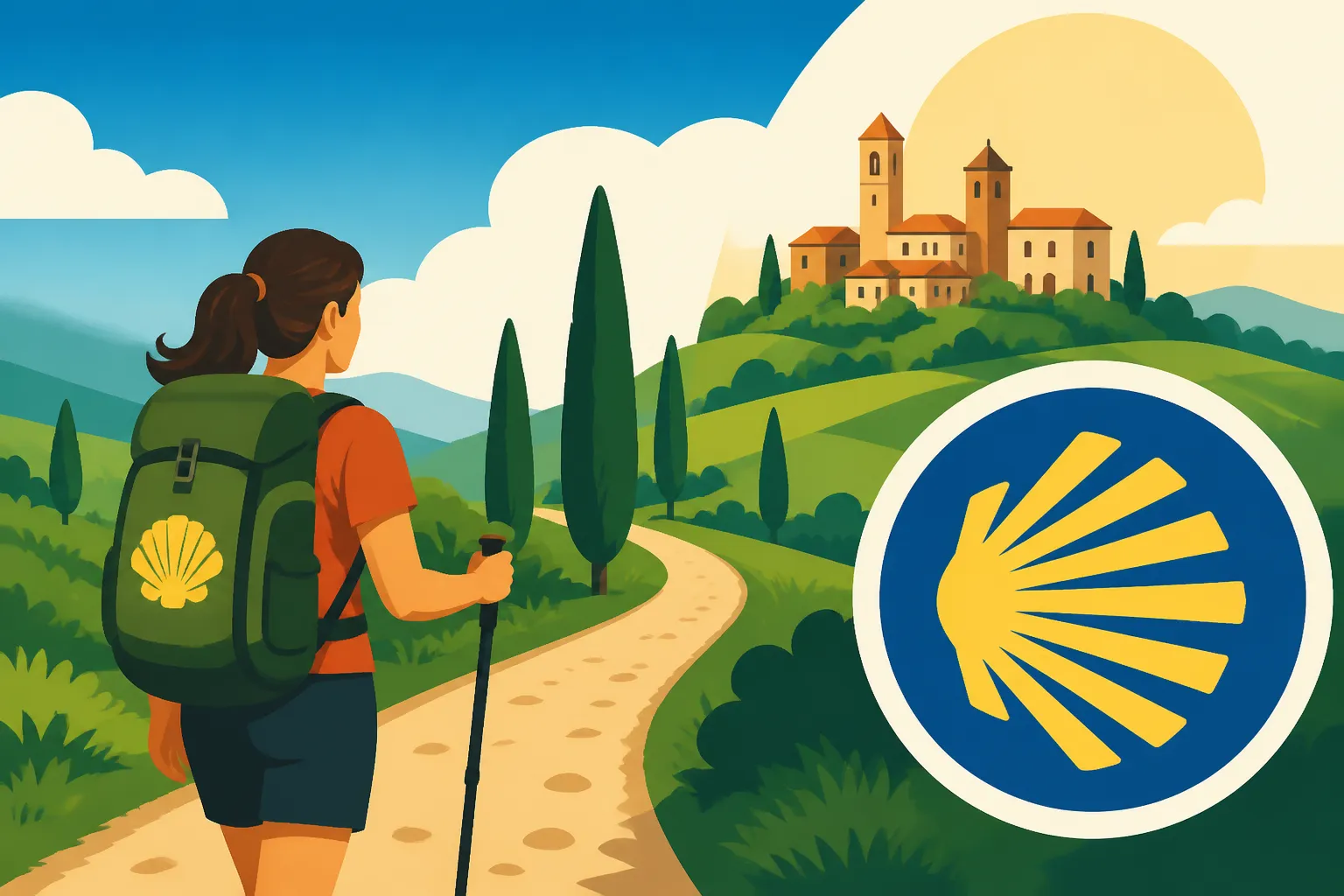
How to Walk a Section of an Italian Cammino
Deciding to walk a cammino in Italy is a fantastic idea, offering a completely different perspective than the usual tourist dash. But when you’re looking at these incredible, ancient paths, the sheer length can feel daunting, right? It's easy to think you need weeks, even months, to truly experience them. Many of us expats, juggling work, family, and the everyday intricacies of Italian life, just don't have that kind of time. This guide is here to tell you that you don't need to tackle the entire path at once; you can absolutely walk a meaningful section of an Italian cammino and still soak in all the beauty, history, and tranquility without committing to an epic, multi-week journey.
Disclosure: This post may contain affiliate links. We may earn a commission at no extra cost to you if you make a purchase through these links. Read full disclosure.
Why Choose a Section of an Italian Cammino?
Let's be honest, the idea of walking for weeks on end sounds romantic, but the reality for most of us living abroad or even just visiting Italy for an extended period is a bit more constrained. Choosing a section of a cammino isn't "cheating"; it's a smart, realistic way to embrace the experience.
Embracing the Slow Travel Ethos
One of the biggest draws of these walking paths is the concept of slow travel – moving at a pace that allows you to truly observe, reflect, and connect with your surroundings. When you’re not rushing from one major city to the next, ticking off landmarks, you start to notice the smaller, everyday wonders: the changing landscape, the scent of wild herbs, the sound of church bells in a tiny village. Walking a section lets you lean into this without the pressure of needing to cover X kilometers by a certain date. You can linger over a coffee in a piazza, chat with a local farmer, or simply sit by a stream and watch the world go by. It’s about the journey, not just the destination, and a shorter section allows you to savor each step more deeply. It strips away the superficial layers of tourism and offers a genuinely immersive cultural experience.
Practicality and Time Constraints
The primary reason many of us opt for a segment of a cammino is simply time. Maybe you have a long weekend, a week's vacation, or just a few days to spare between other commitments. A full Via Francigena from Canterbury to Rome could take three months! That's just not feasible for most. By selecting a specific 3-5 day stretch, or even just a challenging single day hike, you can integrate this unique travel style into your already packed life. This approach makes the seemingly impossible, possible. You get the mental and physical benefits of a long walk, the detachment from daily stressors, and the beauty of rural Italy, all within a timeframe that fits your schedule.
Taste-Testing the Experience
Perhaps you're curious about long-distance walking but aren't ready to invest in all the gear, training, and extensive planning a full cammino demands. Walking a section is the perfect "try before you buy" scenario. It allows you to gauge your interest, understand the physical demands, and see if this kind of travel resonates with you. You'll learn what works for your body, what gear is truly essential, and what aspects you enjoy most (or least!) about being on the trail. It's a valuable learning experience that can inform future, longer adventures, whether that's another section, or perhaps even a full cammino down the line. Plus, there’s no pressure – if you love it, great! If not, you've still had a unique Italian experience.
Popular Italian Cammini and Their Characteristics
Italy is crisscrossed with ancient paths, many of which have been revitalized for modern pilgrims and hikers. Each cammino has its own flavor, history, and unique challenges.
The Via Francigena
Ah, the Via Francigena. This is probably the most famous of Italy's pilgrimage routes, historically linking Canterbury in England to Rome. It's truly a journey through history, traversing ancient Roman roads, medieval villages, and breathtaking landscapes. In Italy, the Francigena winds its way from the Alps down through Lombardy, Emilia-Romagna, Tuscany, Lazio, and finally to Rome.
The Italian sections offer incredible diversity. You'll walk through the picturesque hills of Tuscany, stopping in towns like San Gimignano and Siena, then navigate the often-hilly and sometimes less-developed parts of Lazio before reaching the Eternal City. The terrain varies from paved roads (be prepared for some!), gravel tracks, dirt paths, and sometimes rocky trails. What makes a section of the Via Francigena particularly appealing is its relatively well-developed infrastructure compared to some other Italian routes. You'll find ostelli (hostels, often run by churches or municipalities) specifically catering to pilgrims, making accommodation easier to arrange. The signage, while sometimes a little wonky as you navigate through different regions, is generally identifiable with the familiar white and red stripes, often accompanied by the pilgrim shell or specific Francigena logos. If you're interested in really delving into specific parts, I highly recommend checking out how to walk part of the Via Francigena. It dives into the nuances of tackling smaller portions of this monumental route.
The Cammino di San Francesco
For those seeking a more spiritual or reflective journey, the Cammino di San Francesco, or St. Francis's Way, is an absolute gem. This route largely focuses on Umbria, tracing the footsteps of St. Francis from La Verna, where he received the stigmata, to Assisi, his birthplace, and beyond to Rome. This cammino offers a profound immersion into the life and teachings of one of Italy's most beloved saints.
The Umbrian landscape is truly special – rolling green hills, dense forests, and charming medieval towns perched atop hillsides. Unlike the more bustling sections of the Francigena, the Cammino di San Francesco often feels more intimate and serene. Accommodation tends to be in smaller, family-run B&Bs, agriturismi, or guesthouses associated with convents, which adds to the authentic experience. You might not find as many dedicated pilgrim hostels as on the Francigena, but the warmth of the local hospitality more than makes up for it. Expect climbs, especially as you approach towns like Assisi, but the views are always worth the effort. The paths are generally well-marked with the distinctive yellow Tau cross (the Franciscan symbol) and arrows.
Other Notable Routes
Italy boasts a multitude of other cammini, each with its own character. For instance, parts of the Sentiero Italia, a massive 7,000 km trail that snakes across the entire country, offer incredible multi-day treks, though these are often more challenging and remote, requiring serious preparation.
If you’re looking for something entirely different, a coastal path like the famous Sentiero degli Dei (Path of the Gods) on the Amalfi Coast is a stunning, albeit shorter, option. While not a traditional cammino in the pilgrimage sense, it offers breathtaking views and a different kind of walking experience. There are also smaller regional cammini, like the Via degli Dei connecting Bologna to Florence, or paths in Sicily and Sardinia that explore ancient Greek and Roman ruins, or unique geological formations. These less-trodden paths might have less comprehensive signage or fewer specific pilgrim accommodations, but they offer an unparalleled sense of discovery and solitude.
Planning Your Segment Walk: Logistics and Preparation
Once you've decided which cammino you want to explore, the real fun (and sometimes, the real headache of Italian logistics) begins: planning the practicalities.
Choosing Your Section and Direction
This is perhaps the most crucial decision. Think about what you want to experience. Do you want rolling hills and vineyards? Mountain vistas? Coastal views? Historical towns? And how many days do you actually have? A good starting point is to look at the official guides or websites for your chosen cammino (often available in English), which break the routes down into stages.
Consider:
- Accessibility: How easy is it to get to your chosen start point and from your end point using public transport? More on this later, but often, major train lines don't serve tiny villages.
- Difficulty: Some sections are far more demanding than others. Check elevation gains and distances. Don't underestimate Italian terrain, especially if you're not an experienced hiker.
- Points of Interest: Are there specific towns, churches, or natural landmarks you really want to see? Build your section around those.
- Seasonality: Walking in Tuscany in July can be brutally hot, while mountainous sections might be impassable due to snow in winter. Consider the best time to visit Italy.
A common approach is to pick a start and end point that are both reasonably well-connected, even if it means skipping a less accessible section in between. Many guidebooks offer suggested shorter itineraries precisely for this purpose.
Accommodation Along the Way
This is where planning truly pays off, especially for sections that aren't the main pilgrim trails. On popular routes like the Via Francigena, you'll find dedicated ostelli per pellegrini (pilgrim hostels). These are usually simple, dormitory-style accommodations, often run by local parishes, offering affordable rates (sometimes even a donation) and a communal atmosphere. Remember to carry your credenziale (pilgrim passport), as many of these require it.
For other routes or if you prefer more privacy, you'll be looking at agriturismi (farm stays), B&Bs, or small hotels in the towns you pass through. It's vital to book these in advance, especially during peak season or in smaller villages where options are limited. Websites like Booking.com can be invaluable for finding places to rest your weary feet after a long day. Be aware that some tiny villages might only have one or two options, or even none, requiring you to walk an extra few kilometers or arrange a pick-up with your accommodation. Always confirm check-in times, especially if you anticipate arriving late after a long day's walk.
Essential Gear and Packing Light
This is a lesson many of us learn the hard way: every extra gram feels like a kilogram by the end of the day. Packing light is paramount.
Here's a breakdown of essentials:
- Footwear: Your most important item. Invest in good quality, broken-in hiking boots or trail shoes. They should be waterproof if there's any chance of rain or mud. Carry a pair of lightweight sandals or flip-flops for the evenings to let your feet breathe.
- Clothing: Layers are your friend. Quick-drying, breathable fabrics are best. Even in summer, evenings can be cool, especially at higher elevations. Pack a waterproof and windproof jacket. For a 3-5 day walk, two changes of walking clothes (you'll wash one each night, or wear the same thing multiple days!) and one clean outfit for evenings is usually sufficient.
- Navigation: While routes are marked, these markers can sometimes be inconsistent, missing, or obscured. A physical map of the area is crucial, along with a compass (and knowing how to use it!). Download offline maps on your phone (e.g., Google Maps, Gaia GPS, Komoot, Wikiloc) and carry a power bank. Some cammini have dedicated apps too.
- First Aid Kit: Blister plasters (lots!), antiseptic wipes, pain relievers, any personal medications, insect repellent, sun cream.
- Water: Carry at least 2 liters of water, more in hot weather. Plan your water stops, as sources can be scarce on some stretches.
- Food: Snacks like nuts, dried fruit, energy bars are good for on-the-go fuel.
- Documents: Your ID, codice fiscale (tax code), health insurance card (your Tessera Sanitaria or private insurance details), cash (smaller towns often don't have ATMs or take cards), and your credenziale if you have one.
- Other: Headlamp, small quick-drying towel, biodegradable soap, phone for emergencies.
Remember, most Italian towns have pharmacies (Italian Pharmacies: Prescription, Over-the-Counter, and Supplies) and small shops where you can resupply, but don't count on finding a supermarket every few kilometers. Always start the day with enough water and snacks for at least half a day's walk.
Navigating the Trail and Daily Life
Walking an Italian cammino isn't just about the physical act; it's about integrating into the rhythm of rural Italian life, which can be wonderfully charming but also a little bewildering at times.
Understanding Trail Markers and Signage
Italian trail markers can sometimes feel like a puzzle. While the Via Francigena and Cammino di San Francesco generally have good signage (often featuring the white and red stripes of the CAI – Club Alpino Italiano – along with their specific route symbols), regional variations are common. Don't be surprised if the signage changes slightly as you cross from one comune (municipality) or regione (region) to another.
The general rule is to look for painted white and red stripes (vertical or horizontal), often on trees, rocks, or signposts. Arrows will indicate direction. Keep an eye out for specific cammino logos, like the pilgrim shell for the Francigena or the Tau cross for St. Francis’s Way. It's not uncommon to walk a kilometer or two without seeing a marker, causing a momentary panic – this is normal! Trust your map, your app, and your gut. If you haven't seen a marker in a while, double-check. Sometimes, markers are small, painted on a stone at ground level, or high up on a pole. Don't be afraid to ask locals, even with limited Italian; a simple "Via Francigena?" or "Cammino di San Francesco?" with a questioning gesture is usually understood.
Food and Water on the Path
Meal times in Italy are non-negotiable, and they can impact your walking schedule. Lunch (pranzo) is typically between 12:30 PM and 2:30 PM, and dinner (cena) starts around 7:30 PM, often later in the south. Many small shops and restaurants close completely between these hours, usually from 2:30 PM to 7:00 PM. This means if you arrive in a village in the late afternoon, you might struggle to find food until dinner service begins. Always plan your lunch stops or carry enough provisions to make your own.
- Water: Italy has many public fountains (fontanelle) providing potable water, especially in towns. Look for them in central squares or near churches. When in doubt, ask "acqua potabile?" (drinkable water?). Don't rely solely on these, especially on hotter days or longer stretches between villages; always carry ample reserves.
- Groceries: Small towns will have a minimarket or alimentari (grocery store) where you can buy bread, cheese, cured meats, fruit, and snacks. These often close for pausa pranzo (lunch break) too. Farmers' markets are also common for fresh produce, offering a glimpse into local life, as explored in the Italian Markets: Food, Antiques, and Flea Markets guide.
- Meals out: Enjoying a simple meal at a trattoria or osteria is a highlight of walking these paths. You'll often find authentic, regional dishes at very reasonable prices. It's a fantastic way to refuel and connect with the local culture.
Budgeting for Your Walk
Walking a cammino can be a very budget-friendly way to travel, especially if you stick to pilgrim hostels and self-cater. However, costs can vary widely depending on your choices.
Here's an estimated daily budget:
| Expense Category | Typical Cost (per person/day, estimate) | Notes |
|---|---|---|
| Accommodation (Ostello/B&B) | €25 – €60 | Varies by region & type; pilgrim hostels are cheapest |
| Food (Groceries + 1 meal out) | €20 – €40 | Self-catering significantly reduces costs |
| Water/Snacks | €5 – €10 | Essential for staying hydrated and energized |
| Transport (local bus/train for detours) | €0 – €15 | Varies depending on need for local transfers |
| Total Estimated Daily Cost | €50 – €125 | This is a general range; can be lower or higher |
Tips for saving money:
- Stay in ostelli per pellegrini whenever possible.
- Prepare your own breakfast and packed lunch.
- Drink tap water from public fountains (bring a reusable bottle).
- Limit dining out to one meal a day.
- Take advantage of shared rooms.
The Spiritual and Cultural Rewards
Beyond the physical exertion and logistical challenges, walking an Italian cammino offers profound, intangible rewards. It's a journey that touches the soul as much as it strengthens the body.
Connecting with Local Life
Unlike hopping from one tourist hotspot to another, walking a cammino (even a section) takes you through small towns and rural areas that many visitors never see. This is where you encounter the real Italy. People are often genuinely curious about pilgrims and hikers, especially in less-touristy regions. You might find yourself sharing a coffee with an elderly local in a tiny bar, or getting directions from a farmer tending his fields. These interactions, though sometimes limited by language barriers (a few Survival Italian for Travelers: Key Phrases to Learn First will go a long way!), are incredibly enriching. They offer a glimpse into a way of life that is rapidly disappearing and allow you to feel less like an outsider and more like a temporary part of the community. Embrace these moments; they are the true treasures of the journey.
Historical and Natural Immersion
Walking these ancient paths is like stepping back in time. You're treading roads that Romans, medieval merchants, and countless pilgrims walked centuries ago. Every stone church, every crumbling ruin, every panoramic vista tells a story. From ancient Etruscan burial sites to Roman aqueducts, from medieval castles to Renaissance frescoes in remote chapels, the history is palpable. And then there's the nature. Italy is incredibly diverse, and the cammini showcase this beautifully – from alpine meadows to Mediterranean scrub, volcanic landscapes to gentle river valleys.
If you enjoy diving deeper into the history or cultural significance of the places you'll be walking through, sites like GetYourGuide can sometimes offer local walking tours or guided experiences in key towns along the route. This can provide valuable context and enhance your understanding before you even set foot on the path.
The Sense of Accomplishment
Even walking just a few days or a challenging segment of a cammino brings an immense sense of personal achievement. It's a test of physical endurance, mental resilience, and problem-solving skills. You learn to rely on yourself, adapt to unexpected situations, and appreciate the simple necessities. The feeling of reaching your daily destination, shedding your pack, and looking back at the kilometers you've covered is incredibly satisfying. It fosters a deep connection to the land and a quiet confidence that translates into other areas of your life. It’s a powerful reminder that you don't need to conquer an entire mountain to feel the thrill of the climb; sometimes, a particularly challenging ridge is enough.
Getting To and From Your Chosen Section
The logistical puzzle of starting and ending your walk is often the most complex part of planning, especially when dealing with Italy's public transport system, which can be… shall we say, charmingly unpredictable outside major hubs.
Public Transport Connections
Italy's train network is generally efficient for intercity travel, but getting to a small village that serves as a cammino trailhead can be tricky. Trenitalia operates most national and regional trains. For booking tickets and planning routes, especially those involving multiple changes between trains and buses, Omio is a great resource. It aggregates different transport options, including buses, making it easier to see how to connect to those remote spots.
Regional buses (autobus) often fill the gaps where trains don't go. However, bus schedules in rural areas can be infrequent, especially on weekends and public holidays. Always check schedules meticulously in advance – and have a backup plan. Be prepared for potential delays or even cancellations. It's often best to aim for a start or end point that is a larger town with a train station, even if it means walking an extra few kilometers on your first or last day. For more general guidance on traversing the country, Getting Around Italy: Trains, Buses, Flights, and Car Hire is a useful read.
Car Rental and Logistics
If public transport seems too convoluted, renting a car might be an option, but it comes with its own set of challenges.
- One-way rentals: These are generally more expensive and not always available between smaller towns.
- Parking: Finding safe, long-term parking in small villages can be a nightmare. Many historical centers (centri storici) are ZTLs (Limited Traffic Zones), meaning non-resident cars are prohibited, and you'll incur hefty fines if you enter.
- Getting back to your car: If you drive to your start point, you'll need to arrange transport back from your end point, which could mean a taxi (expensive!) or a complex series of buses/trains.
For these reasons, a car rental is usually only practical if you're doing a loop walk, or if you're traveling with a support person who can drop you off and pick you up.
Handling Luggage
Most people walking a cammino carry their own pack with all their essentials. This truly enhances the self-sufficiency and raw experience of the walk. However, if you have specific needs or simply prefer to walk unencumbered, some services offer luggage transfer between stages on more popular routes like the Via Francigena. These services need to be booked in advance and will add to your budget. They are often operated by local cooperatives or dedicated cammino support companies. Inquire when booking your accommodation, as some B&Bs might also offer this as an add-on service, or can put you in touch with a local who does.
The beauty of walking an Italian cammino section by section is that it makes this profound experience accessible. It's not about being a hardcore hiker; it's about embracing the journey, one step at a time, and letting Italy reveal its hidden charms at a pace you can truly appreciate.
Disclaimer
The information provided in this guide is for general informational purposes only and does not constitute professional advice. While we strive to keep the information up-to-date and correct, rules, regulations, and services in Italy can change frequently. Always verify details with official sources, local authorities, or professionals before making any decisions.