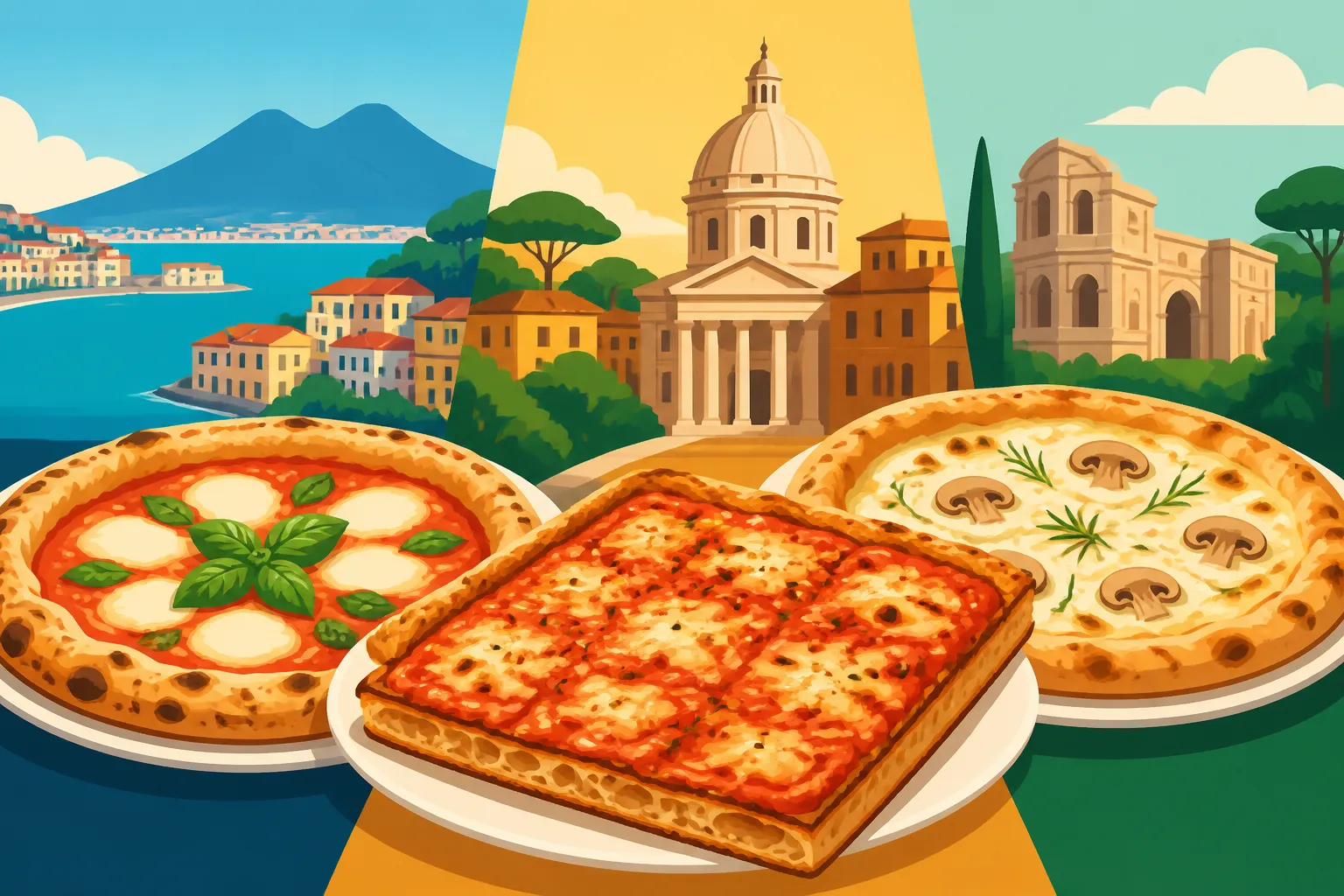
Pizza in Italy: Neapolitan, Roman, and Beyond
One of the most delicious (and often confusing!) culinary journeys you'll embark on in Italy is navigating the world of pizza. Forget everything you think you know from back home, because Italian pizza is a different beast entirely, steeped in tradition, regional variations, and passionate debate. It’s easy to feel overwhelmed by the choices and the subtle differences, wondering if you're truly experiencing "the real thing." Trust me, I’ve been there, staring at a menu filled with unfamiliar names, trying to discern a Neapolitan from a Roman, or figuring out why my friends from Turin rave about something completely different. This guide is here to cut through the confusion and introduce you to the glorious, diverse universe of Italian pizza, so you can order with confidence and savor every authentic bite.
Disclosure: This post may contain affiliate links. We may earn a commission at no extra cost to you if you make a purchase through these links. Read full disclosure.
The Granddaddy of Them All: Neapolitan Pizza (Pizza Napoletana)
Ah, Neapolitan pizza. For many, this is where the story of pizza truly begins, a culinary masterpiece born in the bustling streets of Naples. It’s not just food; it’s an institution, protected by strict rules and a revered history. If you've ever dreamt of pizza, it likely looked something like this.
History, Tradition, and Certification
The origins of pizza, as we largely know it today, are firmly rooted in Naples, dating back to the 18th century. It began as a simple, affordable meal for the working class, quickly gaining popularity. The iconic Margherita pizza, with its fresh tomatoes, mozzarella, and basil representing the colors of the Italian flag, is often credited to baker Raffaele Esposito in 1889, created in honor of Queen Margherita of Savoy’s visit. While the exact historical accuracy of that tale is sometimes debated by historians, it certainly cemented its legend. The truly defining moment for Neapolitan pizza came in 2009 when it was granted "Traditional Speciality Guaranteed" (TSG) status by the European Union, formalizing the traditional methods and ingredients. This means a true Neapolitan pizza must adhere to very specific production rules to earn its title, making it a proud symbol of Italian culinary heritage.
Key Characteristics: Dough, Ingredients, and Cooking
What makes a true Pizza Napoletana? It starts with the dough – a simple, magical blend of water, salt, yeast, and '00' wheat flour, proofed for a minimum of 8 to 24 hours. This long fermentation gives it its distinctive airy, soft, and elastic texture. When you pick up a slice, the center should be moist and floppy, not crisp. The crust, or cornicione, is famously puffy, light, and slightly charred in spots from the intense heat of the oven, known as "leopard spots." As for toppings, tradition dictates simplicity. The classic Pizza Marinara features only tomato, garlic, oregano, and a drizzle of olive oil, showcasing the quality of each ingredient. The Pizza Margherita adds fresh mozzarella (either mozzarella di bufala from Campania or fior di latte from Agerola), fresh basil, and extra virgin olive oil. The tomatoes must be San Marzano D.O.P. (Protected Designation of Origin) from the volcanic plains south of Mount Vesuvius, or pomodorino del Piennolo del Vesuvio D.O.P.. The cooking is equally crucial: a Neapolitan pizza is baked for a mere 60-90 seconds in a wood-fired oven reaching temperatures of 450-500°C (850-930°F), resulting in that uniquely soft, slightly chewy crust with a beautifully blistered edge. It's a quick, fiery ballet of flour and flame.
Where to Find the Best Neapolitan Pizza
To experience truly authentic Neapolitan pizza, a pilgrimage to Naples itself is almost mandatory. The city is dotted with historic pizzerias that have perfected the art over generations. Names like L'Antica Pizzeria da Michele, Pizzeria Brandi, and Gino Sorbillo’s are legendary and often have queues winding down the street. Don’t be put off by the wait; it’s part of the experience. Outside of Naples, you can still find excellent Neapolitan pizza, but look for pizzerias that explicitly state they follow the "AVPN" (Associazione Verace Pizza Napoletana) guidelines or are certified "TSG." Many cities, from Milan to Florence, now boast pizzerias proud to serve the Neapolitan style, often using imported ingredients to maintain authenticity. While a quick search for "best pizza in [city]" might give you some options, always check reviews for mentions of the soft, airy crust and quality ingredients – these are the true hallmarks. If you're planning a trip to Naples, don't forget to research how to get around Italy: Trains, Buses, Flights, and Car Hire, to make your pizza quest as smooth as possible.
The Crispy Contender: Roman Pizza (Pizza Romana)
While Neapolitan pizza might be the celebrity, Roman pizza offers a delightful contrast, holding its own with a distinct character. If you prefer a crunchier, thinner base, then the Roman style is likely to become your new favorite.
History and Evolution
Roman pizza, often called pizza bassa (low pizza) due to its thinness, evolved differently from its Neapolitan cousin. Rome, being a city of empire and trade, absorbed culinary influences from across Italy and beyond. The Roman style emphasizes a crispier, almost cracker-like crust, a result of a different dough composition and baking technique. It’s less about the chewy, airy cornicione and more about an even, firm base that can support a wider array of toppings without becoming soggy. Historically, pizza in Rome was also a street food, with vendors selling slices (pizza al taglio) or whole, thin-crust pies. Over time, this regional preference for a thinner, crispier base became the defining characteristic, a testament to Rome's practical and no-nonsense approach to food.
Key Characteristics: Dough, Toppings, and Cooking
The dough for Roman pizza typically contains a bit more olive oil than Neapolitan dough, and often a higher gluten flour, which contributes to its crispiness. It’s rolled out much thinner, sometimes with a rolling pin, creating a base that remains firm and crunchy, even under generous toppings. The cornicione is almost non-existent or very flat. When it comes to toppings, Roman pizza tends to be a bit more adventurous and varied. You’ll find classics like Margherita, of course, but also more elaborate combinations featuring cured meats, different cheeses, and seasonal vegetables. The cooking process is also different: Roman pizza is typically baked in an electric or gas oven, often at a slightly lower temperature than a wood-fired Neapolitan oven, but for a longer duration. This slower, more consistent bake ensures the crust dries out and becomes perfectly crisp and golden brown.
Varieties: Pizza Tonda and Pizza al Taglio
When in Rome, you'll encounter two main forms of pizza. The first is pizza tonda, which refers to the round, thin-crust pizza served in traditional pizzerias. This is the sit-down experience, where you get a whole pizza to yourself (or to share, if you're feeling generous). Popular Roman pizzerias like Da Remo, Ai Marmi, and Pizzeria Emma are famous for their pizza tonda, often served with simple, high-quality ingredients.
The second, and perhaps even more iconic Roman pizza experience, is pizza al taglio (pizza by the slice). This is a rectangular pizza, baked in large sheets, and then cut into squares or rectangles and sold by weight (al taglio means "by the cut"). You point to the piece you want, and they cut it for you. It's the ultimate Roman fast food, perfect for a quick lunch, a snack, or a casual dinner. The crust for pizza al taglio can vary slightly, sometimes being thicker and focaccia-like, while still retaining a crisp base. Shops like Pizzarium by Gabriele Bonci are celebrated for their innovative and gourmet pizza al taglio creations. It’s a fantastic way to sample many different topping combinations without committing to an entire pizza. To find these local gems, consider exploring options like GetYourGuide for food tours or local experiences that might lead you to authentic spots.
Beyond Naples and Rome: Regional Pizza Varieties
While Neapolitan and Roman styles dominate the global perception of Italian pizza, venturing further into Italy reveals a delicious array of regional interpretations, each with its own character and charm. Italy truly offers a pizza for every palate, reflecting local ingredients and culinary traditions.
Pizza al Padellino (Turin)
Head north to Turin, the elegant capital of Piedmont, and you’ll discover pizza al padellino (pizza in a small pan). This unique style is baked in a small, round, individual metal pan, giving it a distinct identity. The dough is typically thicker and softer than Roman pizza, with a lovely crispy bottom from cooking directly in the oiled pan. It’s often cooked in an electric oven, which ensures a more even, slower bake compared to the blistering heat of a wood-fired oven. The toppings are often simpler, letting the unique texture of the crust shine. Imagine a slightly chewy interior with a satisfyingly crisp base – a textural delight. It's a comfort food staple in Turin, a hearty contrast to the thin crusts found elsewhere. If you're journeying through the north, consider using Omio to book your train tickets and explore cities like Turin.
Pizza Fritta (Naples)
Yes, we're back in Naples, but this time for something entirely different: pizza fritta, or fried pizza. This is street food at its finest, a historical answer to making pizza when wood-fired ovens might have been inaccessible or too expensive. The dough, similar to traditional Neapolitan pizza dough, is stretched, topped (often with ricotta, cured meats like ciccioli, and a touch of tomato), folded into a half-moon shape (calzone style), and then deep-fried until golden and puffed up. The result is a delightfully crispy, savory pocket, warm and gooey on the inside. It’s rich, indulgent, and utterly delicious. You'll find vendors selling pizza fritta in the lively streets of Naples, a perfect snack to grab while exploring. It's a reminder that Neapolitan pizza isn't just one thing, but a whole family of delights.
Sfincione (Sicily)
Travel south to the island of Sicily, and you'll encounter sfincione, which is less a pizza and more of a thick, spongy focaccia-like bread topped with a rich, savory mixture. The name "sfincione" comes from the Latin spongia, meaning sponge, perfectly describing its texture. A classic sfincione from Palermo features a thick, soft, and airy dough, often topped with a tomato sauce, onions, caciocavallo cheese (a stretched-curd cheese), breadcrumbs, and often anchovies. It’s baked in a rectangular pan, typically in a conventional oven. Unlike other pizzas, the cheese often goes under the sauce to prevent it from burning. It's a rustic, deeply flavorful dish, often sold by street vendors or in bakeries, especially during the Christmas season. It’s a testament to Sicily's unique culinary identity, distinct from mainland Italy.
Pizza Gourmet and Contemporanea
Beyond these traditional regional styles, Italy has also embraced a vibrant scene of "gourmet" or "contemporanea" pizza. This trend focuses on high-quality, often slow-fermented doughs with innovative and sophisticated toppings. Chefs experiment with different flours, longer proofing times, and unexpected ingredient combinations, sometimes even featuring regional specialties like artisanal cheeses, premium cured meats, or even unexpected elements like seafood or unusual vegetables. While deeply rooted in traditional techniques, this movement pushes the boundaries of pizza, often presenting beautifully plated creations in more upscale settings. These pizzerias can be found in major cities like Milan, Rome, and Florence, offering a modern take on a beloved classic.
Navigating the Pizzeria Scene: What to Expect
Stepping into an Italian pizzeria, whether it's a bustling Neapolitan institution or a cozy Roman spot, is an experience in itself. Knowing a little bit about what to expect can help you feel right at home and avoid any awkward moments. This is where understanding Italian Food Culture: Eating Well as a Visitor really comes into play.
Types of Pizzerias
You'll encounter various types of establishments serving pizza in Italy.
- Pizzeria Tradizionale: These are your classic, often family-run restaurants primarily focused on pizza. They might offer a few appetizers (antipasti) and simple desserts, but pizza is the star. The atmosphere is usually lively and informal.
- Ristorante Pizzeria: Many restaurants in Italy offer both a full menu of pasta, meat, and fish dishes, as well as a dedicated pizza menu. These can be a good option if some members of your group want something other than pizza.
- Pizzeria al Taglio/Pizza a Pezzi: These are take-away places, particularly common in Rome, where pizza is sold by weight or by the slice. Perfect for a quick bite on the go.
- Trattoria Pizzeria/Osteria Pizzeria: These are more rustic, informal eateries that combine a traditional trattoria (simple, local cuisine) or osteria (wine bar with food) with a pizzeria. The vibe is usually very local and authentic.
- Pizzeria Gourmet/Contemporanea: As mentioned, these are more modern establishments that elevate pizza to an art form, focusing on high-quality ingredients and often a more refined dining experience.
Deciphering the Menu
Don't expect a dozen different types of crust or an endless list of exotic toppings. Italian pizza menus are usually straightforward. You'll almost always see:
- Marinara: Tomato, garlic, oregano, olive oil. No cheese. Simple, pure, delicious.
- Margherita: Tomato, mozzarella, basil, olive oil. The classic.
- Diavola: Margherita with spicy salami.
- Capricciosa: Tomato, mozzarella, mushrooms, artichokes, cooked ham, olives.
- Quattro Stagioni: "Four Seasons" – similar toppings to Capricciosa but typically arranged in four distinct quadrants to represent the seasons.
- Quattro Formaggi: "Four Cheeses" – a white pizza (no tomato sauce) with a blend of cheeses like mozzarella, gorgonzola, fontina, and Parmigiano.
- Prosciutto e Funghi: Tomato, mozzarella, cooked ham, mushrooms.
Beyond these, there will be local specialties. Don't be afraid to ask for a recommendation or just pick something that sounds good. Remember, the focus is always on fresh, high-quality ingredients.
The 'Coperto' and Service Charges
When dining in a sit-down pizzeria, you might notice a charge called coperto on your bill. This isn't a tip, but a fixed charge per person, typically ranging from €1 to €3, for things like bread, tablecloth, cutlery, and service. It's a standard practice in Italy and not something to be offended by. In some regions or establishments, a servizio (service charge) might also be added, usually a percentage of the bill, especially for larger groups. If servizio is listed, you are not expected to tip extra. If neither is listed, leaving a small discretionary tip for good service is appreciated but not mandatory. To delve deeper into this, check out our guide on Restaurant Etiquette in Italy: Coperto, Courses, and the Bill.
Ordering Like a Local: Tips and Etiquette
Now that you know what to expect from the menu and the types of pizzerias, let’s talk about how to order and enjoy your pizza like a true Italian.
Drink Pairings
While some tourists might automatically reach for a soda, Italians often pair their pizza with a refreshing birra (beer), typically a light lager like Peroni or Moretti. Beer cuts through the richness of the cheese and sauce perfectly. Another classic pairing, especially in Naples, is a sparkling local wine, often a dry, bubbly Falanghina or a crisp Greco di Tufo. And of course, acqua minerale (mineral water), either frizzante (sparkling) or naturale (still), is always a good choice to stay hydrated. Rarely will you see Italians drinking red wine with pizza, though a light, fresh red could work with some meatier toppings. Don't be afraid to ask your waiter for a suggestion – they'll be happy to guide you. For more on Italian beverages, explore Italian Wine, Coffee, and Aperitivo Culture.
Customization (or Lack Thereof)
Here's a crucial point: Italian pizzerias are not like their American counterparts when it comes to customization. Do not expect to order a "half pepperoni, half mushroom, no olives, extra cheese" creation. Italians take pride in their traditional recipes, and chefs are often quite particular about the balance of flavors and textures in their established dishes. Ordering a pizza as it appears on the menu is generally the expectation. While you might be able to politely request a simple omission (e.g., "senza cipolla" – without onion), asking for elaborate modifications or creating your own bespoke pizza from scratch is typically frowned upon and might even lead to a bewildered look or a flat-out refusal. Trust the chef's expertise; they've likely perfected these combinations over generations.
Takeaway vs. Dine-in
Both takeaway (pizza da asporto) and dine-in experiences are common. If you're opting for takeaway, you'll usually place your order at the counter and wait for it to be freshly prepared. It's often a bit cheaper as you won't pay a coperto. If dining in, you'll be seated and served, allowing you to savor the ambiance. Many pizzerias, especially the more traditional ones, don't offer delivery services, preferring you to pick up the hot, fresh pizza yourself to ensure quality. If you want to find an excellent local spot, check out our guide on How to Find Authentic Restaurants in Italy (Not Tourist Traps). For a more casual meal or if you’re staying in a self-catering apartment found via Booking.com, grabbing some pizza al taglio can be a fantastic, relaxed dinner option.
Understanding the "Real" Italian Pizza Experience
Many visitors arrive in Italy with preconceived notions of what pizza should be, often influenced by the versions found in their home countries. The truth is, Italian pizza is far more nuanced, traditional, and regionally diverse than many expect. Embracing this means letting go of those expectations and being open to new, delicious experiences.
Embrace the Simplicity
The beauty of Italian pizza, especially Neapolitan, lies in its simplicity. Fewer, high-quality ingredients are preferred over an abundance of toppings. This approach allows each element – the sweet tomatoes, the creamy mozzarella, the fragrant basil, and the perfect dough – to shine through. Don’t expect heavy sauces or mountains of cheese. It’s a delicate balance designed to create harmony in every bite. This philosophy extends beyond pizza to all aspects of Italian cuisine, emphasizing the freshness and inherent flavors of the produce.
The Social Aspect
Eating pizza in Italy is often a social affair. Whether it’s a family dinner at a pizzeria tradizionale or a group of friends sharing pizza al taglio in a piazza, it’s about connection and enjoyment. The communal sharing, the lively conversation, and the casual atmosphere are all integral parts of the experience. It’s less about a quick meal and more about slowing down and enjoying the moment with good company and even better food.
It's a Journey, Not a Destination
Finally, remember that exploring pizza in Italy is an ongoing journey. There's always a new regional specialty to try, a different historical pizzeria to visit, or a contemporary chef pushing the boundaries. Don’t limit yourself to just one style. Sample Neapolitan in Naples, Roman in Rome, and keep an eye out for local variations as you travel across the country. Each region, each city, sometimes even each neighborhood, will have its favorite spot and its unique take on this beloved dish. Enjoy the exploration, and buon appetito!
Pizza Comparison Table: Neapolitan vs. Roman
| Feature | Neapolitan Pizza (Pizza Napoletana) | Roman Pizza (Pizza Romana) |
|---|---|---|
| Crust | Soft, airy, elastic, chewy center, puffy cornicione (edge) | Thin, crispy, firm, almost cracker-like, flat edge |
| Dough | Simple (flour, water, salt, yeast), long fermentation (8-24h) | Often includes more olive oil, higher gluten flour, thinner |
| Cooking | Wood-fired oven, 450-500°C, 60-90 seconds | Electric/gas oven, slightly lower temp, longer bake |
| Toppings | Simple, minimal, focus on quality (San Marzano tomatoes, fresh mozzarella, basil) | More varied, can be more generous, wider array of ingredients |
| Texture | Wet, soft center, foldable | Crisp, crunchy, holds its shape |
| Typical Forms | Round (tonda) | Round (tonda) and rectangular (al taglio) |
| Certification | TSG (Traditional Speciality Guaranteed) | No formal certification, regional style |
| Experience | Often a knife and fork affair, eaten hot and fresh | Can be eaten by hand, both sit-down and street food |
Disclaimer
The information provided in this guide is for general informational purposes only and does not constitute professional advice. While we strive to ensure accuracy, regulations, business practices, and availability of services can change rapidly in Italy. Always verify current details with official sources, local authorities, or service providers. Our recommendations are based on personal experience and general knowledge, and individual experiences may vary.