Rome Fiumicino Transfers: Leonardo Express, Regionale, and Bus Compared
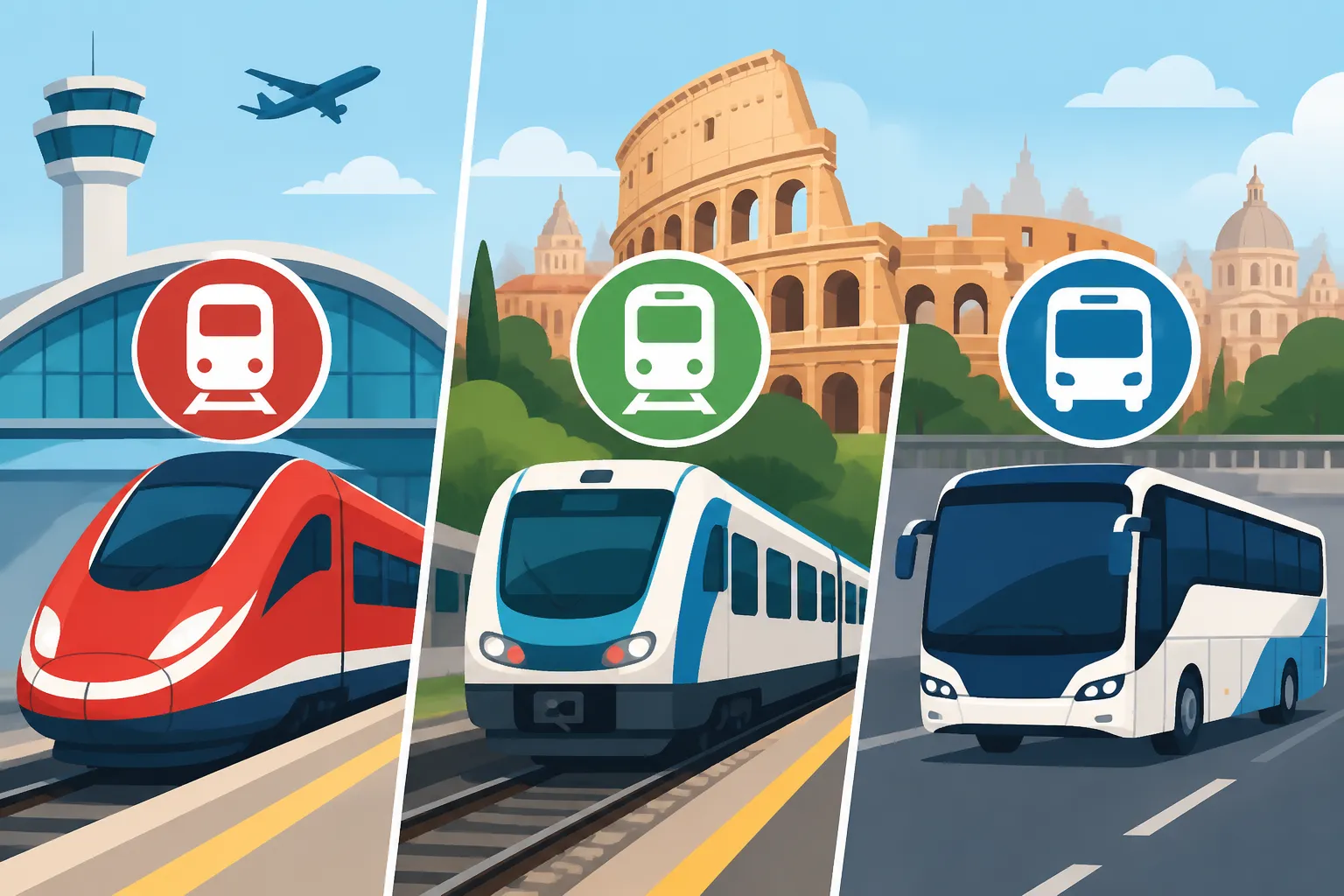
Ah, arriving at Rome's Fiumicino Airport, or FCO as we seasoned expats call it! That moment you step off the plane, jet-lagged and a little disoriented, only to be faced with the immediate challenge of figuring out how to actually get into the Eternal City. It's a common expat rite of passage, navigating the labyrinthine options from the airport to your final destination in Rome. This guide is going to meticulously break down your FCO transfer choices – the speedy Leonardo Express, the versatile regional trains, and the budget-friendly bus services – and show you how to effortlessly compare and book them all using a trusted platform like Omio.
Disclosure: This post may contain affiliate links. We may earn a commission at no extra cost to you if you make a purchase through these links. Read full disclosure.
The Perennial Rome Fiumicino Dilemma: Why Getting to the City Feels Like a Quest
Let's be real, landing in a new country, especially one as vibrant and bustling as Italy, can be a mix of exhilaration and sheer panic. The last thing you want after a long flight is to wrestle with complex public transport systems, decipher Italian signs when your mind is still in airplane mode, or fall prey to unreliable information.
The Initial Jitters of Arriving at FCO
The moment you clear customs and step into the arrivals hall at Fiumicino, a wave of options (and sometimes, overzealous taxi drivers) can hit you. You're tired, perhaps hungry, and burdened with luggage. Your brain is probably foggy from the time difference, and suddenly you're expected to make an informed decision about the most efficient and cost-effective way to reach your hotel or apartment. Many expats have tales of accidentally taking the wrong bus, struggling to validate a train ticket, or simply paying far too much out of sheer confusion. It’s a frustrating experience that can taint your initial impression of a city you’ve dreamt of visiting.
Understanding Rome's Layout and the Need for a Good Connection
Rome isn't just one central hub; it's a sprawling metropolis with distinct neighborhoods, each with its own charm and logistical challenges. Most visitors aim for the historical center, near Termini Station, which is Rome's main transportation nexus. However, many accommodations are scattered in areas like Trastevere, Testaccio, or near the Vatican, which might not be directly served by every airport transfer option. Choosing the right mode of transport isn't just about getting from FCO, but intelligently connecting to your actual destination, minimizing extra steps, taxi fares, or exhausting transfers with heavy bags. A direct connection to a station that's just a short walk or a quick metro ride from your lodging can save you immense amounts of time and stress.
The Speedy Sentinel: Leonardo Express
For many, the Leonardo Express is the gold standard of FCO transfers, and for good reason. It offers a promise of speed and directness that can be incredibly appealing after a long journey.
What is the Leonardo Express and Where Does it Go?
The Leonardo Express is a dedicated, non-stop train service connecting Fiumicino Airport directly to Rome's central Termini Station. It's operated by Trenitalia, Italy's national railway company, and is designed specifically for airport commuters and tourists. These trains run frequently, departing every 15-30 minutes, seven days a week, with service starting early in the morning and running until late at night. The journey itself is a swift 32 minutes, whisking you from the airport tarmac straight into the heart of Rome without any intermediate stops. This means no traffic jams, no unexpected detours, and a highly predictable arrival time, which is a huge comfort if you're on a tight schedule or connecting to another train.
One of the biggest advantages is its reliability. While other forms of transport might contend with Rome's infamous traffic, the Leonardo Express glides smoothly on its dedicated tracks. The trains are modern, air-conditioned, and generally quite clean. They also offer ample luggage space, which is a blessing for those traveling with larger suitcases or multiple bags. However, it's worth noting that its singular destination, Termini, can be a double-edged sword. If your hotel isn't near Termini, you'll need to factor in an additional bus, metro, or taxi ride, adding to your overall travel time and cost. For those heading to the Vatican, Trastevere, or other areas directly accessible from different train stations, it might require an unnecessary backtrack or an additional transfer.
The Leonardo Express Experience: Tickets, Onboard, and Accessibility
Purchasing tickets for the Leonardo Express is relatively straightforward. You can buy them at ticket counters and vending machines within Fiumicino Airport (just follow the prominent "Treni" or "Trains" signs) or at Termini Station. However, to truly streamline your arrival, buying your ticket in advance online through a platform like Omio is often the best strategy. Omio allows you to compare schedules and prices, and receive your ticket directly on your phone, avoiding queues and the stress of navigating a foreign ticket machine with a line of impatient travelers behind you.
Once you have your ticket, remember a crucial step: validation. If you purchase a physical ticket at the station, you must validate it by inserting it into one of the green or yellow machines located on the platform before boarding. Failure to do so can result in hefty fines, and trust me, Italian train conductors don't mess around with unvalidated tickets. If you've booked through Omio and received an e-ticket, it's usually pre-validated or has clear instructions on how to activate it, often eliminating this step entirely.
Onboard, the Leonardo Express offers comfortable seating. You'll find overhead racks for smaller bags and dedicated luggage areas near the doors for larger suitcases. It's generally a safe and pleasant ride, although, like any public transport in a major city, it's always wise to keep an eye on your belongings, especially in crowded moments. The train is also fairly accessible for passengers with reduced mobility or those traveling with prams, with dedicated spaces available. You'll board from specific platforms at Fiumicino (usually near the main terminal entrance) and arrive at platforms typically located towards the end of Termini Station, clearly marked.
The Workhorse: Trenitalia Regional Trains (FL1 Line)
While the Leonardo Express grabs headlines for its speed, the regional train service offers a different kind of value and flexibility, especially if Termini isn't your ultimate stop. This is often overlooked by first-timers, but it can be a gem for those in the know.
The Regional Train: More Stops, More Options
Beyond the express service, Fiumicino Airport is also connected to Rome by the Trenitalia FL1 regional train line. Unlike the Leonardo Express, this service does make several stops along its route, connecting FCO to other important Roman railway stations such as Roma Trastevere, Roma Ostiense, and Roma Tiburtina, before continuing further into the Lazio region. The journey time varies depending on your destination, ranging from 25 minutes to Trastevere, 35 minutes to Ostiense, and about 48 minutes to Tiburtina. These trains also run frequently, usually every 15-30 minutes on weekdays and every 30-60 minutes on weekends and public holidays.
The primary advantage of the regional train is its cost-effectiveness, being noticeably cheaper than the Leonardo Express. But more importantly, it offers direct access to stations that might be much closer to your actual accommodation. For instance, if you're staying in the charming Trastevere neighborhood, taking the FL1 to Roma Trastevere station makes far more sense than going all the way to Termini only to backtrack. Similarly, Ostiense is a major hub with metro connections, and Tiburtina serves as a significant high-speed rail interchange for destinations like Florence or Naples, making it ideal if you're bypassing central Rome entirely. The trains themselves are standard regional trains, perhaps not as plush as the Leonardo Express, but perfectly comfortable for the relatively short journey.
Navigating the Regional Train: Buying Tickets and Validating
Just like with the Leonardo Express, you can purchase FL1 regional train tickets at Fiumicino Airport train station, either from ticket counters or self-service machines. And again, for a hassle-free experience, consider booking your regional train tickets through Omio. The Omio platform allows you to see all available train options, compare prices, and get your mobile ticket instantly, simplifying the process immensely.
However, the golden rule of Italian regional trains still applies: validate your physical ticket before boarding! These small, usually green or yellow, machines are found at the entrance to the platforms. Insert your ticket, wait for the stamp or beep, and retrieve it. Skipping this step, even if you genuinely forgot, is not an excuse and can lead to a fine of €50 or more, plus the cost of the ticket. For digital tickets booked via Omio, this step is typically handled electronically, providing one less thing to worry about.
The onboard experience is typical of a regional commuter train. You'll find standard seating, and while there are luggage racks, they might not be as spacious as those on the Leonardo Express. During peak hours, these trains can get quite crowded with both commuters and travelers, so be prepared for a potentially standing-room-only journey if you're traveling at busy times. While the FL1 train doesn't take you directly to the Colosseum or Spanish Steps, it provides excellent connectivity to other parts of Rome, allowing for easier onward travel via Rome's extensive public transport network, including the Metro, buses, and trams. For many expats and savvy tourists, it's the preferred choice for its blend of value and direct access to specific areas of the city.
The Budget-Friendly Brigade: Airport Bus Services
If your priority is keeping costs down, or if you're staying in an area well-served by bus routes, the various airport bus services from Fiumicino offer an appealing alternative. They might not be the fastest, but they are certainly the most economical.
The Many Faces of FCO Bus Transfers
Several private bus companies operate regular services between Fiumicino Airport and various key points in Rome, predominantly Termini Station, but also other locations like Piazza Cavour (near the Vatican) or Roma Ostiense. The most well-known operators include Terravision, SIT Bus Shuttle, Tam Bus, and Atral-Schiaffini. Each offers a similar service: a comfortable coach ride with luggage storage in the hold. The journey time for buses is highly variable, ranging from 45 minutes to over 90 minutes, entirely dependent on Rome's notorious traffic conditions. During rush hour, what might normally be an hour's journey can easily stretch to an hour and a half or more, turning your quick transfer into a more prolonged experience.
The biggest pro of bus transfers is undeniably the price. These tickets are typically the cheapest option available, making them very attractive for budget-conscious travelers or those traveling in larger groups where individual train tickets can quickly add up. Some services, like SIT Bus Shuttle, offer direct routes to areas like Piazza Cavour, which is a stone's throw from the Vatican, proving incredibly convenient if that's your final destination. The coaches are generally comfortable, air-conditioned, and provide a pleasant ride when traffic is cooperative. However, the major drawback is, as mentioned, traffic. There's no dedicated bus lane for much of the route, meaning you'll be stuck in the same congestion as every other vehicle. Also, while luggage space is provided, it can sometimes be a squeeze on very busy buses, and drop-off points may require an additional walk or public transport connection.
Booking Bus Tickets and Practical Tips
You can purchase bus tickets directly at the airport from the ticket booths located near the bus stops (usually just outside Terminal 3 Arrivals, follow the "Bus Station" signs). However, a smarter move is often to book your bus tickets online in advance, especially during peak travel seasons. This guarantees your seat and often comes with a slight discount. And here's where Omio shines again: you can easily compare all the different bus operators, their schedules, prices, and drop-off points in one glance. This makes choosing the best bus service for your specific needs incredibly simple, rather than having to juggle multiple company websites.
When you book through Omio, you'll typically receive an e-ticket on your phone, which you just show to the bus driver. Once you arrive at FCO, follow the signs to the bus station. The stops for each company are clearly marked. It's wise to have your ticket ready and be aware of your bus company's specific stop. Be realistic about travel times, particularly if you have an onward connection or appointment. If you're due somewhere at a specific time, adding a buffer for potential traffic delays is crucial. For those with really heavy or bulky luggage, remember that while buses have storage, maneuvering large items onto and off the bus can still be a bit of a workout.
Direct Comparison: Leonardo Express vs. Regional Train vs. Bus
Choosing the right transfer isn't just about picking one; it's about making an informed decision based on your specific needs, priorities, and budget. Let's break down the key differences to help you decide.
Price, Speed, and Convenience Matrix
Here's a quick overview to help you visualize the trade-offs:
| Feature | Leonardo Express | Trenitalia Regional (FL1) | Airport Bus Services (e.g., Terravision, SIT) |
|---|---|---|---|
| Cost (approx.) | €14 | €8 | €6-€7 |
| Journey Time | 32 minutes | 25-48 minutes (depending on stop) | 45-90+ minutes (highly traffic-dependent) |
| Directness | Non-stop to Termini | Multiple stops (Trastevere, Ostiense, Tiburtina) | Typically non-stop to Termini/Piazza Cavour (after exit) |
| Key Destinations | Termini (major hub for metro/buses/onward trains) | Trastevere, Ostiense, Tiburtina (good for specific areas/onward trains) | Termini, Piazza Cavour (Vatican area), Ostiense |
| Reliability | High (no traffic) | High (no traffic) | Low (prone to traffic delays) |
| Luggage Space | Ample dedicated space | Standard racks, can be crowded | Under-bus storage, sometimes tight |
| Frequency | Every 15-30 minutes | Every 15-30 minutes (weekdays), 30-60 minutes (weekends) | Every 20-40 minutes (depends on operator) |
| Booking Ease | Easy (Omio, station) | Easy (Omio, station) | Easy (Omio, airport booth) |
As you can see, each option has its strengths. The Leonardo Express is the undisputed champion for speed and reliability, perfect if you're going directly to Termini or need to catch an High-Speed Trains in Italy: Trenitalia, Italo, Routes, and Savings connection quickly. The regional train is a fantastic value proposition if your destination aligns with Trastevere, Ostiense, or Tiburtina, saving you money and potentially a second transfer. For detailed guidance on these services, you might find our guide on Regional Trains in Italy: How to Use Them and Save very useful. The buses, while the cheapest, introduce the element of traffic unpredictability, which can be a significant factor. For more on bus networks, check out Intercity Buses in Italy: FlixBus and Regional Networks.
Making the Best Choice for Your Arrival (and Why Omio Helps)
Deciding which option is best for you truly boils down to a few personal factors:
- Your Final Destination: If you're staying right near Termini, the Leonardo Express is a no-brainer for its speed. If you're in Trastevere, the FL1 regional train is direct and cheaper. If you're near the Vatican, a SIT Bus Shuttle to Piazza Cavour could be ideal. Otherwise, you'll need to consider Rome's excellent Getting Around Italian Cities: Metro, Tram, and Buses to complete your journey.
- Your Budget: Buses are the most economical, followed by regional trains, then the Leonardo Express.
- Time of Day and Week: Traffic is significantly worse during weekday rush hours (typically 7-9 AM and 5-7 PM). If you arrive during these times, trains will be far more reliable.
- Amount of Luggage: All options accommodate luggage, but the dedicated racks on the Leonardo Express and the under-bus storage are often more comfortable than squeezing onto a crowded regional train with large suitcases.
- Travel Party Size: For solo travelers or couples, the cost differences per person are manageable. For families or larger groups, bus tickets can offer considerable savings.
This is precisely where Omio becomes your indispensable tool. Instead of opening multiple tabs, checking different company websites, and trying to translate everything, Omio consolidates all these options into one user-friendly interface. You simply input "Fiumicino Airport" and your Rome destination (e.g., "Roma Termini," "Roma Trastevere"), and Omio will show you all available trains and buses, their prices, departure times, and estimated journey durations. You can instantly compare the Leonardo Express, regional trains, and various bus services side-by-side, allowing you to quickly determine the best fit for your specific needs, budget, and schedule. It takes the guesswork and the language barrier out of the equation, giving you the power to choose wisely. Omio makes planning your transfer as simple as a few taps on your phone.
Seamless Planning with Omio: Your Digital Travel Companion
Making your way from Fiumicino to Rome shouldn't feel like a cryptic puzzle. In a country where bureaucracy and processes can sometimes be less than intuitive, having a reliable tool to simplify travel is a godsend.
How Omio Simplifies Fiumicino Transfers
Omio is more than just a booking site; it's a travel aggregator that empowers you to make smart decisions without the usual headaches. Think about the typical scenario: you've just landed, you're trying to figure out if the Leonardo Express is worth the extra cost compared to a bus, or if a regional train actually gets you closer to your Airbnb. With Omio, all this information is laid out clearly. You can see the departure times for all three modes, their exact prices, and the total travel duration, including any transfers if necessary. This comparison feature is invaluable.
The beauty of Omio is its seamless booking process. Once you've chosen your preferred option – perhaps the speedy Leonardo Express because you're tired, or the regional train because it's cheaper and goes directly to Trastevere – you can book it right then and there. Your tickets are delivered directly to your phone as e-tickets, which means no fumbling with paper, no worrying about ticket machines, and often, no need to validate. This digital convenience is a huge stress-reducer, allowing you to bypass potential queues and get straight to your journey. Moreover, Omio provides real-time availability, so you know exactly what's running and if there are any delays, a particularly crucial feature for bus services that can be impacted by traffic. This level of transparency and ease truly validates the frustration many foreigners feel when trying to navigate Italian public transport systems. Omio takes the complication out of the equation, leaving you free to anticipate your Roman adventure.
Beyond Fiumicino: Using Omio for Your Italian Adventures
While Omio is a fantastic resource for your initial Fiumicino transfer, its utility extends far beyond just getting into Rome. Once you're settled, you'll inevitably want to explore more of Italy, whether it's a day trip or an intercity adventure. Omio is your go-to platform for comparing and booking all modes of transport across Italy and beyond. Planning a trip to Florence, Venice, or Naples? Omio can show you all the available train connections (including both Trenitalia and Italo, the two main high-speed train operators), bus routes, and even domestic flights, allowing you to craft your itinerary with confidence.
Whether you're looking for Getting Around Italy: Trains, Buses, Flights, and Car Hire or planning a multi-city tour, Omio centralizes all your options. It simplifies the process of finding the fastest, cheapest, or most convenient way to get from A to B, making it an essential app for any expat or tourist living in or visiting Italy. From booking your return journey to FCO to exploring the hidden gems of Tuscany or the Amalfi Coast, Omio helps you travel smart. And for those new to the country, platforms like Omio can help bridge the gap, even if you're still practicing your Italian Language and Everyday Communication for Visitors. Just remember to keep an eye on your belongings, especially in busy train stations, as mentioned in our guide on Avoiding Pickpockets in Italy's Tourist Areas, and ensure your phone's battery is charged and you have adequate data with services like those discussed in Mobile Data and eSIMs for Travel in Italy for smooth digital ticket use.
Disclaimer
The information provided in this guide is intended for general informational purposes only and is subject to change. While we strive to keep the content accurate and up-to-date based on current public information, transport schedules, prices, and regulations in Italy can vary. It is always recommended to check the latest details directly with the transport providers (Trenitalia, bus companies) or through reliable booking platforms like Omio prior to your travel. We cannot be held responsible for any inconvenience or financial loss incurred due to reliance on this information.